

Five rare supercars, five very different personalities, and one fascinating view of luxury motoring in 2026
For some owners, the journey begins long before the hotel entrance or the mountain pass. It starts with the car. Not as transport, not as a status prop, but as the central object in the experience. The right machine changes the texture of a road, the tempo of a long run, even the mood of arrival. In this rarified end of the market, that matters.
The five cars here do not chase the same idea of desirability. Aston Martin’s Valhalla leans hard into hybrid precision and downforce. Bentley’s revived Supersports goes the other way, stripping its latest Continental into something far more focused and unexpectedly purist. Gordon Murray Automotive’s T.33 is all about lightness, a screaming V12 and mechanical intimacy. Ferrari’s Luce asks what an electric Ferrari can feel like when the technical ambition is this serious. Then there is Lamborghini’s Fenomeno, a few-off V12 hybrid that treats subtlety as a complete waste of time.
What ties them together is not merely speed. It is character. Each one offers a different answer to the same question: if you have the means to drive almost anything, what kind of machine still feels worth planning a journey around?
Aston Martin Valhalla
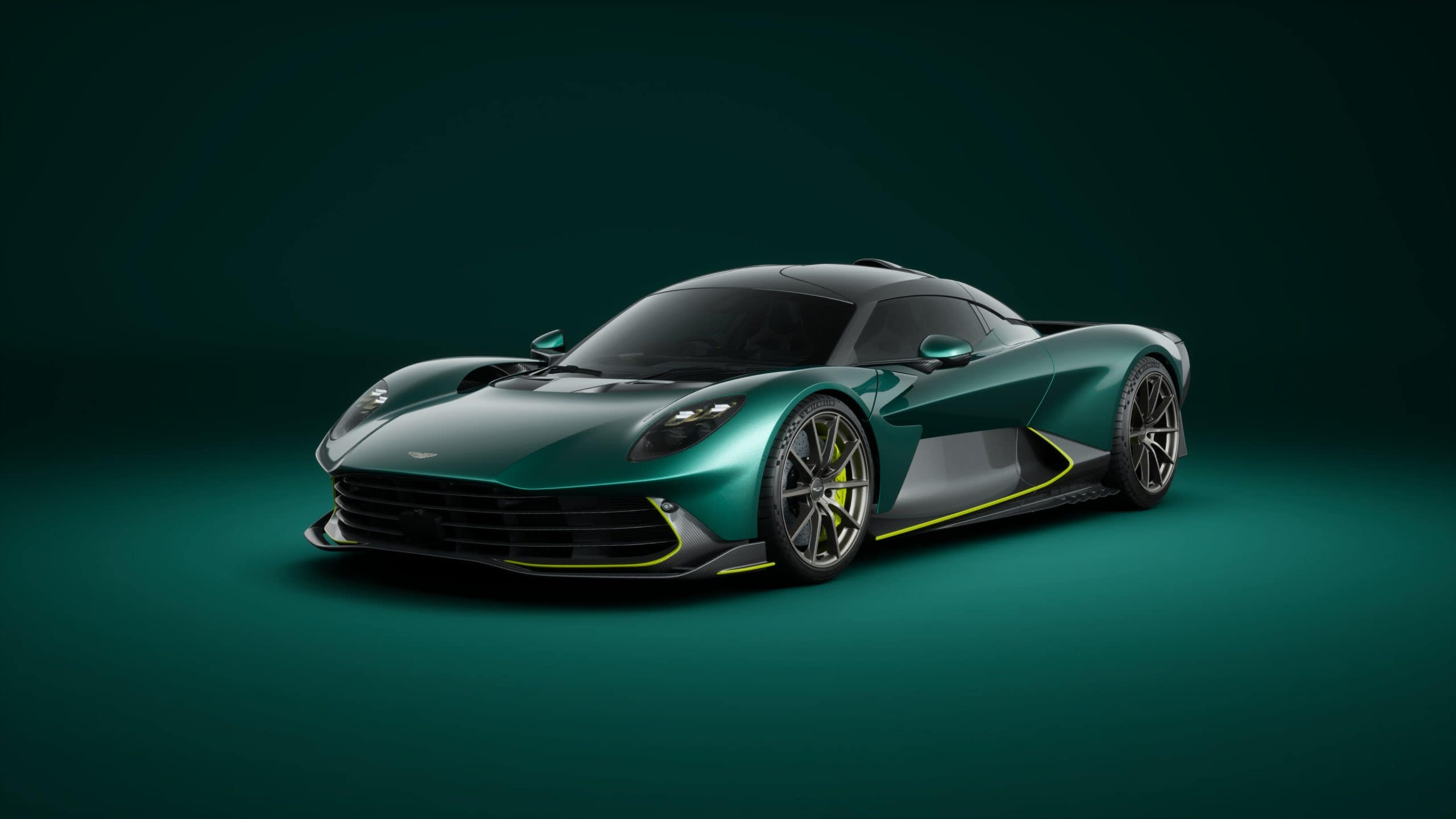
The Valhalla is Aston Martin at its most technically aggressive. Mid-engined, plug-in hybrid, limited to 999 cars, and built around a 4.0-litre twin-turbo V8 working with three electric motors, it delivers 1,079 PS, a claimed 0–100 km/h time of 2.5 seconds, and a 350 km/h top speed. Aston also quotes more than 600 kg of downforce in race mode, which tells you exactly where this car sits in the modern hierarchy. It is not a softened grand tourer wearing a supercar silhouette. It is a serious performance car with Aston Martin finishing school.
That combination is what makes it appealing. A lot of very fast hybrid machinery still feels split in personality, as though the engineering team and the design team arrived with different ideas of what the car should be. The Valhalla feels more resolved than that. The proportions are compact and tightly wound. The aero devices are not decorative. The cabin, too, avoids the usual trap of turning technical ambition into visual clutter. Aston gives you the low, driver-led seating position, the F1-flavoured architecture and the sense of being packaged into something purposeful, but it still remembers that this is an Aston Martin. The materials matter. The detailing matters. So does the way it will look outside a very expensive hotel.
For the luxury petrolhead, the real hook is the way the car appears to balance systems and sensation. There is torque vectoring at the front axle, an eight-speed dual-clutch transmission with the rear motor integrated into it, and a 6.1 kWh battery that gives the Valhalla a short EV capability without turning it into an exercise in restraint. It still reads as a driver’s car. Just a modern one.
Bentley Supersports
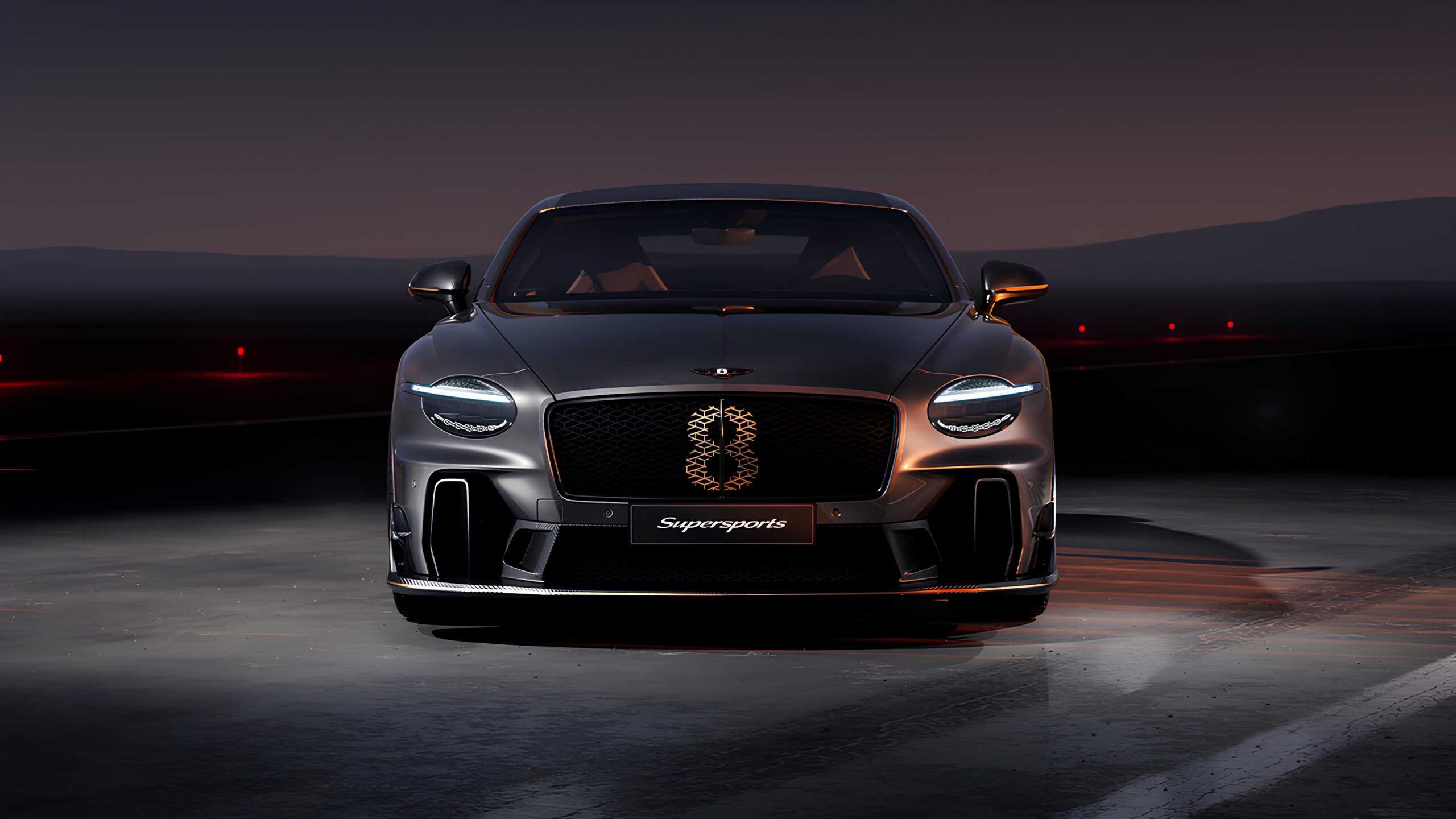
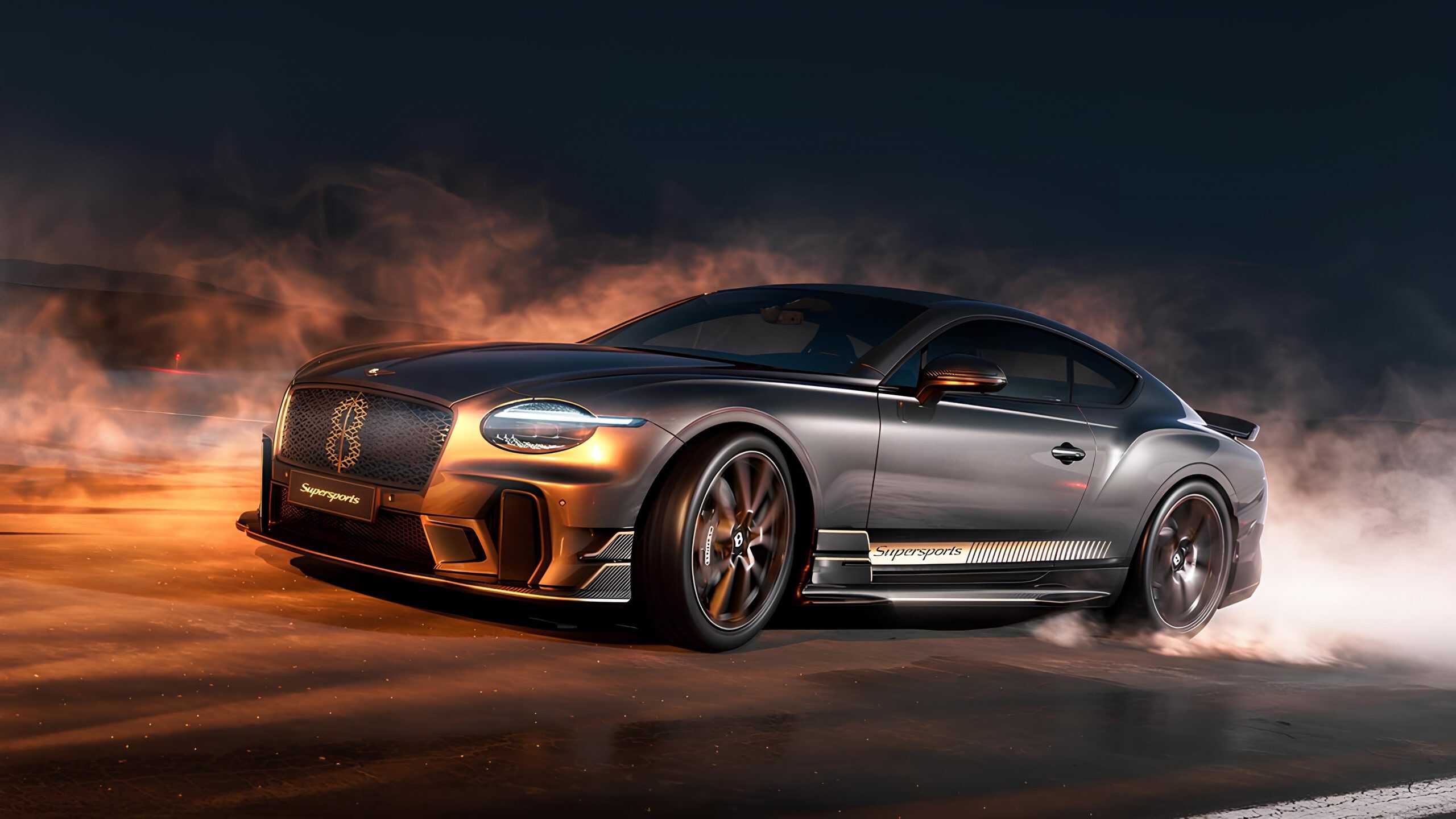
The current Supersports is not the old W12 car carried over into the present. Bentley officially brought the name back in late 2025 as a very different machine: rear-wheel drive, two seats, under two tonnes, and powered by a non-hybrid 4.0-litre twin-turbo V8 producing 666 PS and 800 Nm. Bentley says 0–100 km/h takes 3.7 seconds, top speed is about 310 km/h, and production is limited to 500 individually numbered examples, with orders opening in March 2026 and production starting in Q4 2026.
That changes the tone of the car completely. Earlier Supersports models, especially the mighty W12 versions, were fast in a traditional Bentley way: heavy, thunderous, continent-crossing. The new one is more pointed. Bentley has given it rear-wheel drive for the first time in Continental GT road-car history, fitted carbon-ceramic brakes as standard, developed 22-inch forged wheels with Manthey Racing, and given it a titanium Akrapovič exhaust. There is an optional Trofeo RS tyre too, which tells you this is not merely a trim package with a louder badge.
Even so, it remains a Bentley, and that matters. The cabin still carries leather, Dinamica and carbon fibre rather than bare-bones theatre. It is just more tightly edited. The rear seats are gone, replaced by a carbon-fibre and leather shell. The body has real aerodynamic intent. Bentley claims more than 300 kg of additional downforce than a Continental GT Speed. It also says the car is nearly half a ton lighter than the standard Continental GT. That is not a small shift in attitude; it is almost a philosophical reset.
So the Bentley now sits in a more interesting place than before. Less drawing room, more bruiser. Still expensive-looking, still beautifully built, still deeply Bentley in surface quality, but with an edge that sounds properly mechanical rather than merely plush.
Gordon Murray Automotive T.33
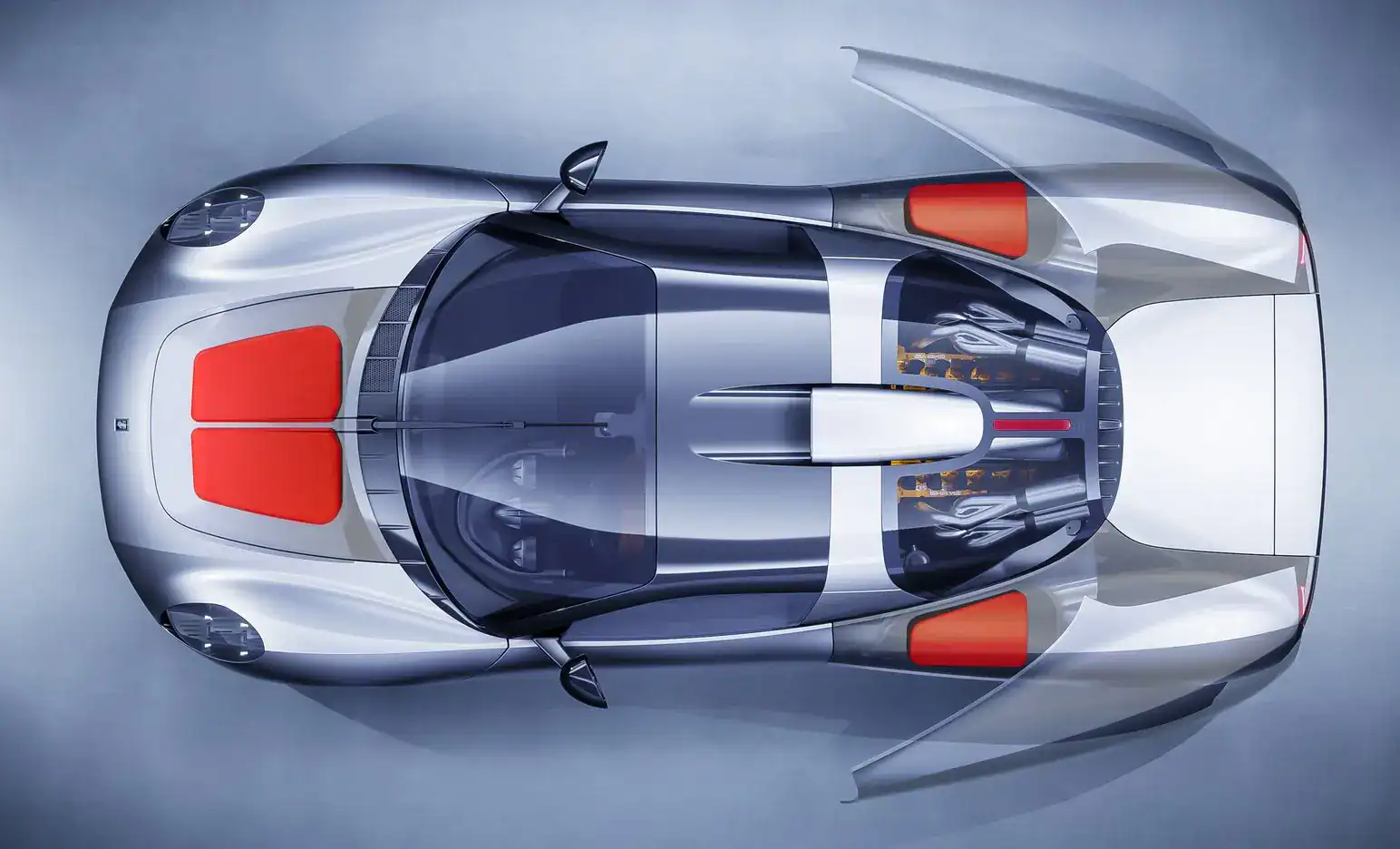
If the Bentley is the surprise, the T.33 is the purist’s safe house. Gordon Murray Automotive’s line on the car is unusually direct: a two-seat supercar shaped by clean 1960s inspiration, lightweight thinking and what the company plainly regards as one of the great engines of the age. Officially, the T.33 uses a naturally aspirated 3.9-litre Cosworth GMA.2 V12 with 617 PS, revs to 11,100 rpm, and comes with either a six-speed manual or a six-speed paddle-shift gearbox. Dry weight is 1,090 kg, and production for the T.33 coupe is limited to 100, with the run already allocated.
Those numbers matter less than the philosophy behind them. Murray has never been interested in bloat, either visual or mechanical, and the T.33 benefits from that discipline. It is not covered in decorative aggression. It is not trying to win a static war of vents and creases. The body is simple, elegant, almost calm. Then you look more closely and realise how rare that is now.
It also has something many ultra-expensive performance cars have started to lose: tactility. A manual gearbox is still available. The engine is naturally aspirated. The mass stays low. The cabin avoids screen-heavy fuss. Even the sales language leans into beauty and engineering rather than brute spectacle. That gives the T.33 a certain confidence. It does not need to shout because it already knows who it is.
For an owner who genuinely cares about response, sound quality and steering feel, it may be the most compelling car here. Not the loudest arrival. Possibly the most satisfying drive.
Ferrari Luce
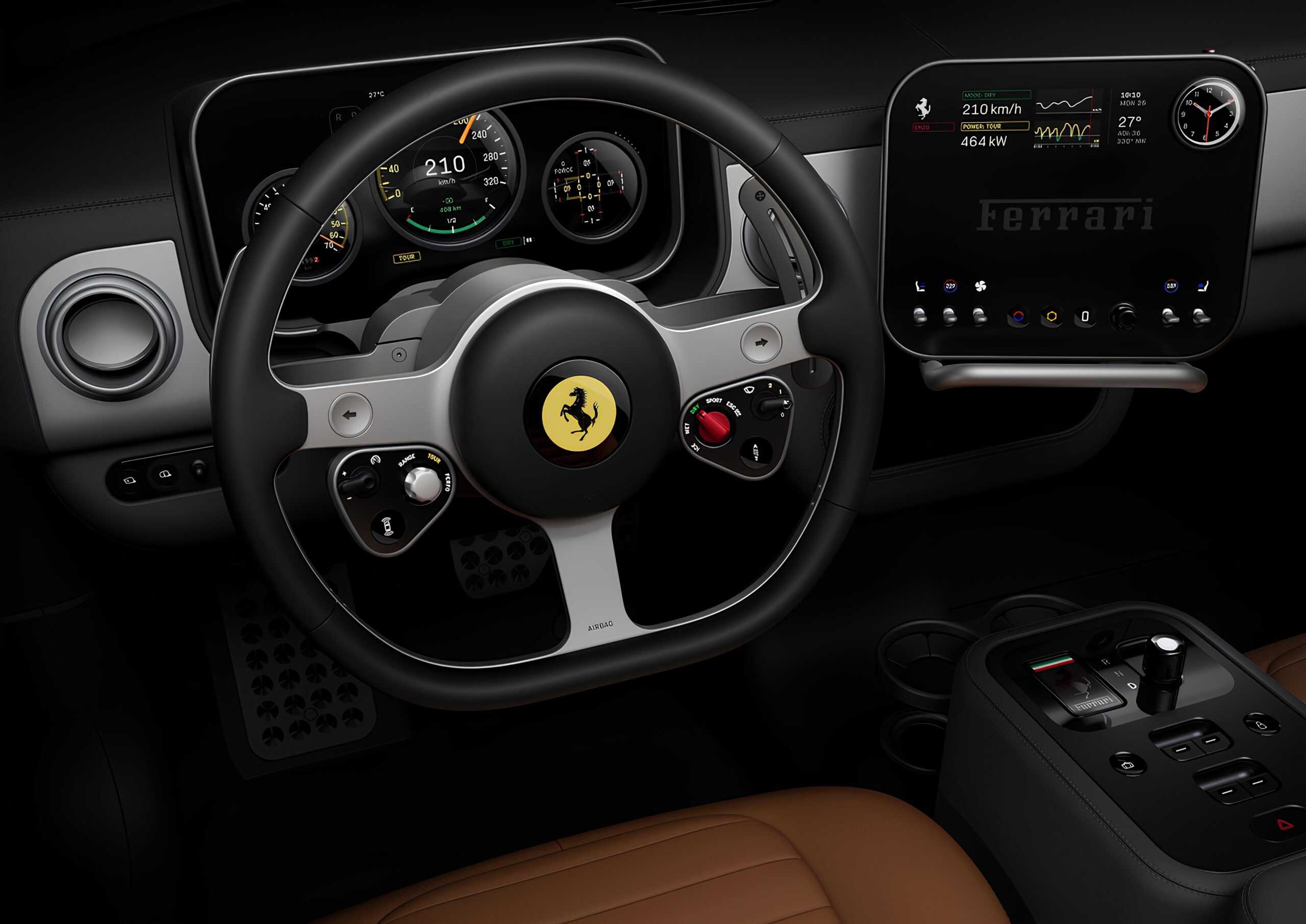
Ferrari’s first full-electric production model is no longer just a future idea. In February 2026, Ferrari officially announced the name Luce and revealed its interior and interface design, following the earlier technical presentation of what had been previewed as the Ferrari Elettrica. The car is built around a fully in-house electric architecture, and Ferrari has already published headline figures that place it firmly in the serious-performance category: more than 1,000 cv in boost mode, a top speed of 310 km/h, and a range of more than 530 km.
What makes the Luce more than a novelty is how much Ferrari seems to have obsessed over the fundamentals. The battery pack has an energy density of 195 Wh/kg and runs at roughly 800 V. Ferrari says the car uses two electric axles developed in-house, with the front axle alone delivering 210 kW and able to disconnect during gentle driving to help range. Weight distribution is quoted at 47:53, and Ferrari says the centre of gravity sits about 80 mm lower than in an equivalent combustion car. Those are not decorative statistics. They tell you Maranello wants this thing to drive like a Ferrari, not merely accelerate like an EV.
There is another interesting detail: Ferrari describes it as a model with two rows of seats and all-wheel drive, which makes it more naturally aligned with actual luxury use than a strict two-seat berlinetta. That opens the brief. The Luce can be written not as a compromise, but as Ferrari’s attempt to create a different sort of GT: quieter, more architectural, still fast enough to silence most debate.
Traditionalists will argue about sound because they always do. Ferrari, for its part, says it has focused on amplifying the natural character of the electric drivetrain rather than faking an old engine note. That is probably the right call. A first electric Ferrari did not need nostalgia pasted over it. It needed conviction. On paper, at least, the Luce has that.
Lamborghini Fenomeno
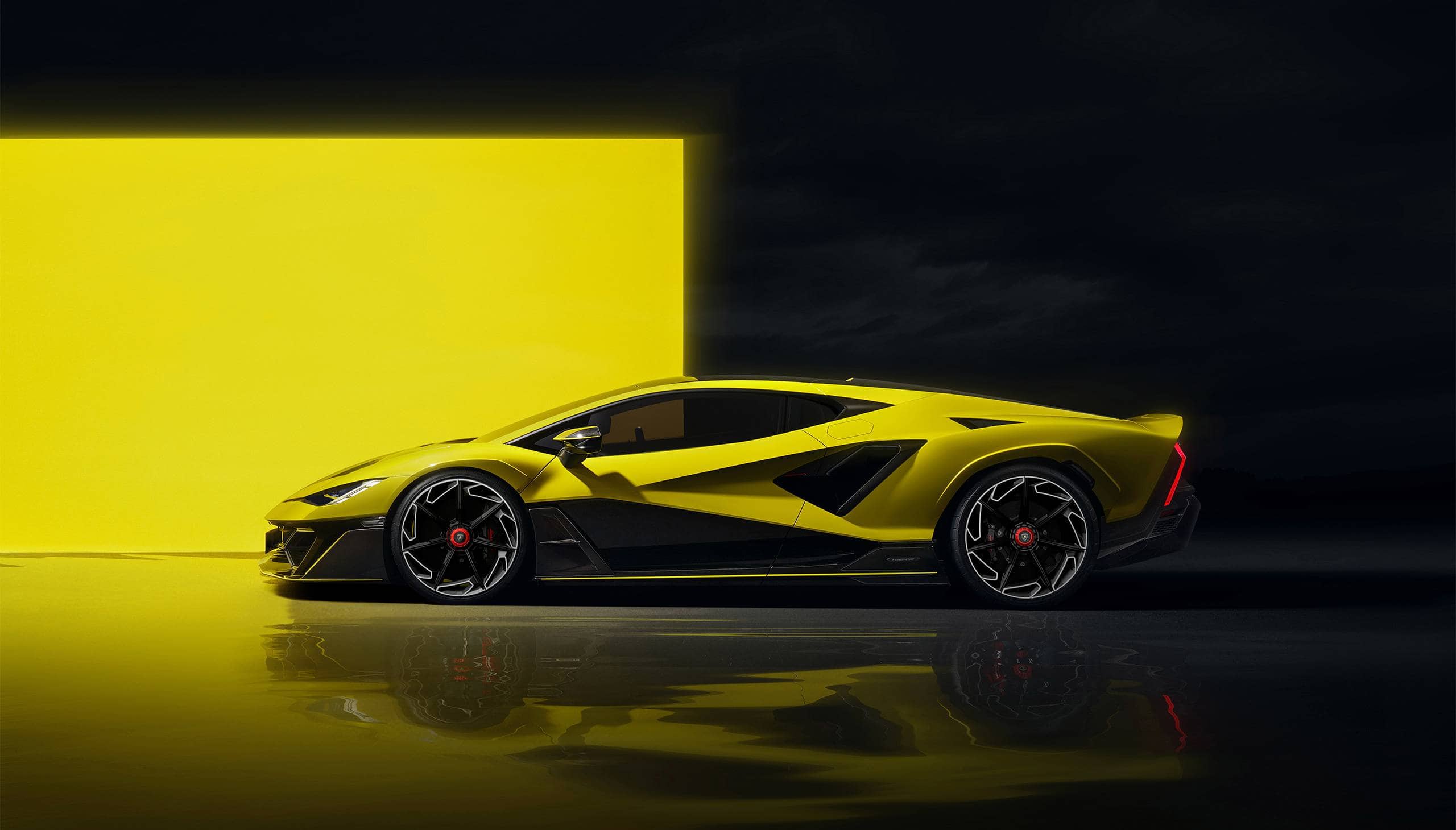
Then comes the least restrained car in the group. Lamborghini’s Fenomeno is a few-off in the brand’s established tradition of limited-run statements, but even by Sant’Agata standards, it sounds excessive in the best possible way. Officially, it is limited to 29 units, uses a 6.5-litre naturally aspirated V12 working with three electric motors, produces 1,080 bhp in total, reaches 100 km/h in 2.4 seconds, and goes beyond 350 km/h. Lamborghini calls it the most powerful V12 model it has ever created.
That alone is enough to justify its existence for certain buyers. Yet the Fenomeno is not only an engine-and-output story. Lamborghini positions it as a design manifesto, a car that takes the brand’s signature cues and pushes them harder. That usually means sharp geometry, visual aggression, and a sense that the object was designed to generate a crowd before it generates a lap time. Here, that seems entirely deliberate. It was unveiled at The Quail, which was not an accidental choice. Cars like this belong in places where collectors gather, cameras hover, and context is half the appeal.
Still, there is enough real mechanical substance underneath the theatre to keep a proper enthusiast interested. The V12 on its own produces 835 horses, with the three electric motors adding another 245 bhp. So even within the hybrid era, Lamborghini has managed to keep the emotional centre of the car where it should be: a naturally aspirated twelve-cylinder. That matters. Not because old habits die hard, but because some configurations still carry more magic than others.
The Real Divide
What these cars show is not that luxury motoring has become softer or more sanitised. It has become more varied. The Aston Martin is technical and exact. The Bentley is now leaner, more driver-led and more surprising than the badge usually allows. The GMA is for someone who still cares about lightness and revs. Ferrari is rewriting its own rulebook without pretending the old one never existed. Lamborghini, sensibly, has decided that outrageous still sells when done properly.
For the luxury petrolhead, that is the good news. There is still room for a titanium-exhaust Bentley, a screaming Cosworth V12, a 1,079 PS Aston hybrid, a 1,080 bhp Lamborghini few-off and a fully electric Ferrari that is trying very hard to feel like a real Ferrari. The formulas are different now. The appetite is not.
Read more – Lifestyle, Weddings and Wellness