

An exploration of Indian bridal sarees, tracing heritage weaves, regional traditions, and their elegant reinvention for modern weddings
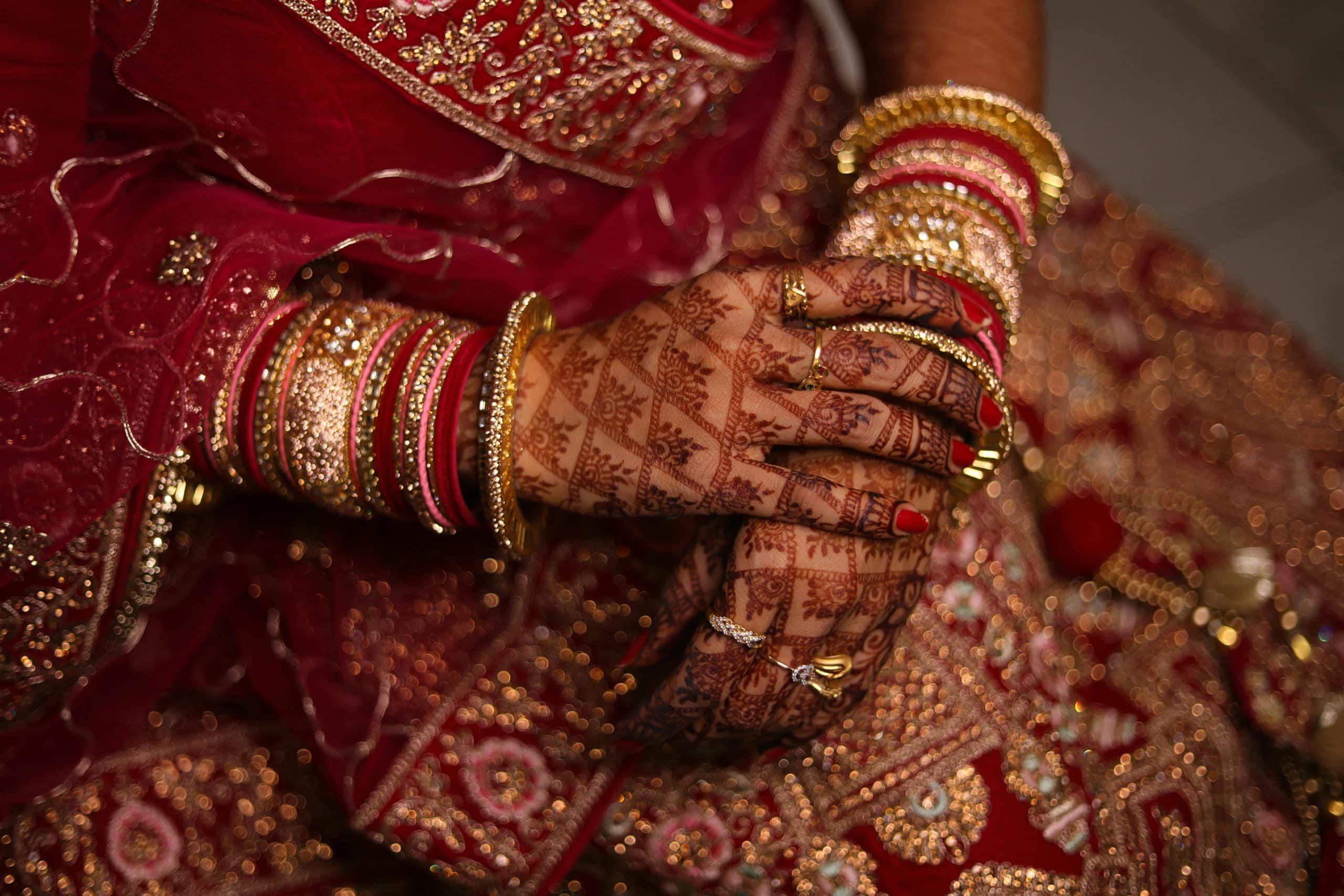
The Indian wedding, a culture transforming as we speak, yet even under its constant flux, is always true to itself. Fueled by cultural exchange and modernisation, this change has resulted in marriages that are the expression of values and beliefs of the families and the couple; the same is true of the wedding attire.
Even as the bride reinvents herself through various self expressions through each of the different ceremonies, the core wedding ceremony almost always sees the bride returning to the Saree. With a hundred saree styles and countless ways to wear them across the length and breadth of this land, the Saree creates a wide and vivid palette for anyone trying to look for their own expression of identity, memory and values.
Banarasi Silk Saree
Banarasi silk carries the weight and prestige shaped by centuries and finds its roots in Banaras (Varanasi), which has been a major weaving centre for centuries. The saree form that we recognise today matured in the 18th century under Mughal and Maratha patronage.
The Banarasi Silk Saree is known for metallic zari, and motifs such as kalga, bel, buti and buta. The saree is worked on Banaras looms according to the jacquard and older jala traditions. The Saree also featuresMughal-inspired floral motifs, meena work, which is also one of the defining traits of this art form. The craft is also a holder of the GI recognition.
The modern bridal wardrobe sees them being adapted for movement and styling, with birds increasingly choosing organza and tissue Banarasis, pairing them with sharper blouses, belts and softer drapes for the long photograph-heavy functions. While the entire form remains relatively unchanged, ivories, muted golds and jewel tones are becoming more popular.
Designers are shaping this evolution in distinct ways. Sabyasachi keeps Banarasi heirloom-led, seen in Anushka Sharma’s red reception saree woven by artisans in Benares. Sanjay Garg’s Raw Mango reimagines Banarasi through collections such as Three Shuttle, drawing on South Indian temple architecture references and an interlocking weft / three-shuttle weaving approach, while the label’s broader Varanasi brocade work also engages deeply with the Kadwa technique. Ekaya Banaras modernises the weave through handwoven pre-draped formats.
Kanjeevaram (Kanjivaram) Silk Saree
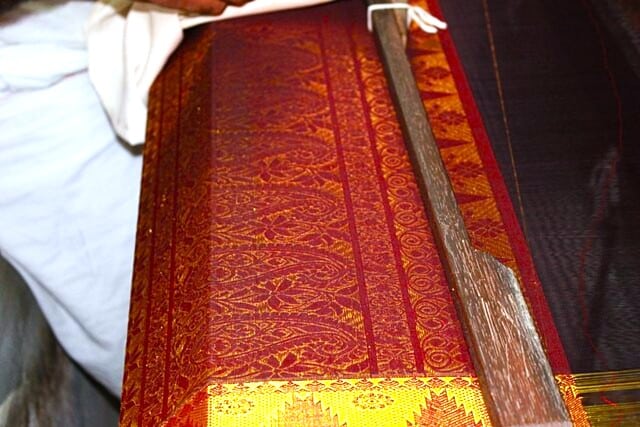
Kanjivaram, often described as the queen of silks, finds its roots in Kanchipuram, Tamil Nadu. This tradition has lived through several dynasties, stretching across Pallava, Chola and Vijayanagara eras. Kanjeevaram Silk is prized for its lustre, weight and durability. This tradition earned its GI recognition, reaffirming its identity as a protected craft tradition.
The Kanjeevaram Saree is made in pit looms using mulberry silk and zari, with the signature korvai (contrast border) and petni (contrast pallu) techniques. Temple-inspired motifs are worn when attending sacred rituals, and rich borders and deep jewel tones are used in wedding ceremonies. The temple motifs, it must be said has over time become synonymous with the Kanjeevaram Saree.
In the modern bridal world, designers endeavour to adapt this grand saree without diluting its gravitas. Tarun Tahiliani reworks it into pre-draped “concept sarees” and embellished versions paired with corsets, bringing movement and couture ease to a classical weave. Manish Malhotra uses Kanchi Pattu silk in some saree sets with borders and embroidered corsets for a sharper silhouette. Gaurang Shah, through a textile-revival model, keeps pushing bold design concepts through direct collaborations with artisans. Sabyasachi’s take on Kanjeevaram preserves Traditional weaving types while making the sarees lighter and giving a softer vintage palette and styling.
Chanderi
Chanderi is a light yet ceremonial saree tradition that has gained prominence over the years. Woven in Madhya Pradesh, this textile carries a long history and can be traced back to the 11th century, with the saree itself being more of a product of the medieval period and court patronages. Chanderi was prized for its refined, elegant character, which is provided by its delicate surface and translucent sheen. Chanderi is also recognised today as a GI-tagged Indian handloom tradition.
Traditionally, it evolved from ultra-fine cottons into the now-iconic silk-cotton blend, creating that famous airy drape often described as “woven air” Zari borders, butis, and motifs inspired by architecture and nature give it a ceremonial character, while the fabric remains comfortable enough for long wedding rituals, haldi gatherings, and daytime celebrations.
In the modern bridal world, Chanderi has been brilliantly reworked by many designers. Sanjay Garg’s Raw Mango worked on Chanderi by introducing new colour palettes and a softer finishing, and adding contemporary motifs. Anita Dongre has spoken about giving Chanderi a more global, contemporary silhouette, using it beyond the saree in separates and jackets. Ritu Kumar’s occasionwear line also reflects this shift, with embroidered pre-draped Chanderi sarees that bring bridal ease, movement, and styling flexibility into the tradition.
Linen Saree
Linen Bridal sarees are a disruptor to popular notions of a wedding saree. Made from flax, one of the world’s oldest textile fibres, linen has long been valued for strength, breathability, and its naturally cool feel, which is why it translates so beautifully into Indian celebration dressing, especially day functions and warmer climates. Its rise in saree form is more recent, shaped by contemporary Indian design rather than court tradition, and it is slowly rising in popularity as a choice for a wedding saree due to its nature.
In modern bridal styling, linen is being adapted through finish and surface detail rather than heavy structure. Linen and linen-blends now appear with zari borders, gota kinari, appliqué, and print layering, which makes the fabric more suited to ceremonies without sacrificing any of its characteristic ease.
Jamdani Saree
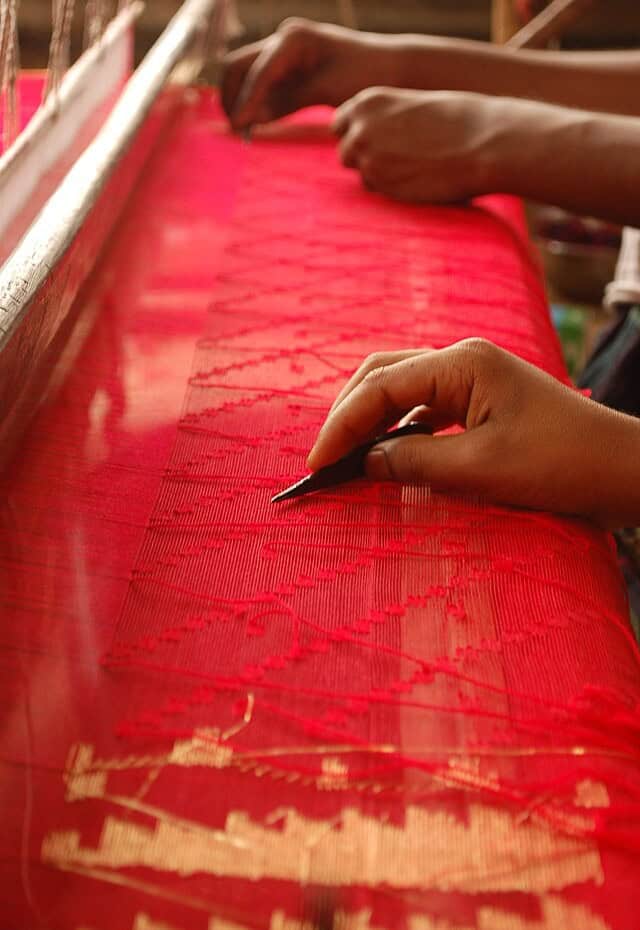
Jamdani is prized for its lightness and handwoven motifs that appear to float on ultra fine the fabric. It finds its roots in the Bengal region, with documented references to fine patterned muslins dating back to antiquity, and the craft underwent further refinement and under Mughal patronage between the 14th and 18th centuries. Over time, Jamdani has migrated and evolved into saree traditions in Bengal and beyond, including Tangail in West Bengal and Uppada Jamdani in Andhra Pradesh. The Jamdani tradition has received UNESCO recognition as an intangible heritage, further cementing its prestige in the textile world.
Jamdani is made by weaving motifs by hand, inserting extra threads individually into the warp, row by row. This slow and arduous process, which could take months, gives Jamdani its signature floral, geometric, and lattice patterns. Historically associated with fine muslin, today Jamdani is also woven in cotton, silk, and blends, with festive versions incorporating zari for wedding-ready sparkle. That shift has made it especially relevant for modern bridal wardrobes, where brides want craft depth with a lighter drape.
In the modern design space, Jamdani is being seeing new adaptations to colour, silhouette, and styling. Designers like Gaurang Shah engage with it while preserving traditional hand techniques, while introducing contemporary colour combinations and design innovations, including art-led narrative sarees and contemporary styling choices. Raw Mango (Sanjay Garg) engages with Bengali weaving by using cleaner compositions and modern palettes, while also retailing wedding-focused saree edits that position heritage weaves for today’s celebrations.
Paithani Saree
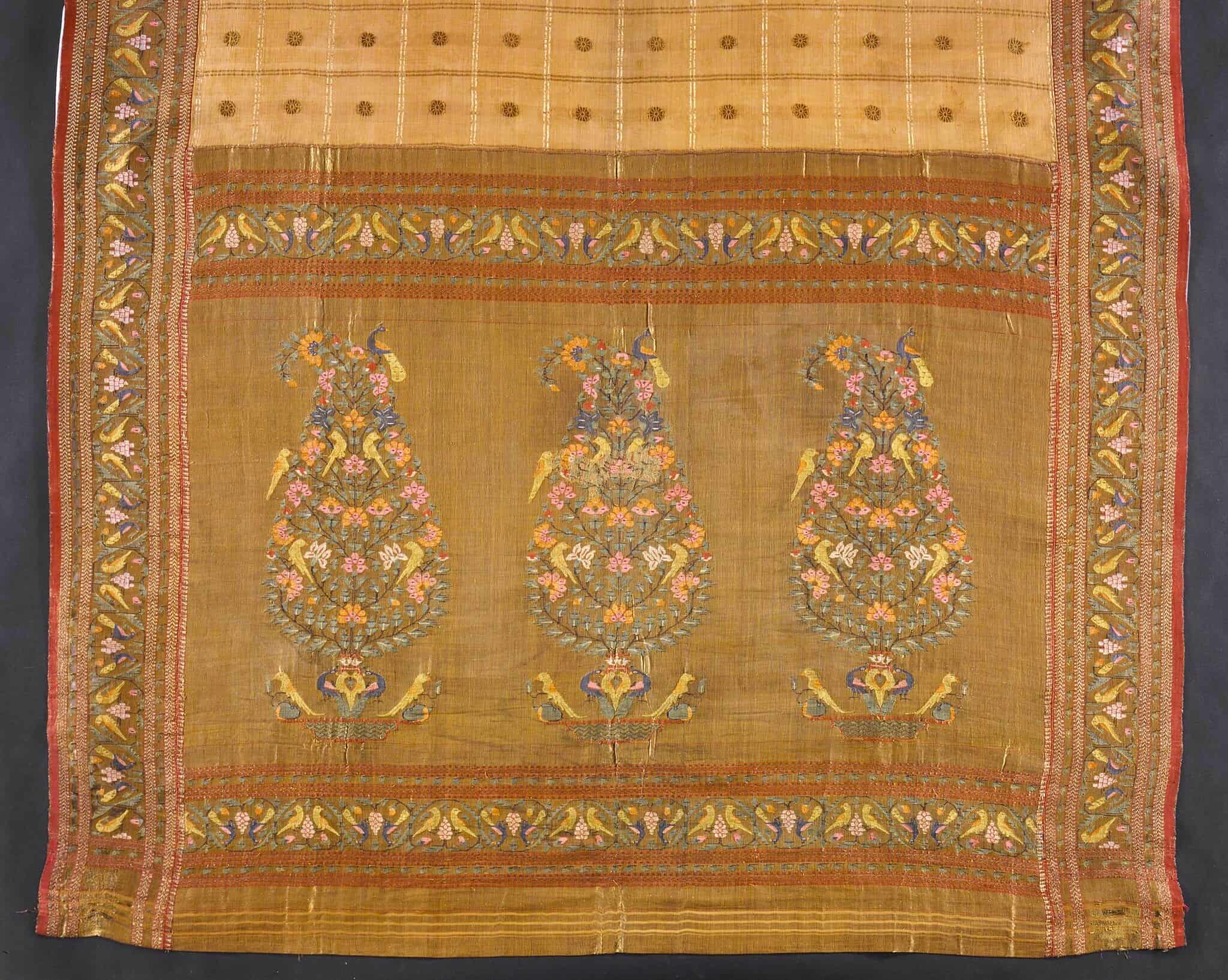
The Paithani saree boasts a legacy shaped by royal patronage stretching across the Satavahana, Peshwa, Mughal, and Nizam periods of Maharashtra. Traditionally woven in silk with zari, it can be identified by its characteristic ornate kath (border) and padar (pallu), often featuring peacocks, florals, and foliage.
Paithani is also known for its dense, jewel-like motifs, and, in many handloom pieces, it could even present a near-identical appearance on both sides.
Modern designers have worked on Paithani in many ways. Gaurang Shah reworked Paithani by enlarging borders, reviving traditional motifs, and using bolder colours to make the saree read as a bridal piece. Asha Gautam worked on Paithani by experimenting with newer bridal expressions, motif placement, borders, and fabric combinations to make a lighter and more versatile saree without losing its heirloom character. Abu Jani Sandeep Khosla worked on Paithani through styling-led couture design, keeping the handwoven drape traditional but pairing it with embellished blouses and detailing that feels more contemporary.
Bandhani
Bandhani is one of the oldest dieing tradition in India. The craft associated with Gujarat and Rajasthan, especially Jamnagar, Kutch and Jaipur, where artisans create patterns by tightly tying tiny points on fabric before dyeing it. In western Indian wedding culture, Bandhani and related forms have long been linked with ceremonial wear.
To adapt it for the contemporary bridal wardrobe, designers are using lighter silks, georgettes and blended fabrics, designing the saree for easier drape and freedom, providing for practicality, long ceremonies and photoshoots. Pallets have expanded too: alongside classic reds, maroons and pinks, there is strong demand for browns, pastels, black accents and metallic-finished looks.
Designers are engaging with this tradition in many ways. Some designers, like Anita Dongre has extended Bandhani into contemporary formats, including ready-to-wear and pre-draped silhouettes. Ritu Kumar’s approach reinterprets traditional “bandhini” for contemporary wardrobes, preserving the craft’s identity while refreshing its visual language.
Read More: Latest