

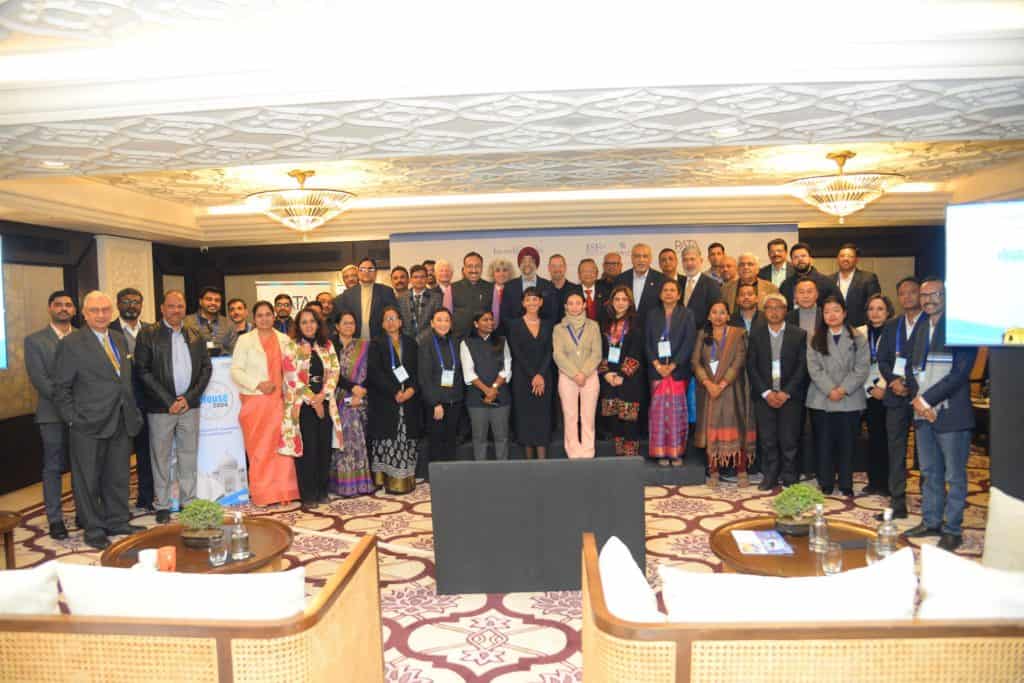
The fourth edition of the PATA India Tourism PowerHouse held on 8th & 9th January 2026 at New Delhi, and delivered under the aegis of Ministry of Tourism & Inder Sharma Foundation, brought together senior government leaders, global experts and industry stakeholders in New Delhi to shape a forward-looking roadmap for India’s tourism growth
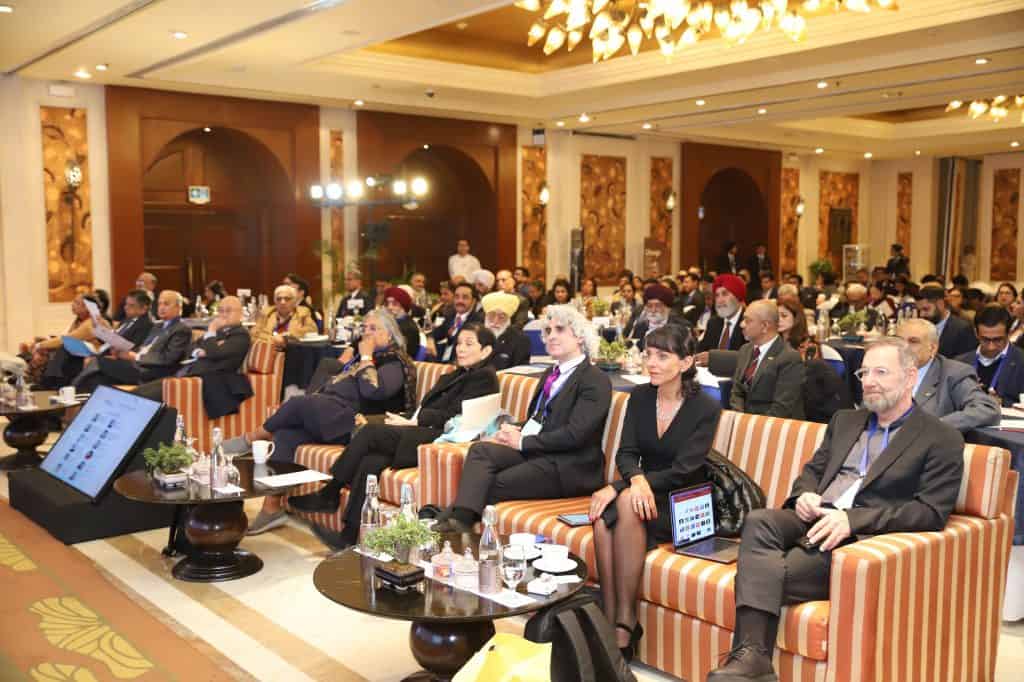
Hosted by the PATA India Chapter at Hotel ITC Maurya, the full-day forum was supported by the Ministry of Tourism and the Inder Sharma Foundation, under the theme Accelerating Tourism For Tomorrow Powered by Data and Knowledge.
The forum was led by Dr Suman Billa, Additional Secretary and Director General Tourism, Government of India, along with Noor Hamid, CEO of Pacific Asia Travel Association, and the PATA India Executive Committee.
Welcoming delegates, Vikram Madhok, Vice Chairman PATA India, highlighted India’s strong inbound recovery, noting that international arrivals have largely returned to pre-pandemic levels, driven by markets such as the US, UK, Australia and Asia Pacific. He shared that India recorded over 20 million international arrivals in 2024, generating USD 35 billion in foreign exchange and supporting 84 million jobs, while stressing that aviation expansion and new airports remain critical to sustaining momentum.
Addressing the gathering, Arjun Sharma of the Inder Sharma Foundation said that if tourism has the power to connect humanity, institutions must help guide that power with wisdom and responsibility.
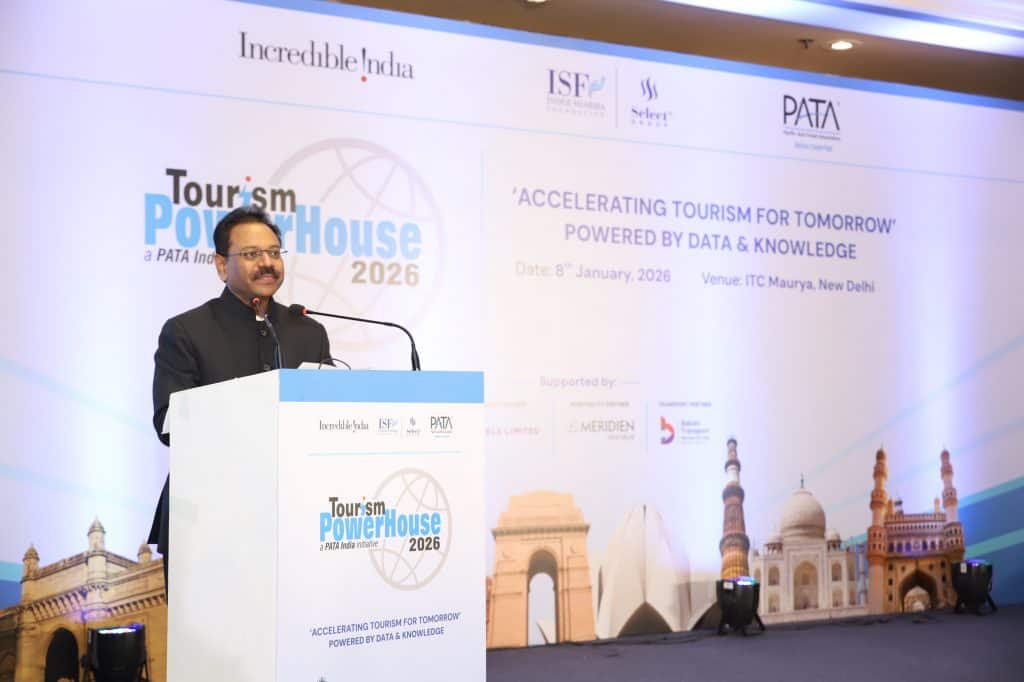
In his keynote address, Dr Suman Billa, Additional Secretary and DG Tourism, underlined the need for government and industry to work in lockstep to position tourism as India’s national growth multiplier. He stressed the importance of tapping the digital traveller, institutionalising Indian cities as global MICE hubs and shifting focus from volume to value. “India’s tourism challenge is not demand but conversion,” he said, adding that despite massive infrastructure growth, tourism contributes just 5.5 per cent to GDP. He called for stronger destination management, AI adoption and sustainability-led growth.
Speaking on India’s global positioning, PATA CEO Noor Hamid said India is not just a destination but a collection of layered and emotional experiences. He urged the industry to move beyond the traditional Incredible India narrative towards sustainable, community-led tourism that creates long-term value.
Global market insights were shared by Prof. Haiyan Song, Chair of the School of Hotel and Tourism Management at Hong Kong Polytechnic University, who said India’s outbound market will remain stable and resilient, with Thailand, the US and Singapore continuing to lead demand. He noted that India’s outbound growth follows a stage-like trajectory driven by first-time travellers, unlike the mature and frequency-led growth seen in Southeast Asia. He also highlighted Sri Lanka’s rise as a fast-growing destination due to proximity, pricing and targeted outreach.
On the power of intelligence-led decision making, Olivier Ponti, Vice President Intelligence and Marketing at ForwardKeys part of Amadeus, stressed that India’s next tourism leap must be driven by real-time data rather than instinct. He pointed out that limited direct connectivity from Europe and Oceania is constraining long-haul inbound growth and suggested twin-destination itineraries and hub partnerships as practical solutions.
Calling for a rethink on growth metrics, Alan Merschen, Founder of MMGY and The Sigmund Project, said tourism growth does not need more seats but one extra day per visitor, which delivers higher returns with lower environmental impact.
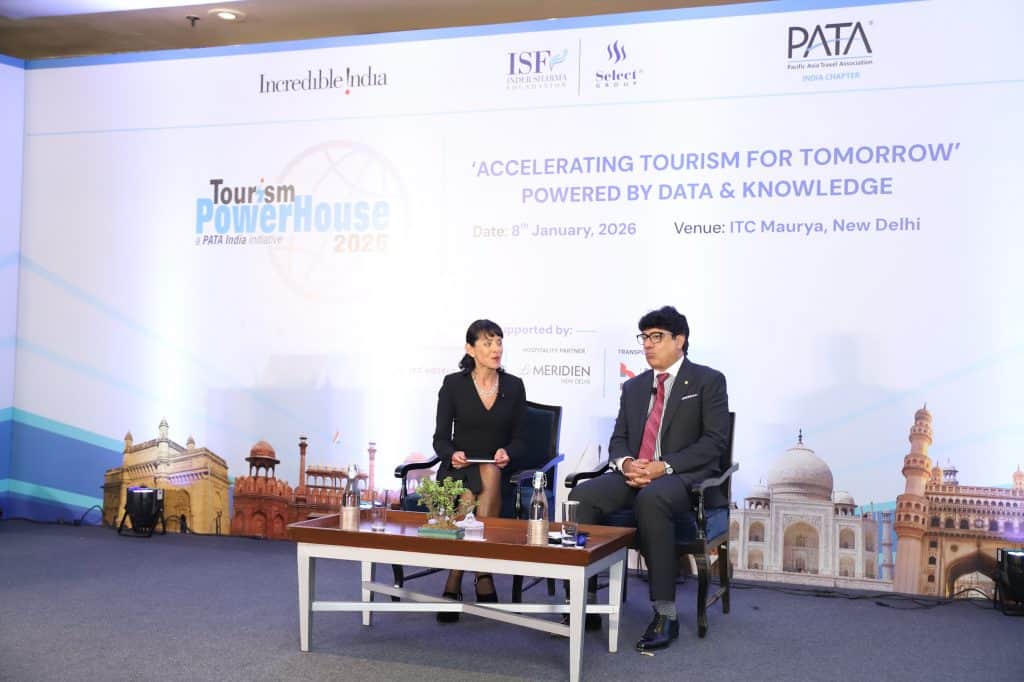
During a fireside chat, Puneet Chhatwal, MD and CEO of Indian Hotels Company and Chairman of FAITH, described tourism as India’s fastest soft-power tool. He said no other sector builds the same emotional connect globally as tourism and hospitality.
On sustainability, Ludwig Rieder, Co Founder and Chairman of Asia Pacific Projects, stressed that ESG is no longer optional. Access to markets, capital and partnerships, he said, will increasingly depend on transparent governance, sustainability and local talent development.
The session on MICE highlighted India’s capability to host large-scale global events, with S Harikishore, Chairman of the India Convention Promotion Bureau & Joint Secretary Ministry of Tourism, pointing to the G20 as proof of capacity and calling for sustained global promotion and structured bidding supported by strong public-private collaboration.
On crisis management, Anita Mendiratta, Special Advisor to the Secretary General of UN Tourism, said crises impact not just tourism operations but a nation’s identity. She emphasised that clarity, empathy, calm communication and a single credible voice are essential for effective recovery.
Adding a global perspective on seasonality, Narzalina Lim, Former Tourism Secretary of the Philippines, spoke on developing India’s year-round appeal through product diversification and strategic promotion.
Looking ahead, Matt Gibson, CEO of UpTHINK, said India is exceptionally well placed for AI-driven travel growth, citing high consumer confidence and strong digital infrastructure.
Concluding the PowerHouse, Dr Suman Billa summed up the day’s deliberations by calling for smarter data use, sustainability-first thinking, AI adoption and deeper partnerships to shape India’s tourism future. The success of the fourth edition was underscored by Dr Suman Billa, who noted that the Tourism PowerHouse has evolved into a platform of real strategic value for India’s tourism ecosystem. Reflecting on the depth of dialogue and quality of participation, he said the forum should now be institutionalised as an annual engagement, bringing government, global experts and industry leaders together every year to review progress, recalibrate priorities and collectively steer India’s tourism growth agenda.
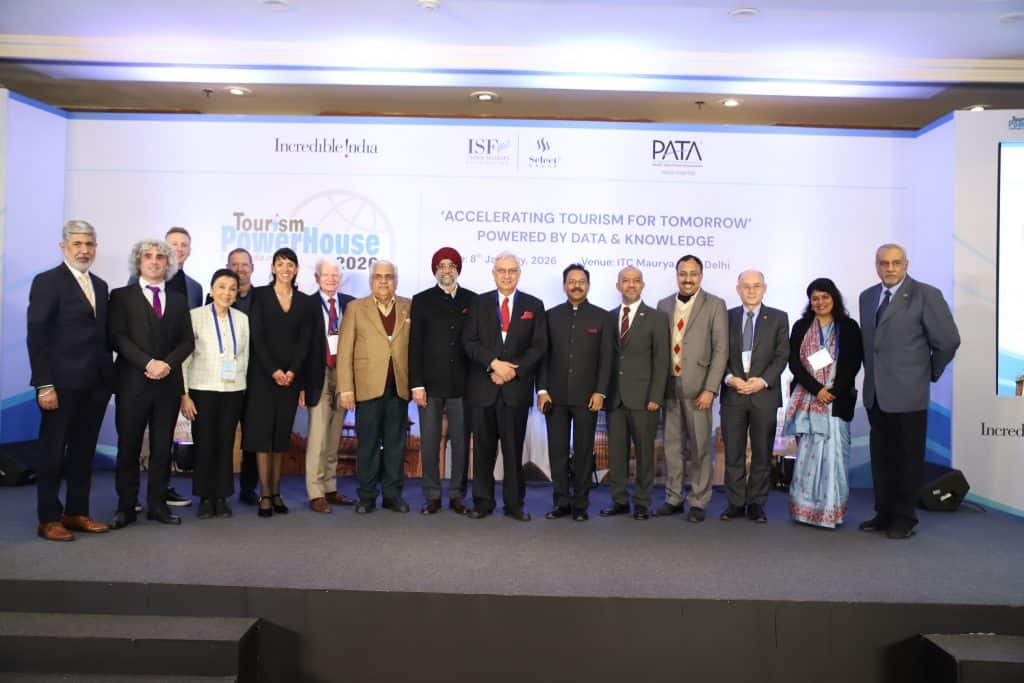
The fourth PATA India Tourism PowerHouse concluded with a clear message. Big ideas, honest insights and decisive action will define how India accelerates its journey towards becoming a globally competitive, high-value tourism destination.
PATA India Tourism PowerHouse 2026 Day 2 equips states with global strategies for competitive tourism growth
The second day of the fourth edition of the PATA India Tourism PowerHouse 2026 gathered representatives from 12 Indian states and industry associations at Taj Palace, New Delhi, to gain actionable insights on building global competitiveness. Hosted by the PATA India Chapter under the theme ‘Accelerating Tourism For Tomorrow’ Powered by Data and Knowledge, the forum featured in-depth discussions that helped states understand global best practices and re-examine their own strategies with a fresh, forward-looking perspective.
Runeep Sangha, Executive Director, PATA India, delivered the welcome address, setting the context for a day focused on state-level strategy, execution and collaboration.
Anita Mendiratta, Special Advisor to Secretary General, UN Tourism, then moderated a one-on-one session with Dr. Suman Billa, IAS, Additional Secretary & DG Tourism, Government of India, who identified supply constraints as India’s core tourism challenge and underlined the need for city-level MICE promotional bureaus to unlock destination potential. He called for policy-enabled investments and centre–state–industry convergence to double tourism’s GDP share from 5.5% to 10%, emphasising that strengthening room capacity, easing project clearances and aligning campaigns between the Centre and states would be critical to realising this ambition.
Mendiratta went on to moderate the centerpiece panel ‘Building Global Competitiveness’ where Olivier Ponti, Vice President Intelligence Marketing – ForwardKeys an Amadeus Company, Madrid, presented on ‘Managing Data to Win in the Marketplace and Wooing the New Age Traveller’. He urged destinations to prioritise real-time data over instinct, highlighting air connectivity gaps such as 57% of Europeans transiting and low-season US opportunities revealed through algorithms, stating “if people can’t get to your destinations, they will not come.” He further added that destinations should track only those indicators that directly inform decisions and actions, building dashboards layer by layer so that data remains meaningful and actionable rather than overwhelming teams on the ground.
Next speaker of the day at PATA India Tourism PowerHouse 2026 was Alan Merschen, Founder – MMGY and The Sigmund Project, USA, who addressed ‘Destination Market Positioning Capturing Market Share’, advocating a shift from seat-focused metrics to longer visitor stays for higher yields and lower environmental impact while stressing resilience through diverse visitor profiles amid rapidly changing trends.
He stressed that using the Incredible India brand alongside state or city messaging helps global travellers quickly place the destination in their mental map. “People remember experiences, not states,” he noted, citing examples like Bali and the Grand Canyon to illustrate how powerful experience-led branding can be. He also added that it was important to time your campaigns to ensure that people would like to travel to your destination now, reinforcing the need to align marketing calendars with booking windows in key source markets.
Ludwig Rieder, Co-Founder & Chairman – Asia Pacific Projects Inc., Philippines, at PATA India Tourism PowerHouse 2026, spoke on ‘How Environment Sustainable Governance Rewards Destinations’, positioning ESG as essential rather than optional for accessing markets, capital, and partnerships. He underlined how transparent governance, robust compliance, strong local talent development and community livelihood ecosystems beyond direct jobs are increasingly becoming prerequisites for investors and global partners evaluating destinations, thereby making responsible tourism a competitive advantage rather than a cost.
Noor A. Hamid, CEO, PATA, covered ‘Association Partnerships Catalysts for India’s Tourism Growth Potential’. He emphasised PATA’s role in delivering sustainable, community-led tourism through layered emotional experiences and strategic global collaborations, encouraging states and industry bodies to leverage association networks for knowledge exchange, joint marketing and access to emerging markets. By framing India as a collection of distinctive yet connected experiences, he underlined the opportunity for states to work together rather than compete in isolation.
The panellists took questions from the audience and shared their views, guiding the states towards practical, context-specific solutions on issues ranging from seasonality and connectivity to positioning and product diversification. The interactive exchanges ensured that the day’s insights could be translated into on-ground action plans tailored to each state’s realities and priorities.
The forum concluded with wrap-up remarks from S. Harikishore, Joint Secretary, Ministry of Tourism, who said we need to accelerate rather than just push, highlighting the G20’s success in demonstrating India’s capability for both large and small events across diverse locations. “There are lots of low hanging fruits. We could do large meetings… smaller locations. It’s not necessary that we must only look at New Delhi or Hyderabad,” he noted, calling for city bureau strategies and public-private collaboration to capture accessible opportunities.
Jatinder Singh Taneja, EC Member, PATA India Chapter, gave the vote of thanks, acknowledging the Ministry of Tourism, Inder Sharma Foundation, speakers, state tourism officials and industry associations for their active participation.
Over two intensive days, the PATA India Tourism PowerHouse 2026 has established itself as India’s premier platform uniting government, global experts and industry stakeholders to chart a data-driven roadmap for doubling tourism’s economic contribution.
By fostering centre-state synergy, equipping delegates with cutting-edge insights on connectivity, positioning, sustainability and partnerships, and catalysing actionable commitments, the forum delivered on its promise of accelerating tourism growth through knowledge-powered strategies that position every Indian state as a complementary contributor to the Incredible India narrative. State representatives left with clear priorities, collaborative frameworks and global benchmarks to transform insights into measurable progress, reinforcing tourism as India’s multiplier for jobs, livelihoods and global soft power.
Read more: News