

Unique Indian wedding rituals and global parallels that reveal symbols of transition, play, protection, duty, and community
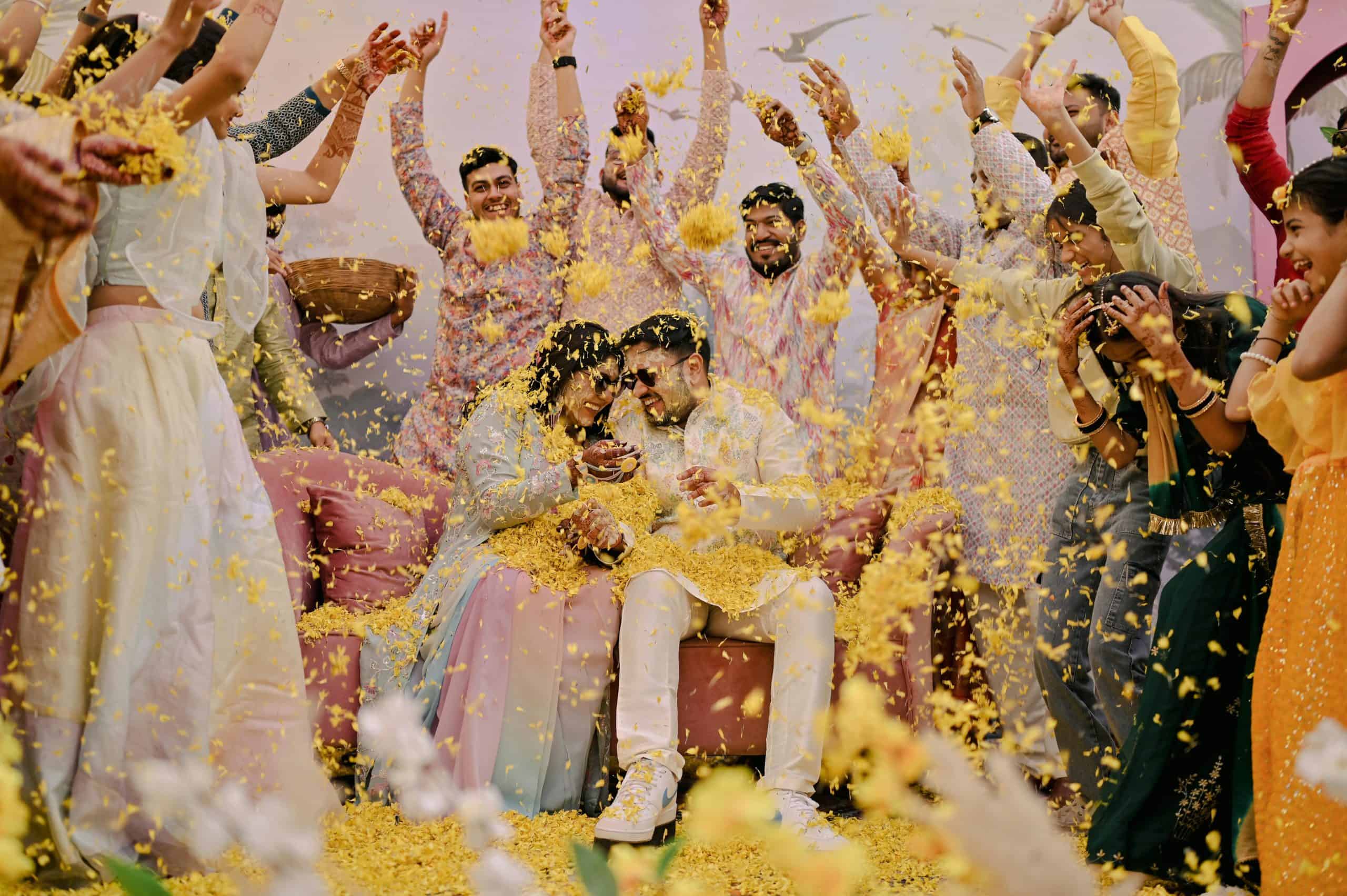
Wedding rituals echo the ideas of the past into the present. Many customs that linger from the past have been reinterpreted to be playful and fun, divested from the culture that birthed them. They trace their roots back to the Puranas and ancient folklore, defining the experience of Indian wedding ceremonies. A lot of them are symbolic and ritualistic, adding a playful charm to the wedding ceremony.
Many of these traditions find kinship with similar customs across the world, similar motifs and philosophies, and attitudes exist across the globe for eyes keen enough to find them. Some share similar narratives, others share motifs and symbolism, creating a vast network of shared ideas and practices between cultures.
Kashi Yatra
The Kashi yatra is a common wedding narrative across India in Brahmin weddings. The wedding rituals follow the narrative where the groom renounces worldly life and starts a pilgrimage to Kashi in search of spiritual fulfilment.
The bride’s father stops him and persuades him to return, reminding him that marriage is not a lesser path, that household life, duty, and family responsibility are also sacred, and Grahastya comes before Sanyas in the path to fulfilment. The groom accepts domestic life, and the wedding proceeds.
Across the world, the same pattern can be seen in different forms: in some Nepali wedding lore, a groom may don saffron and announce a Himalayan retreat before a purohit and family elders draw him back with the language of grihastha dharma. Similar motifs can be found in Sri Lankan Buddhist marriages and farther from home in some African marriage traditions.
Nalangu and Playful Rituals
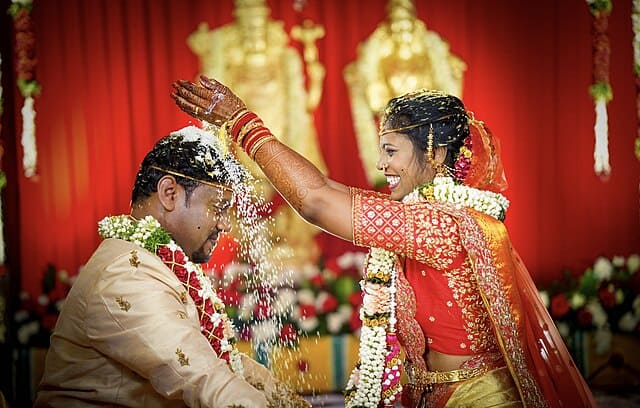
Nalangu, a tradition observed in some South Indian marriages, arrives after the solemnity of vows, mantras, and family rituals. The rituals of Nalangu are ones that can be playful, noisy, and deeply social. It is a soft landing, something many families of the day have turned into something playful.
One of these rituals includes a ring being dropped into a wide bowl or brass vessel filled with milk, turmeric water, or petals, and the bride and groom search for it with one hand. Some others include breaking appalams (a food item similar to pappad), where the bride and groom take turns breaking them over each other. Another ritual includes snatching as many Betal leaves as possible from a pile between them.
One could easily see how these rituals have been reinterpreted to be playful and lighthearted over the years. Outside India, similar post-wedding play appears in different forms where rituals from the past have lingered on, add leivety to the marriage ritual as a whole.
Similar game-like rituals can be found in other parts of the world as well, rituals like yüzük saklama / fincanda yüzük revolves around hiding a ring under cups or under the hands of people involved and guessing where it is hidden. Likewise, in parts of Scotland and Northern Ireland, some prewedding traditions include covering the bride and groom in messy and sticky substances in front of the family and friends, sometimes even driven in the back of an open-back truck.
Kalaratri
Kalaratri is a Bengali Hindu post-wedding custom in which the newlyweds spend their first night apart. In some families, these traditions are stricter, and many observe this day after the wedding reception, the ritual perhaps slowly moving into something more symbolic. Either way, the idea remains the same: the first night is treated as a moment of pause, not immediate union.
Often linked to the Behula-Lakhindar story in the Manasa Mangal tradition, where the wedding night is marked by danger and loss, Kalaratri absorbed this sense of vulnerability and evolved into a form of ritual protection. The “dark night” became not a denial of intimacy, but a guarded threshold. The same motif of separation can be seen in many cultures across the world, though the practice and its intention and symbolic meaning may differ from culture to culture.
In Scottish folk tradition, the so-called “barn sleep” places the couple in a barn or stable rather than a comfortable home setting, with water sprinkled for luck and a rustic period of adjustment before domestic life fully begins. In Iran and Greece, the emphasis shifts toward protection, with evil-eye precautions, amulets, and sensory rituals used to guard the newlyweds during a period seen as spiritually sensitive.
Breaking Pots and Obstacles
In some Gujarati, Sindhi and Ismaili wedding customs, wedding rituals include breaking a clay pot, earthen vessel, or ritual plate during the marriage sequence. Sometimes the groom breaks it at the entrance; in other cases, the family performs the act together.
The break may represent removing obstacles, warding off negativity, strength, or inviting good fortune. In some traditions, the breaking of the pot is thought to release blessings that the contents of the pot represent.
Similar motifs can be spotted across the world. In the German and Polish Polterabend, held on the eve of the wedding, guests gather to smash porcelain, crockery, and earthenware, and the couple then clean up the shards together. This custom is linked to luck and read as an early test of teamwork. In Greek celebrations, plate breaking is tied to dancing and happiness, with smashing used as an expression of joy, abundance, and, in many interpretations, a way of driving away ill fortune; while the practice is less common in formal weddings today, it still survives symbolically and in staged forms, sometimes with safer plaster plates.
Mehandi
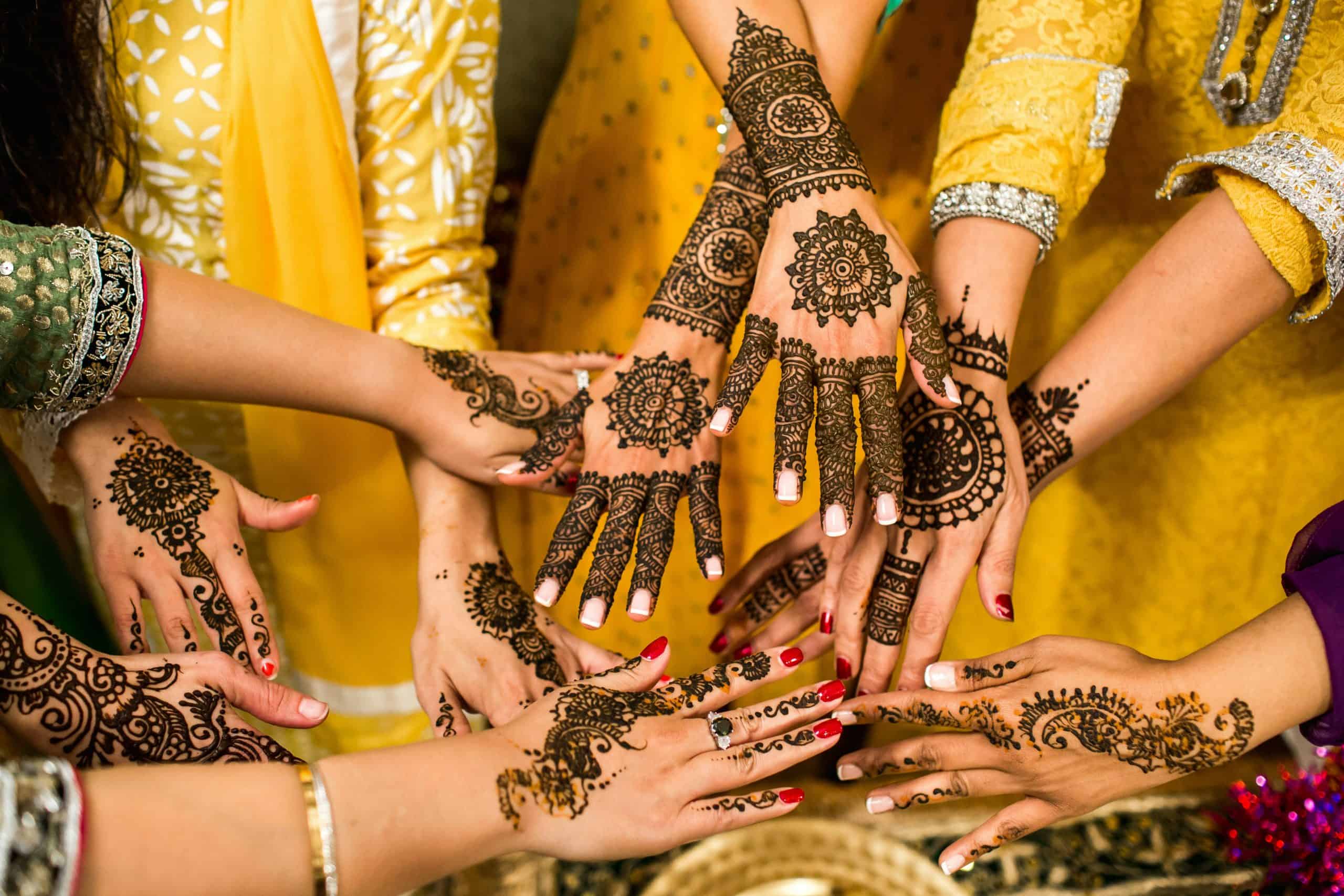
Mehandi is perhaps a pre-wedding ritual that could be called quintessentially Indian, a practice that has been adopted across various states and communities and can be traced back to truly ancient times, where records and references turn blurry. This is a ritual that truly needs no introduction.
Henna comes from Lawsonia inermis, a shrub or small tree whose leaves yield the reddish-brown dye used for temporary skin art and hair colouring. The plant creates a stain that deepens over time.
As Indian as Mehandi is to us, the traditions in India sit in a wider culture of Henna also found in Turkey, Yemen, Morocco, Sudan, Egypt and more, where henna marks life-cycle moments such as marriage. Rituals around Henna is often accompanied by songs, chants, proverbs, and other oral expressions. In Persian wedding culture, hanā bandān is a pre-wedding henna night that may include music and songs, with the bride at the center of a ritualized gathering that signals transition into married life. Across these traditions, the recurring meanings are joy, auspiciousness, protection, and blessing for a vulnerable threshold
It is very easy to treat Mehandi as merely decorative, since it is easily photogenic and the ceremony is widely used in many wedding photoshoots. Across cultures, henna is a symbol of joy and celebration and is associated with health, fertility, and security. Some communities also believe that it can ward off evil eye and negativity, especially during auspicious occasions.
The No-Invitation Wedding
This is perhaps one of the most unique traditions of them all, observed by the Koya community, something almost unimaginable to most of us. A Marriage where no one is invited! Here, the news of the wedding spread organically through friend and kinship groups until the wedding drums invite people over to the grove where the wedding is supposed to happen. Dhemsa dance circles form, and people stream in from neighbouring hamlets, turning the event into a collective celebration rather than a private family affair.
By night, the bride is brought in procession, local liquor is shared, and simple vermilion rites are performed in the open. The Koya Pendul wedding is less an invitation-based ceremony and more a community assembly for all who arrive. It is a reminder that ceremony does not always depend on formality. In this system, the wedding is not a private announcement with a guest list. It is a social event that the community is meant to hear, join, and carry forward.
Conclusion
Looking through these customs spread across time and cultures, it becomes more and more clear how weddings are not just about union, but it is about the transition. The ritual lies at the threshold of different stages of life, and many rituals around marriage reflect the same, taking on a protective and auspicious note.
With time, many of these rituals have lost contact with the times and practices that birthed them, but still carry on with newer meanings and associations. Serious rituals become playful, symbols change, so do the people who engage in these rituals, but many of these rituals carry on, even if maybe altered with time and place. Even if similar motifs can be found in wedding ceremonies across the world, it does not mean that they have similar meanings and symbols.
Seen alongside similar traditions across the world, these traditions reveal that though the culture may differ in objects, stories, and ceremony, they often return to the same human instinct: to ritualise change so that joy, fear, duty, and hope can all be held at once. In that sense, wedding customs are not just relics of the past but also living maps of how societies imagine love, family, and the work of building a life together.
Read More: Latest