

Rare Birkins, numbered cabin cases, archival revivals and beautifully engineered carry-on luggage are turning the art of travelling light into a powerful expression of taste, access and modern privilege
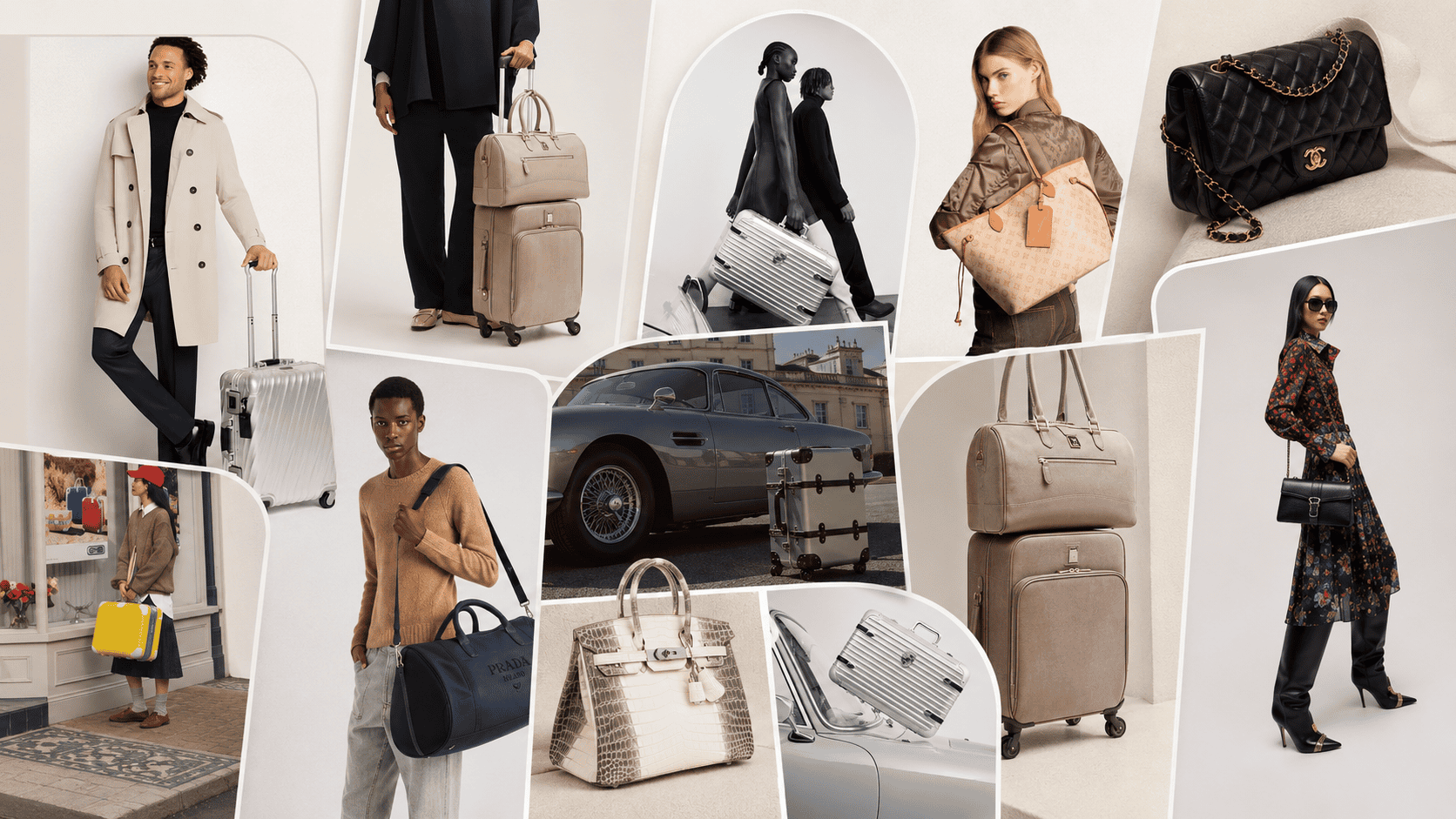
There was a time when the spectacle of luxury travel began with volume. Trunks were stacked on railway platforms: hatboxes, vanity cases and monogrammed leather luggage accompanied travellers across oceans. The size of the procession said something about the scale of the life being lived.
The modern luxury traveller is moving in the opposite direction.
The new symbol of arrival is increasingly a single, unmistakable object: a ribbed aluminium cabin case, a handmade suitcase produced in double digits, a quota handbag designed with utility pockets, or a collector tote associated with a particular season, hotel, or piece of cultural mythology.
Travelling light has become a sophisticated performance of control. The fewer objects carried, the more carefully each one must be chosen. Every piece has to work harder, look better and reveal something about its owner without requiring an explanation.
This shift has created a new hierarchy of travel objects. Some are engineered workhorses elevated through exceptional materials and design. Others are acquired for rarity, narrative and emotional value as much as for anything they might hold. The most compelling pieces now sit at the intersection of fashion, luggage, architecture, collectable design and social signalling.
The appeal is not rooted in minimalism alone. This is edited abundance: fewer belongings, higher value, tighter curation, and a sophisticated network of hotel services ready to handle everything left behind.
Here are ten bags and cabin cases shaping that world.
1. Hermès Birkin 25 Cargo
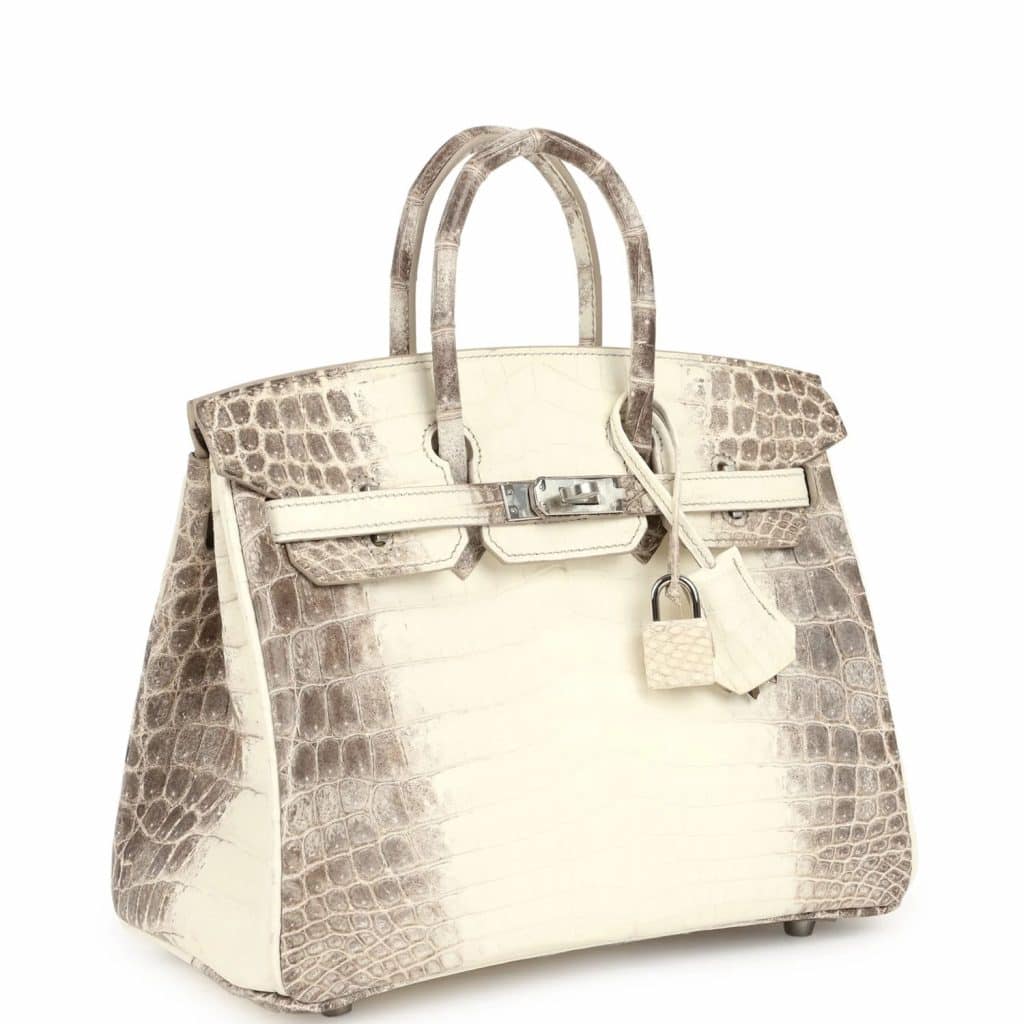
The Hermès Birkin has long occupied a territory beyond fashion. It is a handbag, a status code, a collector asset, a cultural object, and, in rare iterations, a piece of portable mythology.
The Birkin 25 Cargo makes an especially intriguing travel companion because it borrows the visual language of practicality. External pockets, loops, and a utility-inspired construction give the bag the appearance of equipment designed for movement. Yet the resemblance stops at the surface. This is utility filtered through one of the world’s most controlled and exclusive luxury ecosystems.
The Cargo Birkin translates the pockets and attachments of workwear into markers of privilege. What appears functional becomes desirable because access is so limited. It offers the visual suggestion of an expedition bag while remaining more at home in a private aviation lounge, a presidential suite or the back seat of a chauffeured car.
Its compact 25-centimetre format serves as a highly polished personal item. It can hold the essentials that remain close during a journey: passport, phone, cardholder, sunglasses, headphones and perhaps a small beauty edit. It is not designed to replace a cabin case. It sits above that practical role.
The United States boutique price for the Birkin 25 Cargo is around $21,000, while scarcity can drive secondary market prices considerably higher.
The Birkin 25 Cargos embodies a central contradiction within contemporary luxury travel. It looks equipped for action, yet its greatest function is symbolic. The traveller carries a story about access, rarity and connoisseurship before the journey has properly begun.
2. RIMOWA x Porsche Carry Case Pepita
Some collaborations feel decorative. Others appear inevitable.
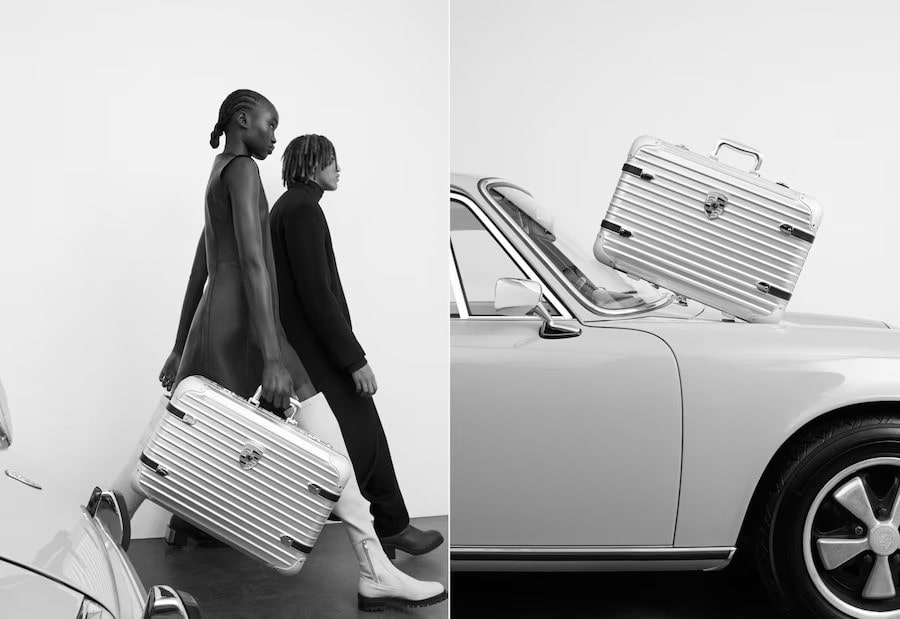
The RIMOWA x Porsche Carry Case Pepita belongs to the second category. Both names are closely associated with disciplined engineering, unmistakable silhouettes and the emotional pull of industrial design. Bringing them together creates an object that comes across as less like branded luggage and more like a compact design study.
RIMOWA contributes its aluminium construction and distinctive ribbed surface. Porsche contributes the Pepita pattern, long associated with classic sports car interiors. The result brings the visual codes of mid-century motoring into the contemporary airport.
Its most significant detail is the production number. Only 911 pieces were created, a direct reference to the Porsche 911. Scarcity is therefore not an incidental marketing device. It is embedded in the object’s logic.
That makes the Carry Case Pepita especially attractive to collectors who already understand the emotional power of limited automotive editions. A numbered piece of luggage, connected to one of the world’s most recognisable sports cars, naturally sits beside watches, driving accessories, scale models, and other objects acquired through passion rather than necessity.
The case represents an increasingly important category within travel luxury: luggage that is usable yet purchased with the reverence normally reserved for collectable design.
It appeals to travellers who prefer coded recognition over loud display. The grooves, patterns, and proportions carry meaning for those who know what they are looking at. There is no need for a large logo or theatrical embellishment. Precision provides the drama.
3. Globe Trotter 007 Goldfinger Carry On
Luxury travel has always borrowed heavily from cinema, and few screen characters have defined the fantasy of elegant global movement with as much impact as James Bond.
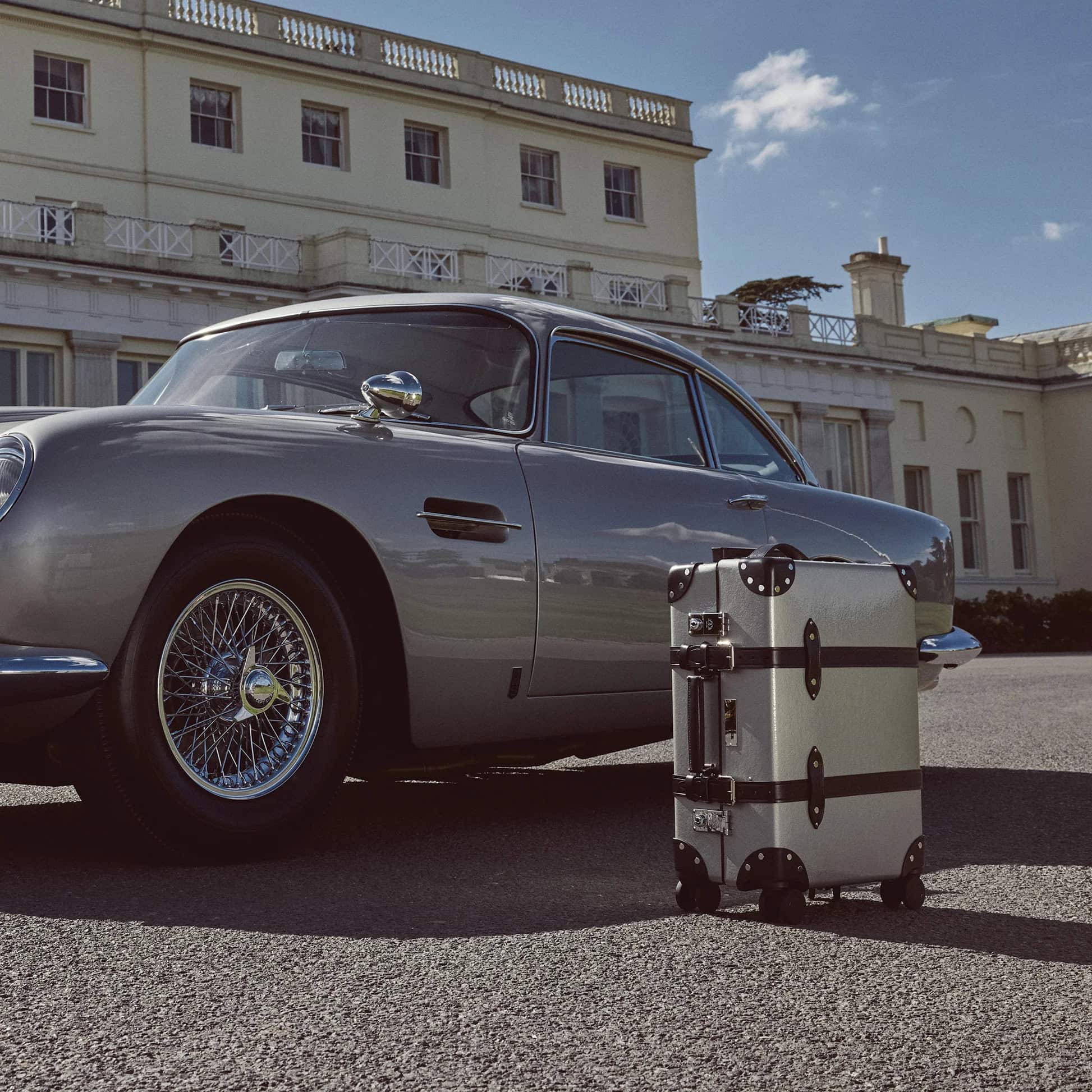
The Globe Trotter 007 Goldfinger Carry On draws on that entire world: tailored dinner jackets, grand hotels, polished cars, private clubs, improbable missions and the ability to cross borders without ever appearing dishevelled.
Created to mark the 60th anniversary of Goldfinger, the case was limited to only 60 pieces. Globe Trotter’s own positioning places it firmly in collector territory, while reported pricing has been around $5,295 or £3,895.
The production number transforms the case. A standard luxury suitcase can be replaced. A handmade Bond edition with only 59 copies worldwide becomes something way more personal.
Globe Trotter’s design language also offers a useful contrast with the metallic precision of RIMOWA. Its defined body, leather corners, and heritage construction evoke the romance of an earlier age of travel. The case appears built for polished railway platforms, liveried porters and suites where a handwritten welcome card waits beside the flowers.
This nostalgia never feels entirely trapped in the past. Its proportions remain practical enough for the cabin, while the Bond connection gives the object an immediately legible cultural identity.
The Goldfinger case succeeds because it carries several stories at once. It is British craftsmanship, film history, numbered rarity and travel fantasy contained within one elegant silhouette.
4. Chanel Classic 11.12
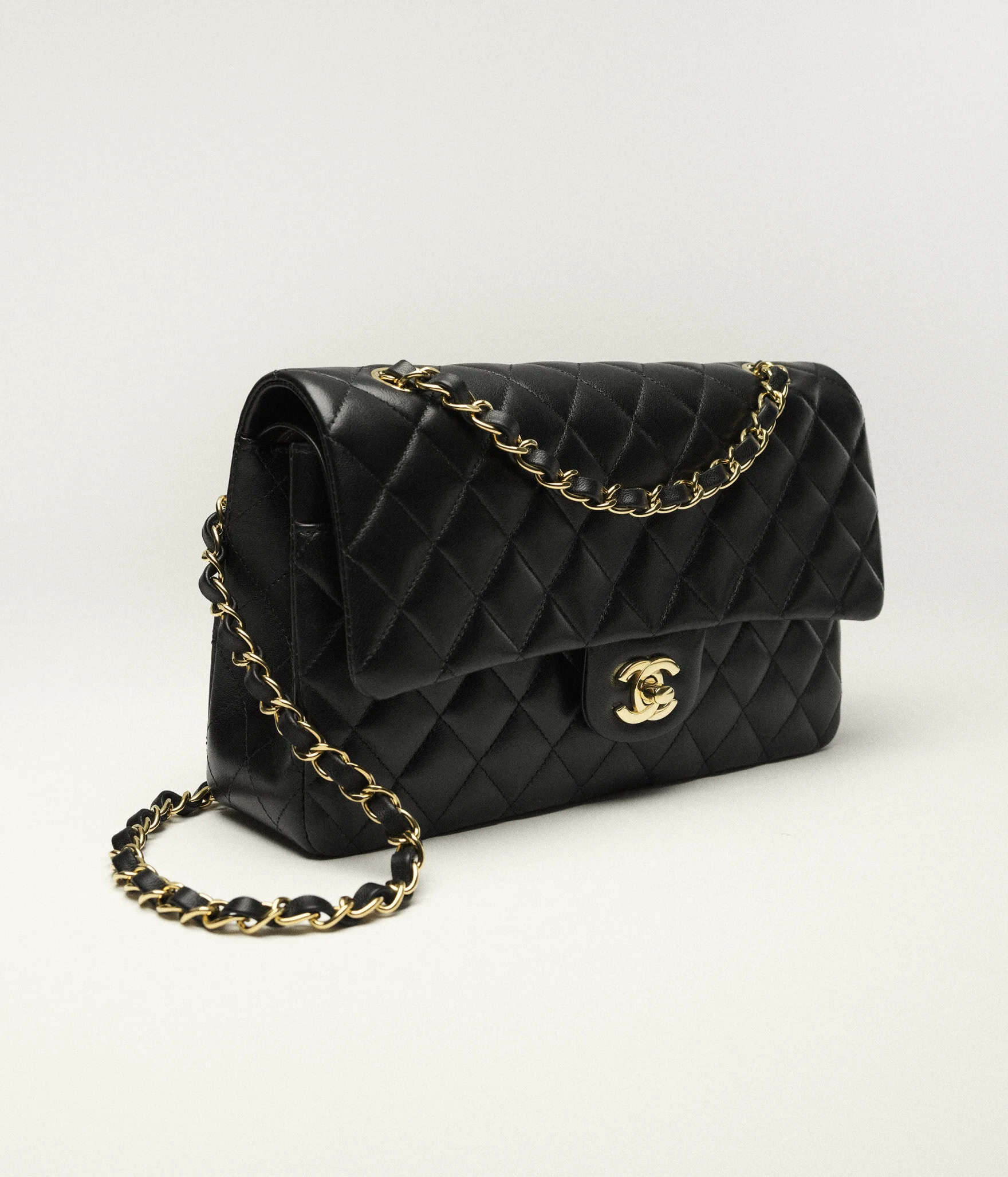
A trophy carry-on does not always have wheels.
Within the contemporary luxury airport wardrobe, the personal item can communicate as much as the suitcase. It is the piece seen in the lounge, placed beside the traveller during lunch and carried into the hotel long after the larger case has been taken upstairs.
The Chanel Classic 11.12 remains one of the clearest examples of that power.
Its quilted leather, chain strap, and double-C closure have become visual shorthand for established luxury. The bag does not rely on a partnership or a numbered release to command attention. Its strength lies in continuity.
A black lambskin Spring Summer 2026 version has been listed in India at ₹1,331,200, while a camel Métiers d’Art 2026 edition has appeared at ₹1,109,500.
Those prices place the bag firmly in trophy territory, yet the 11.12 remains relatively versatile within that world. It can move between a flight, business lunch, private preview, cocktail hour and formal dinner without feeling out of place.
Its role in travel is therefore less about capacity and more about continuity. It allows the traveller to maintain a consistent visual language across multiple settings without carrying multiple bags.
This is one of the quieter ways luxury supports travelling light. A carefully chosen handbag can serve through the entire journey, cutting down the need for a different accessory at every stage. The edit becomes tighter, while the individual object becomes more significant.
5. Louis Vuitton Neverfull MM Collector Edition
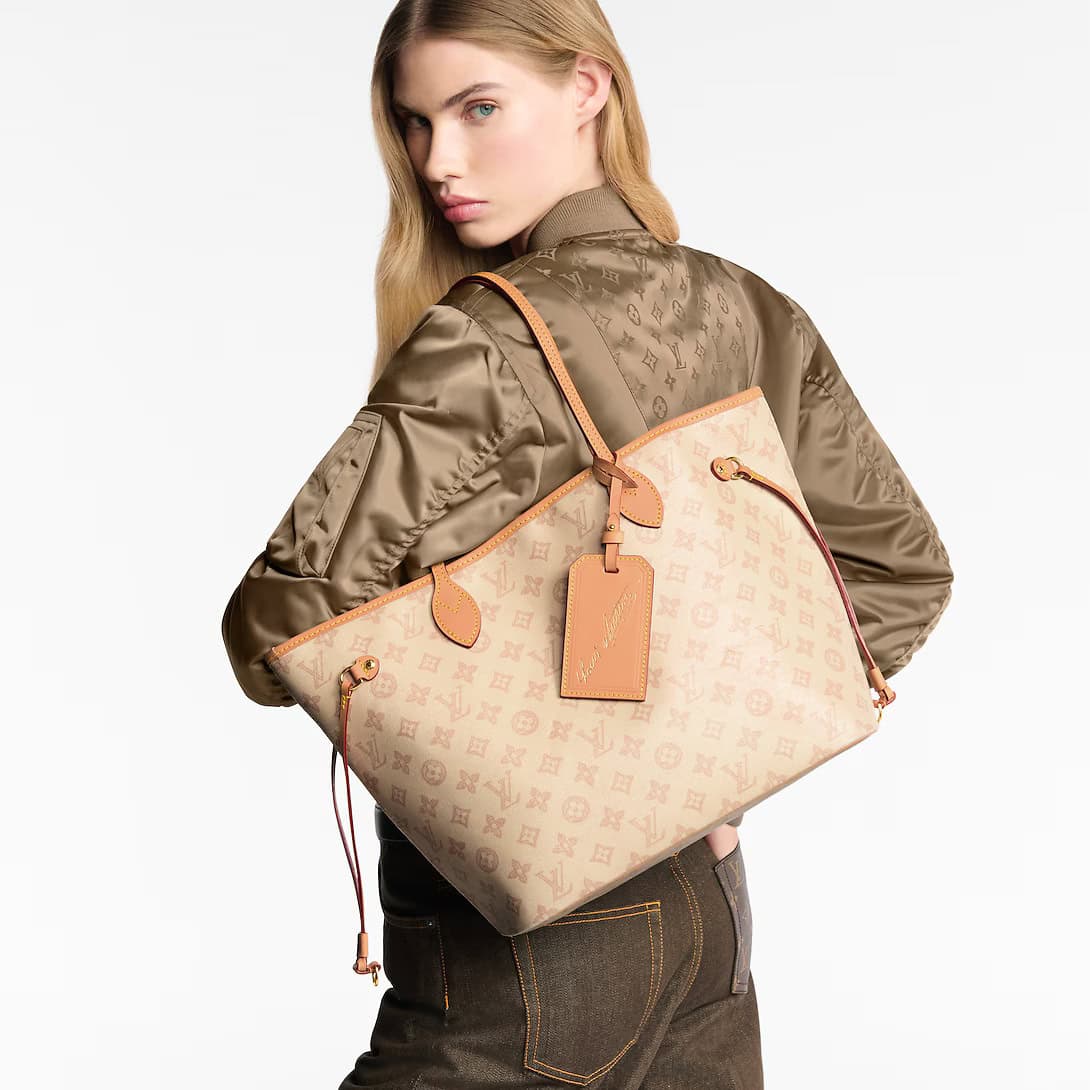
Few luxury houses can claim a connection with travel as deep as Louis Vuitton’s. The house was built around trunks, movement and the organisation of personal worlds.
The Neverfull MM collector edition translates that heritage into a more relaxed contemporary form.
The tote has always succeeded because of its flexibility. It can hold travel documents, electronics, a light layer, beauty essentials, a notebook and a small collection of objects that need to remain close during a journey. It works equally well in an airport lounge, resort lobby or city car.
In collector form, that familiarity gains another layer. Louis Vuitton has described the edition as a genuine collector’s piece, with a price in the United States of around $3,050.
The Neverfull also reveals how a recognisable house code can turn an everyday travel silhouette into something culturally charged. Its value comes partly through practicality, but also through the Monogram’s long association with mobility, hotels, trains, ocean travel and an international lifestyle.
Louis Vuitton’s earlier resort-linked projects make the relationship even more interesting. One&Only collaborations featured destination-inspired Keepalls created by Jay Ahr exclusively for the hotel group. Such projects point heading toward a future in which luxury travel goods turn into souvenirs at the highest possible level: pieces that carry the identity of a place far beyond the journey.
In this category, narrative matters as much as production volume. A bag can become collectable because it belongs to a particular destination, season or collaboration that may never be repeated in quite the same way.
6. Gucci Dionysus Crystal Medium Shoulder Bag
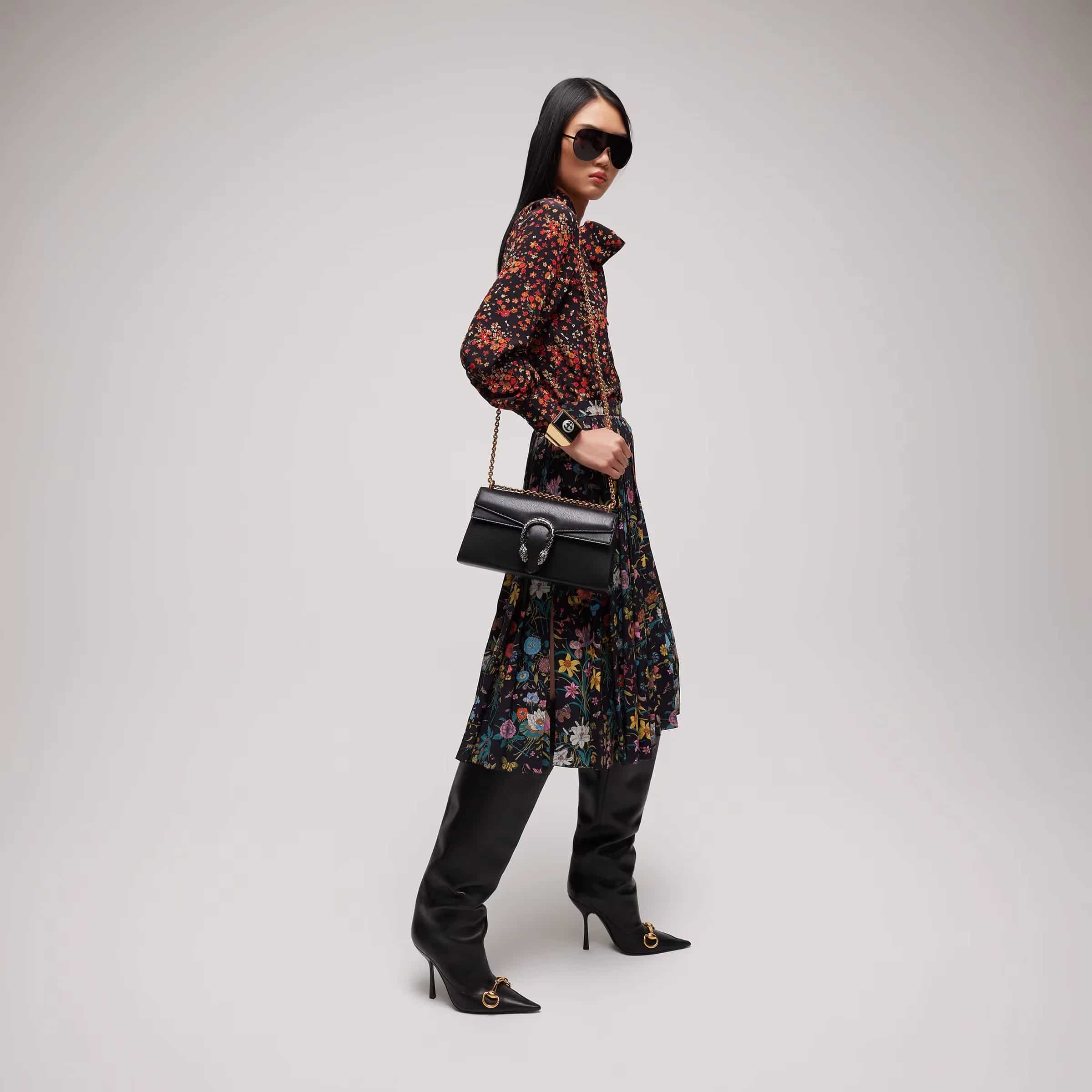
Much of the current luxury luggage conversation centres on understatement. Neutral colours, brushed aluminium, small logos and clean silhouettes dominate the idea of sophisticated movement.
Gucci offers a useful interruption.
The Dionysus crystal medium shoulder bag belongs to the world of statement rarity. Covered in light-catching embellishment and anchored by its recognisable hardware, it treats travel as theatre.
Reported at around $7,900, the bag behaves more like a travelling jewel box than a conventional personal item.
Its practical capacity may be modest, but its visual impact is immediate. The Dionysus suits celebratory itineraries, fashion capitals, destination weddings and weekends where the evening programme is as important as the daytime journey.
This kind of bag reminds us that luxury travel has never been entirely about discretion. Quiet taste might prevail in one corner of the market, yet glamour retains its power. There are travellers who enjoy the private recognition of a carefully finished leather case, and others who want an object capable of changing the energy of a room.
The crystal Dionysus belongs to the second group.
It also questions the assumption that travelling light must lead to visual restraint. A small bag can still carry an enormous presence. In some cases, reducing the number of objects creates more space for one extraordinary piece to perform.
7. Tumi 19 Degree Aluminum International Carry On
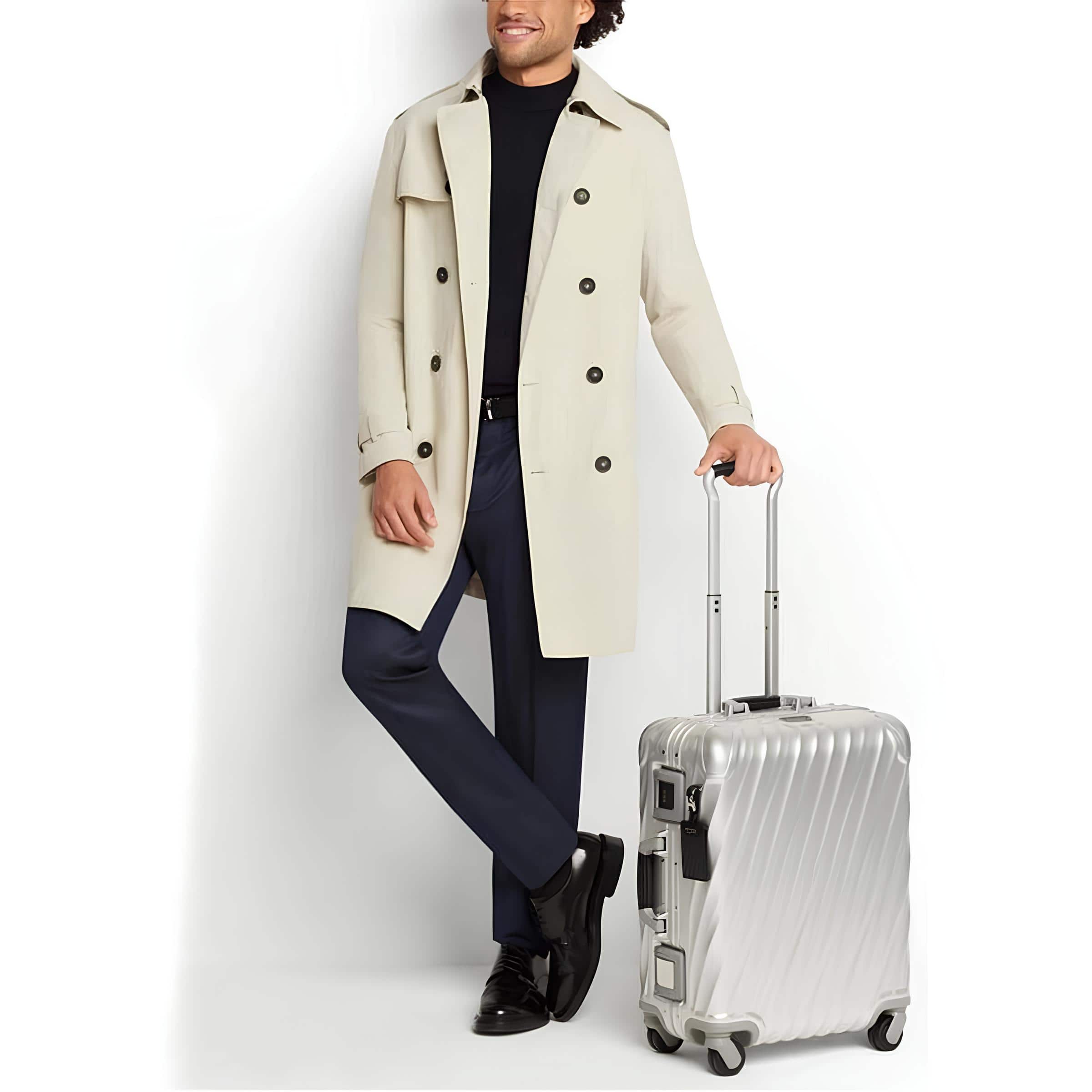
The Tumi 19 Degree Aluminium International Carry On appears regularly in luxury luggage coverage because it manages to combine business travel functionality with a highly recognisable exterior. Its sculpted shell creates movement across the aluminium surface, giving the case an architectural quality without compromising its practical focus.
This is luggage designed for repetition. It suits the traveller moving through multiple cities, short stays and tightly scheduled days. The interior organisation, robust construction and international cabin proportions support a life in which packing has become a refined system.
Its appeal rests in competence.
The Tumi traveller is not necessarily seeking the rarest object in the terminal. They are looking for a case that feels polished, intelligent and capable of handling constant movement. The luxury lies in the reduction of friction.
That makes the 19 Degree an important inclusion within the trophy carry on conversation. The market is not made solely of collector pieces kept pristine between occasional trips. It also includes objects that become more personal through use: aluminium marked by journeys, corners softened by handling and interiors organised according to the traveller’s own habits.
A true luxury travel object should not always fear movement. In some cases, movement is what completes it.
8. RIMOWA Holiday Hand Carry Case
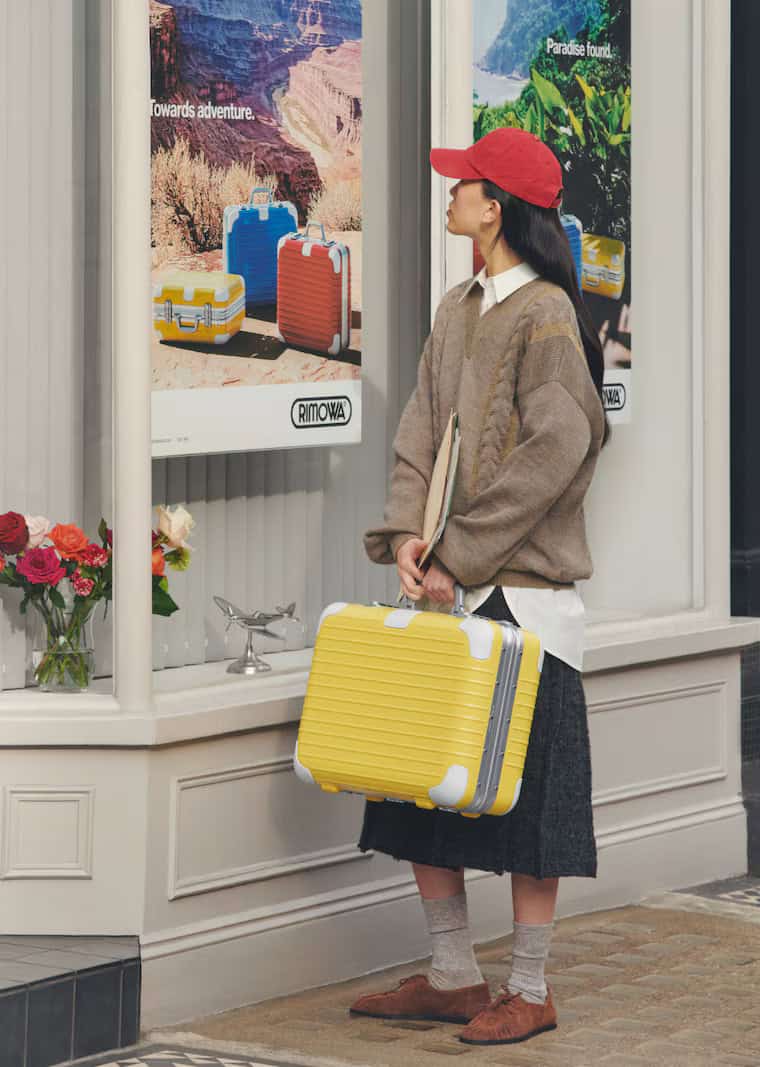
RIMOWA’s Holiday Hand Carry Case demonstrates how effectively a luggage brand can use its own archive.
The limited edition capsule revisits a design first introduced in 1988. Instead of presenting innovation as something entirely new, it draws value through memory, form and continuity.
This archival approach gives the case a personality distinct from the standard RIMOWA Cabin. It feels more playful, more nostalgic and more connected with the visual optimism of leisure travel.
The most compelling luxury revivals do more than reproduce an earlier product. They allow a new audience to participate in a chapter of brand history that might otherwise remain inaccessible. The Holiday case carries that sense of rediscovery.
Its appeal is also highly photographic. It works naturally within resort settings, poolside arrivals and summer itineraries where luggage becomes part of the visual story. While a conventional cabin case disappears once unpacked, the Holiday case can remain present as a design object inside the room.
That distinction matters. Trophy luggage increasingly has to exist comfortably within the wider aesthetic of the journey. It may appear in social imagery, hotel photography and personal travel documentation. It is no longer merely the container that brings the wardrobe. It has become part of the wardrobe itself.
RIMOWA’s archival revival shows how luggage can acquire collectable status when design history, limited availability and a strong silhouette converge.
9. Aspinal of London Connaught Cabin Case
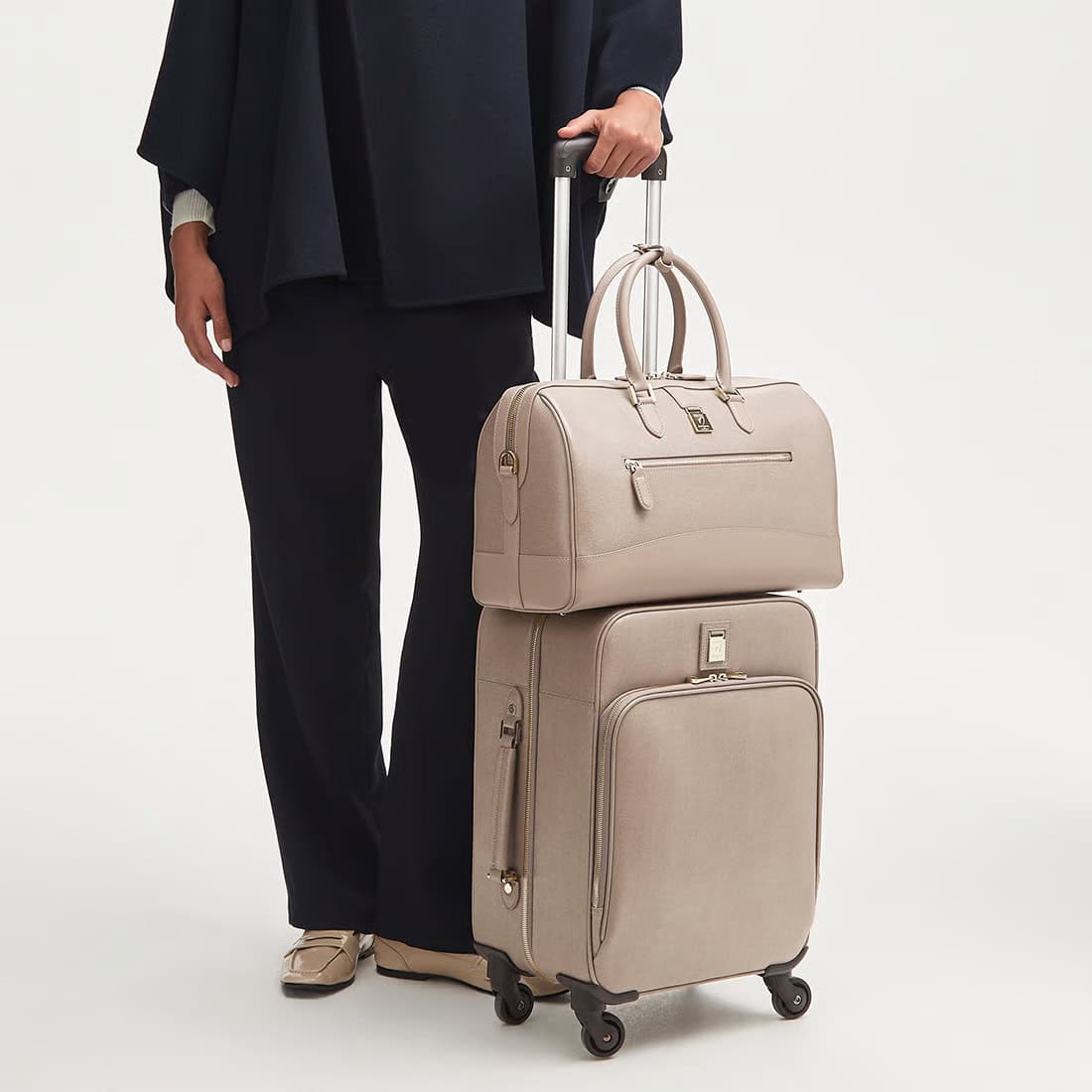
The Aspinal of London Connaught Cabin Case offers a softer and more romantic alternative to the metal cases dominating the modern luxury terminal.
Its appeal comes through structured proportions, heritage styling and the warmth of leather. It evokes private clubs, country hotels and railway compartments more readily than futuristic airport architecture.
That old world character gives the Connaught a clear place within the market. Luxury travel is not moving in a single aesthetic direction. Technical materials and industrial construction may represent one version of modernity, but many travellers remain drawn to objects that carry a sense of ceremony.
The Connaught belongs to journeys where arrival matters.
It looks particularly suited to luxury rail travel, grand touring holidays, extended estate stays and city weekends centred on beautiful hotels. The case brings a sense of composure into settings where a highly technical shell might appear too severe.
Its presence also broadens the idea of performance. Practicality is not measured only through weight, impact resistance and engineered components. Emotional fit matters too. A traveller may choose a leather cabin case because it creates the right relationship with the journey.
The Connaught reminds us that a piece of luggage can be functional while still carrying nostalgia. In a world obsessed with speed, it offers the visual pleasure of travelling as though there is time.
10. Prada Linea Rossa Travel Piece
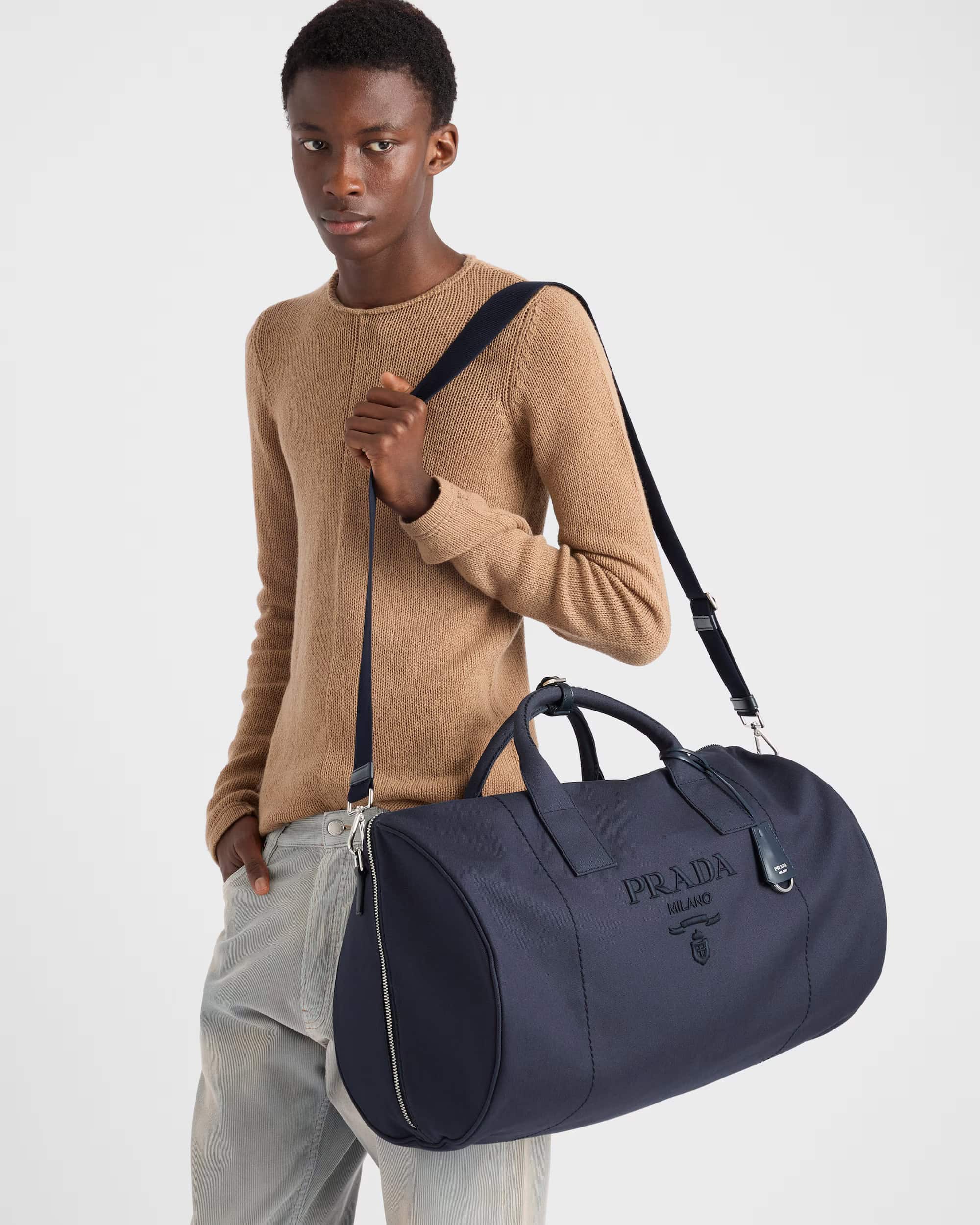
Prada Linea Rossa represents a distinctly contemporary approach to travel luxury.
The collection draws on performance clothing, technical fabrics, clean construction and a streamlined urban sensibility. Its travel pieces are designed for movement without relying on the visual language of traditional luggage.
This makes Linea Rossa especially relevant to the traveller whose itinerary may shift between a design hotel, business meeting, wellness retreat, gallery district and outdoor experience. The aesthetic supports a life that does not fit neatly into older categories of business, leisure and adventure.
Listed pieces within the wider collection begin at around £350, with more substantial bags and specialist designs positioned higher.
Prada’s strength lies in making performance feel intellectual. Technical materials are not presented as purely practical. They become part of the design language and carry status through their association with speed, movement and modernity.
Linea Rossa also reflects a wider change in the definition of luxury. Weight, flexibility and adaptability can now matter as much as hand-stitched leather or visible ornamentation. A material developed for performance can become desirable because of how intelligently it supports the traveller.
The rarest bags and cases also reveal something deeper about modern luxury. Today, status is often communicated through selection rather than accumulation. It is less about displaying the largest collection and more about carrying the one object that others cannot easily obtain.
A Birkin Cargo, a 60-piece Bond case, an archival RIMOWA or a numbered Porsche collaboration all tell different versions of the same story. Their owner has chosen precision, but that precision is supported by craftsmanship, cultural knowledge, privilege and access.
The trunk has been distilled. And in its place stands the single perfect case, polished, numbered and ready for departure.
Read more: Lifestyle, Weddings, and Wellness