

The sacred legacy of Silk Routes lives through architecture, pilgrimage, ritual, music, manuscripts and art
On 11 May 868, a man named Wang Jie commissioned a copy of the Buddhist Diamond Sutra in honour of his parents. The text was printed on seven sheets of paper, joined into a scroll almost five metres long and made available for free distribution.
More than a thousand years later, it emerged inside a sealed cave at Dunhuang in northwestern China. Today, it is recognised as the earliest surviving complete book with a printed date.
Pause over what one object contains: an Indian religious teaching translated into Chinese; paper and printing technologies refined across Asia; a son expressing devotion to his parents; a text created for circulation, then preserved in a desert cave beside manuscripts written in several languages. That scroll is the Silk Routes in miniature.
Silk was the famous cargo, but beliefs often made the more ambitious journey. They crossed mountain passes and deserts, sailed with monsoon winds and entered cities filled with unfamiliar languages. Along the way, they acquired new names, new images and new ways of being understood.
Buddhism travelled through Gandhara, Bamiyan, Khotan and Dunhuang before taking root across China, Tibet, Korea and Japan. Hindu thought and sacred stories sailed towards Southeast Asia. Zoroastrianism, Manichaeism, Christianity, Islam and Judaism moved with merchants, missionaries, scholars and migrants.
At the centre of all this stood Central Asia. Its oasis towns were the great switching stations of the premodern world. Here, a merchant might meet a monk, an interpreter might work across three languages, and an artist might place a foreign god in local clothes. The Silk Routes turned geography into conversation.
Beyond Silk and Spices
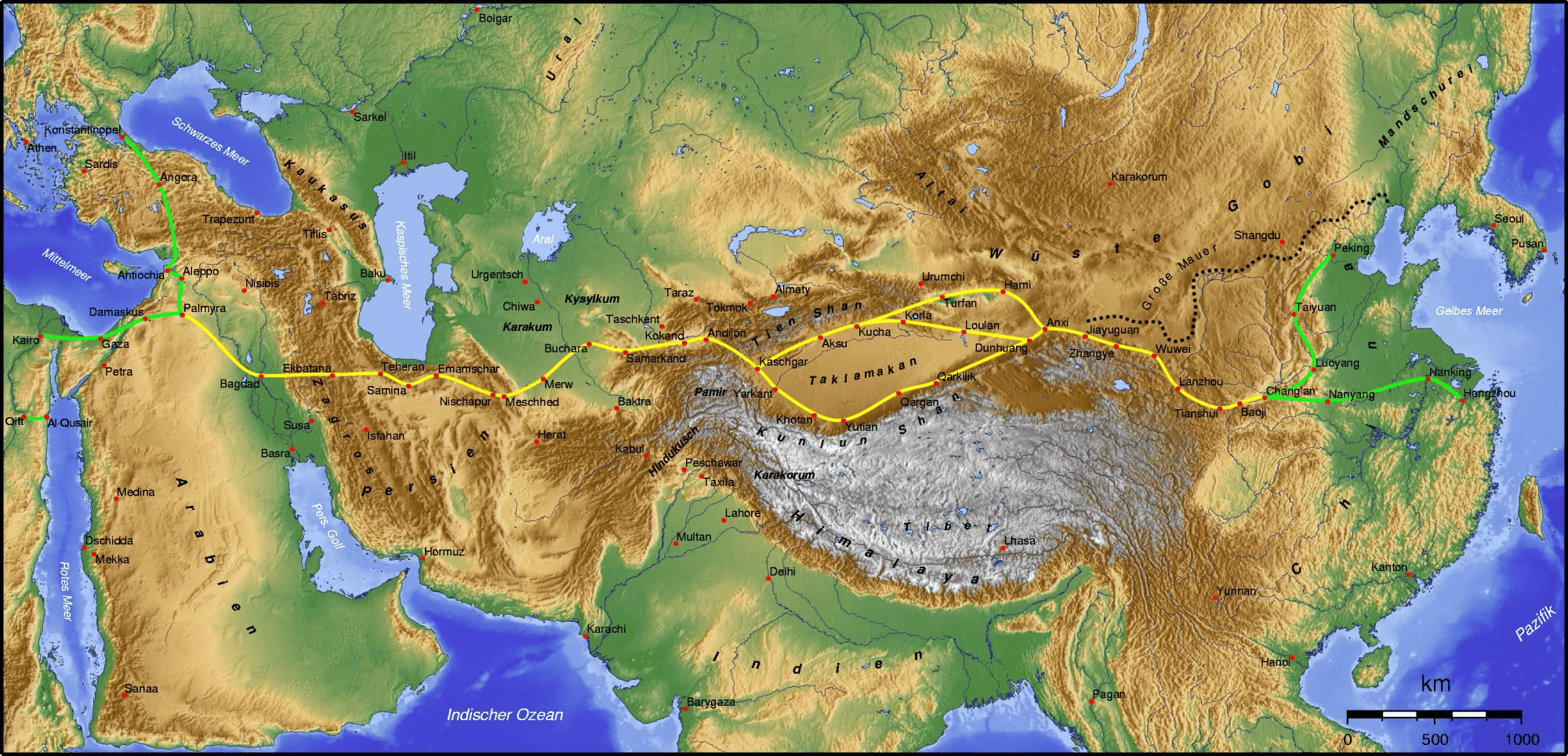
Begin by losing the straight line: the Silk Road was a web of land routes, river crossings and sea lanes linking East Asia, South Asia, Central Asia, the Middle East and the Mediterranean. Travellers rarely covered its span; goods changed hands, guides changed at borders, and caravans split at oasis towns before reassembling for the next difficult stretch.
One UNESCO-recognised section alone stretches about 5,000 kilometres between Chang’an and Luoyang in China and the Zhetysu region of Central Asia. Its surviving landscape includes cities, caravanserais, cave temples, shrines, passes, watchtowers and fortifications. A route on this scale required a support system.
Silk, horses, spices, glass, gemstones, metals and paper moved through it; so did alphabets, medical knowledge, musical styles, painting techniques, stories and ritual practices. These travelled in people’s minds and luggage: a monk carried a manuscript, a merchant packed a protective icon, and an artisan remembered the curve of a foreign halo before using it months later in another city.
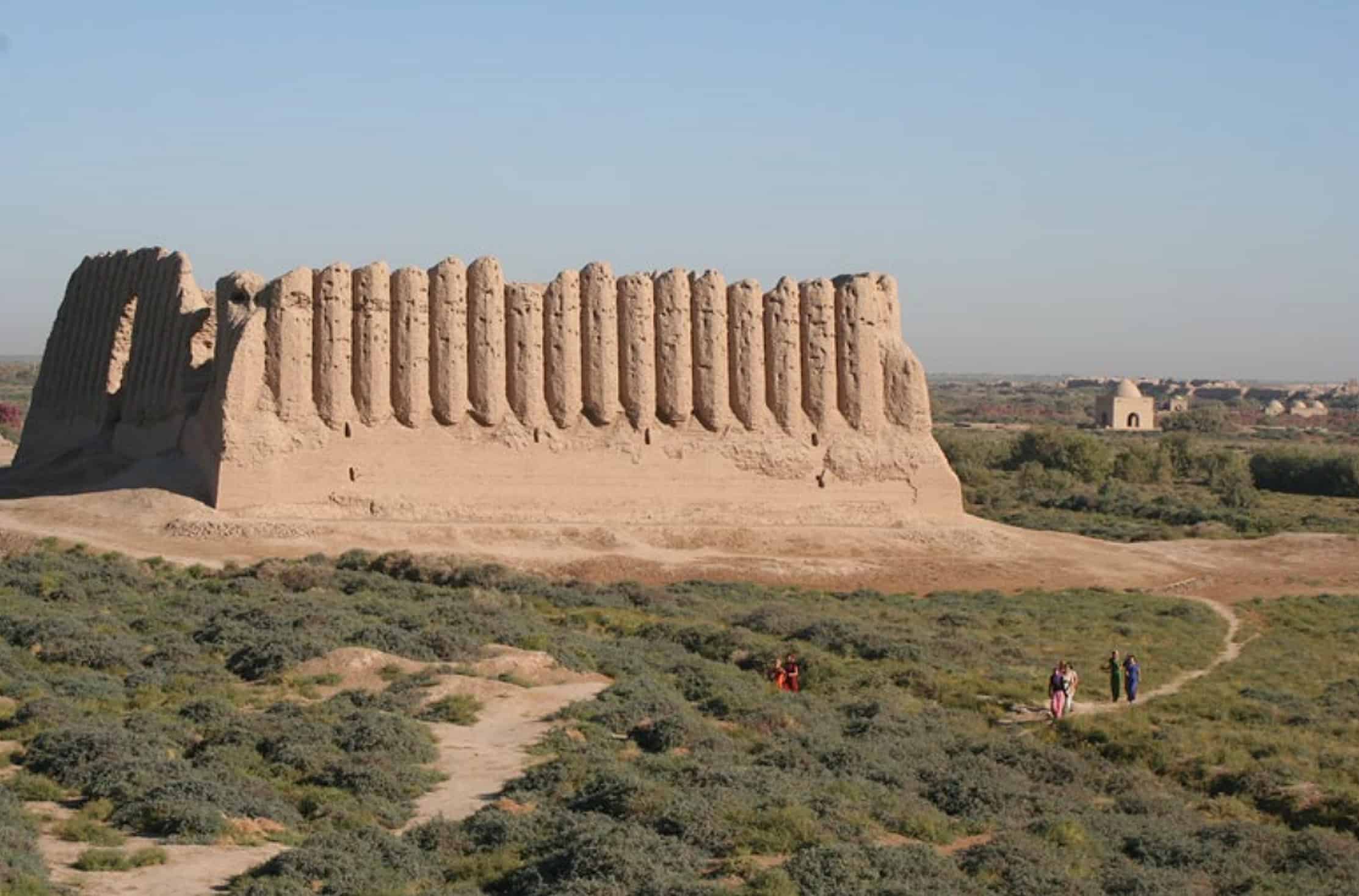
The pauses mattered as much as the journeys. Samarkand, Bukhara, Merv, Khotan, Kucha, Turfan and Dunhuang supplied water, shelter, markets and information. Caravanserais created temporary communities around shared meals and commercial news. Monasteries offered beds, education, libraries and introductions.
Central Asia became the cultural heart of the network because so much stopped there long enough to change. UNESCO describes the Zarafshan-Karakum Corridor as a meeting place for religions, ethnicities, sciences and technologies across eighteen centuries. It was a workshop for ideas.
Buddhism Takes the Long Road
Buddhism became one of the great travellers of Eurasian history, and its movement depended on rulers and trade as well as acts of nerve. Pilgrims walked towards sacred sites they knew only through texts, monks crossed hostile terrain carrying manuscripts, and translators devoted years to finding the right words for ideas formed in another language.
Gandhara, covering parts of present day Pakistan and Afghanistan, was an early centre of this transformation. The region sat between South Asia, Central Asia and the Iranian world. Its artists encountered Indian, Greek, Roman, Parthian and Kushan traditions, then created a Buddhist visual language with an international accent.
Look at a Gandharan Buddha: his robe falls in rhythmic folds, while his face carries the composed naturalism associated with Mediterranean sculpture, yet the subject and spiritual presence remain Buddhist. The Metropolitan Museum of Art notes that wealth generated through trade helped fund Gandhara’s monasteries and sacred sites, creating spaces in which art could rethink the divine.
The route continued through Taxila, a major centre of Buddhist learning, and Bamiyan, where monasteries and painted caves rose around two immense standing Buddhas. Those statues, destroyed in 2001, once watched over a valley connecting India, China and Bactria. Their scale announced that Buddhism had found patrons far beyond its birthplace.
Around the Taklamakan Desert, Khotan and Kucha became important Buddhist kingdoms and centres of translation. Monasteries did far more than host worship. They taught philosophy, copied texts, stored knowledge and sheltered travellers. For a pilgrim facing another desert crossing, the monastery was a spiritual institution and practical lifeline.
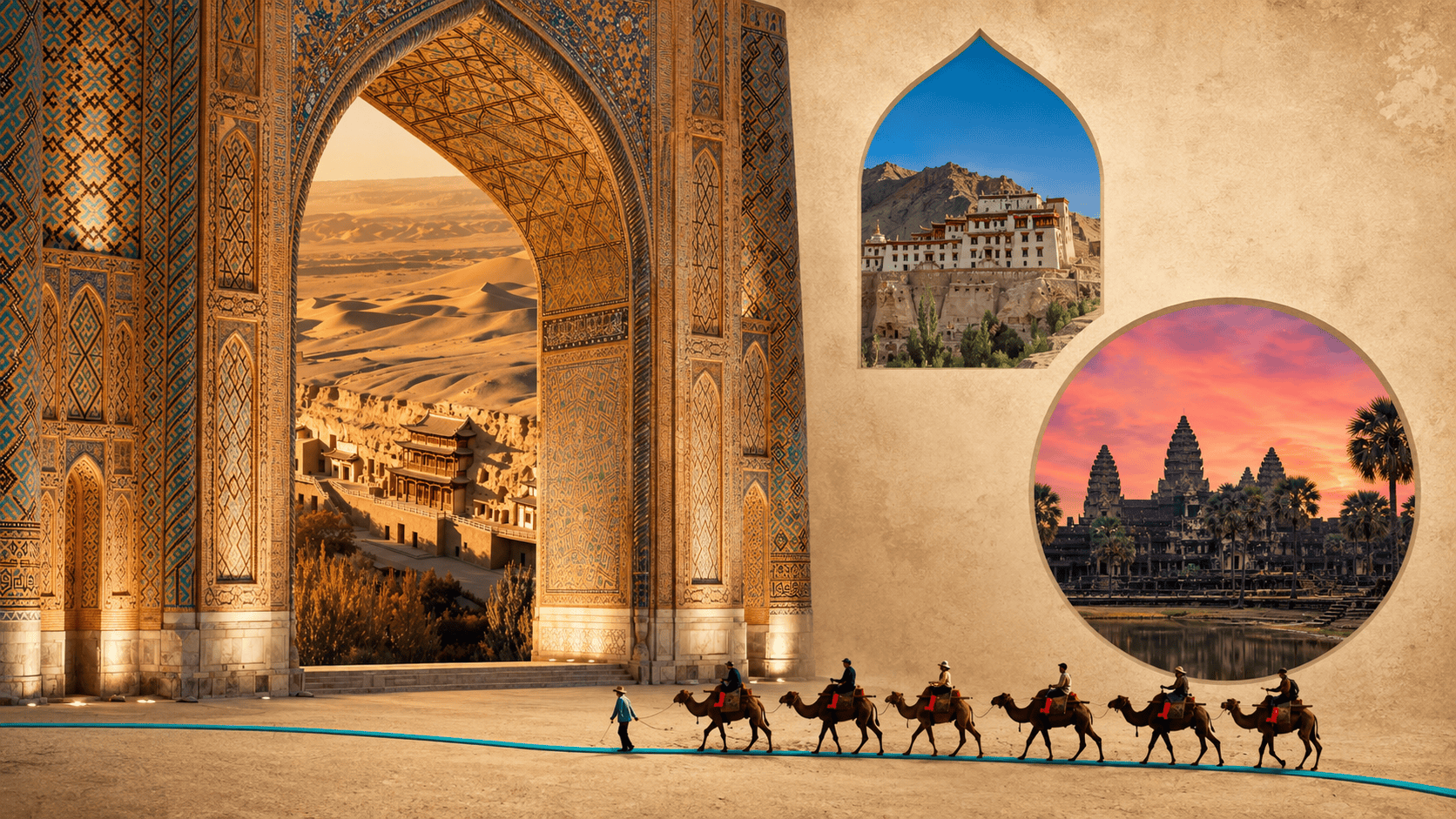
Dunhuang formed the great gateway into China. Work on the Mogao Caves began in the fourth century and continued for close to a millennium. Their walls tell Buddhist stories through a changing visual world. Indian figures mingle with Chinese architecture, Central Asian clothes, Tibetan influences and musicians playing instruments associated with lands farther west.
Then came the pilgrims travelling in the opposite direction. Xuanzang left China in 629, crossed Central Asia and studied in India because existing Chinese translations had produced doctrinal uncertainties. He returned with hundreds of manuscripts and became one of history’s most influential Buddhist translators. The International Dunhuang Programme records how travellers carried letters requesting lodging, guides and help from monastic leaders and officials.
As Buddhism reached Tibet, Korea and Japan, every culture made its own choices, producing new schools, canons, images and rituals. The tradition continued to grow because translation remained creative.
Hinduism Finds the Monsoon
Hindu beliefs followed both caravan tracks and ocean winds. Merchants, Brahmins, scholars, artisans and royal envoys carried Sanskrit learning, ritual practices and sacred imagery across Asia. Maritime routes proved especially powerful, linking Indian ports with Sri Lanka, the Malay Peninsula, mainland Southeast Asia and the Indonesian archipelago.
Monsoon winds created a dependable rhythm. Ships sailed out with one seasonal wind and waited months for the return current. That waiting time encouraged merchants and religious specialists to settle, build relationships and enter local courts. Ideas gained roots between voyages.
Shaiva and Vaishnava traditions attracted royal patrons across Southeast Asia. Sanskrit became a language of ceremony, inscriptions and political prestige, usually beside local languages. Rulers adopted Indian concepts of sacred authority, then aligned them with older beliefs, landscapes and dynastic needs.
The epics travelled beautifully, with the Ramayana and Mahabharata moving through recitation, manuscripts, dance, theatre and temple carving. Their plots stayed flexible as local forests and palaces entered the action, heroes changed emphasis and episodes were edited around regional values.
At Prambanan, Java’s great Hindu temple complex, stone reliefs unfold a Javanese telling of the Ramayana. The story is recognisable, yet its visual life belongs to Java. Nearby Buddhist monuments add another layer, showing traditions growing within the same cultural landscape.
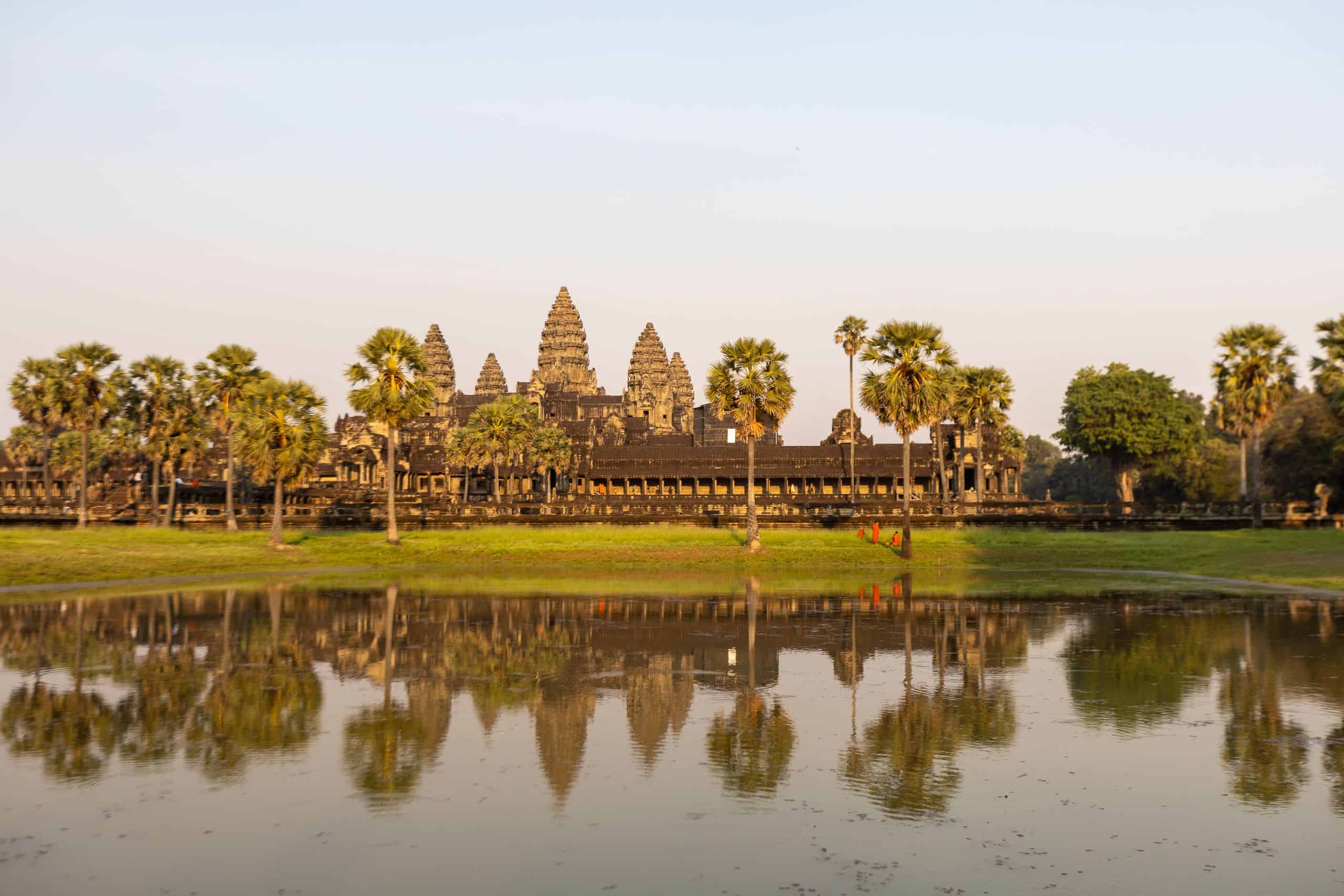
Angkor tells a similarly confident story. Indian cosmology and temple principles influenced Khmer builders, who reshaped them through local engineering, sandstone, water systems and ideas of kingship. The temples feel coherent because the borrowing became creation. They belong completely to Khmer history.
Hindu images also travelled north. A painted wooden panel discovered near Khotan depicts the elephant headed Ganesha with four arms and familiar attributes. The British Museum dates it to the seventh or eighth century. Finding Ganesha in a region celebrated for Buddhist remains reveals a richer religious mix. Portable gods could have remarkably long lives.
The Desert’s Sacred Crossroads
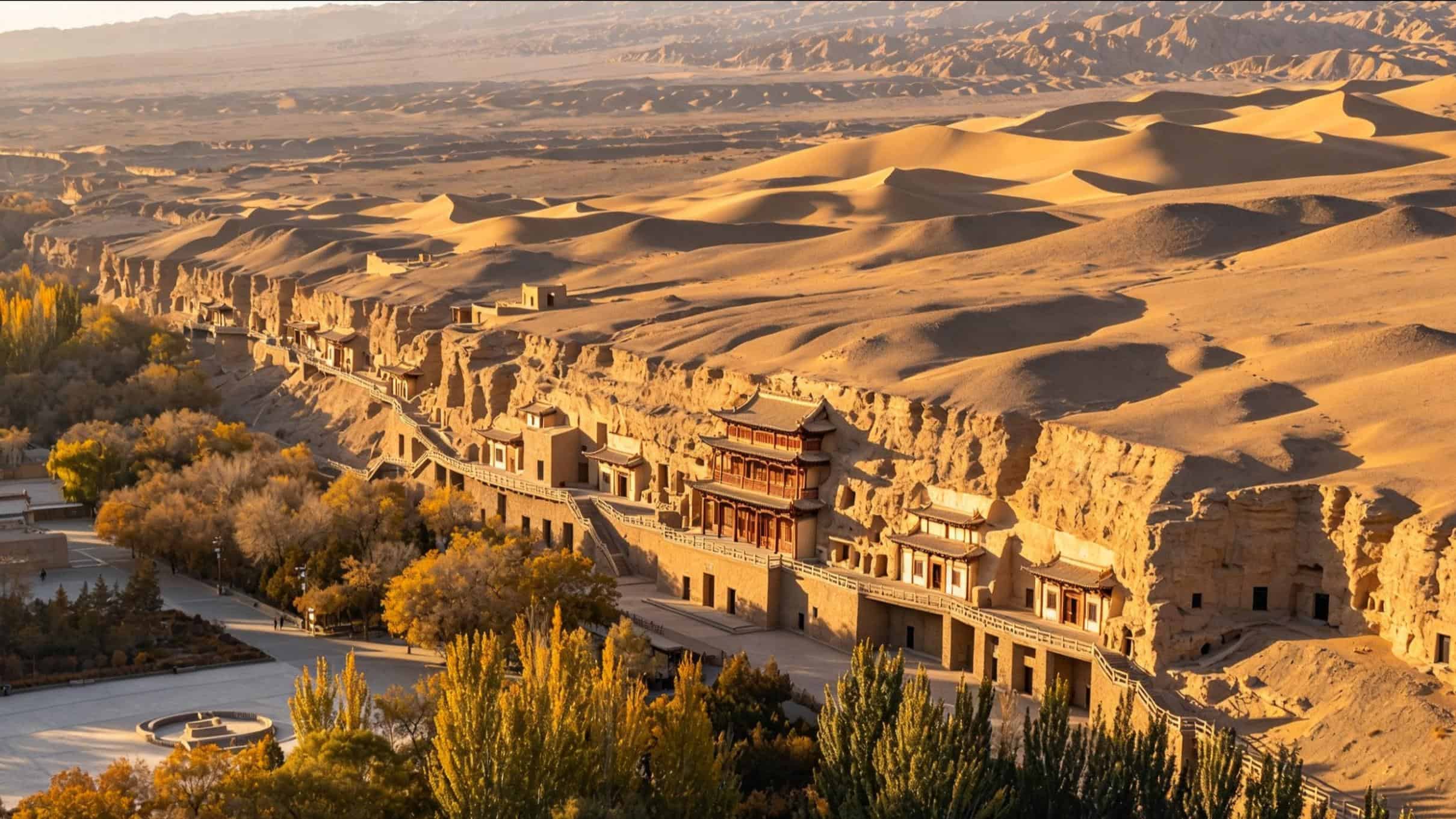
The towns circling the Taklamakan Desert were cosmopolitan by necessity. Khotan absorbed Indian and Iranian influences. Kucha became renowned for Buddhist scholarship, painting and music. Turfan linked the Chinese world with Central Asian and steppe communities. Dunhuang stood where two routes around the desert met before entering China’s Hexi Corridor.
Daily life demanded translation: traders needed interpreters and trustworthy contracts, while travellers searched for guides who understood the next mountain pass or water source. Monasteries, temples and merchant communities offered networks of recommendation, turning faith into social infrastructure.
The Mogao Caves show how spectacular the results could be. UNESCO records 492 decorated caves, around 45,000 square metres of murals and more than 2,000 painted sculptures. Created between the fourth and fourteenth centuries, the caves work like a visual time lapse as clothes and faces change, painting styles, patrons and political powers shift, and Buddhism remains the connecting thread.
Cave 17 held the greatest surprise. Sealed around the start of the eleventh century and opened in 1900, the small chamber contained tens of thousands of manuscripts and paintings. Chinese, Tibetan, Sanskrit, Khotanese, Sogdian and Uyghur texts sat together. Most were Buddhist, while others related to Daoism, Zoroastrianism, Manichaeism and the Church of the East. Prayers shared space with contracts, calendars and everyday records.
Among them was Wang Jie’s Diamond Sutra. According to the International Dunhuang Programme, its sheets were printed using carved woodblocks and joined into a long scroll. Printing made devotion reproducible. A sacred teaching could now reach readers its commissioner would never meet.
Many Faiths, One Network
The Silk Routes carried a crowd of religions whose relationships ranged across curiosity, competition, patronage and persecution. A faith welcomed by one ruler could lose protection under the next, although cities repeatedly made room for several sacred worlds.
Sogdian merchants were among the network’s great connectors. Their homeland centred on Samarkand and the Zarafshan Valley, while their communities reached deep into China. They traded in goods, translated texts and worked across languages with exceptional skill.
Many Sogdians practised forms of Zoroastrian or Mazdean worship. Tombs built for Sogdian leaders in China show priests, sacred fire and scenes of judgment carved onto Chinese style funerary furniture. Iranian beliefs had entered a Chinese form. The Smithsonian’s account of Sogdians abroad also finds Buddhists and Christians within this mobile, multilingual world.
Manichaeism made an equally striking journey. Mani founded the religion in third century Sasanian Persia, presenting a universal faith centred on a cosmic struggle between light and darkness. Its teachers carried illustrated texts in several languages towards Central Asia and China.
The Uyghur ruler’s conversion in 762 or 763 gave Manichaeism powerful support. At Kocho near Turfan, paintings show clerics dressed in tall headdresses and white robes. These figures, highlighted in the British Museum’s Silk Roads guide, look far removed geographically from Persia. Their presence proves how fully a travelling religion could settle into another society.
Christianity reached Tang China as well. The missionary Aluoben arrived at Chang’an in 635. A stone stele erected in 781 later recorded the history of the Church of the East in China using Chinese and Syriac inscriptions. At its top sits a memorable symbol: a cross rising over a lotus like form. The image allowed Christianity to speak through a visual vocabulary familiar in China.
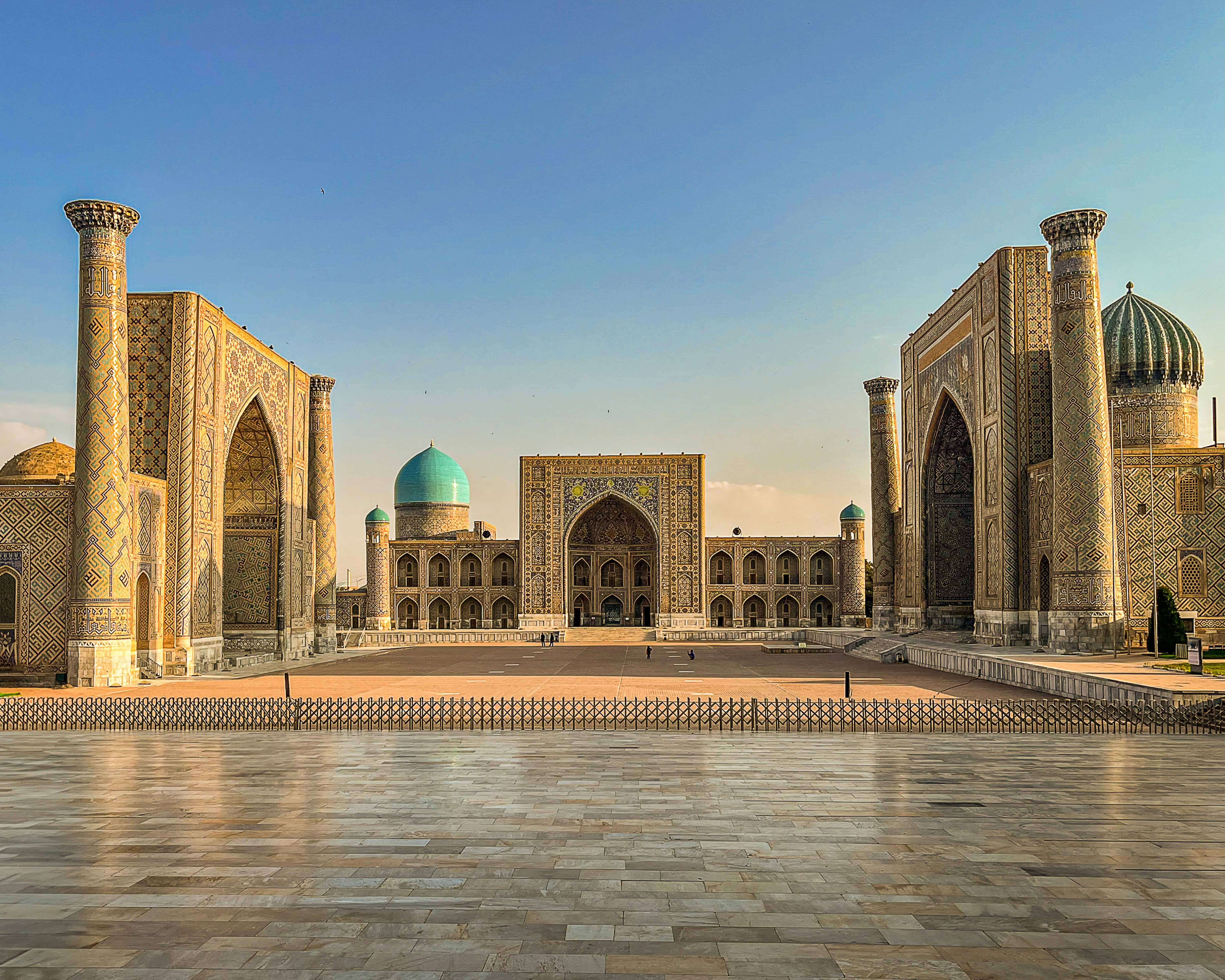
Islam changed the network on an even larger scale. Beginning in the eighth century, Muslim merchants, scholars, rulers and Sufi communities reshaped cities across Central Asia and the maritime world. Samarkand and Bukhara became centres of Islamic learning, architecture and manuscript culture. Kashgar connected Muslim Central Asia with western China. Across the Indian Ocean, merchants carried religious practice into busy port communities.
In Bukhara, mosques, madrasas and mausoleums gave the city a new sacred geography. Its monuments, including the Ismail Samani mausoleum, reflect its historical stature as an Islamic cultural centre.
Jewish commerce left quieter evidence in a letter discovered at Dandan Uiliq near Khotan, written around 802 in New Persian using Hebrew script and Sogdian elements. Its discussion of sheep trading places a Jewish merchant inside the everyday life of a Buddhist oasis town, bringing history close enough to touch.
When the Sacred Changed Shape
Every travelling faith acquired a local accent. Gandharan artists clothed Buddhist subjects in robes shaped by an international sculptural style, Chinese builders transformed the Indian stupa through architectural forms that contributed to the multistoreyed pagoda, and painters at Kucha and Dunhuang filled Buddhist compositions with local buildings, textiles, landscapes and faces.
Avalokiteshvara, the bodhisattva of compassion, became Guanyin in China and Kannon in Japan. New stories and forms gathered around the figure. In some periods, Chinese artists increasingly represented Guanyin with feminine qualities, creating one of East Asia’s most beloved sacred presences.
Words travelled through a similar process. The Sanskrit dhyana, meaning meditation, became Chan in Chinese and later Zen in Japanese. The Smithsonian’s National Museum of Asian Art traces this linguistic journey. Chan and Zen then developed through their own monastic, philosophical and artistic traditions. A borrowed word opened into distinct ways of thought.
The lotus and cross on the Xi’an stele make the same point in a single image. Translation preserved identity while creating connection. Across the Silk Routes, sacred ideas remained alive because artists, teachers and believers made them feel at home.
This was the network’s real genius. It allowed an idea to travel without demanding that it remain frozen. Believers recognised enough to feel continuity, while local artists and teachers supplied enough freshness to make it meaningful. Across many centuries, that balance created traditions that felt both ancient and new at exactly the same time.
The Culture That Travelled
Religion rarely travelled alone: manuscripts shared luggage with incense, pigments, ritual vessels, prayer beads and small icons, while sacred textiles became robes, temple hangings, relic wrappings and diplomatic gifts. Decorative patterns slipped easily between religious and fashionable use.
Music proved even harder to contain. Central Asian performers became stars of Tang court culture in Chang’an. Tomb figures show musicians riding camels with harps, pipes and lutes. Dancers performed the fast spinning Sogdian Whirl, a sensation among Chinese elites.
The pear-shaped lute associated with western and Central Asian traditions developed into the Chinese pipa. Musicians absorbed the instrument, changed its playing technique and built new repertoires around it. The Smithsonian documents the popularity of Central Asian music and dance at the Tang court.
Fashion came along for the ride. Riding coats, boots, fitted sleeves, patterned fabrics and foreign hairstyles entered elite Chinese taste. The same caravan might carry scripture, perfume, textiles and an entertainer. Culture moved as a complete sensory world.
A Legacy Still in Motion
The routes continue to reveal themselves across Asia and Europe. Xi’an’s Christian stele recalls a Tang capital filled with several faiths and languages. Dunhuang’s painted caves preserve a millennium of devotion. Samarkand’s tiled monuments and Bukhara’s religious schools speak of the centuries when Islamic scholarship shaped Central Asian life.
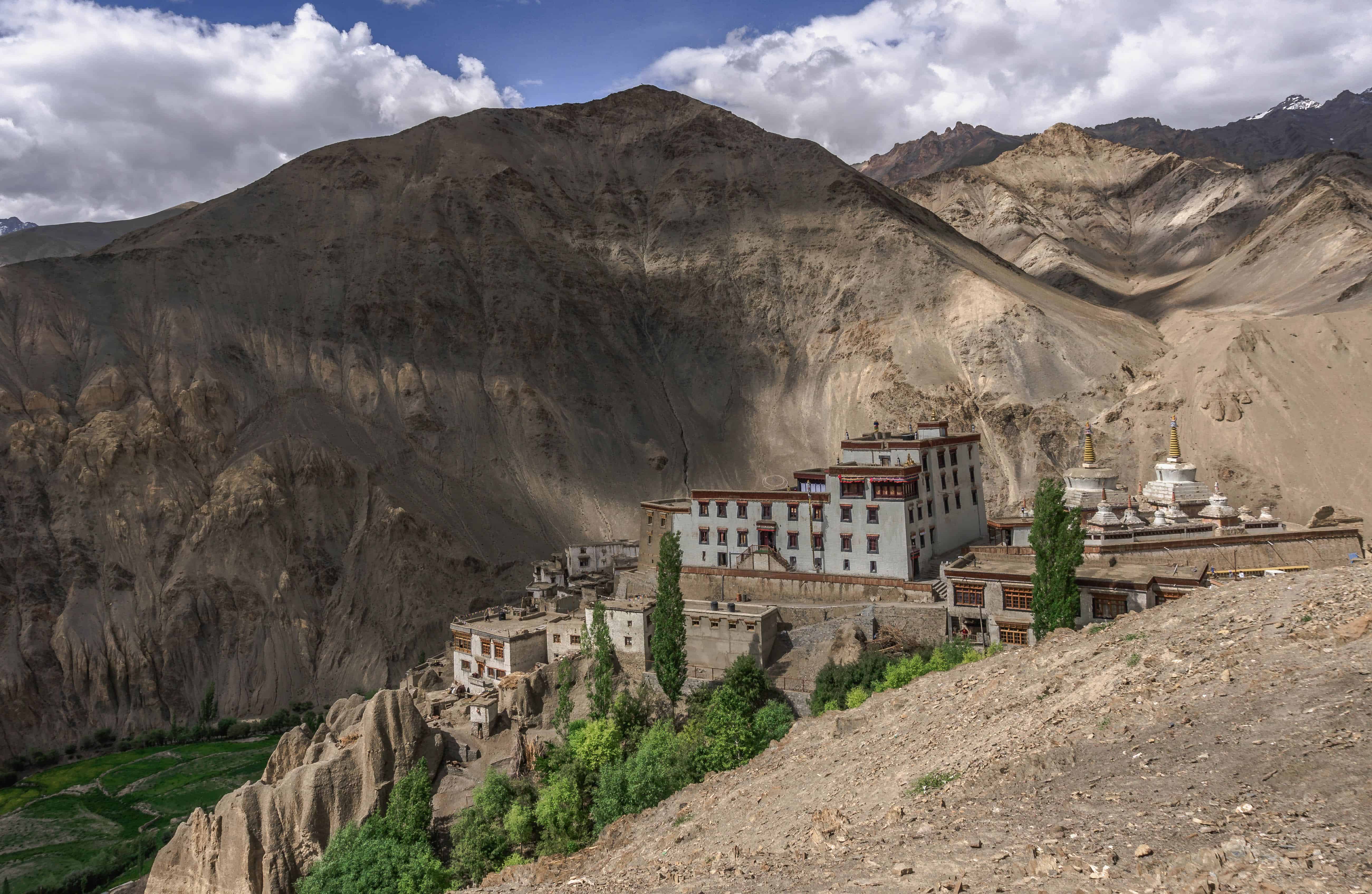
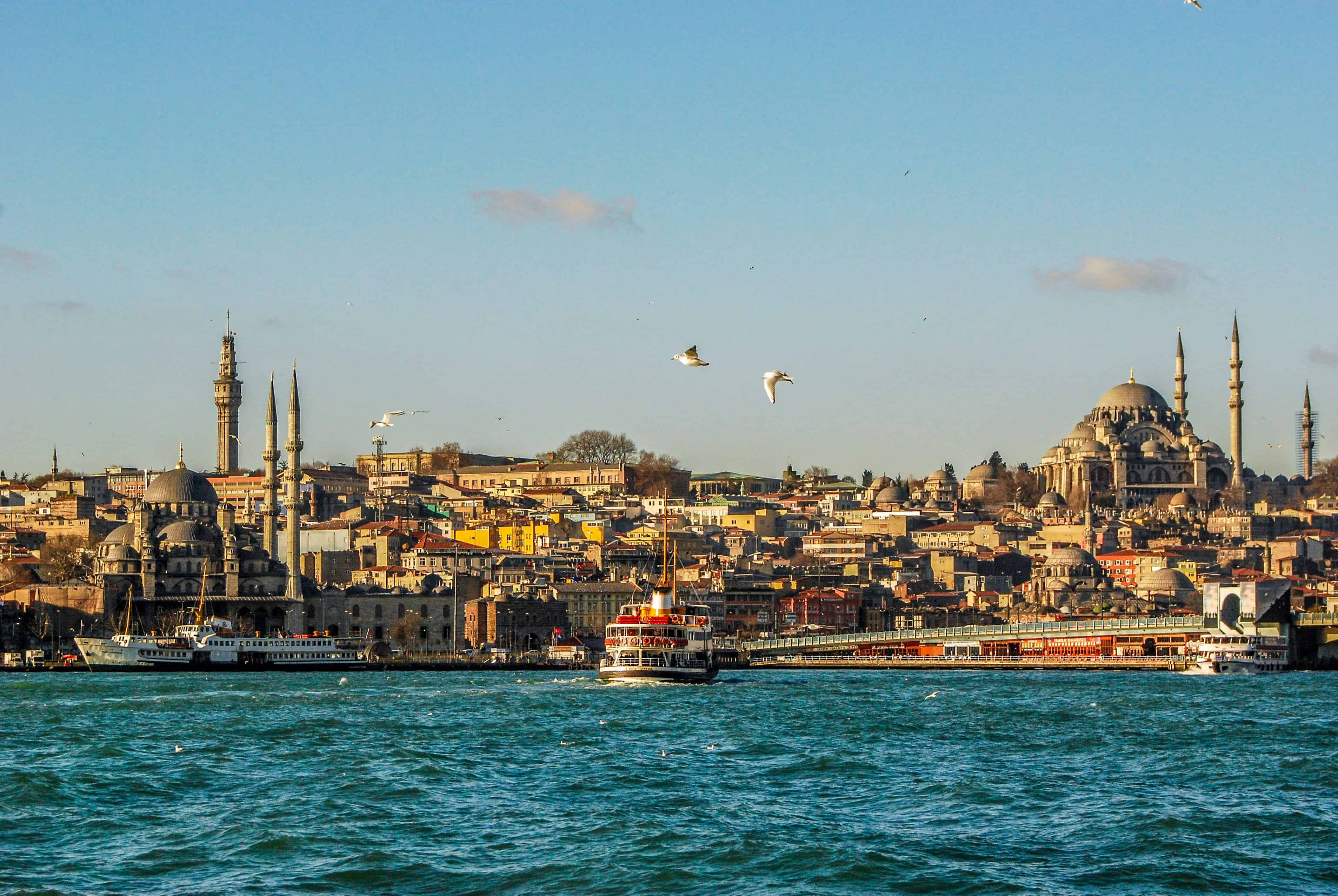
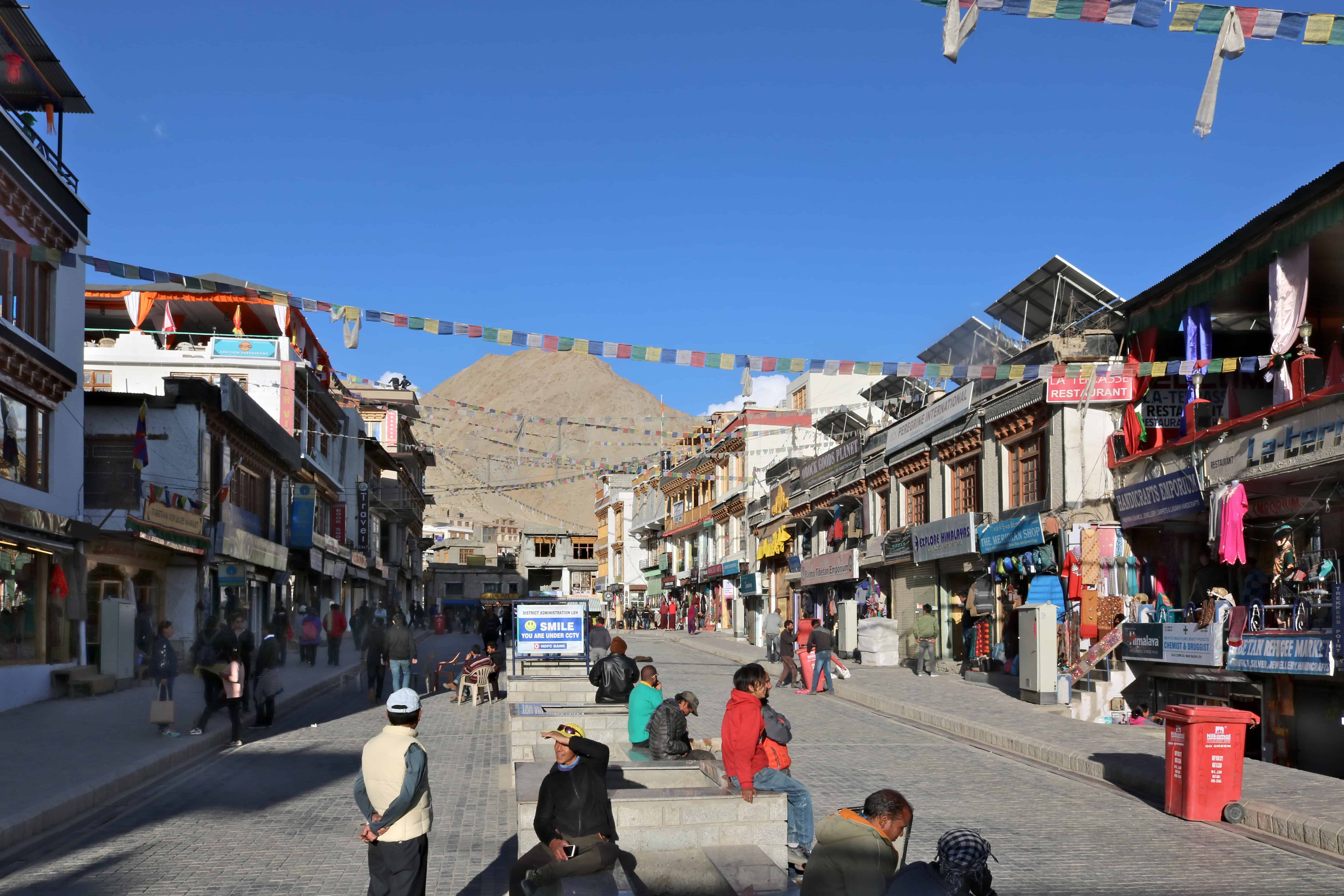
In Ladakh, mountain monasteries mark routes once connecting northern India with Yarkand and Tibet. At Angkor and Prambanan, Indian religious ideas survive in distinctly Khmer and Javanese forms. Istanbul carries the western memory of networks linking Asia with the Mediterranean.
The smaller traces may be even more powerful: a Sanskrit word lives in a Japanese meditation hall, a Central Asian instrument sounds at a Chinese concert, a Southeast Asian dancer enters an epic composed in India centuries earlier, and a lotus holds up a Christian cross.
The history includes rivalry, conquest and persecution, alongside long periods of curiosity and coexistence. Its deepest legacy lies in the repeated act of encounter. People met beliefs that arrived from beyond the horizon and found ways to understand them.
Faith travelled because someone packed a manuscript, paid for a translation, offered a traveller a bed or carved a familiar flower beneath an unfamiliar symbol. It endured because each destination gave it another life. The Silk Routes carried the sacred across continents, and in return, the journey changed what the sacred could become.
Frequently Asked Questions
1. Why are they called the Silk Routes instead of the Silk Road?
The plural reflects a vast network of interconnected land and maritime routes linking Asia, the Middle East and Europe. Merchants, pilgrims and scholars travelled across different sections, exchanging goods, beliefs, languages and artistic traditions along the way.
2. Which cities became sacred crossroads on the Silk Routes?
Khotan, Kucha, Turfan, Dunhuang, Samarkand, Bukhara and Kashgar became important sacred crossroads. Their monasteries, markets, caravanserais, temples and libraries brought diverse religious communities into sustained contact.
3. How did Hinduism travel beyond India?
Hindu beliefs travelled through merchants, scholars, Brahmins, artisans and royal connections. Maritime trade carried Shaiva and Vaishnava traditions towards Southeast Asia, where local cultures reshaped Indian epics, sacred imagery, temple architecture and ideas of kingship.
Read more – Explore the World