

Discover the crafts of Goa beyond the beaches reveal stories of artisans, heritage, materials and everyday creativity
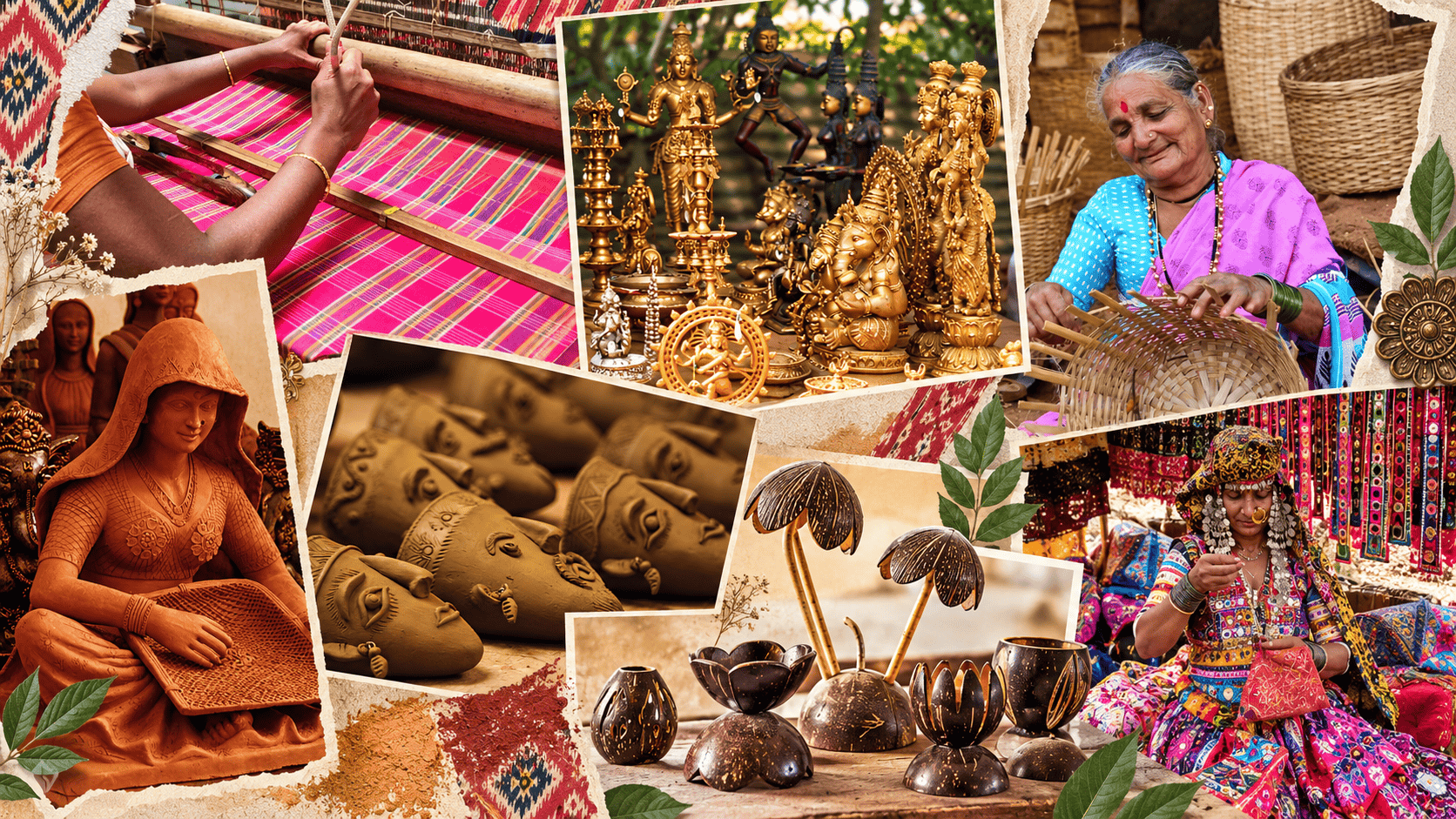
Often Goa is introduced through its beaches, churches and nightlife, or colourful tourist markets. However, the familiar image of a holiday hides another part of a state — one molded from products such as those found in its villages and crafts that have been passed down through generations. Through the craftsmanship of local artisans, coconut shells, bamboo, cane, wood, clay and metal took shape into utilitarian products and decorative items.
As much as its cultural history, the craft traditions of Goa are also a reflection of nature and natural environment in which it functions. Goa’s government database shows wide ranging incidents of handicrafts like crafts on coconut, cane and bamboo work, wood craft, brassware, pottery and terracotta shell craft and batik crafts alongside embroidery likewise furthermore imaginative weaving. These traditions also reflect the various cultural communities that, over centuries, have set foot in Goa.
The crafts offer one more way of understanding Goa, if only the travelers are willing to look away from the beaches for a moment. They tell us not only about the finished objects, but the materials, techniques and people who keep them alive.
Coconut Shell Craft: Making Use of What the Coast Provides
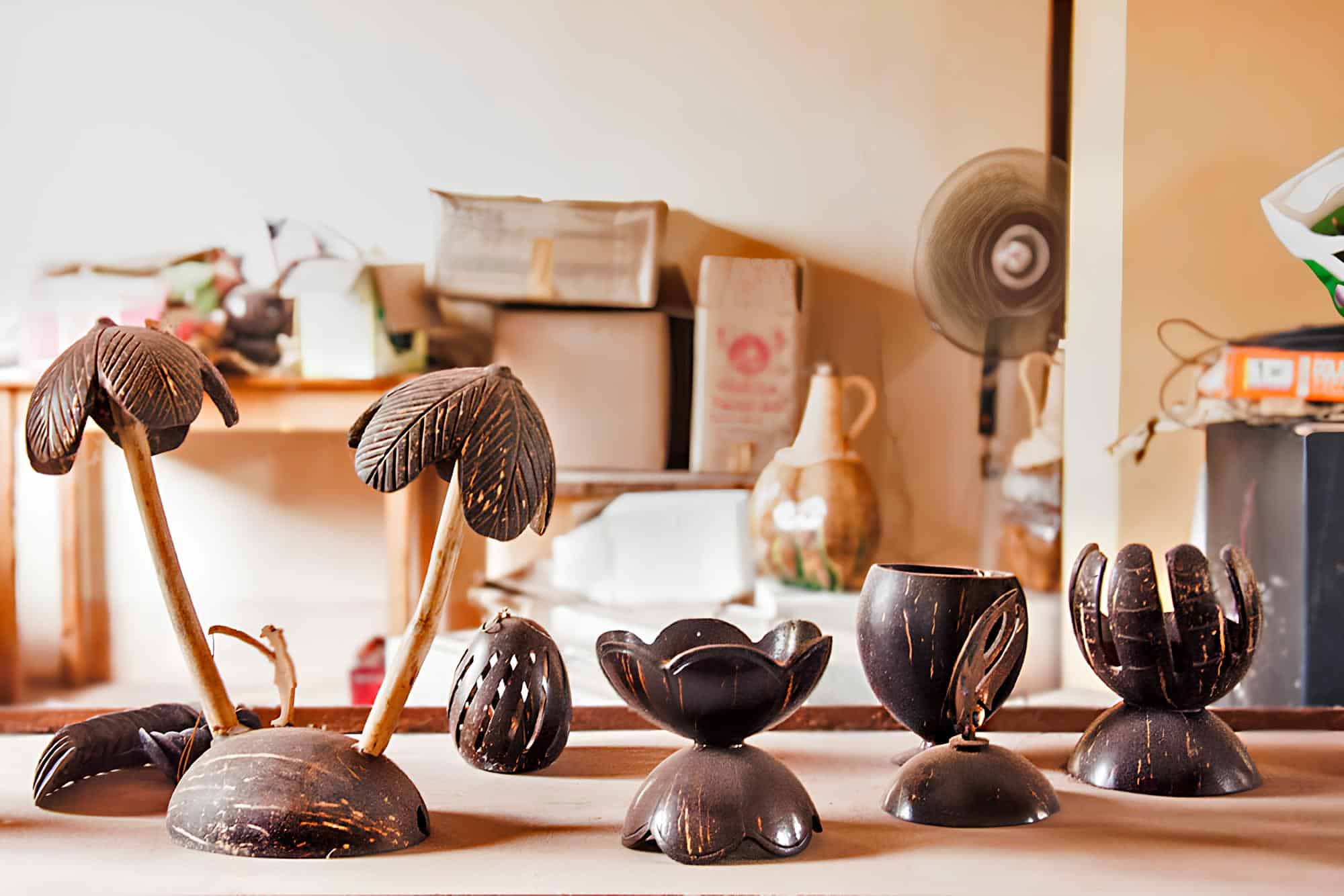
Coconut is an integral part of daily life in Goa Coconut palms are found throughout the state and coconut is an important agricultural commodity in the state. Which means its not at all odd that they made an appearance in local crafts as well.
- Coconut shell craft turns waste material into useful and decorative items.
- They can be scoured, molded, smoothed out, and engraved into craft items.
- The raw luster and flow of the shell bring to life the final design.
- With this material, modern artisans can transform it into ornamental parts or use for utility goods.
- The craft connects everyday agricultural material with small-scale creative work.
Coconut shell carving is still part of the handicraft skills offered through training programmes organised by the Government of Goa, so there is no need for it to remain a nostalgic reminder but can still be nurtured like any other craft going forward into contemporary markets.
Bamboo and Cane: Craft Shaped by Local Materials
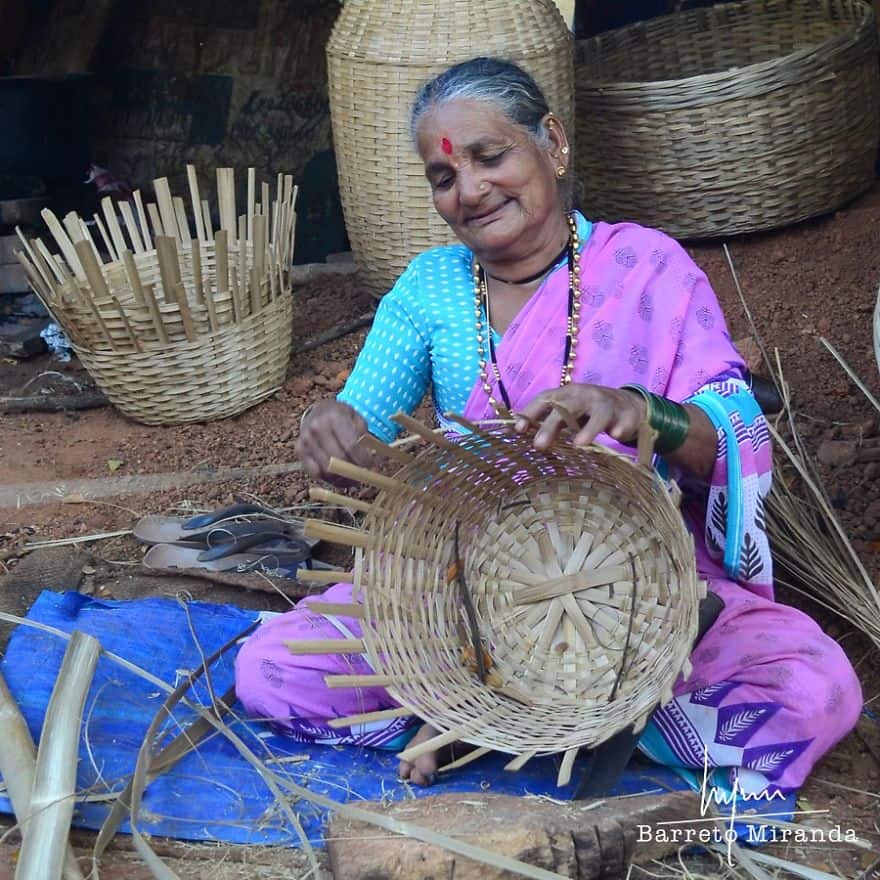
Bamboo and cane have served the community for ages across Goa. According to government records, bamboo craft is one of the top art forms in the state and artisans are mainly located in some areas of Pernem and Sattari. The raw material comes from nearby bamboo-growing regions thus anchoring the craft in the landscape.
Attractive characteristics of bamboo and cane are flexibility and strength. Different kinds of artisans can cut, split, shape and weave these materials into functional and decorative pieces alike.
- Weaving has so many traditional usages such as baskets and containers.
- Even bamboo and cane can be utilized to create furniture and household goods.
- It takes patience and knowledge of how the material works.
- Local availability of bamboo has helped sustain craft activity in village communities.
As a traveler who has only ever seen bamboo used as an exotic souvenir in the markets of Goa, trying something else gives you another lens through which to see how practical some aspects about Goa’s villages have been with their surrounding natural environment.
Pottery and Terracotta: Goa in Clay
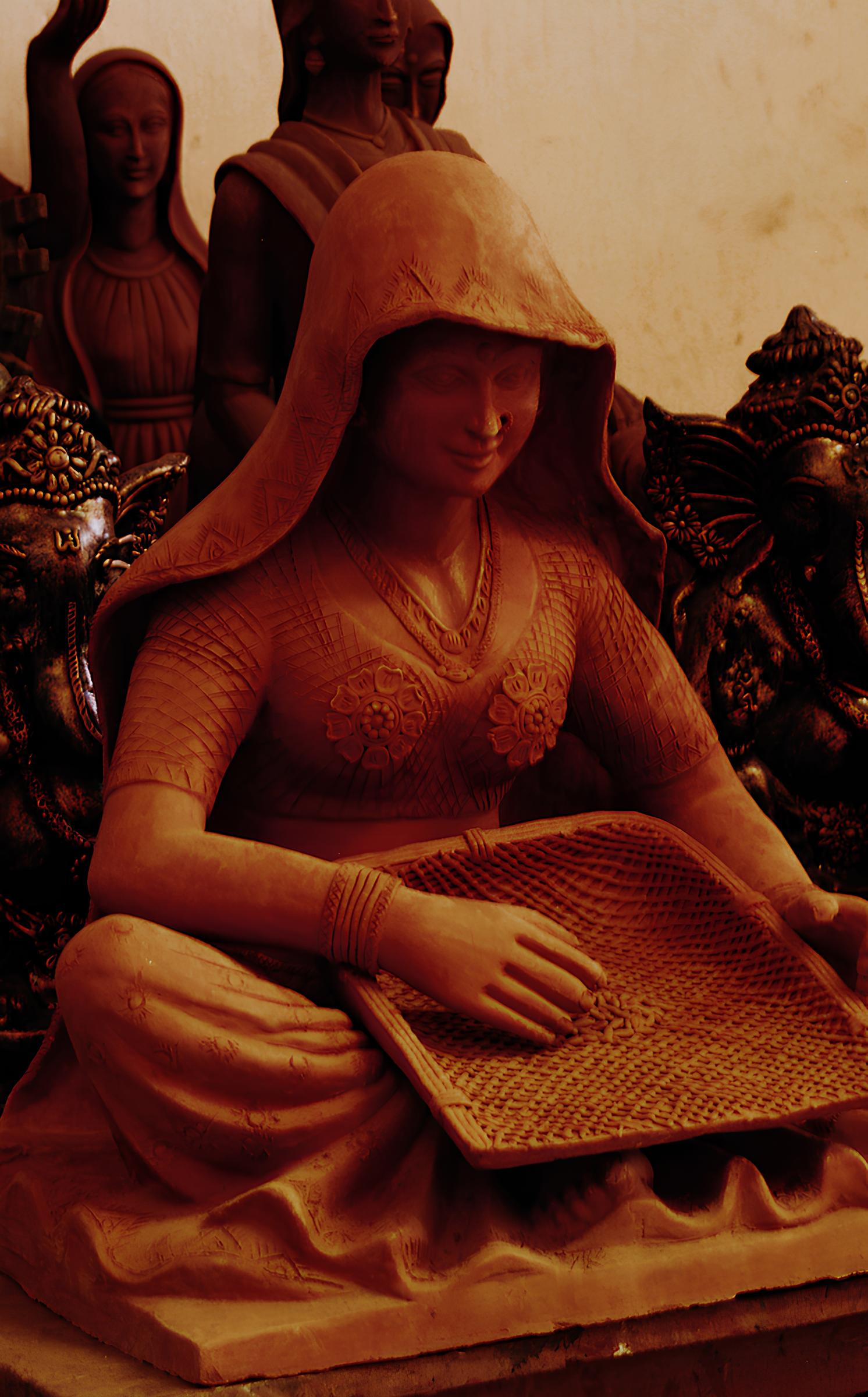
Another art form that bridges creativity and daily life is pottery. Clay can be shaped into vessels, decorative objects and traditional forms before being dried and fired. Pottery and terracotta work are part of Goa’s handicraft and still being trained by state’s skill-development programmes in terracotta pottery.
Crafts can be meaningful without being unchanging. Modern day artisans can explore designs, forms and purposes while still maintaining the skill of working with clay. The ongoing pottery training indicates a key change: the craft that used to be an inherited profession now can help newcomers make a livelihood.
Wood Carving: Stories Written Into Timber
Wood, meanwhile, has a significant role in Goa’s architectural and decorative arts. Firstly, Wood carving has been one of the main crafts in state handicraft records and current government training programmes still teach woodcarving and carpentry.
Design starts from learning the material for wood carving. A plank of timber is slowly sculpted away through cutting and carving, as ornate detail or practical structure begins to emerge.
The larger cultural mosaic of Goa is also representative of centuries of Indo-Portuguese interaction. Architecture, religious spaces and even domestic design are examples of using woodcraft in a much larger exchange narrative.
This transforms a wooden carving from souvenir inside tourist luggage into more than that. The whole thing can be seen as a glimpse into the artisanship and cultural influences that have gone hand in glove in Goa over time.
Brassware and Metal Craft: The Beauty of Everyday Objects
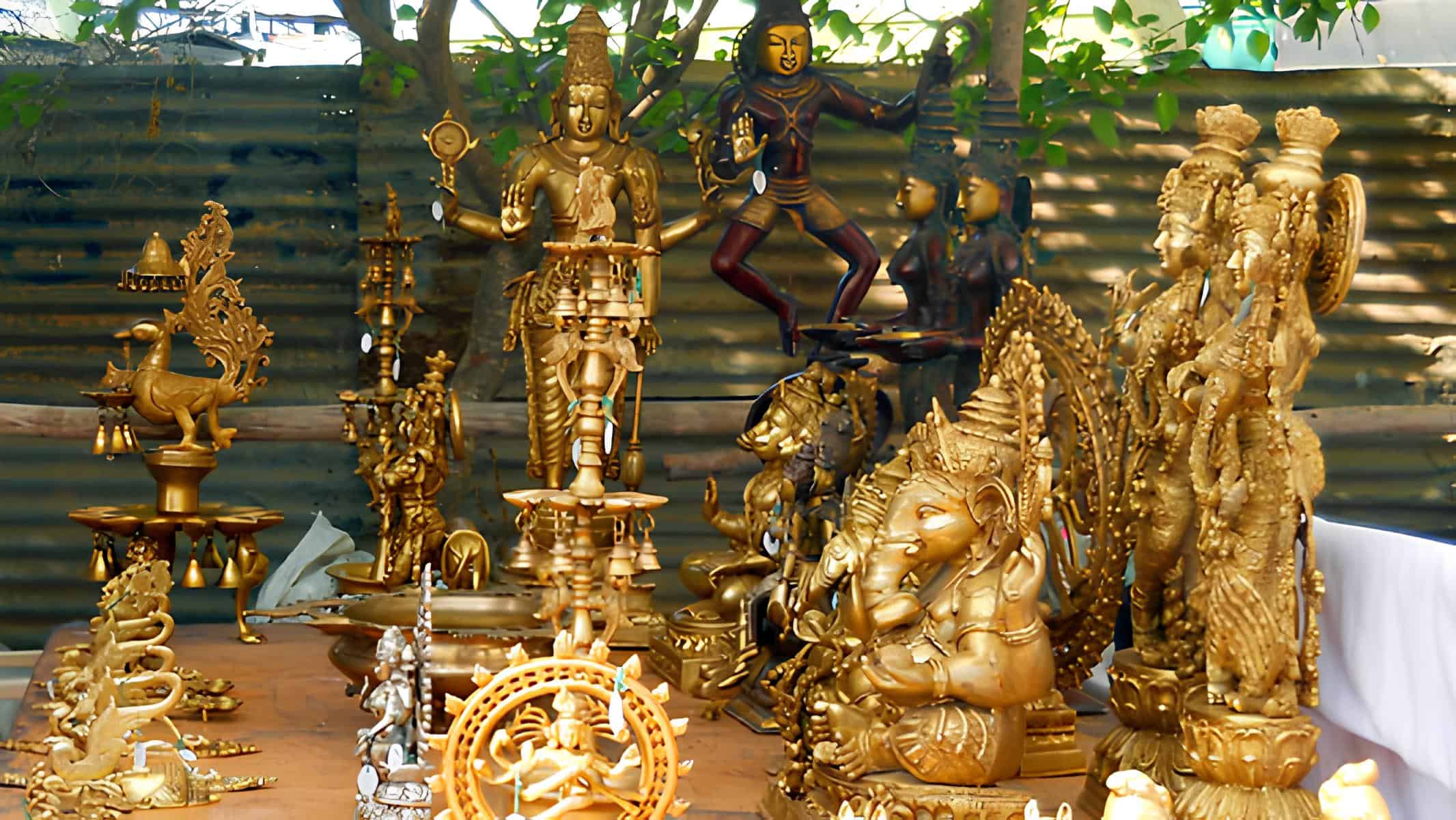
Goa also offers the craft of metal work, which provides an extra layer to its handicraft heritage. Brassware, alongside metal embossing and jewellery-related crafts, is specifically mentioned in the state’s traditional handicraft products.
- Brass has long been admired for its strength and warm appearance. Metal artists need precision to cut, finish and embellish their goods.
- Traditionally Brassware is often used to both practical use and decorative design.
- Using metal working to press patterns in the surface of items.
- Metal craft reflects the wider tradition of skilled small-scale production in Goa.
We still have markets today where artisans have adapted those traditional methods into new products. They also show the breadth of Goa’s art beyond natural fibres and clay. State craft as such has a spot for metalworking.
Textiles and Decorative Needlework
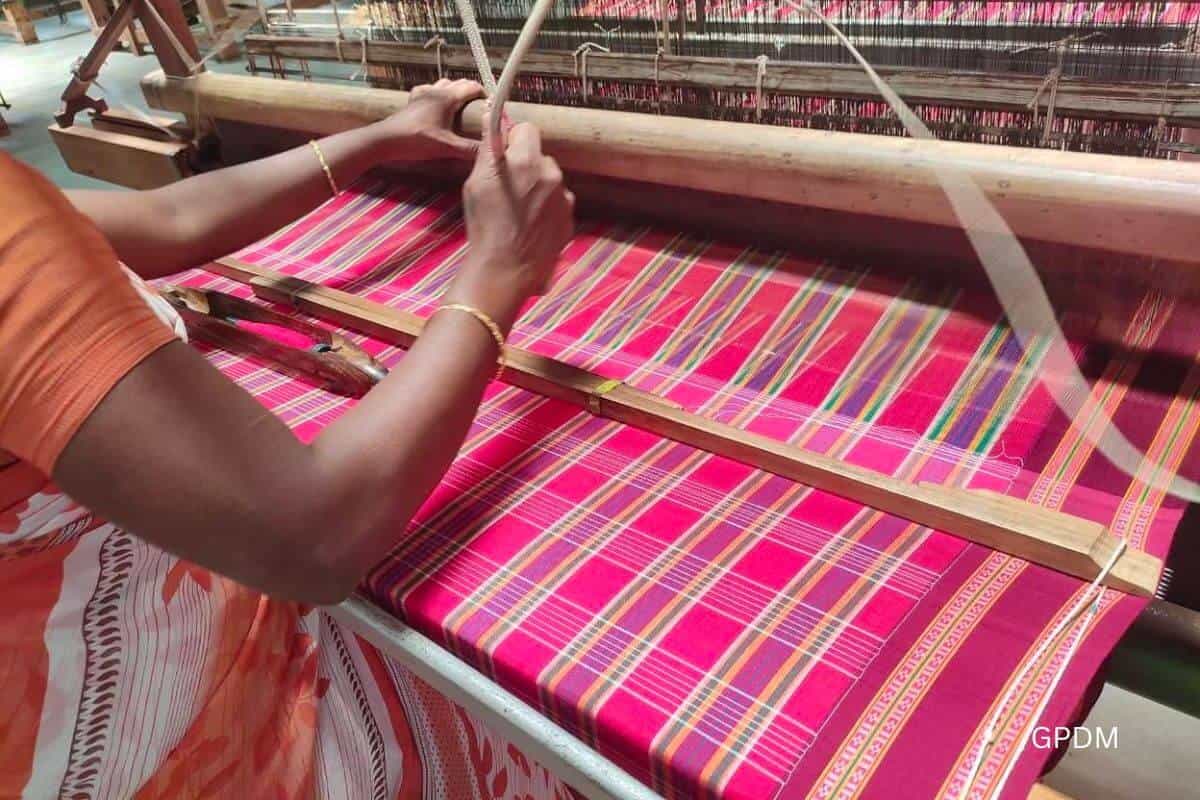
Textiles are among the other craft traditions of Goa. Handicraft activities of the state, according to government records, include embroidery, crochet, batik printing, fabric collage and woollen tapestry and artistic weaving.
The various types of textile work exhibit how craft can become an element of clothing, interior design and self-presentation. Textile traditions can intersect stitching and printing, weaving and surface decoration — unlike the single material based craft.
The contemporary relevance of embroidery and artistic weaving is indicated by their continued inclusion in government skill-development programmes. It also prepares, updates and ensures that traditional and semi-traditional skills are relevant to changing markets and newer generations of artisans.
When Craft Becomes a Way to Understand Goa
These crafts share a connection through their relationship to the everyday environment. Coconut shells derive from a crop closely linked to the Goan landscape. Artisans leverage forest & village resources for bamboo and cane. From clay to pottery, wood to carved objects, metal to decorative ware, and textiles become showcases of skills and design.
It is also an effort that increasingly tries to connect those with these skills with actual livelihoods. The training and assistance programs run by the Government of Goa’s Department of Handicrafts, Textile and Coir for artisans range from bamboo craft, pottery, wood carving, embroidery, weaving among other traditional trades. Its schemes too support trained artisans to practice and market their crafts.
Especially in a state where tourism has such an obvious effect. In particular, tourism provides a potential new market for artisans to sell handmade products; but it can also transform a living craft into an attractive yet standardised souvenir. The dilemma here is to leverage the artisans of a community to utilize tourism without making their traditions mere artefacts for visitors.
For travellers, exploring Goa’s crafts can therefore become a different kind of cultural experience.
- Look beyond the most tourist-heavy markets and seek out craft exhibitions, village experiences and artisan-led activities.
- Ask about the material, process and community behind a handmade object rather than only its price.
- Support genuine handmade work where possible.
Read more – Discover Your India