

Today’s Traveller curates the editorial showcase, Best Events Across the USA 2026, anchored around the United States’ 250th Anniversary year, before India’s high-value travel market. Across Texas, guest ranches turn cowboy history into lived journeys through horses, campfires and country.
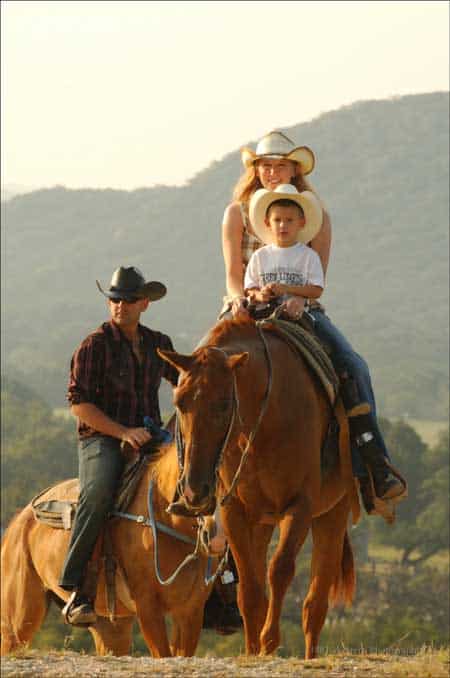
The cowboy has travelled far beyond Texas. He exists in film, fashion and popular imagination, reduced at times to a hat, a pair of boots and the silhouette of a rider against a setting sun. Across parts of Texas, however, the culture behind that image remains tied to landscape, livestock and routines that long predate its cinematic mythology.
Guest ranches offer travellers an unusual way into that world. Days are shaped by saddles and trail rides, cattle and cookouts, rivers, mountains and long stretches of open land. Some properties have evolved into polished resorts; others remain deliberately simple. What connects them is a relationship with Western heritage that visitors experience through participation rather than observation.
Bandera is a natural place to begin. The Hill Country town’s claim to being the “Cowboy Capital of the World” has roots in its role as a staging point for the great cattle drives of the late nineteenth century. The Western Cattle Trail carried millions of longhorns north through this region between 1874 and 1894. Guest ranches subsequently became part of Bandera’s identity, with early ranches hosting summer visitors and staging rodeos from the 1920s onwards.
Flying L Ranch Resort, Bandera
At Flying L Ranch, the story of the West takes an unexpected detour through aviation. Colonel John H. Lapham, a retired Air Corps officer, established the property in 1947, introducing an airstrip and flight school alongside its ranch operation. Its original villas were designed with forms said to resemble grounded aircraft, while the surviving Pilot’s Lounge later received historic-landmark recognition.
That history gives Flying L a character slightly removed from the conventional dude-ranch template. Today, cabins, villas and lodges sit alongside an 18-hole golf course, while wagon rides, horses, campfires and Western entertainment keep the property’s ranch identity visible. It is a reminder that the Texas ranch story has rarely remained frozen in one period; it has continuously absorbed the ambitions of the people who occupied the land.
Dixie Dude Ranch, Bandera
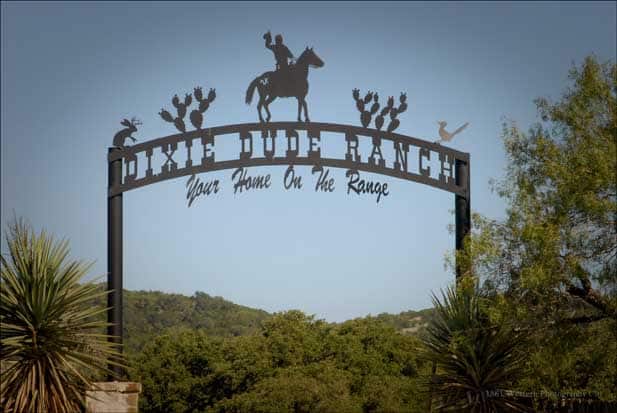
A few miles away, Dixie Dude Ranch follows a more traditional line. Founded as a stock ranch in 1901 and now in its fifth generation, it still raises livestock across 725 acres of Hill Country. The property has been receiving dude-ranch guests for more than eight decades.
Here the structure of the day retains much of the old guest-ranch rhythm: horseback riding, family-style meals and time outdoors. Cabins and ranch buildings provide the setting, but the land remains the central character. Trails move through limestone hills and open pasture, creating the sense that riding is less an excursion added to a holiday and more the organising principle of it.
Mayan Dude Ranch, Bandera
At Mayan Dude Ranch, the Medina River changes the mood. The river curves around the 348-acre property, its cypress-lined banks meeting trails that climb from the lowlands into surrounding hills. Rustic cabins on the site trace part of their history to a 1930s Girl Scout camp.
Horseback rides remain central, with guided rides generally heading out morning and afternoon. Yet the ranch also reflects the social side of Western culture: hayrides, cowboy breakfasts, barbecues, dancing, fishing and evenings gathered around a bonfire. There is a looseness to the experience, especially where the river enters the picture. A Texas ranch holiday can involve dusty trails in the morning and a swim beneath cypress trees later in the day.
Rancho Cortez, Bandera
Rancho Cortez represents a newer chapter in Bandera’s guest-ranch history. Larry and Mary Cortez established the ranch after encountering the region’s older dude-ranch culture and deciding to build their own version of it. Over time, the property expanded its accommodation and recreation facilities while keeping horses at the centre of the experience.
Trail rides are paired with lasso lessons and wagon rides to feed longhorn cattle, while evenings often end around the campfire. The format makes the traditions approachable to visitors who may never previously have been near a saddle or cattle pen. The learning is informal: how to sit on a horse, throw a rope, read the terrain and understand a little more about the working rhythms behind cowboy imagery.
BlissWood Ranch, Cat Spring
East of the Hill Country, the scenery softens at BlissWood Ranch near Cat Spring, roughly an hour west of Houston. Its 350 acres contain meadows, oak woods, creeks and lakes, creating a greener, quieter version of ranch country.
Horseback trails cross this varied landscape, while fishing, kayaking, archery and trap shooting extend the outdoor programme. The ranch is also home to cattle, horses, peacocks, antelope and American bison. Rather than recreating a single vision of the Old West, BlissWood demonstrates how broadly the contemporary ranch stay has evolved, combining horsemanship with wildlife, water and long periods of deliberate stillness.
Texas Ranch Life, Chappell Hill
Near Chappell Hill, Texas Ranch Life reaches further back into the state’s settlement story. Its 1,800-acre Lonesome Pine Ranch was originally settled in 1823 by a member of Stephen F. Austin’s “Old Three Hundred.” Today it remains a working cattle and horse ranch, with American Quarter Horses and Texas Longhorns sharing land where coastal prairie begins to rise into the central Texas countryside.
Accommodation is found in restored historic Texas houses dating from the nineteenth century. Beyond horseback riding, activities include cattle drives, team penning, roping, skeet shooting and guided ranch tours. The combination makes history tangible. The houses, horses and cattle belong to different chapters of Texas’s past, yet here they occupy the same landscape.
Wildcatter Ranch, Graham
North Texas introduces another change of scale. Wildcatter Ranch, near Graham, occupies a 1,500-acre plateau above the Brazos River, where rockier terrain and broad views create a more rugged horizon.
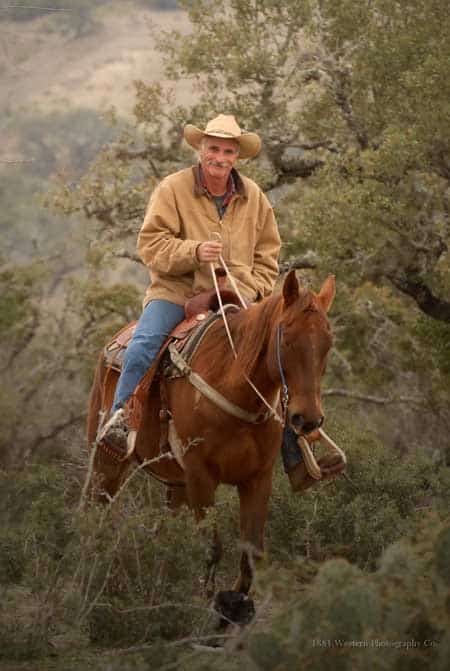
Trail rides descend through the landscape towards river valleys and cliffside viewpoints. Clay shooting, roping, archery, longhorn feeding and Jeep excursions expand the ranch experience beyond the saddle. The region’s history encompasses frontier forts, cattle country and the oil boom, giving Wildcatter a Western identity shaped by several eras rather than one.
Prude Ranch, Fort Davis
Farther west, Prude Ranch shifts the story decisively into the mountains. Set at around 5,000 feet in the Davis Mountains, the ranch has welcomed guests for more than 125 years and remains connected to generations of the Prude family.
Its horseback trails wind through mountain terrain and across streams, with the high-desert landscape creating a very different experience from the oak-covered hills around Bandera or the green pastures closer to Houston. Cabins, bunkhouses and trails retain a straightforward ranch character, while the surrounding West Texas skies become part of the experience after daylight disappears.
Together, these ranches reveal why the Texas West continues to hold such fascination. There is pleasure in the boots, hats and campfire rituals, certainly, but the deeper appeal comes from entering a different tempo. Horses set the pace. Distances feel larger. Meals become gatherings. Nightfall matters again. The cowboy legend may belong to the world now. Across Texas, the landscapes that created it are still telling the story.
Read More: Best Events Across the USA