

From the red and white designs of Kumaoni Aipan to the functional basketry of Ringaal, explore the crafts of Uttarakhand
Beyond the classic imagery of Uttarakhand, its Himalayan peaks, pilgrimage routes, hill stations and trekking trails- lies a different perspective on the region, one that is visible in the painted patterns found on the thresholds of homes; the bamboo woven into baskets; the wool spun into warm clothing; and the wooden door frames and structural elements of mountain residences.
These traditions evolved in a tight connection with their environment. The people used local resources to create things they required on a daily basis, and art and patterns were linked to celebrations, festivals, and religious practices. Whether it is the red and white designs of Kumaoni Aipan or the functional basketry of Ringaal, the crafts of Uttarakhand show us a culture that has been created both through human action and the landscape of the mountains.
Aipan: Sacred Patterns on the Threshold
A red background with neatly painted white lines has many levels of meaning in the Kumaon region of Uttarakhand.
Aipan is a traditional form of folk art that is most commonly associated with Kumaon. It was traditionally created on floors, walls, courtyard areas and in places of worship. Aipan has strong ties to religious ceremonies and other major events, such as marriages, births, and sacred-thread ceremonies.
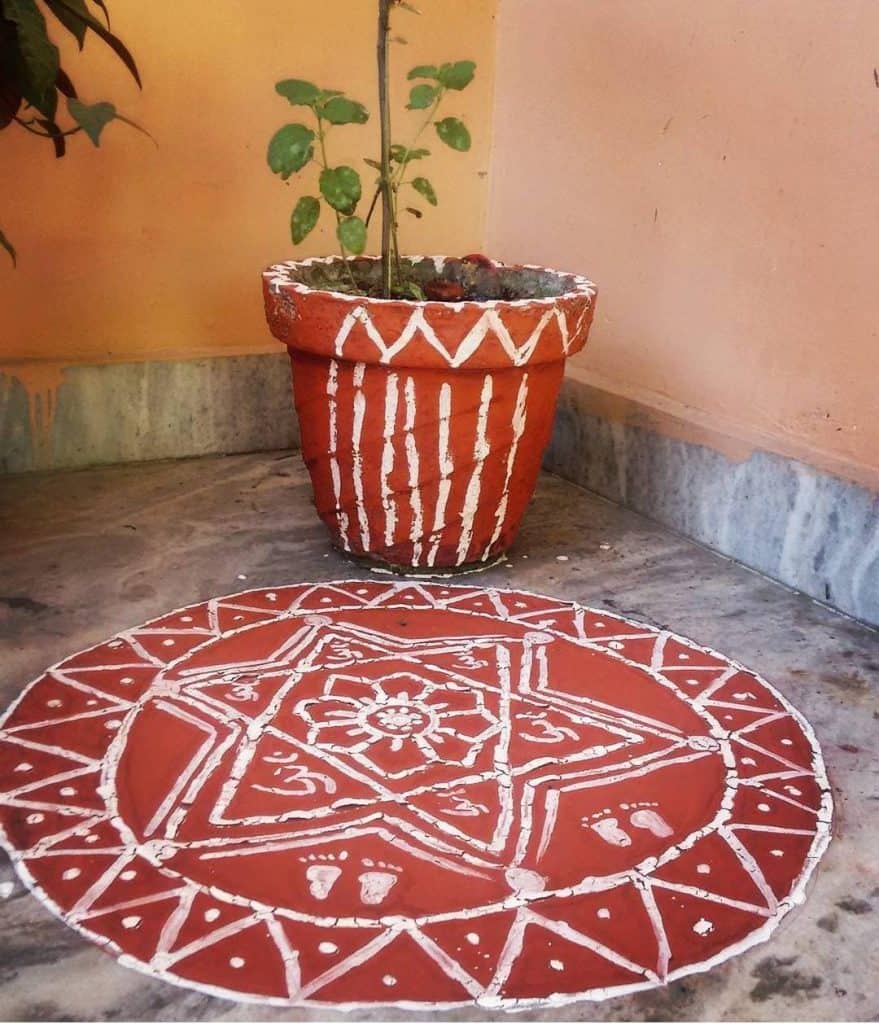
The simplicity of the traditional process is what makes it so striking. To begin with, a red ochre base called geru is laid down first, and then white designs are made on top of this base with a paste composed of rice. These designs have historically been drawn by hand; they consist of various combinations of dots, lines, geometric shapes, religious symbols and images taken from nature.
Different designs are often associated with certain events. Some designs, such as the Lakshmi Yantra and Saraswati Chowki, are especially used in rituals. The design’s shape is just as important as how the design looks.
Aipan has been traditionally practiced primarily by women. The practice of aipan allows for designs and techniques to be passed on from generation to generation through families.
Today, however, the art has moved beyond floors and walls.
- Aipan patterns now appear on trays, boxes and decorative objects.
- Artists create designs on paper and cloth.
- The patterns can be found on wall hangings, bookmarks and household décor.
- Clothing and accessories today are also being used as a way to use the traditional visual language.
The material changes, but the same combination of red, white and complex geometric patterns makes Aipan easily identifiable.
Ringaal: Bamboo Shaped by Mountain Life
The way Ringaal shows us how to make something useful out of a need for something practical is similar to the way Aipan represents the religious ceremonies of Kumaon.
Ringaal, a long-established craft made from bamboo, is used to make products such as furniture, baskets, and mats in the Garhwal and Kumaon regions. To produce these products, artisans use different types of mountain bamboo that are able to be cut into thin strips and then used to create strong but light weight products.
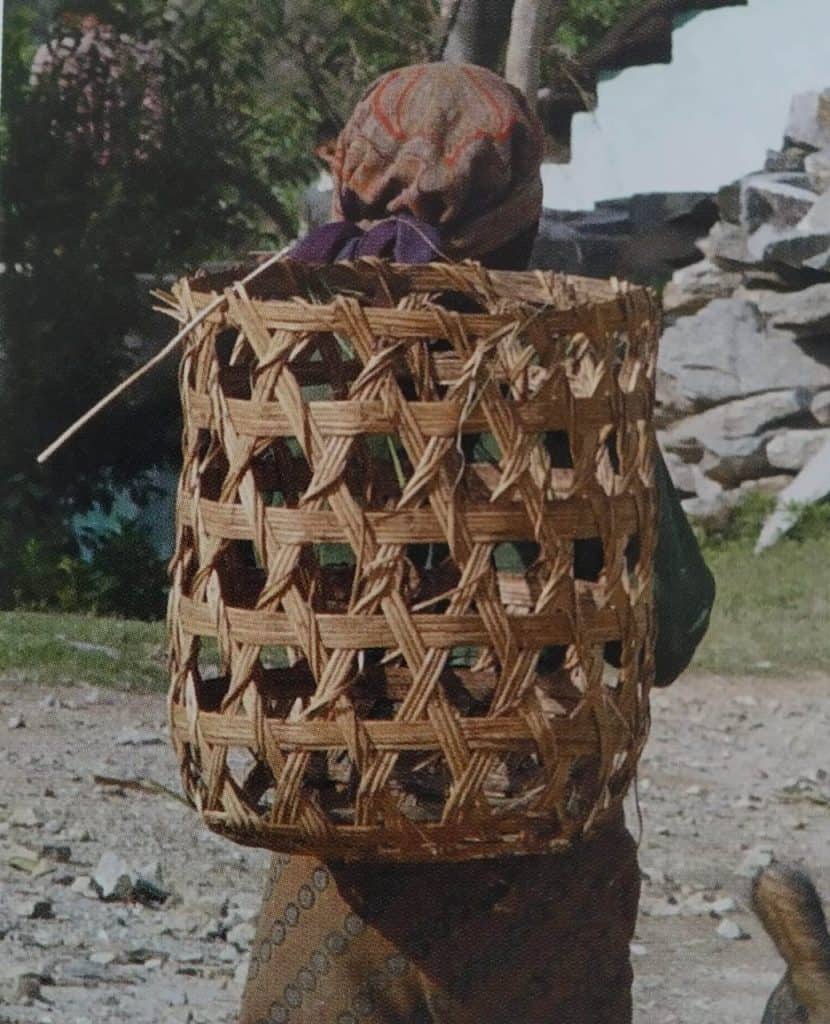
Image Courtesy: Wikimedia Commons
These products have been historically used as more than just decorative items. Bamboo has been formed based on the needs of daily life in the mountains.
Traditional Ringaal products include:
- Doka, a large basket used for carrying goods
- Dalia, a shallow basket
- Suppa, a winnowing tray
- Baskets used for storing or measuring grain
- Mats and other household objects
Producing the products requires much preparation. The bamboo is harvested and cut into strips. Those strips are then cleaned and organized by how thick they are. Once the strips have been organized, artisans will begin weaving the strips together starting at the bottom and continuing to build the sides of the product, finally reinforcing the top edge of the product.
The result is an object whose form is determined largely by its purpose.
Ringaal has also been used for new purposes. Contemporary craftsmen are creating lamps, decorative baskets, puja baskets, and other household items using the exact same raw materials and traditional weaving techniques.
The transition from using traditional, handmade objects for farming and household purposes to creating modern decorative items demonstrates that a traditional craft can evolve in function while continuing to be connected to the Himalayan region.
Wool and Weaving in the Higher Himalayas
For generations, in the colder regions of Uttarakhand, wool has been a significant component used to produce both apparel and other household textile items.
The woollen industry in areas like Munsyari, Dharchula, Bageshwar and many other areas of Kumaon have produced some of India’s most popular woollen items such as shawls, carpets, and blankets. There is a tradition of weaving that reveals the cultural exchanges among different Himalayan communities in the border areas.
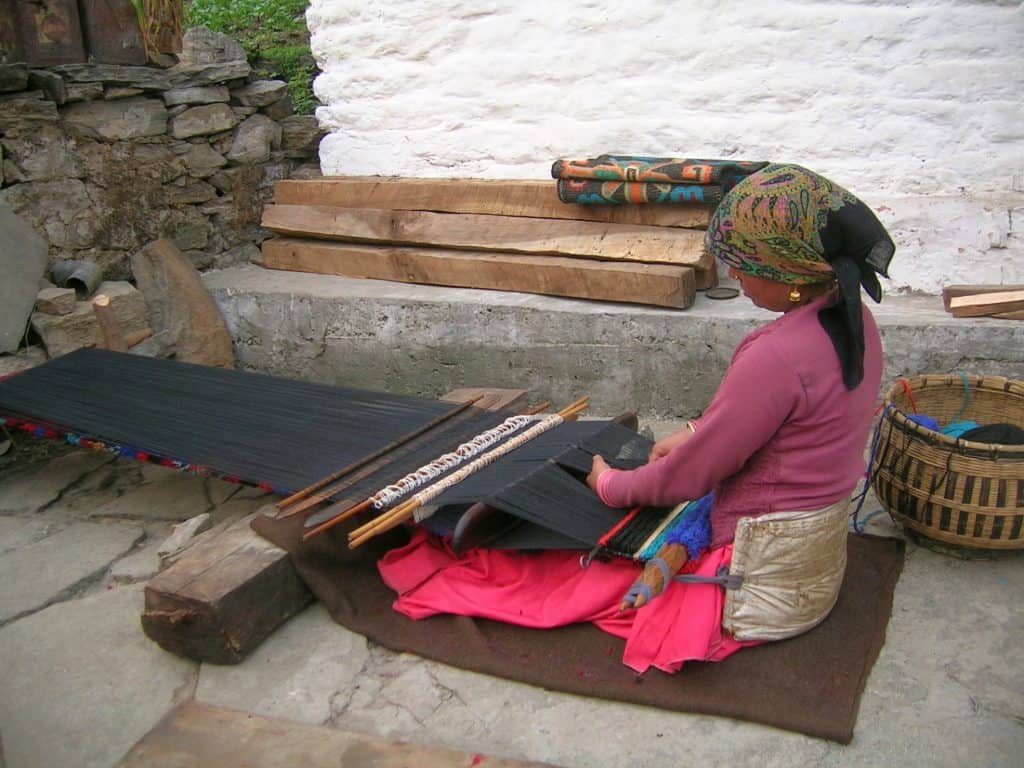
The Shauka or Bhotia communities that live in the higher regions of Himalayas are especially known for their wool production. In addition to carpets, these people produce many types of woven goods. In both types of products, one can find elements from their own culture as well as from Tibet.
In mountainous areas, people used wool to create blankets, rugs and clothing that would provide warmth. As time went on, weavers began to develop their own styles of weaving, as well as their own color choices and regions.
The wool traditions in Uttarakhand are represented by two of its most famous wool products: the “Thulma” blanket and “Bhotia” carpet, both of which have been given geographical indications.
Today, the use of woollen textiles spans the gap of being both functional and representing a long history of cultural heritage and providing income. Woolen products such as shawls, rugs, carpets and other items are sold at retail outlets throughout the world in addition to those located in the high altitude areas of the world which have a strong tradition of producing woollen products.
Wood and Stone: Craft Built into the Hills
Traditional craft of uttarakhand is not just about making things that people take with them when they leave from the trip. in many cases, crafts are actually built right into the environment.
Wood carving has been an integral part of the architecture tradition in both Kumaon and Garhwal for many years. Many of the older homes, churches, temples, and other structures contain carved doors, windows, pillars, and decorative panels.
Wood became such an important building and decorating material due to its availability. Craftsmen used wood from the structural components of buildings to create flat surfaces on which they could carve out intricate designs. This made the craft an integral part of the structure of the building.
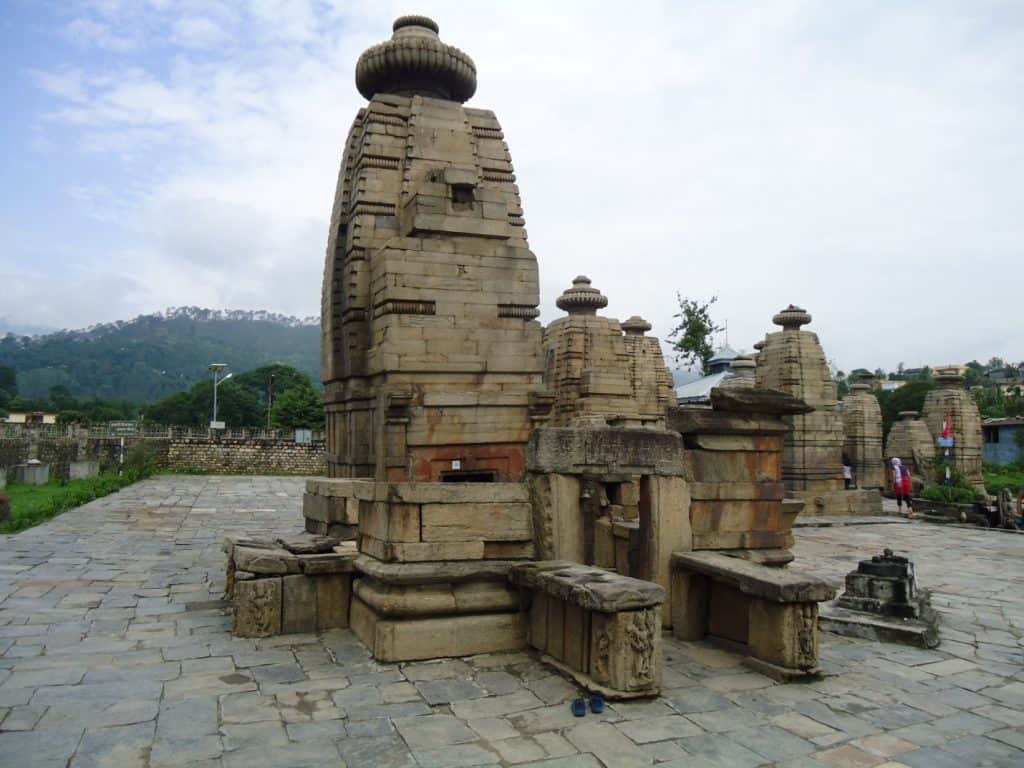
Uttarakhand’s temple architecture provides a very clear example of how material and skill are connected. Examples such as Baijnath illustrate the state’s tradition of using stone as a building material, and there are many instances of surviving wooden carvings in both temples and other ancient structures throughout the hills.
Garhwal Painting: A Different Himalayan Canvas
The Garhwal school of painting is one of the many schools of Pahari painting that developed throughout the entire Himalayan region. While there are some who treat the whole of Pahari painting as a single Garhwali tradition, Garhwal painting is more closely linked to the state of Uttarakhand.
The school’s development can be seen as having evolved through both the courtly and regional artistic influences of the time. Perhaps the most famous artist of this school, and one who was greatly tied to the Garhwal tradition, was eighteenth century poet and painter, Mola Ram.
The artist’s works were often based on religious or literary themes; however, the physical geography of the Himalayas also played a role in shaping the aesthetic nature of these works.
Experiencing Uttarakhand Through Its Crafts
Travellers who wish to learn about Uttarakhand’s traditional customs may choose to go beyond the usual sights and see those areas of Uttarakhand that still practice those traditional customs.
- Explore the Kumaon region’s Aipan tradition: The Aipan tradition of the Kumaon region including areas like Almora and Nainital, introduces us to how households use art in their daily rituals.
- Search for Ringaal Products: Ringaal products, both traditional and contemporary represent the ways that people from mountainous regions have utilized locally available natural resources.
- Explore the wool traditions of Kumaon: The areas of Munsyari, Dharchula, Bageshwar, and other nearby locations have a long history of woollen weaving and Himalayan textile practices.
- Look at ancient buildings with care: Historic houses and temples can reveal carved doors, wooden details and stonework that are easy to miss when attention is focused only on the monument as a whole.
- Understand prior to purchase: To know how a product is made, and the origins of that process, will enable you to find meaning in a hand-crafted item (such as a textile, basket or painted item) as opposed to a generic souvenir.
By experiencing the traditions of Uttarakhand, a visitor will find that they are not just traveling from one scenic view point to the next, nor even from one holy site to another. Rather, the traveler is making connection with people who have found ways to use the natural resources of the mountains.
Read More: Latest