

There are very few professions where the quality of one’s work is determined, to such a large extent, by how one makes another human being feel. Hospitality is one of them- Article written by Sanjay Bose
We can build magnificent hotels, employ celebrated chefs and introduce remarkably sophisticated technology. Yet, as we all know, what a guest remembers about a hotel is often a seemingly insignificant moment involving another human being — a doorman who remembered his name, a restaurant associate who noticed that she was dining alone on her birthday, or a housekeeping employee who went looking for a child’s misplaced toy. What these interactions require is a human being who is sufficiently attentive, emotionally available and genuinely interested in another human being. And therein lies an interesting challenge.
What happens, psychologically, when being interested in other people’s happiness becomes one’s profession?
The hospitality industry has devoted considerable intellectual energy to understanding the psychology of the guest. Perhaps it is equally fascinating to explore the psychology of the person.
In 1959, sociologist Erving Goffman published a fascinating book titled The Presentation of Self in Everyday Life. His premise was that much of human social interaction resembles a theatrical performance. There is a frontstage, where we behave in accordance with the expectations of our audience, and a backstage, where we can lower our guard, prepare and recover.For those of us in hospitality, Goffman’s theory has an almost literal relevance. Our lobbies and restaurants constitute the frontstage, while our kitchens, service corridors and employee recreation areas constitute the backstage.
The architectural distinction is easy to establish. The psychological distinction is considerably more complex. An employee moving from a restaurant into a service corridor may have physically exited the frontstage. But if the individual continues to be conscious of how others perceive them, perhaps all that has happened is a change of audience.
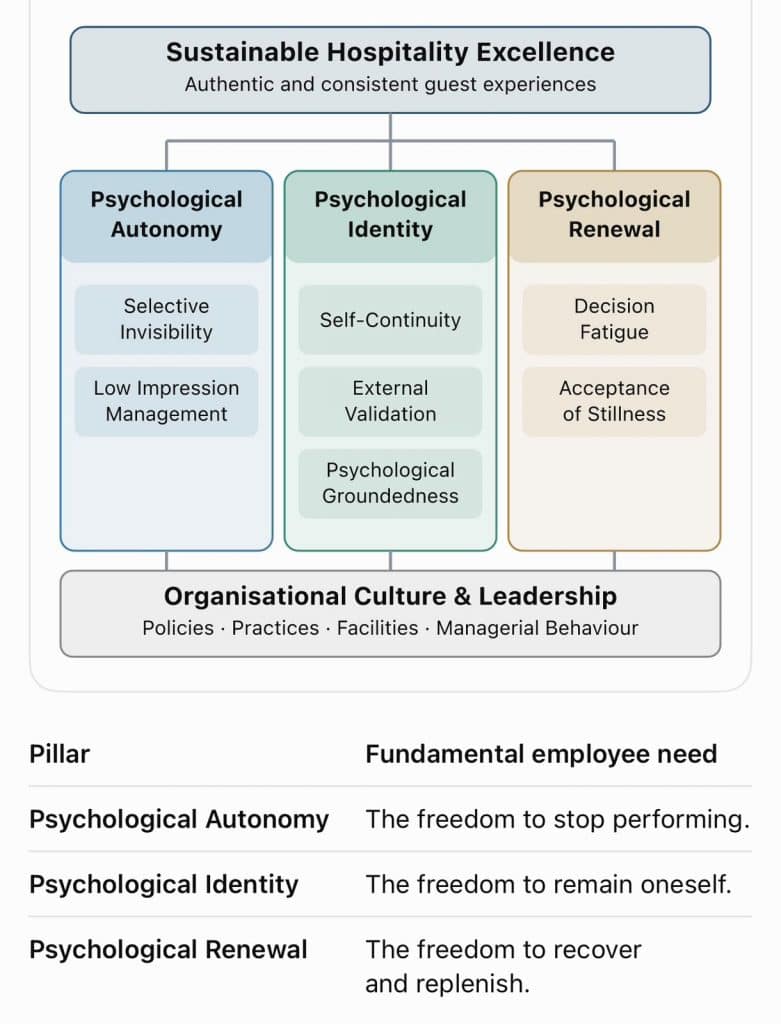
While most of us intuitively recognise these issues, in this article, I make a case for hospitality leaders to use a structured perspective based on seven psychological ideason the way we lead hotels and hospitality organisations.
The Luxury of Being Invisible
One of the underrated pleasures of human existence is the ability, every once in a while, to become invisible — to read a book, enjoy a cup of coffee or simply sit somewhere without being particularly concerned about how the world perceives us.This is the idea of selective invisibility.
From the moment a hospitality professional puts on a uniform, the individual becomes part of an elaborate ecosystem of observation. Guests, supervisors, cameras, auditors and online reviewers all contribute to it.Individually, these mechanisms serve legitimate purposes. Collectively, they create an environment of considerable visibility.
Interestingly, we understand the importance of privacy and solitude exceptionally well when it comes to our guests. Do we attach the same significance to these needs when it comes to our employees?The psychological value of an employee recreation area may have as much to do with the behaviour of those supervising it as with the quality of its furniture.
When the Performance Never Ends
In her book The Managed Heart, sociologist Arlie Russell Hochschild explored the concept of emotional labour — what happens when managing one’s emotions becomes part of one’s occupation.A front office associate concludes an unpleasant interaction with a guest. Within seconds, another guest approaches the counter. The irritation generated by the previous conversation cannot become part of the next one.But when the associate subsequently meets a supervisor, is there an opportunity to express what transpired? Or is the same composure expected all over again?
The concept of low impression management relates to our ability to interact without constantly managing other people’s perception of us.Its absence can produce interesting organisational consequences. Problems become challenges, challenges become opportunities and, by the time they reach senior leadership, opportunities occasionally become achievements!
The degree of comfort an employee experiences in saying something that a superior may not particularly like hearing can be quite a revealing indicator of organisational culture.
The Individual Inside the Uniform
The experience of being welcomed into a home in Rajasthan is quite different from that of being welcomed into a home in Kerala or Nagaland. The gestures, conversations, food and cultural rituals differ considerably. Yet, there is something distinctly hospitable about all of them.Interestingly, we sometimes take individuals drawn from this extraordinary diversity and train them to express hospitality in an almost identical manner.
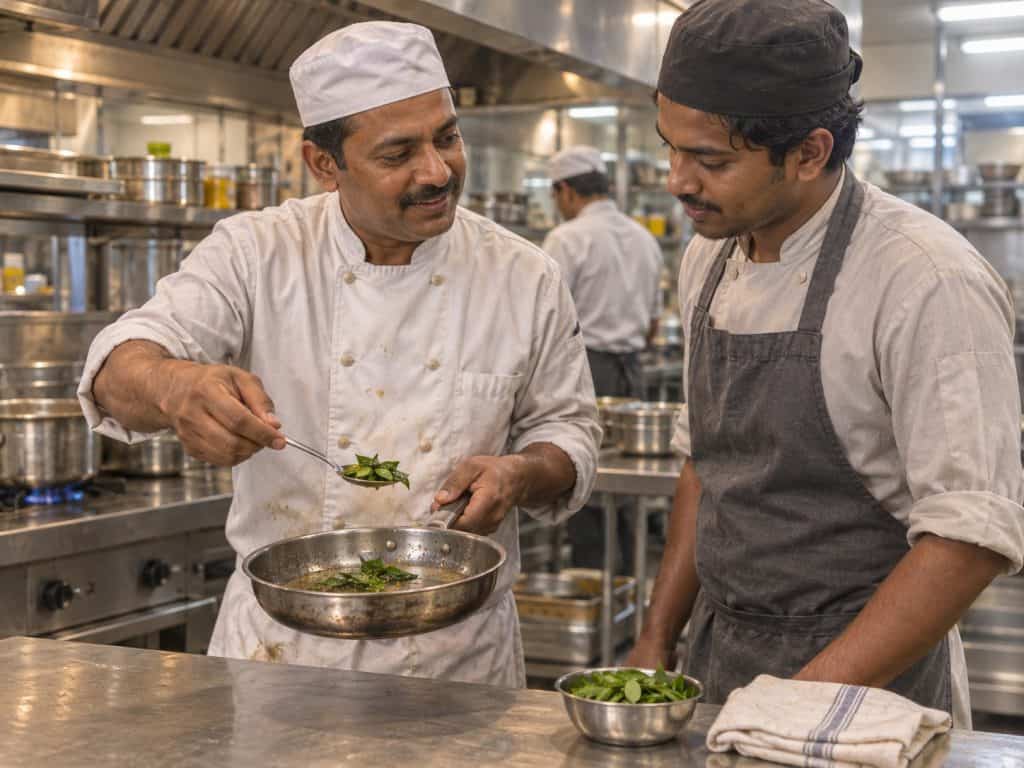
The psychological idea of self-continuity concerns our ability to retain a coherent sense of who we are. Acquiring a professional identity need not come at the expense of our personal identity. A chef describing a preparation that his grandmother used to make, or a concierge animatedly talking about his hometown, can provide an experience that no training manual can adequately replicate. As Indian hospitality develops its distinctive global identity, the individuality of our people could become an integral part of that distinction.
The uniform provides a common professional identity. The individual wearing it need not become quite so uniform.
The Psychology of Applause
Hospitality is an industry that loves feedback. Guest satisfaction scores, online reviews, awards, rankings and a rather impressive assortment of indices dominate our performance conversations. External validation can be enormously fulfilling. But what happens when an individual’s perception of professional competence becomes almost entirely dependent on external appreciation? There is another interesting dimension to recognition in hospitality. Some of the finest work undertaken in a hotel is work that nobody notices.
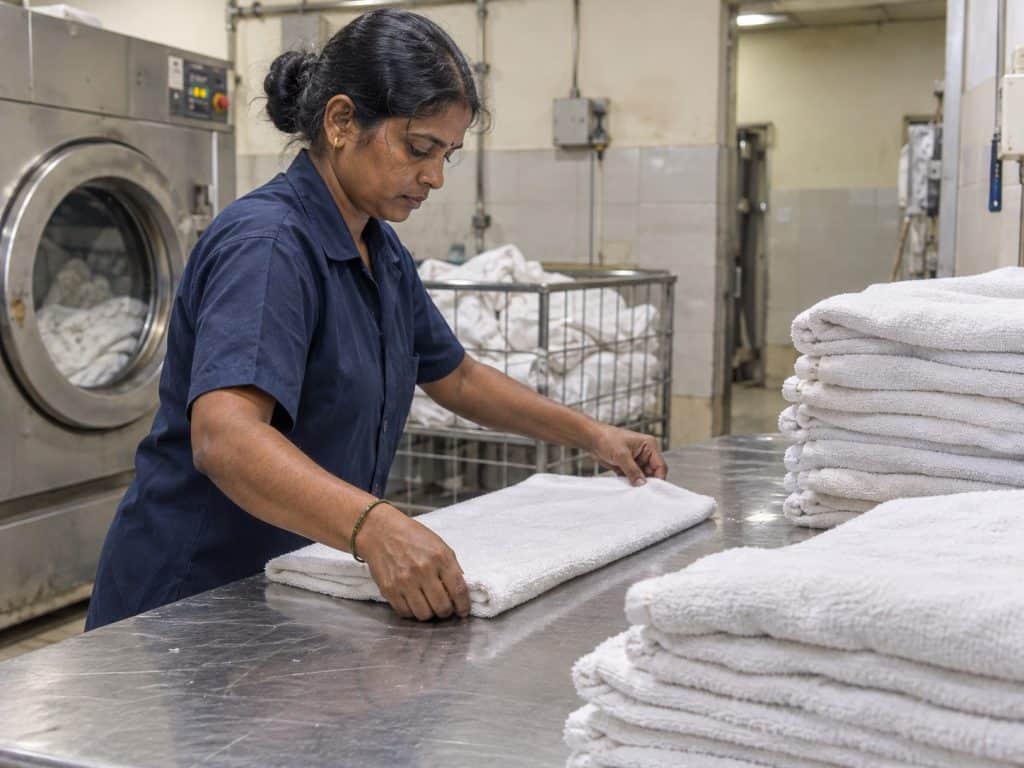
The engineer who prevents a breakdown, the kitchen steward who maintains impeccable hygiene and the laundry professional who ensures perfectly clean linen may never feature in a guest review. Their greatest professional achievements are often characterised by the absence of an event. Perhaps the challenge before hospitality leadership is to balance the satisfaction that comes from being appreciated with the satisfaction that comes from knowing that one has done something exceptionally well.
The former requires an audience. The latter can exist quite independently of one.
A Mind With Too Many Tabs Open
A room is not ready. A flight has been delayed. A wedding party wants something that was never part of the original agreement. An employee has reported sick.For a hotel Duty Manager, this might constitute a perfectly ordinary afternoon.
The concept of decision fatigue explores how sustained decision-making demands may affect subsequent judgement. While its precise mechanisms remain a subject of research, cognitive overload is something most hospitality professionals would readily recognise. Interestingly, we sometimes manufacture additional cognitive demands ourselves — elaborate approval mechanisms, reports to explain other reports and new communication platforms without necessarily retiring the previous ones.
And, this is where I think that we have been handed this great boon called artificial intelligence. Rather than asking how extensively AI can replace human beings in hospitality, perhaps we could ask how extensively it can liberate human beings to do those things that human beings do particularly well.
Empathy, creativity and genuine attentiveness require mental availability. Technology could help us create more of it.
The Emotional Temperature of a Hotel
Walk into the backstage areas of two hotels experiencing equally challenging operational situations. One may have considerable activity accompanied by a sense of calm; the other, an atmosphere of palpable anxiety. The difference may have less to do with the operational challenge than with the temperament of those leading the operation.
Psychological groundedness refers here to the ability to remain emotionally centred and anchored in one’s values despite external pressures.
Emotions have an interesting way of travelling through organisational hierarchies. An agitated General Manager can, without leaving his office, influence the emotional state of a restaurant associate several levels below him and, eventually, the experience of a guest whom he has never met .For many young Indians joining hospitality, their first supervisor is their introduction to professional authority. How that supervisor responds to a mistake or an admission of ignorance may influence how they subsequently exercise authority themselves.
Organisational cultures are transmitted across generations through such seemingly insignificant encounters.
The Curious Case of Doing Nothing
Imagine encountering an employee sitting quietly in a hotel corridor and another walking briskly through it carrying a file. Which is more likely to attract managerial attention? Never mind that the second employee may have been carrying the same file around for twenty minutes! Hospitality has traditionally had an affectionate relationship with activity. Physical presence is often associated with commitment and the appearance of busyness occasionally mistaken for productivity. The acceptance of stillness is the ability to experience inactivity, rest or reflection without feeling guilty about it.
There is a delightful irony here. We create environments where our guests can slow down, relax and escape the pressures of everyday life. Yet, we are not always entirely comfortable when the people creating these environments seek a few moments of the same experience.
Operational readiness is fundamental to hospitality. But readiness and perpetual activity are not necessarily synonymous. Recovery, genuine breaks and reasonable working hours are equally relevant to sustaining performance.
On the Other Side of Hospitality
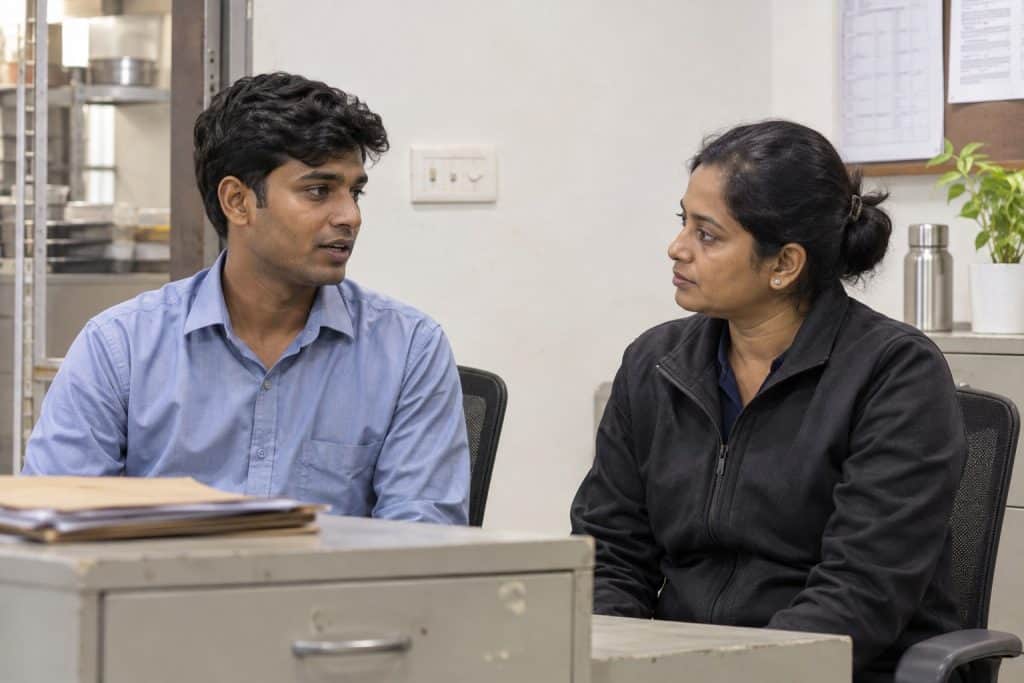
India is a powerhouse of raw talent. However, young Indians today have a growing number of professional choices and bring somewhat different expectations regarding work, authority, individuality and quality of life. Rather than interpreting these expectations as a dilution of commitment, perhaps we could regard them as an opportunity to revisit some of our traditional assumptions. The seven psychological ideas discussed here point towards three rather fundamental human needs —
- The freedom to periodically stop performing
- The freedom to remain oneself, and,
- The freedom to recover.
None is inconsistent with excellence in hospitality.Over the years, we have become exceptionally adept at walking through our hotels with the eyes of a guest. We notice the imperfectly positioned cushion, the unattended table and the slightest deviation from the intended guest experience.It might be an equally interesting exercise to occasionally walk through a hotel with the eyes of an employee.
And perhaps ask ourselves whether the individual leaving the hotel at the end of the day has sufficient emotional energy left to be hospitable to their own family.
We often speak about taking the warmth of Indian hospitality to the world. In pursuing that aspiration, it may be worth exploring how much of that warmth circulates within the industry itself.
The frontstage, after all, is where hospitality is experienced.
The backstage is where hospitality is created.
And perhaps the most interesting challenge in the evolution of Indian hospitality lies not in making the frontstage more luxurious, but in making the backstage a little more human.
Read more: Latest