

The new chapter brings together seven necklaces and five earring creations, celebrating exceptional gemstones, distinctive design and the craftsmanship of Cartier’s High Jewellery ateliers
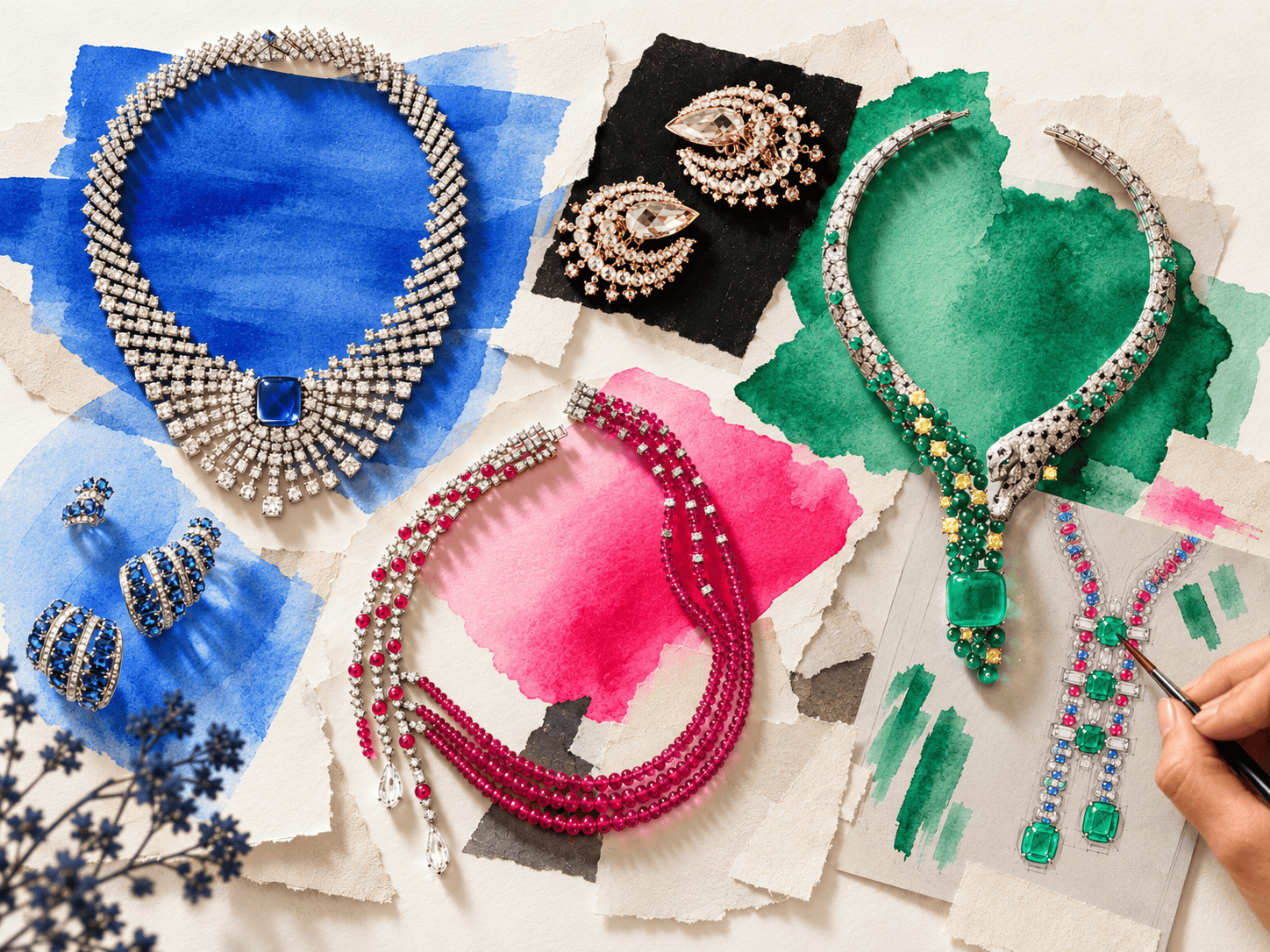
Cartier has presented Le Chœur des Pierres, the second chapter of its 2026 High Jewellery Collection, placing the individuality of gemstones at the centre of its creative expression. Comprising seven necklaces and five earring designs, the collection explores the relationship between precious stones, artistic interpretation and the technical expertise required to transform them into High Jewellery creations.
Each piece begins with the selection of gemstones distinguished by their colour, shape, cut, proportions and individual character. Beyond the established criteria of quality and purity, Cartier’s approach considers the visual and emotional qualities that give a stone its particular identity.
These characteristics guide the creative process, influencing the arrangement of gemstones, the development of geometric or organic forms and the relationship between colour, volume and light. The resulting designs draw inspiration from architecture, textiles, the natural world and Cartier’s established stylistic vocabulary.
The collection also highlights the collaborative process behind High Jewellery. Designers work closely with stone specialists, lapidaries, jewellers, gem-setters and polishers throughout the development of each piece. From the earliest sketches to the final construction, the exchange of creative and technical expertise informs decisions concerning gemstone placement, setting, movement, flexibility and structural integrity.
Speaking about the creative approach behind the collection, Jacqueline Karachi-Langane, Director of High Jewellery Creation, said, “Letting a stone speak is to recognise in it a memory of the world, a beauty shaped by time and imbued with eternity. Each gemstone is an encounter, an alchemy that resonates with our vision and our quest for the Cartier ideal. The creation serves the stone, revealing its nuances, its brilliance, its sparkle and its inner vibration. That is where the jeweller’s work lies: to be moved, to interpret and magnify the stone’s unique soul, its presence.”
The technical execution of the collection reflects the importance of craftsmanship in translating these creative ideas into wearable pieces, particularly when working with unusually large gemstones, complex settings and highly articulated structures.
Alexa Abitbol, Director of the High Jewellery Workshops, commented, “This collection perfectly illustrates how exceptional craftsmanship can be harnessed to bring a creative vision and gemstones to life. Exceptional craftsmanship, a dialogue between each artisan and each craft, a tangible emotion that transforms these gifts of nature into timeless works of art.”
Seven Necklaces Explore Colour, Structure and Movement
The seven necklaces in Le Chœur des Pierres bring together a range of creative approaches, from radiating diamond geometry and architectural patterns to cascading emeralds, braided gemstone arrangements and compositions inspired by volcanic landscapes.
Stellara: A 41.01-Carat Ceylon Sapphire Takes Centre Stage
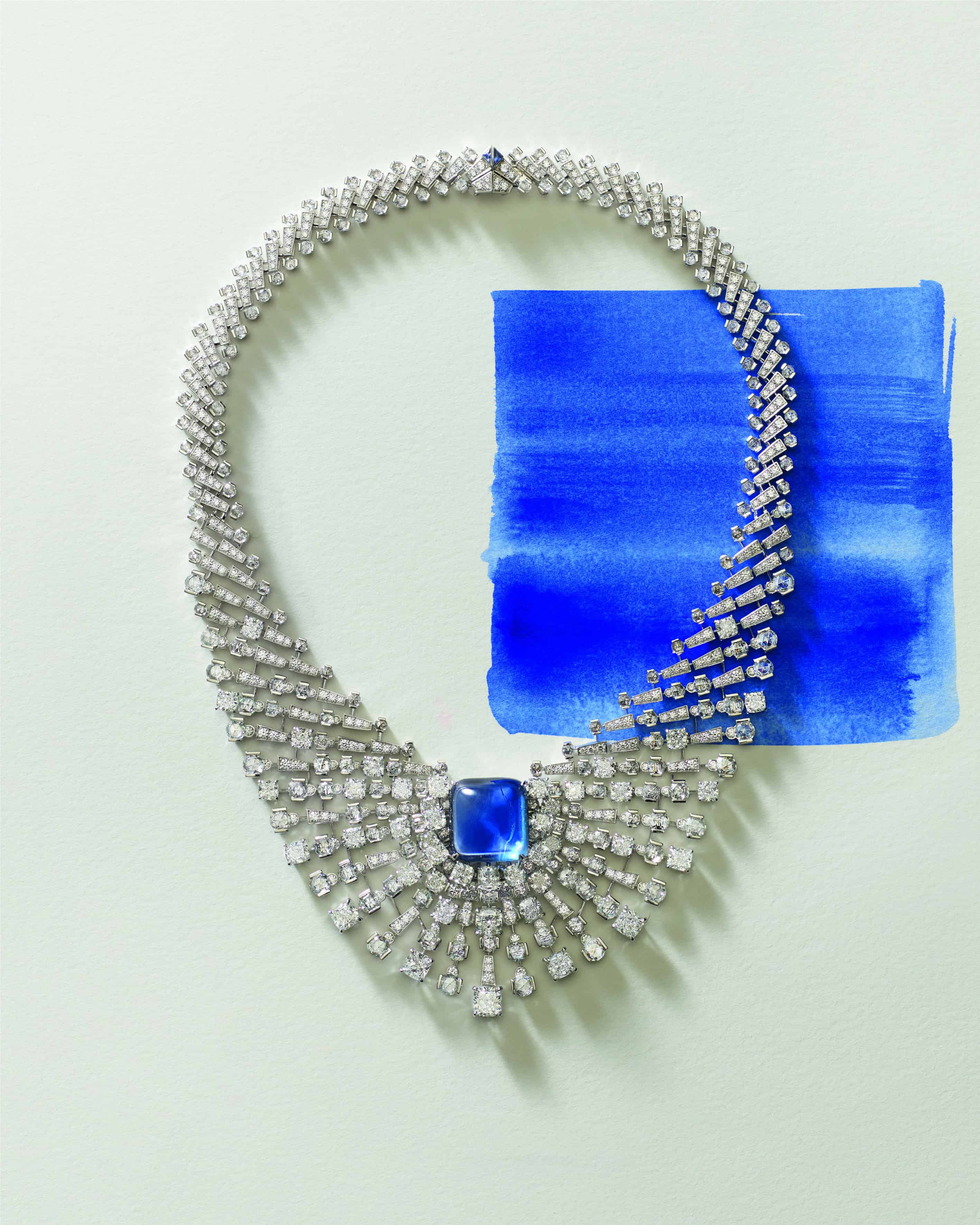
Stellara is built around a 41.01-carat Ceylon sapphire, whose distinctive blue colour anchors a necklace composed of diamonds in different shapes and sizes.
The gemstone sits at the centre of an elaborate geometric arrangement, with diamonds radiating outward in patterns that create a wave-like movement across the composition. Openwork allows light to travel between the stones while giving the necklace its delicate visual structure.
Maintaining the continuity of these radiating lines presented a significant technical challenge. Cartier’s artisans developed a construction that preserves the precision of the geometric pattern while allowing the necklace to remain exceptionally light and supple.
The underlying framework has been designed to recede visually, placing the sapphire and surrounding diamonds at the forefront of the composition. The arrangement also allows the piece to follow the contours of the body. Stellara is crafted in white gold with a Ceylon sapphire and diamonds.
Fibria: A Gemstone Interpretation of Decorative Textiles
Inspired by decorative textile trimmings, Fibria combines emeralds, turquoise and rubies in a two-strand braided necklace that explores the relationship between colour, texture and structure.
Rubies and turquoise form the principal strands, arranged in a rope-like pattern edged with diamonds. The stones create an impression of volume while the open arrangement introduces lightness and depth. The composition changes around the clasp and towards the ends of the braid, where the rubies give way to horizontal arrangements of turquoise and diamonds.
Five emeralds complete the design. Two are positioned at the ends of the asymmetrical strands, while three others form the central motif, progressively increasing the visual emphasis towards the middle of the necklace.
The interplay between the coloured stones draws inspiration from the construction and decorative detailing of elaborate textiles, interpreted through gemstone setting and jewellery craftsmanship. Fibria is made in platinum with emeralds, rubies, turquoise and diamonds.
Polydroma: Architectural Geometry in Diamonds
Polydroma draws inspiration from the vocabulary of urban architecture, translating volume, geometry and repetitive patterns into a domed necklace entirely paved with diamonds.
At the centre of the composition is a 5.18-carat Asscher-cut diamond, surrounded by an intricate mesh of repeating geometric elements.
The curved structure and continuous diamond setting create a surface that reflects light across the necklace. Repetition gives the design its visual rhythm, while the architectural arrangement provides definition to the overall form.
The piece reflects Cartier’s exploration of geometric construction through High Jewellery, combining the precision of individual diamond settings with the complexity of a continuous, curved structure. Polydroma is crafted in white gold and diamonds.
Panthère Tunya: Cartier’s Panther Meets a Cascade of Emeralds
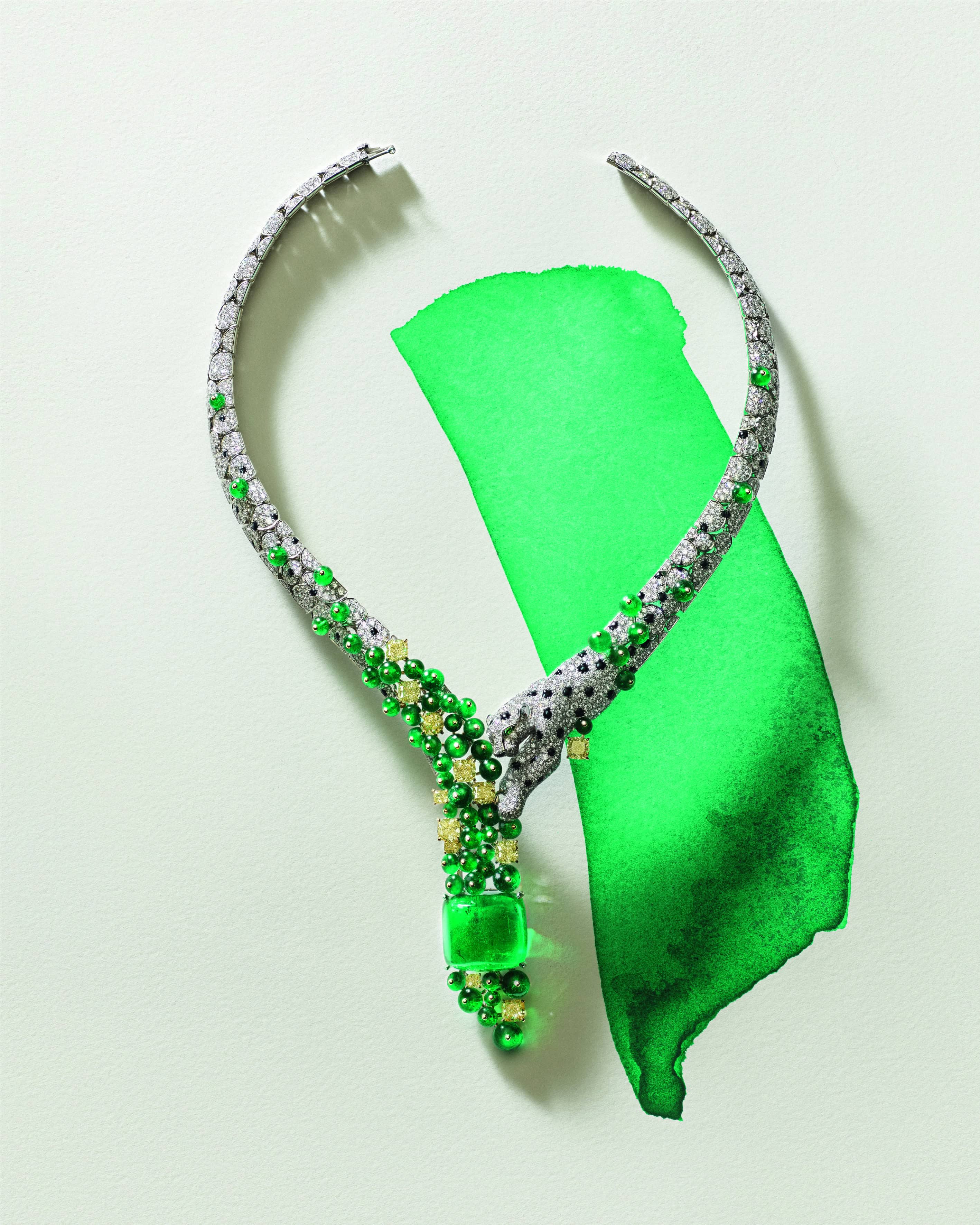
The Panthère Tunya necklace centres on a 48.12-carat Zambian emerald cabochon, a two-sided gemstone distinguished by its depth and unusual form. The composition incorporates Cartier’s established panther motif, with the animal positioned above a flowing arrangement of emerald beads.
Its coat is rendered in onyx and diamonds, accented with individual emerald beads. These gradually multiply as the design moves away from the feline, creating a transition from the recognisable animal form into an abstract cascade of gemstones.
Nine cushion-cut Fancy Yellow diamonds, with a combined weight of 10.91 carats, are positioned among the emeralds, introducing warm colour contrasts within the predominantly green, black and white composition.
The movement of the emerald beads directs attention towards the central cabochon and creates a sense of fluidity throughout the necklace. The design combines Cartier’s figurative jewellery tradition with an increasingly abstract arrangement of gemstones. Panthère Tunya brings together platinum, white gold, yellow gold, emeralds, yellow diamonds, onyx and diamonds.
Tipaza: Ruby Strands and Exceptional Briolette Diamonds
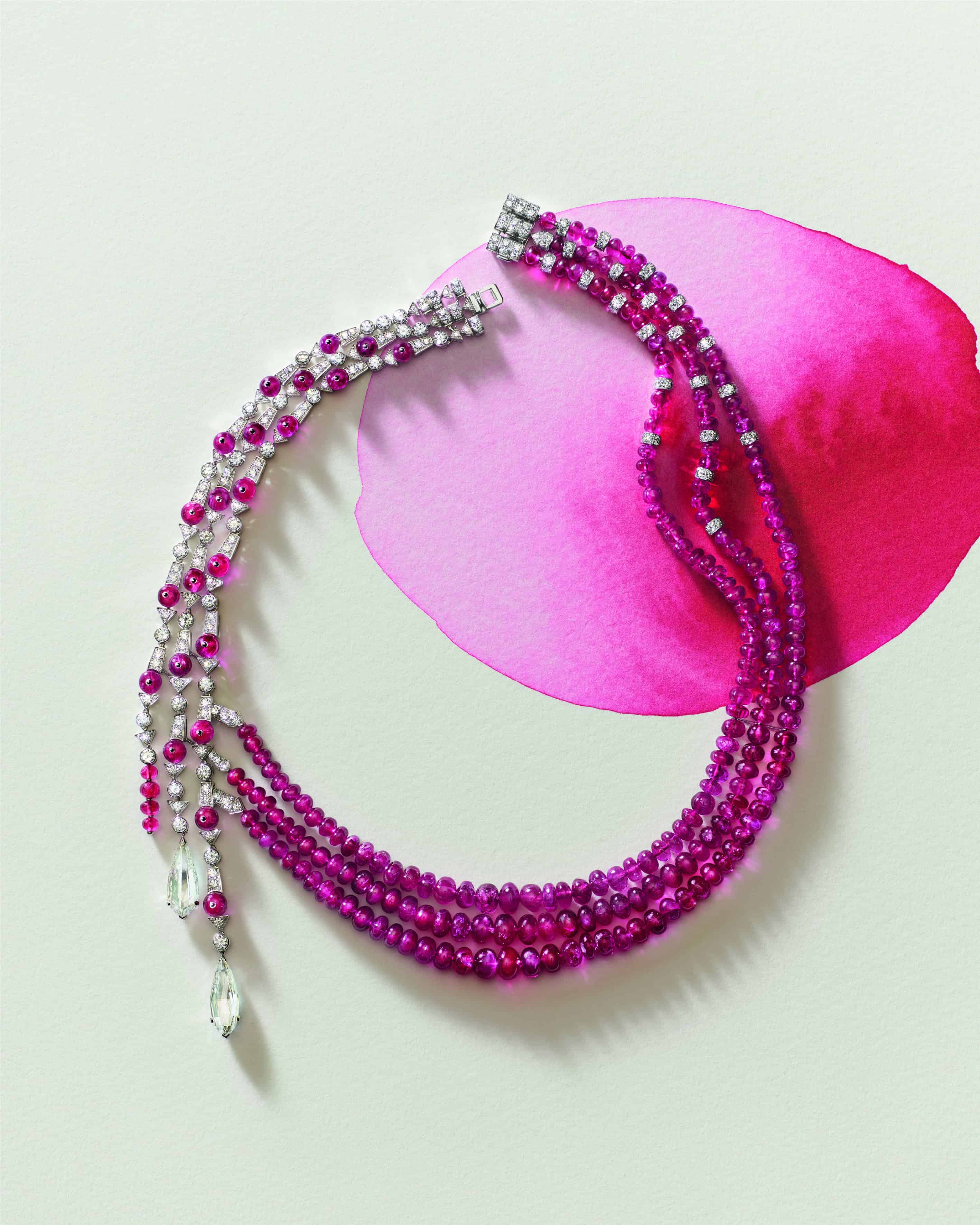
Two 7.36-carat briolette diamonds provide the focal points of Tipaza, a necklace distinguished by its arrangement of matched ruby beads. The composition begins with three rows of rubies selected for their aesthetic harmony and consistency. These gradually transition into three strands featuring geometric arrangements of alternating rubies and diamonds.
Using a stringing technique, the artisans create a continuous progression between the beaded sections and the more structured gemstone arrangements. The two briolette diamonds descend from the slope of the shoulder, completing an asymmetrical, waterfall-like design. Their suspended positioning introduces movement, while the ruby strands provide continuity of colour across the necklace.
The overall composition draws on Cartier’s use of geometric motifs, varied gemstone cuts and carefully considered proportions, allowing the placement of the stones to establish the movement of the design. Tipaza is crafted in white gold with rubies and diamonds.
Etnara: Rubellites Inspired by Volcanic Landscapes
Etnara takes inspiration from volcanic forms, translating the movement of molten lava into a necklace centred on a 67-carat rubellite. The central gemstone provides the starting point for the entire structure, with additional rubellites arranged in two symmetrical rows that extend outward from the principal stone.
The gemstones are closely matched to establish visual continuity, while topazes positioned between them introduce contrasting points of colour. These details evoke the sparks and shifting intensity associated with flowing lava, bringing movement to an otherwise symmetrical composition.
The relationship between the central rubellite, the surrounding stones and the contrasting topazes gives Etnara its distinctive character, with colour playing a primary role in shaping the design. The necklace is created in yellow gold with rubellites, topazes and diamonds.
Tutti Chaya: A Contemporary Expression of Cartier’s Tutti Frutti Tradition
Tutti Chaya revisits one of Cartier’s most recognisable High Jewellery design traditions, Tutti Frutti, which the Maison has explored since the mid-1920s. Known for combinations of blue, red and green gemstones, the style brings together coloured stones in elaborate arrangements that have become a defining part of Cartier’s creative repertoire.
For Tutti Chaya, the designer has developed a geometric diamond-paved mesh accented with rubies, emeralds and sapphires. Individually shaped onyx elements provide contrast and depth, establishing definition between the different gemstones.
The necklace features asymmetrical strands completed by two ribbed Colombian emeralds totalling 56.97 carats. The emeralds are held in position by two invisible clasps, allowing the gemstones to remain the principal focus of the design. The technical construction includes a sliding clasp at the back, enabling the wearer to adjust the length of the necklace.
Considerable attention has been given to the hidden structural elements, with the artisans developing a construction that allows flexibility and comfort while accommodating the elaborate gemstone settings. The reverse side has also been treated as an integral part of the design. Bridgework connecting the individual components forms a decorative motif, extending the craftsmanship to details that are normally concealed when the necklace is worn.
Tutti Chaya required nearly 2,000 hours of work, including approximately 1,400 hours devoted to goldsmithing. The necklace was crafted entirely by hand, reflecting the complexity of combining elaborate settings, adjustable mechanisms and a flexible structure. It is made in platinum with emeralds, rubies, sapphires, onyx and diamonds.
Five Earring Creations Reinterpret Natural Forms
Alongside the necklaces, Le Chœur des Pierres introduces five earring designs featuring rubies, pink and orange sapphires, emeralds, brown diamonds and blue spinels.
The collection explores unconventional gemstone arrangements, with several pieces extending beyond the traditional earlobe setting to incorporate the upper part of the ear.
Natural forms provide a recurring source of inspiration, from fruit and foliage to aquatic shapes, while the stones’ colours, cuts and proportions determine the development of each composition.
Patellia: Brown Diamonds Set in Reverse
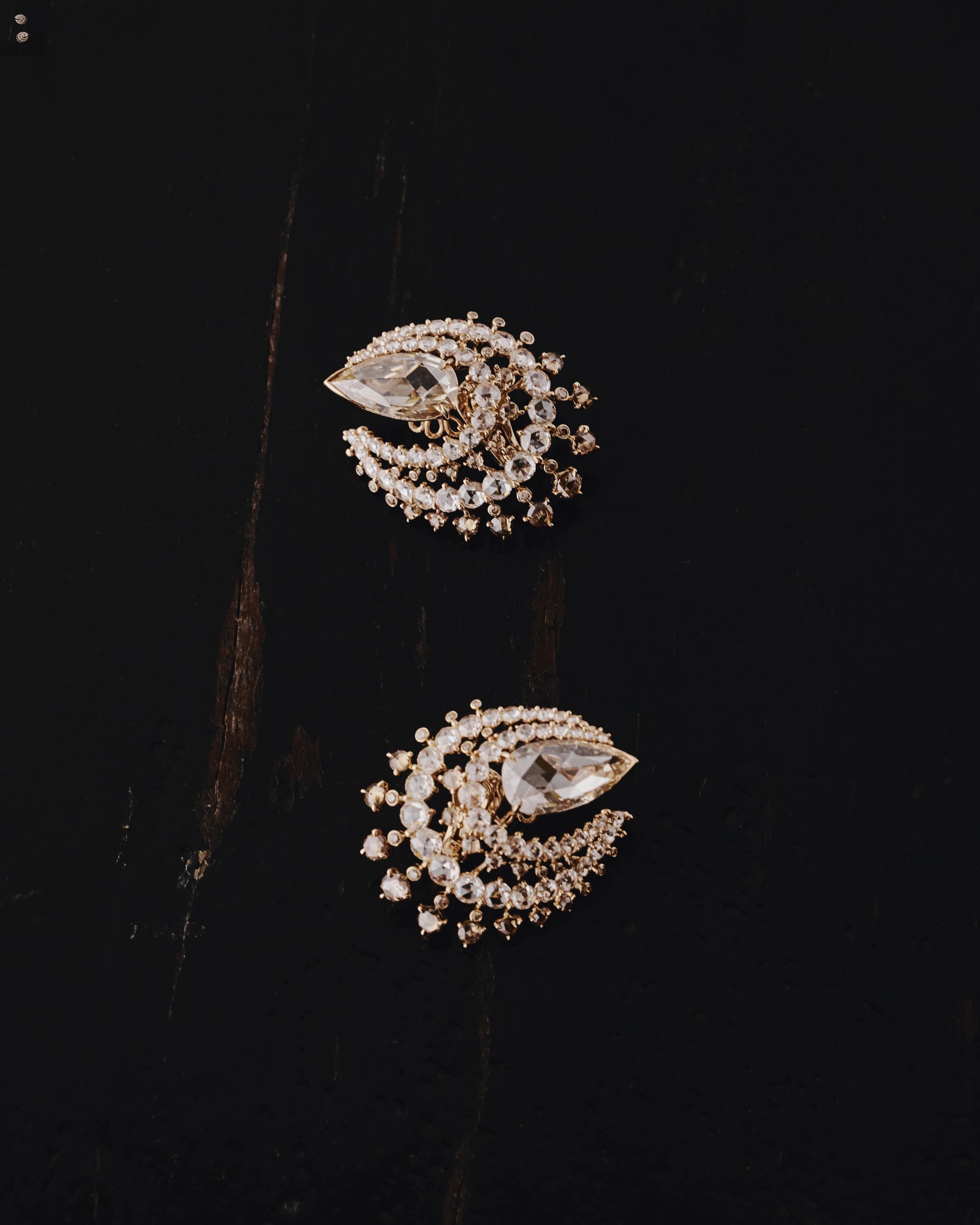
Patellia centres on two pear-shaped brown diamonds totalling 11.32 carats, selected for their colour and distinctive proportions.
The principal gemstones are mounted upside down, with their pavilions facing outward and their facets and tables positioned beneath. This unconventional orientation changes the way light interacts with the diamonds, highlighting their angular structure and allowing the stones to produce a different visual effect.
Each principal gemstone is surrounded by a pattern of white and brown diamonds, extending the interplay of colour and light across the earrings. The composition demonstrates how variations in setting and gemstone orientation can influence the appearance of a jewellery design. Patellia combines rose gold, yellow gold, brown diamonds and diamonds.
Drosera: Ruby Forms Inspired by Nature
Drosera features 18 rubies totalling 28.44 carats, whose rounded, organic shapes provide the starting point for the design. The gemstones are placed within individual cavities in a diamond-paved structure that curves around the earlobe.
Their shapes suggest small fruits, while diamond droplets positioned towards the upper ear evoke the appearance of dew. The combination of curved metalwork, carefully arranged gemstones and suspended diamond details creates a composition that follows the natural form of the ear. Drosera is crafted in white gold with rubies and diamonds.
Ojai: Graduated Sapphires Across the Ear
Ojai explores an unconventional approach to earring design through the placement of gemstones across the upper ear and earlobe. The earrings incorporate 18 sapphires in graduated shades of pink and orange, with a combined weight of 24.12 carats.
The gemstones descend in a series of droplet-like formations, supported by diamond-set twigs that create a branching structure. The graduation of colours establishes visual continuity between the stones, while their positioning allows the composition to follow the contours of the ear.
The design brings together coloured gemstones and delicate diamond detailing in an arrangement inspired by natural forms. Ojai is made in rose gold with pink-orange sapphires and diamonds.
Volubia: An Asymmetrical Arrangement of Emeralds
Volubia draws inspiration from foliage, using emeralds and diamonds to create a branching composition that extends across the earlobe and upper ear.
The stones are distributed asymmetrically, with baguette and briolette cuts introducing variation in line, shape and movement. The combination of these different cuts creates a flowing structure, with suspended elements bringing additional movement to the design.
The arrangement interprets the delicacy of natural foliage through gemstones and precisely constructed settings. Volubia is crafted in white gold with emeralds and diamonds.
Undara: Blue Spinels Evoke the Underwater World
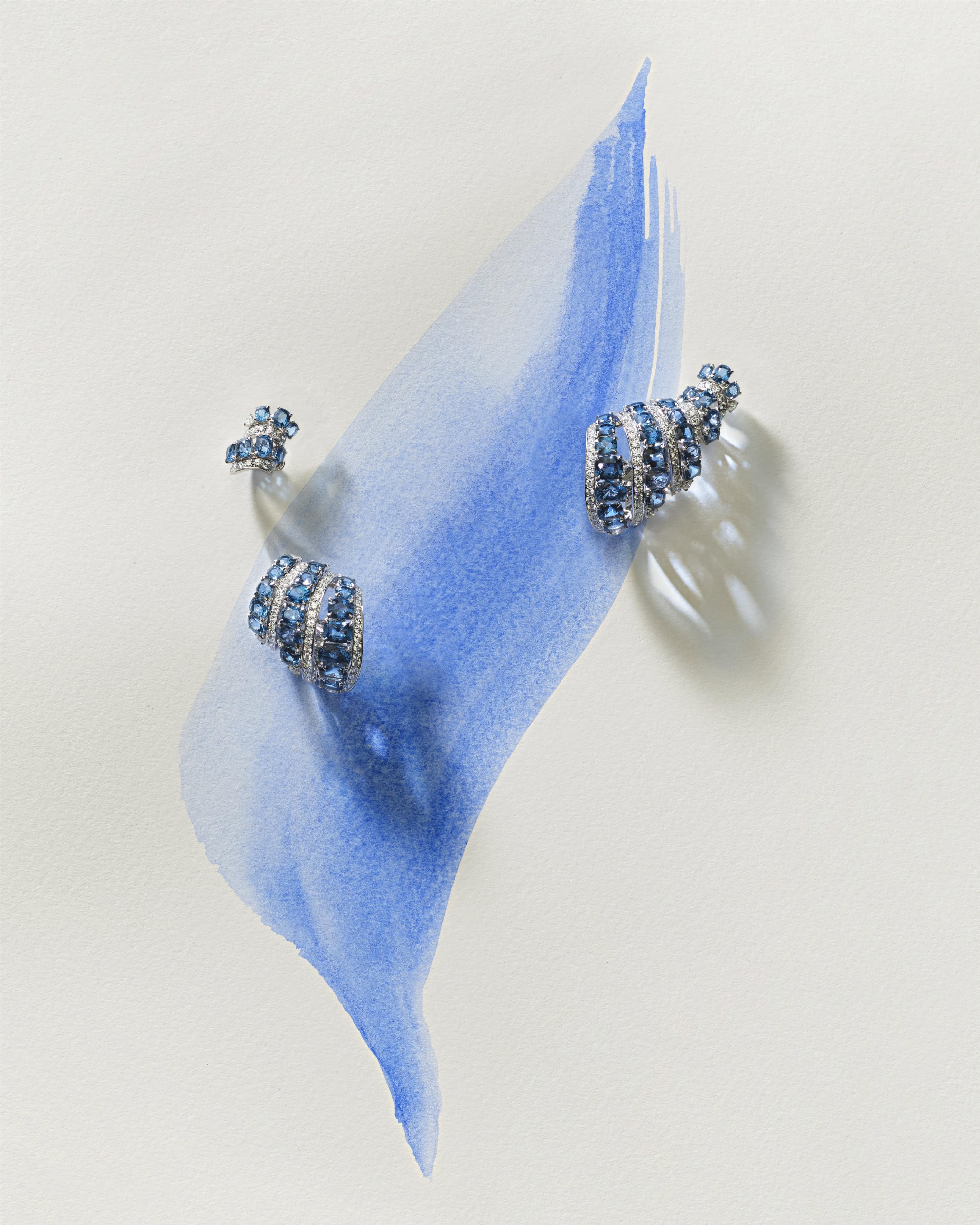
Undara takes inspiration from the aquatic blue of a collection of spinels, interpreting their colour through a design influenced by underwater forms.
The earrings suggest the shapes of mysterious shells, marine creatures and waves reaching the shore. Three individual components wrap around the ears, incorporating blue spinels and diamonds in a succession of rounded, bubble-like details.
The placement of the elements creates a flowing composition, with the contrast between blue gemstones and diamonds reinforcing the aquatic character of the design. Undara is created in white gold with blue spinels and diamonds.
Gemstones and Craftsmanship Shape the Collection
Across its twelve creations, Le Chœur des Pierres presents different interpretations of Cartier’s High Jewellery design language. The collection moves between structured geometry, elaborate colour combinations and organic forms, with the individuality of each gemstone informing the development of the finished piece.
The technical aspects are equally significant. Flexible settings, concealed clasps, articulated structures, unconventional gemstone orientations and intricate reverse-side detailing demonstrate the range of expertise involved in producing the collection.
From the 41.01-carat Ceylon sapphire of Stellara and the 48.12-carat Zambian emerald of Panthère Tunya to the two Colombian emeralds totalling 56.97 carats in Tutti Chaya, the collection places particular emphasis on the relationship between significant gemstones and the designs developed around them.
With its combination of gemmological selection, creative interpretation and specialised craftsmanship, Le Chœur des Pierres continues Cartier’s exploration of colour, light, structure and movement in High Jewellery.
Read more – Lifestyle, Weddings and Wellness