

Madhav Rathore journeys through the Chandrabhaga Cattle Fair’s whirlwind of colours, cattle, sacred rituals, heartfelt stories, and culture
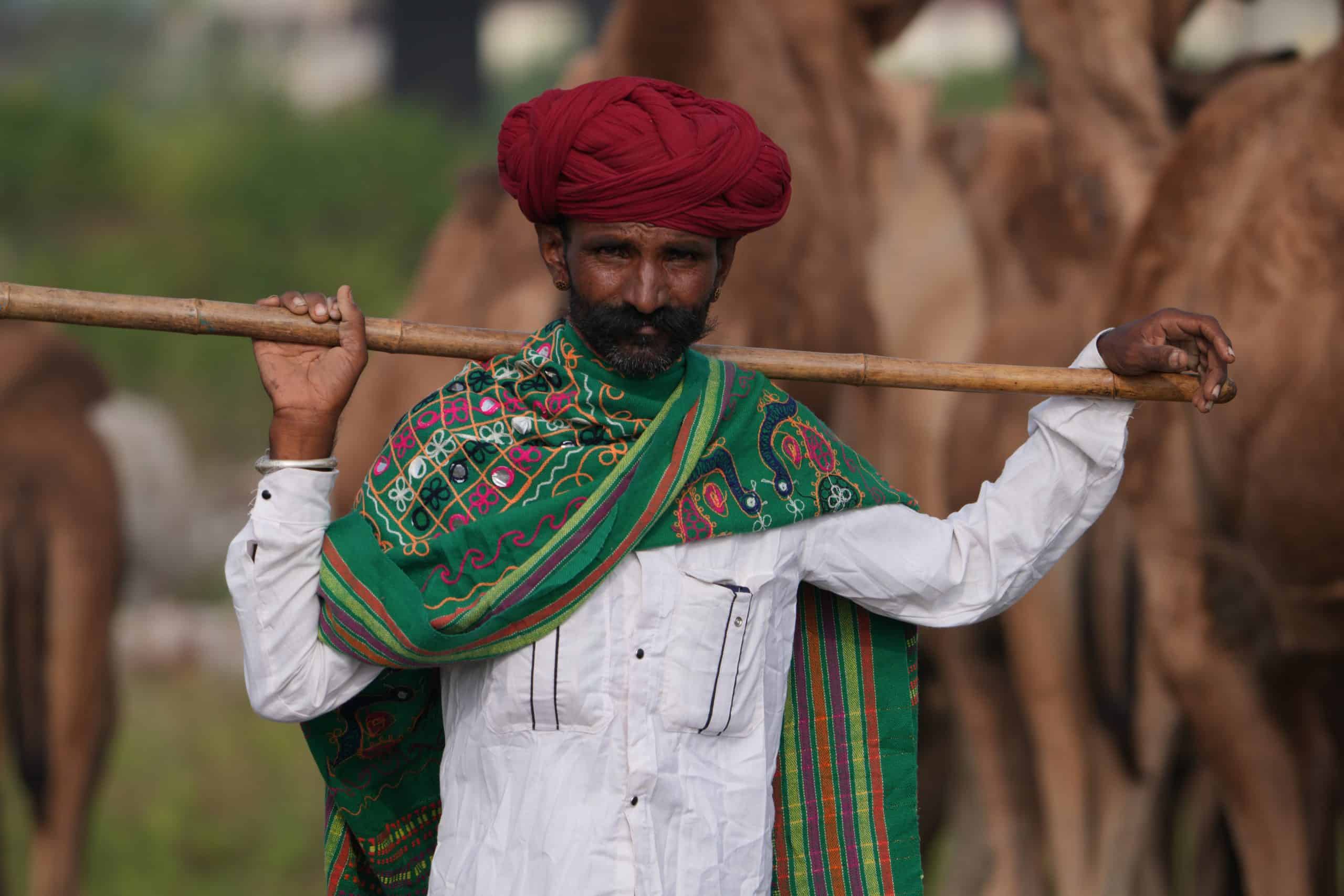
The memory of my visit to the Chandrabhaga Cattle Fair in early November 2025 lives in my mind like a long, unbroken ribbon of colour and sound, vivid, textured, and still fluttering somewhere between reality and dream. It was five days wrapped in dust and devotion, in the earthy smell of horses and wood smoke, in the hypnotic lull of folk songs, in the hum of trade and tradition, and in the warm smiles of people who have carried this ancient fair through centuries.
As a travel designer, photographer and writer, I have wandered through many festivals and gatherings across the world, but Chandrabhaga held something rare—an unpolished authenticity that can only come from a place where faith and livelihood have grown inseparably together.
The fair unfolds every year on the banks of the Chandrabhaga River in Rajasthan, timed with Kartik Poornima, when the full moon is believed to grant sacred blessings. For generations, pilgrims have arrived at this river to take a holy dip in its waters on the night of the radiant moon. What began as a spirited religious congregation has, over time, evolved into one of the largest cattle fairs of the region. And yet, even in its evolution, the soul of the event remains untouched: people still come for the moonlit dip, for the prayers whispered into the breeze, for the reaffirmation of a faith older than memory.
A Temporary City Rises at Jhalawar
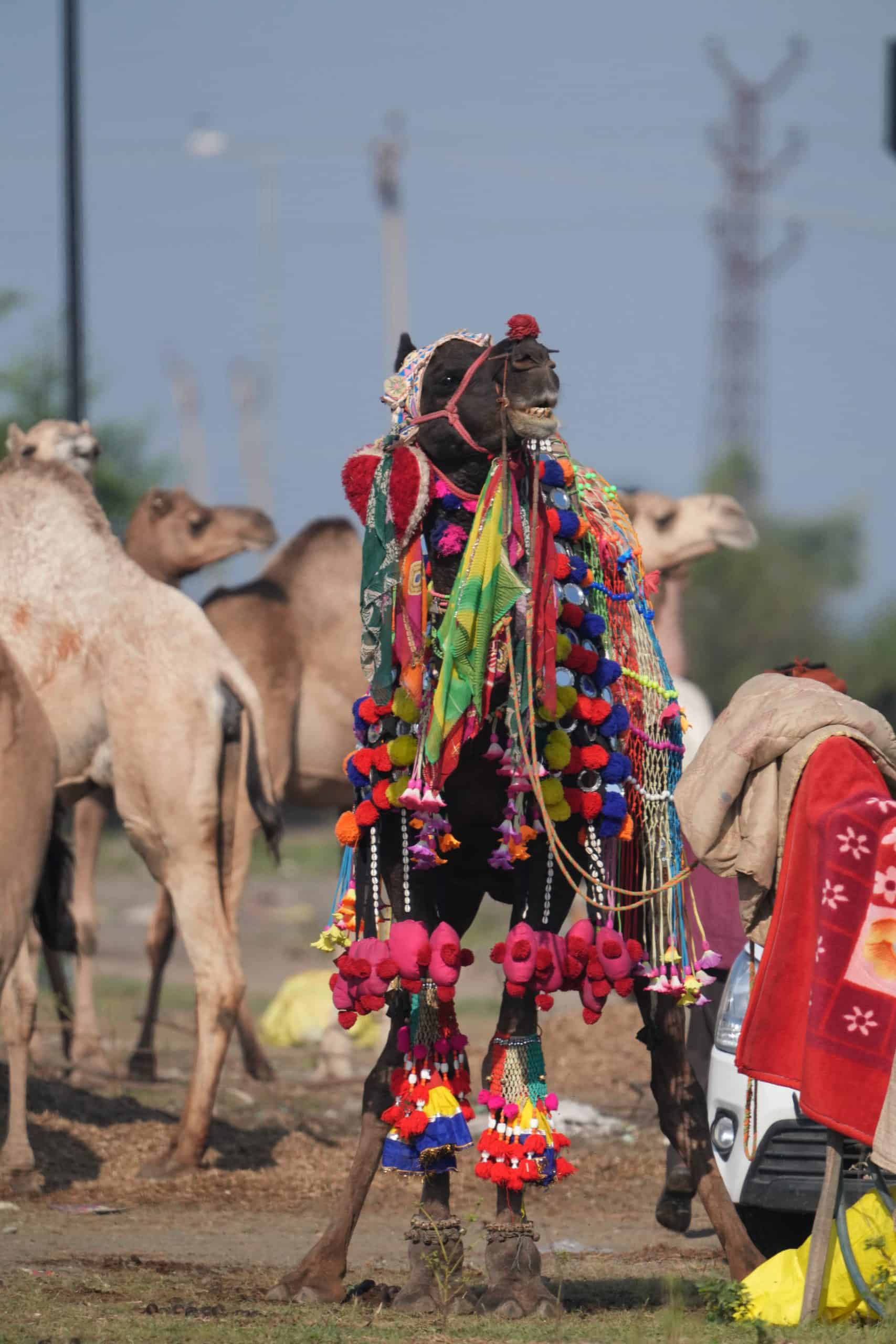
When I reached Jhalawar’s Dussehra Ground on the morning of the 2nd, the fair had already risen like a temporary city—its landscape dotted with canvas tents, smoke trails, and a mosaic of turbans in bold reds, yellows, and greens. The first sensation was scale. I found myself standing before a spectacle of nearly two thousand horses, their sleek coats gleaming in the winter sun, their ears flicking at the constant buzz around them.
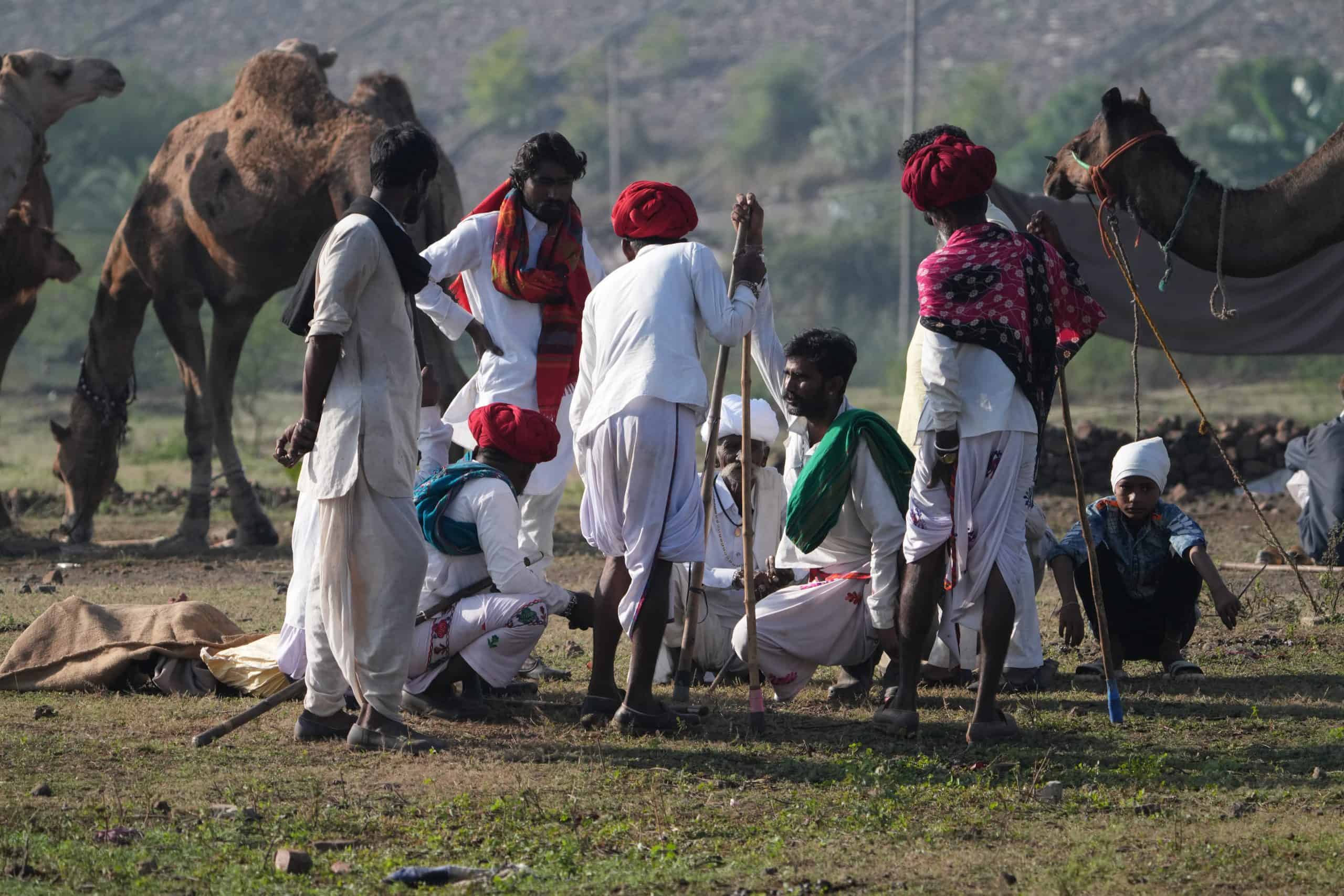
Their keepers—sun-browned, turbaned men from Rajasthan, Gujarat, Haryana, Uttar Pradesh, and Madhya Pradesh—moved about with the easy familiarity of those who spend most of their lives in the company of animals. Scattered among them were around eight hundred camels, tall and languid, chewing thoughtfully on fodder while their owners negotiated deals in a rhythm so fluid it felt almost choreographed.
Everywhere I pointed my camera, a story unfolded. A Marwari horse with an arching neck and crescent-shaped ears pranced as if it knew its lineage would fetch a handsome sum. A breeder from Barmer proudly dusted the saddle of his camel, its back draped in bright cotton fabric trimmed with sparkling silver frills. A young boy, barely ten, tugged gently at the halter of a restless stallion, his expression a mix of pride and responsibility. None of this was staged for tourists—this was livelihood, heritage, and identity dancing together in the open.
Marketplaces of Utility and Ornament
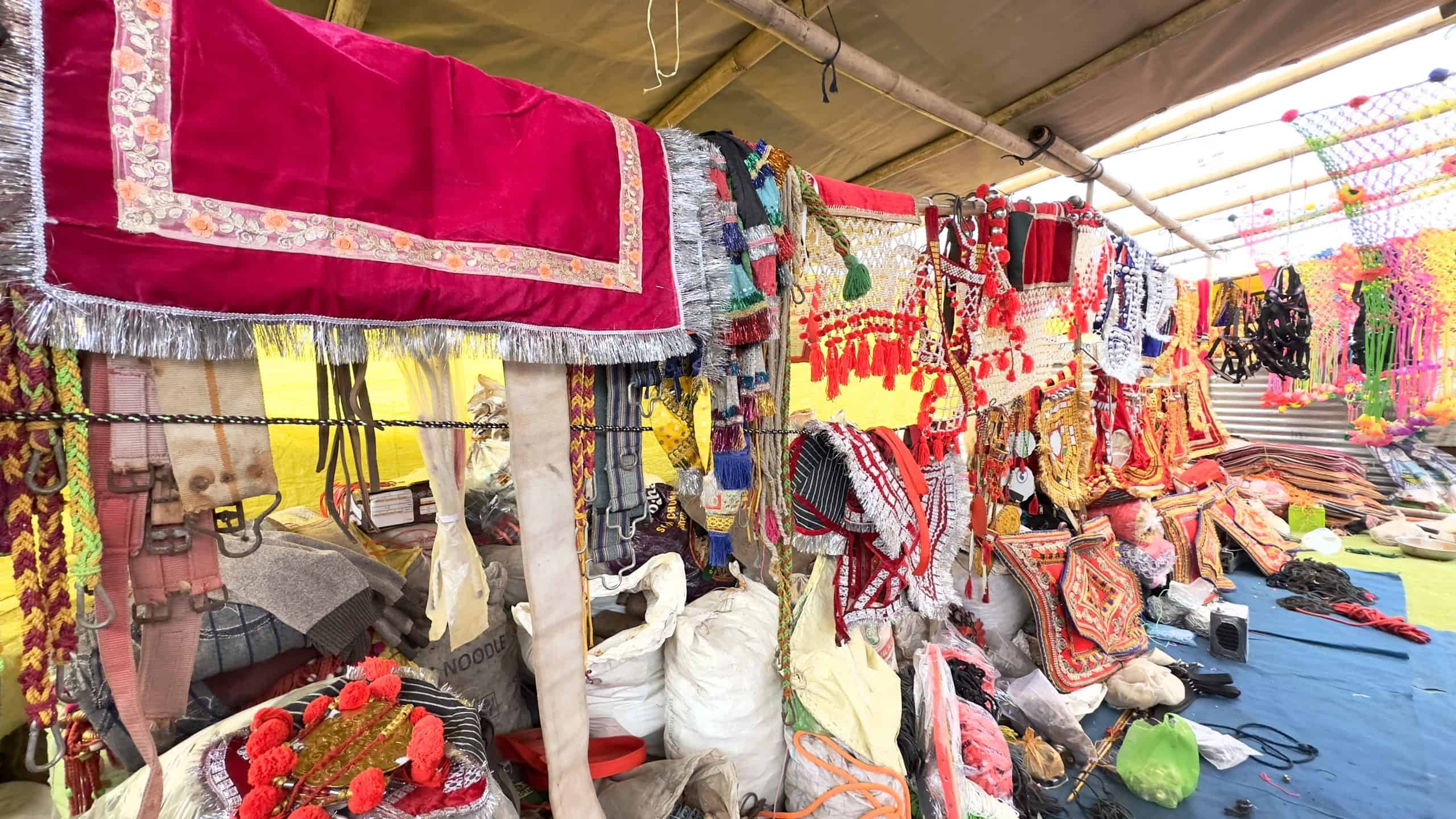
The marketplace surrounding the livestock grounds formed an entire world of its own. Under flapping tarpaulin covers, vendors displayed wares that ranged from the purely functional to the beautifully ornamental. I wandered past shops selling hot plates, metal spoons, and ladles, the tinny clang of utensils lending its own soundtrack to the fair. There were ropes coiled like serpents on wooden planks, wood-fired stoves stacked one over the other, and woks blackened with soot. Their practicality spoke of the rural heart of India, tools of daily life, waiting to travel to far-off villages in the saddle bags of visiting farmers.
But the artisan stalls captured my attention most of all. One shop offered hand-stitched saddles in colours so bright they seemed to pull light toward them, fuchsia, saffron, parrot green, sky blue, each embroidered with intricate patterns and edged with glittering golden frills. They hung like carnival decorations, swaying gently in the dry breeze.
Another stall sold herbal medicines made specifically for horses and camels, their labels written in a mix of Hindi and local dialects, promising cures for everything from fatigue to skin ailments. The vendors spoke with the confidence of those who have learned their trade from fathers and grandfathers, each remedy infused with generations of animal wisdom.
What struck me, as I watched these interactions, was how seamlessly commerce blended with culture here. The bargaining between breeders and buyers was not just an exchange of money, it was a social ritual, a conversation laden with trust, pride, knowledge, and occasionally playful banter. The fair was as much an economic hub as it was a cultural one, and as I drifted deeper into its folds, I realised how difficult it was to separate the two.
Mythology Watches Over the Trade
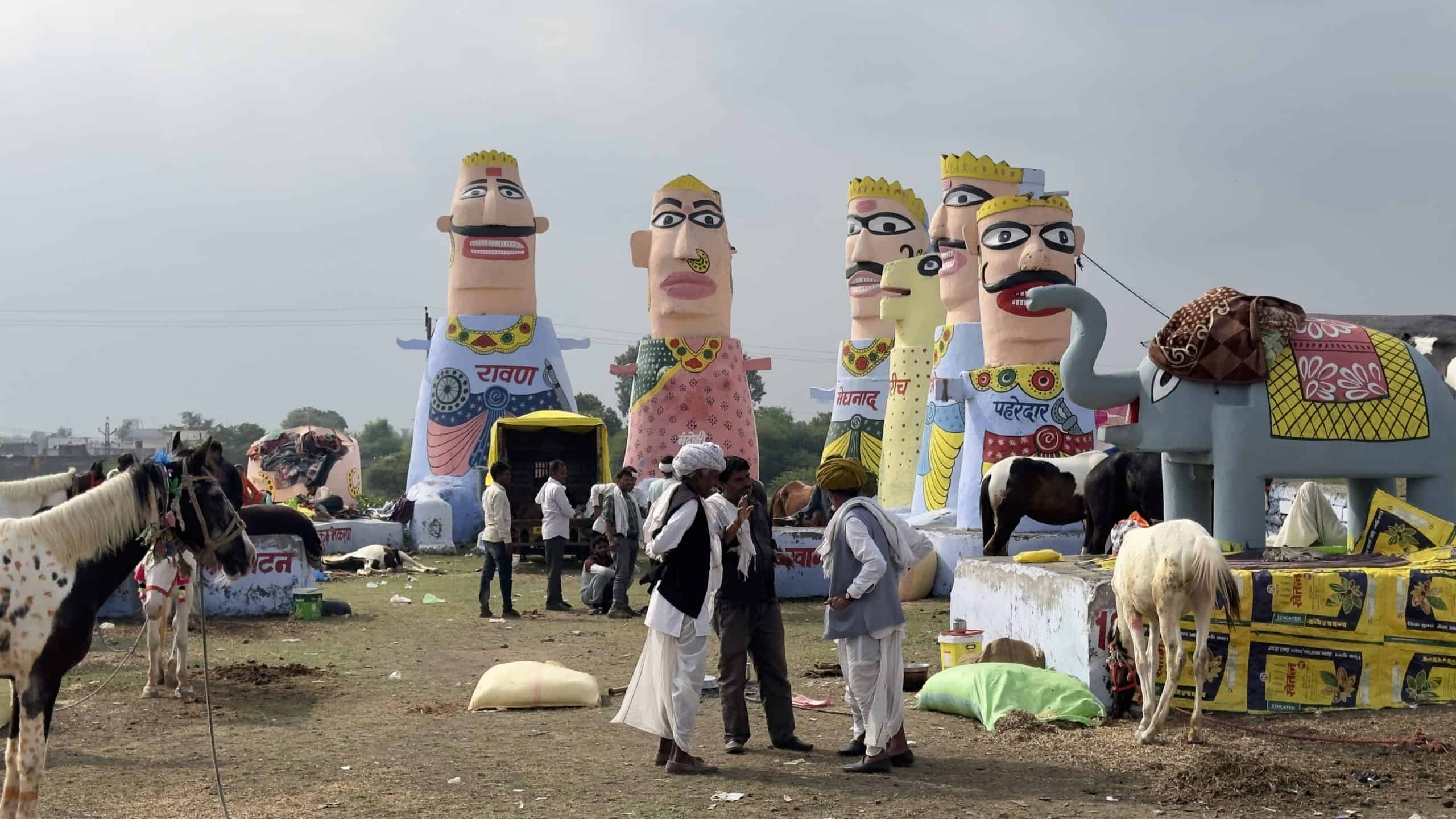
The Dussehra Ground, where the fair is held, adds another layer to this tapestry—one that feels mythic. Towering over the crowds were giant effigies of Ravana, Meghnad, Mandodari, and Marich, their painted faces staring out across the field like ancient sentinels of folklore. Their presence created a curious juxtaposition: the pragmatic, earthy business of cattle trading under the watchful eyes of characters from the Ramayana.
At night, when the ground glowed under strings of electric bulbs, these effigies took on a surreal beauty, their silhouettes looming like guardians of memory. I found myself circling them repeatedly, photographing them from different angles, fascinated by how deeply the region’s mythology was woven into the physical space.
Inside the Tents: A Community Within a Crowd
Life within the tents revealed the quieter, more intimate rhythms of the fair. Breeders sat in clusters on charpoys, sipping steaming cups of tea as they chatted, smoked bidis, or sliced vegetables for the evening meal. The scent of wood smoke and boiling lentils drifted into the air. A few steps away, horses stood tethered, their shadows stretching long and elegant in the shifting light.
As day turned into the night, the tents transformed into tiny glowing cocoons, flickering with lantern light as people huddled under blankets, the murmurs of conversation gradually giving way to sleep. Though thousands of people crowded the fair, there was a remarkable sense of community, everyone seemed to know someone, or know someone through someone. Each person belonged.
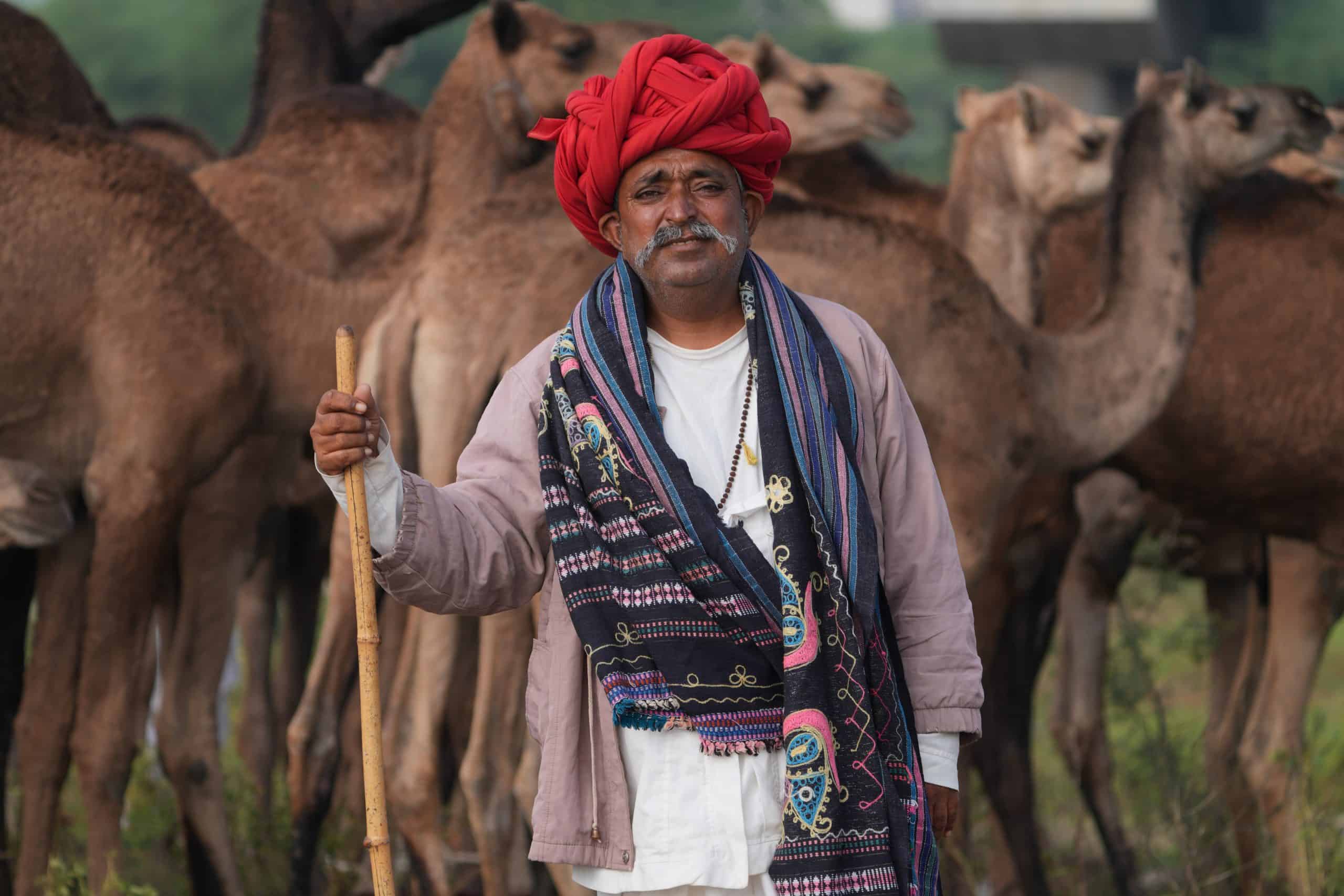
The human element of the fair, the real human element, shimmered brightest in the attire of the people. Turbans here are not mere fashion; they are identity, geography, family, pride. A deep crimson Rebarri turban with intricate pleating whispered of Rajasthan’s Marwar region, while a bright yellow one hinted at origins farther west.
The women, though fewer in number among the animal traders, wore vibrant shawls and stoles, some adorned with delicate mirror work, others with heavy hand embroidery. Textiles hung everywhere: on shoulders, on waists, on fences, on carts. I photographed dozens of portraits, each face telling a story of lineage, toil, and belonging.
A Fair Run with Heart and Precision
Yet even amid this sensory explosion, what I admired deeply was the thoughtful organisation behind the entire fair. It is not easy to host thousands of animals, breeders, and visitors, but the arrangements for lighting, water, sanitation, and crowd movement were impressively smooth.
Water troughs for animals were regularly replenished, medical aid teams stood ready, and volunteers guided visitors with patient smiles. There was an undeniable respect for the needs of both humans and animals—something I’ve learned is not always guaranteed at large fairs around the world.
On the final evening, as Kartik Poornima reached its peak, the fair transformed into a cultural arena. Local artists and schoolchildren took to the stage in vibrant costumes, their performances a thrilling showcase of folk music and dance. The rhythmic clapping, the swirl of ghagras, the warm timbre of traditional instruments—it all unfolded with such infectious energy that even the most stoic onlookers found themselves swaying.
The moon, rising steadily above the river, cast a silver glow over the entire ground, making the scene appear otherworldly. It felt like witnessing an ancient ritual preserved in perfect harmony with the modern world.
Encounters That Give a Journey Its Soul
Among the people I met during my visit was the Collector of Jhalawar, Mr. Ajay Singh, a man whose presence exuded both authority and warmth. Meeting him was serendipity, one of those travel moments that feels destined. Over cups of hot chai in the crisp evening air, he spoke passionately about the history of Jhalawar, the significance of the fair, and the evolving cultural landscape of the region.
What impressed me was not the office he held, but the depth of his understanding and his genuine affection for the district. Conversations like these enrich a journey far beyond photographs and notes—they give it soul.
The Afterglow of a Place That Stays With You
When the time came for me to leave Chandrabhaga, it felt abrupt, like ending a chapter before the story had fully settled. As I drove away from Jhalawar, the sights played back in my memory with startling clarity: the moonlit crowd gathered for the holy dip, the shimmering river echoing the devotion of thousands; the silhouettes of camels against an amber sunset, the laughter of children chasing each other between tents, the golden embroidery catching sunlight on a saddle swaying gently in the breeze; the powerful symmetry of the Sun Temple of Jhalrapatan, its ancient stone basking in quiet dignity.
Travel often promises transformation, but rarely does it succeed so effortlessly. Chandrabhaga did. It stirred something elemental in me, a reminder of why I travel in the first place. Not for polished experiences, but for encounters that feel honest, raw, rooted in history and humanity. Not for ornamental beauty, but for colours that are lived, worn, spoken, sung, and handed down. Not for fleeting entertainment, but for moments that linger long after the journey ends.
As the road unwound before me and the final glow of the fair receded into the distance, I realised that the Chandrabhaga Cattle Fair had given me more than photographs and notes for a story. It had given me an encounter with India in its truest form, complex yet harmonious, chaotic yet purposeful, ancient yet alive. And long after the dust settled on my boots, the echoes of that world continued to accompany me home: the devotion of pilgrims stepping into the moonlit river, the sharp neighing of horses at dawn, the swirl of turbans in the wind, the warmth of shared tea, and the timeless pull of a fair that has outlived empires, generations, and time itself.
About the author
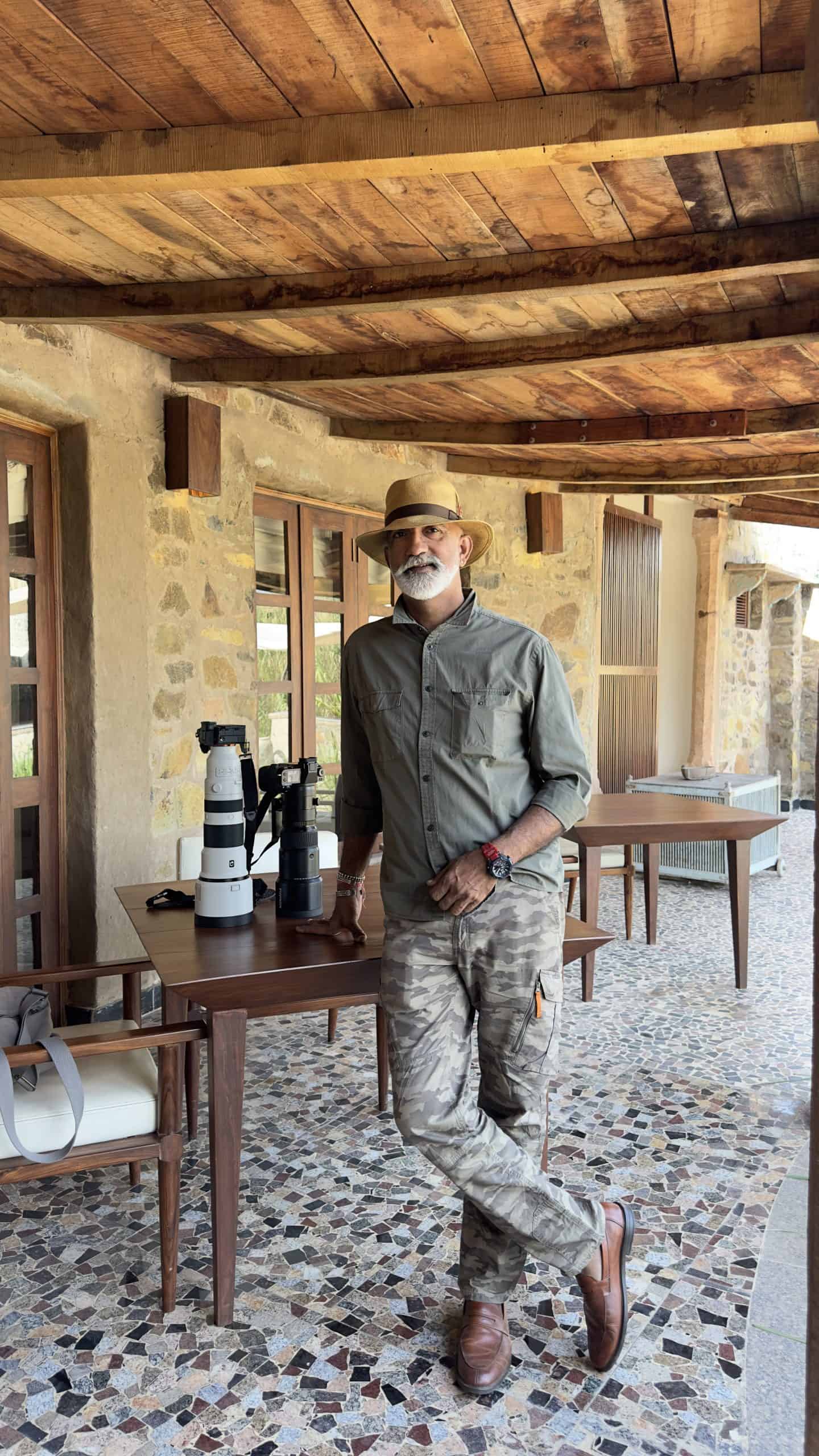
A traveller by instinct and a storyteller by choice, Madhav Rathore has spent decades exploring the untamed, unseen and uncelebrated corners of the Indian subcontinent. His journeys began long before he picked up the camera, shaped by childhood explorations across forts, forests, riverscapes and forgotten kingdoms, which nurtured an eye for detail and a deep respect for heritage.
Over the last 22 years, he has worked on a wide spectrum of travel projects across the subcontinent, from leading special-interest tours for the Royal Academy of Arts, London, to managing operations of India’s top luxury trains, The Deccan Odyssey and The Maharajas’ Express.
As a photographer, he is drawn to natural light, lived histories, tribal cultures, architectural marvels and the quiet poetry of everyday life. His writing mirrors his imagery, immersive, evocative and rooted in authenticity, inviting readers to experience a destination through its people, stories and timeless landscapes.
In 2020, he founded The Indian Bucket List, a boutique travel studio that curates signature and bespoke journeys across India, Nepal, Bhutan and Sri Lanka. The initiative reflects his commitment to showcasing the region’s tangible and intangible treasures through meaningful, experience-driven travel.
Today, he continues to travel with the same curiosity that first guided him, capturing the soul of places through words and images, one story, one frame, one journey at a time.
Read more – Latest


1 Comment