

Behind modest walls, courtyard homes reveal private worlds shaped by craft, weather and enduring tradition
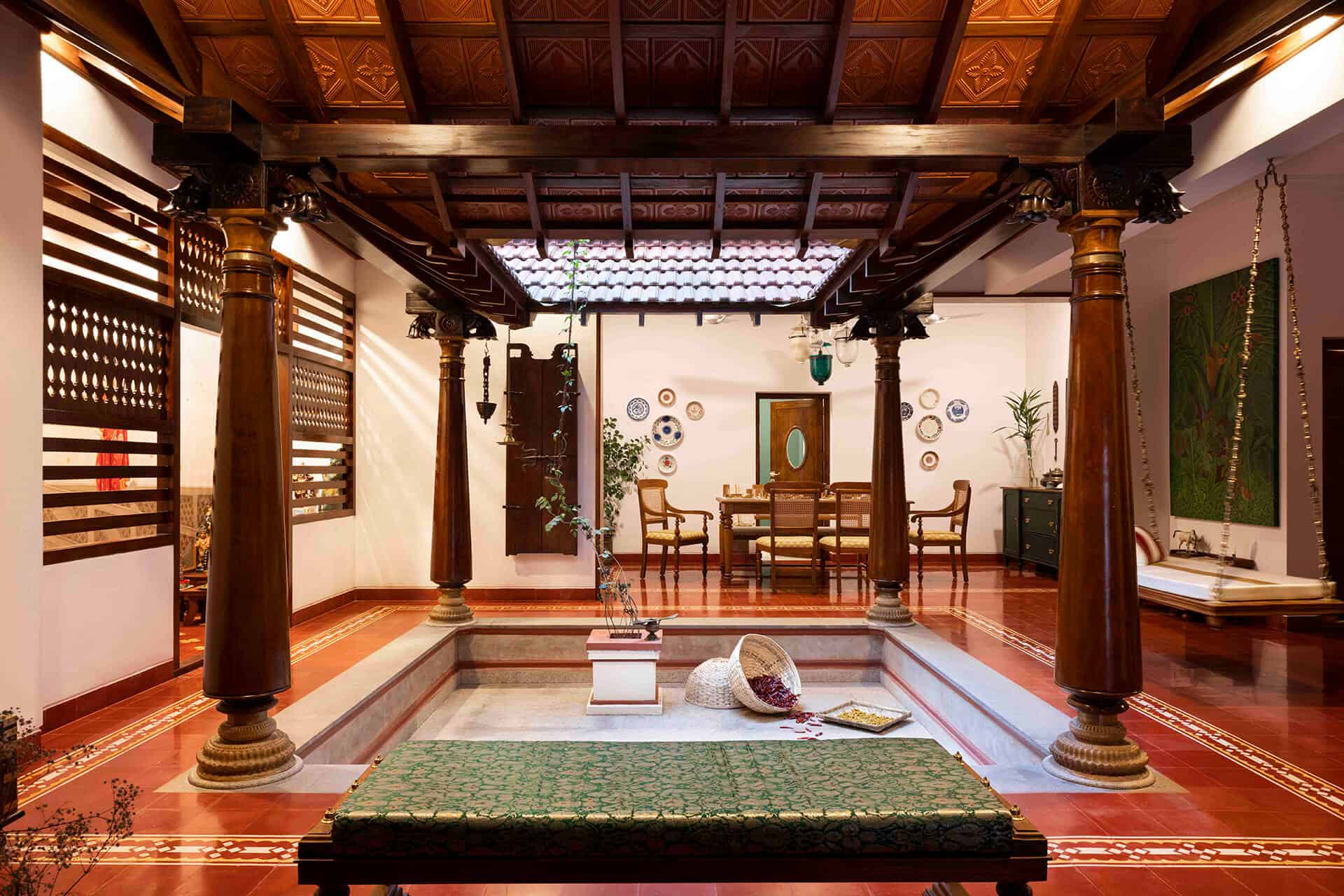
The first sensation is temperature.
Beyond the riad, Marrakech moves in heat, traffic and hard light, with sun flashing across stone, glass and metal. A few steps past the entrance, the air settles. Orange blossom hangs above damp tile, while a fountain murmurs near the centre and a small square of blue appears overhead, framed by plastered walls.
Conversation softens as the courtyard shapes the arrival. Though a carved doorway may sit several rooms behind, the open centre feels like the house’s true threshold, filtering urban noise and creating a calmer, more intimate mood.
Across Morocco, South India, Rajasthan, Kerala and southern Spain, many memorable stays face inward. Their street walls reveal little, while inner worlds offer sky, water, shade and privacy. Luxury arrives through proportion, atmosphere and seclusion, with each element serving a purpose beyond appearance.
Long before sealed interiors, mechanical cooling and rooftop pools, builders understood how an open centre could soften climate, protect domestic life and lend beauty a daily function. Reading such spaces changes the way a traveller understands a house.
Rooms Without Roofs
Courtyard homes appear across regions where privacy and strong heat shaped domestic architecture. A plain wall may meet the street, while ornament, colour and family life gather inside.
Riads in Marrakech and Fez keep their gardens hidden behind modest doors. Chettinad mansions in Tamil Nadu extend deep behind restrained facades, sometimes holding several courts in sequence. Kerala’s nalukettu houses gather beneath sloping tiled roofs, with a central opening known as the nadumuttam. Across Andalusia, patios form intimate gardens of glazed tile, potted flowers, water and whitewashed masonry.
Arrival often follows a similar rhythm. A narrow passage creates suspense, light briefly dims, then the house opens around a shaft of sky, perhaps with a citrus tree and a shallow basin beneath an arcaded gallery. Space expands after compression, and the change feels theatrical without becoming showy.
Water alters the acoustics first. A small fountain softens footsteps and conversation, while enclosing walls filter the city beyond. Arches, balconies and corridors face inward, giving the court a gentle stage-like presence.
Visitors usually recognise the emotional centre quickly. Tea appears here, luggage pauses here, and first impressions gather beneath open sky. Earlier households used this room throughout the day, with meals, work, rest, ceremonies and conversation sharing one setting.
Why Warm Worlds Turned Inward
Before air conditioning, comfortable living depended on close attention to sun, shade, wind and material. Courtyard planning answered each concern through a simple spatial idea: rooms gathered around a sheltered void, with openings positioned for air movement.
Research concerning courtyard temperatures shows that carefully proportioned courts can remain several degrees cooler than surrounding streets during peak heat. Planting and watering strengthen the effect. Differences between shaded surfaces, sunlit patches and vegetated areas often fall between 2°C and 4°C, enough for a clear change in comfort.
Dry climates gain an added benefit through evaporation. Fountains and shallow basins release moisture, cooling nearby air while producing a steady acoustic calm. In humid southern India, air movement matters more, since warm air rises through the open centre while breezes pass along shaded verandahs and aligned interiors.
Thick masonry slows heat gain. Deep eaves protect walls and floors against direct sun. Stone, terracotta and lime retain the coolness of night, releasing it gradually during daylight hours. Sloping roofs manage monsoon rain while preserving ventilation around the central opening.
Recent climate research has measured ideas known intuitively among vernacular builders. Geometry matters, as do wall thickness, orientation and the relationship between height and width. In well-tuned courts, outdoor air around the centre can fall by more than 1°C, while indoor temperatures may decline by nearly 2°C. Such shifts reduce cooling demand and improve daily comfort.
Earlier families needed no scientific vocabulary for these effects. A good house felt cooler than the lane during summer, brighter than a closed chamber during rain and private without becoming airless.
The Moroccan Riad: A Garden Behind the Wall
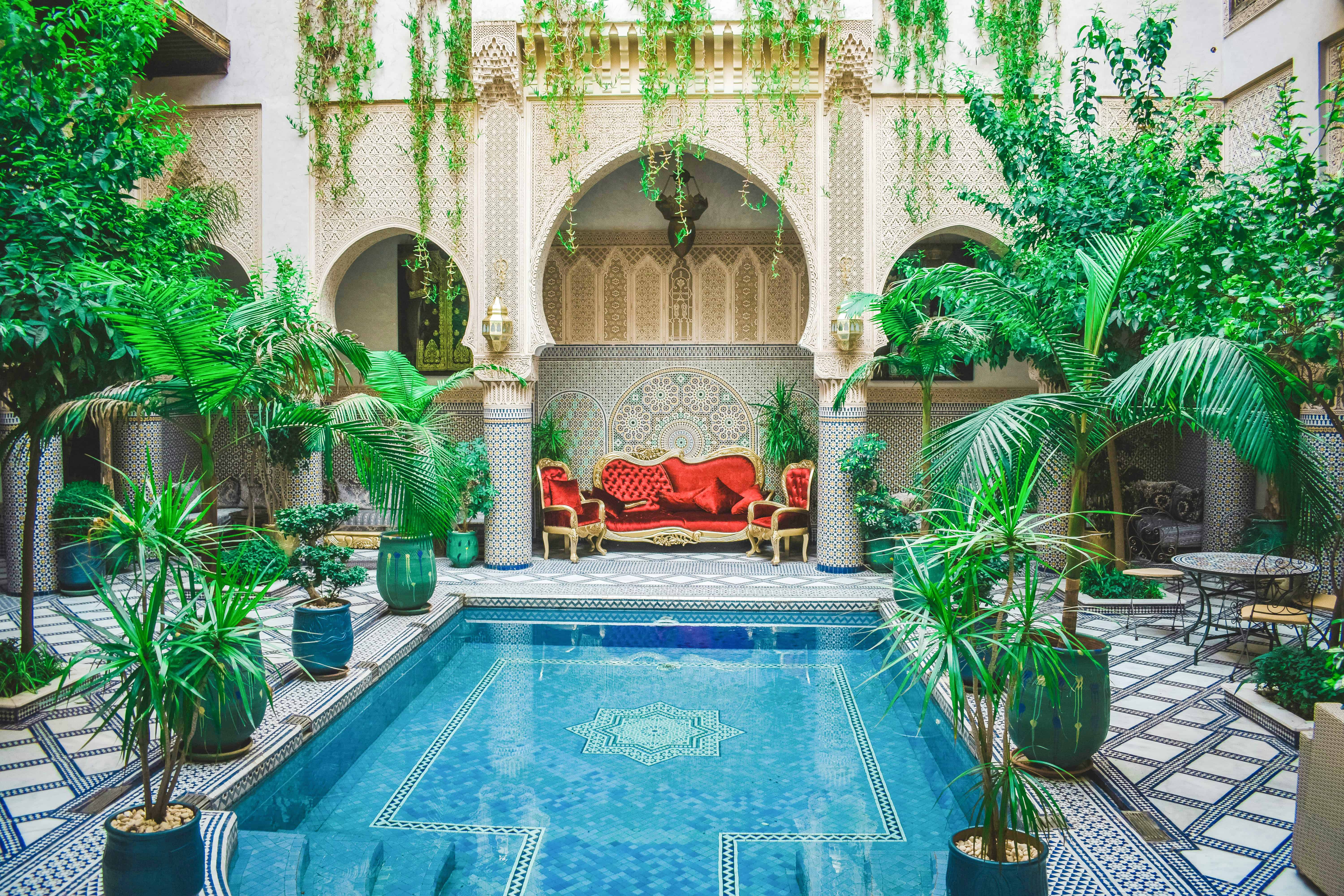
In Morocco, the classic courtyard house carries the name riad, whose original meaning was “garden”. Along the medinas of Fez and Marrakech, a plain doorway may conceal a residence with the grace of a private palace.
Inside, carved plaster rises above zellij tile. Painted cedar frames the upper galleries, and rooms look inward across two, sometimes three, levels. At ground level, a fountain, planted bed and orange tree temper the enclosure with water and foliage.
The architecture reflects Islamic garden ideals alongside older Mediterranean traditions. Light and fresh air enter rooms grouped around the centre, while domestic life stays screened against public view. Within that protected boundary, women and children historically moved across rooms, completed household work, received guests and spent time outdoors with privacy intact.
Many riads now operate as intimate hotels. Their appeal depends little upon the conventional grandeur of a lobby. Scale remains domestic, and the house reveals itself slowly through cool corridors, a soft splash of water and citrus warmed under the sun.
Breakfast may arrive beneath an orange tree, while mint tea catches the reflection of glazed tile. Bedrooms open onto galleries like private boxes above an interior theatre. At night, lantern light touches plaster carvings, shadows gather beneath arches, and the sound of the fountain travels across the sleeping house.
Shade and evaporation cool the air, an enclosure creates reassurance, and repeating patterns bring visual order. The medina stays close, though its intensity loses force. A guest still feels outdoor air and sees open sky, giving the riad its particular luxury: private contact with climate, moderated by centuries of design intelligence.
Chettinad Mansions: Light Along a Deep House
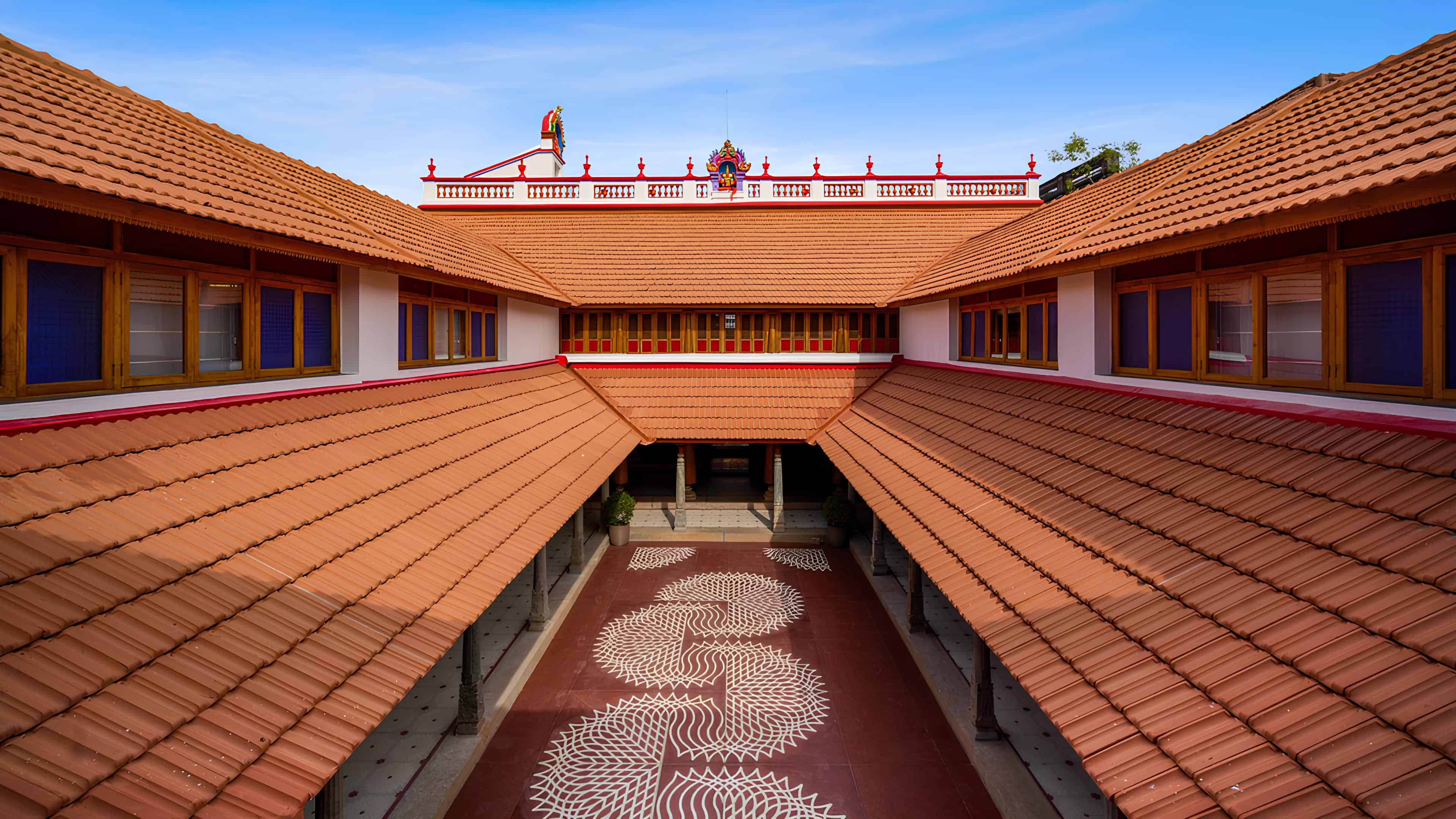
Southern Tamil Nadu offers a different expression. Chettinad mansions, built by the Nattukottai Chettiars, reflect mercantile wealth shaped through global trade. Their restrained street fronts conceal long interiors rich in teak, lime plaster, stone and patterned tile.
Many houses contain several courtyards, sometimes three, occasionally four. Movement through them becomes a procession. Public areas sit near the entrance, while family rooms and service spaces grow more private deeper inside. Each court brings a fresh interval of light.
Pillared verandahs frame the open centres, catching daylight while remaining shaded. Pitched roofs and broad eaves guide monsoon rain into channels. Athangudi tiles, polished stone and slightly sunken floors help manage water and surface temperature.
In this humid climate, cooling alone is insufficient. Air must circulate, and moisture must escape. Open courts pull warm air upward. Long axes of doors and windows carry breezes across rooms, while lime plastered masonry acts as thermal mass, slowing heat during the day and releasing warmth after sunset.
Chettinad courtyards held weddings, rice feeding ceremonies, festivals and evening card games. Chillies dried beneath the sun, sarees hung across shaded edges, and children bathed in metal tubs. Lamps left traces of soot, while familiar routes polished patches across tiled floors.
Such evidence gives restored mansions their emotional texture. Guests may know little about the families once living there, though memory remains present in worn thresholds and the rhythm of rooms around each court.
At breakfast, light falls past carved columns while footsteps echo briefly across tile. Noon enters as a bright vertical beam, with adjacent rooms staying cool and dim. The house feels deep, layered and quietly ceremonial.
Rajasthan’s Havelis: Coolness Held in Stone
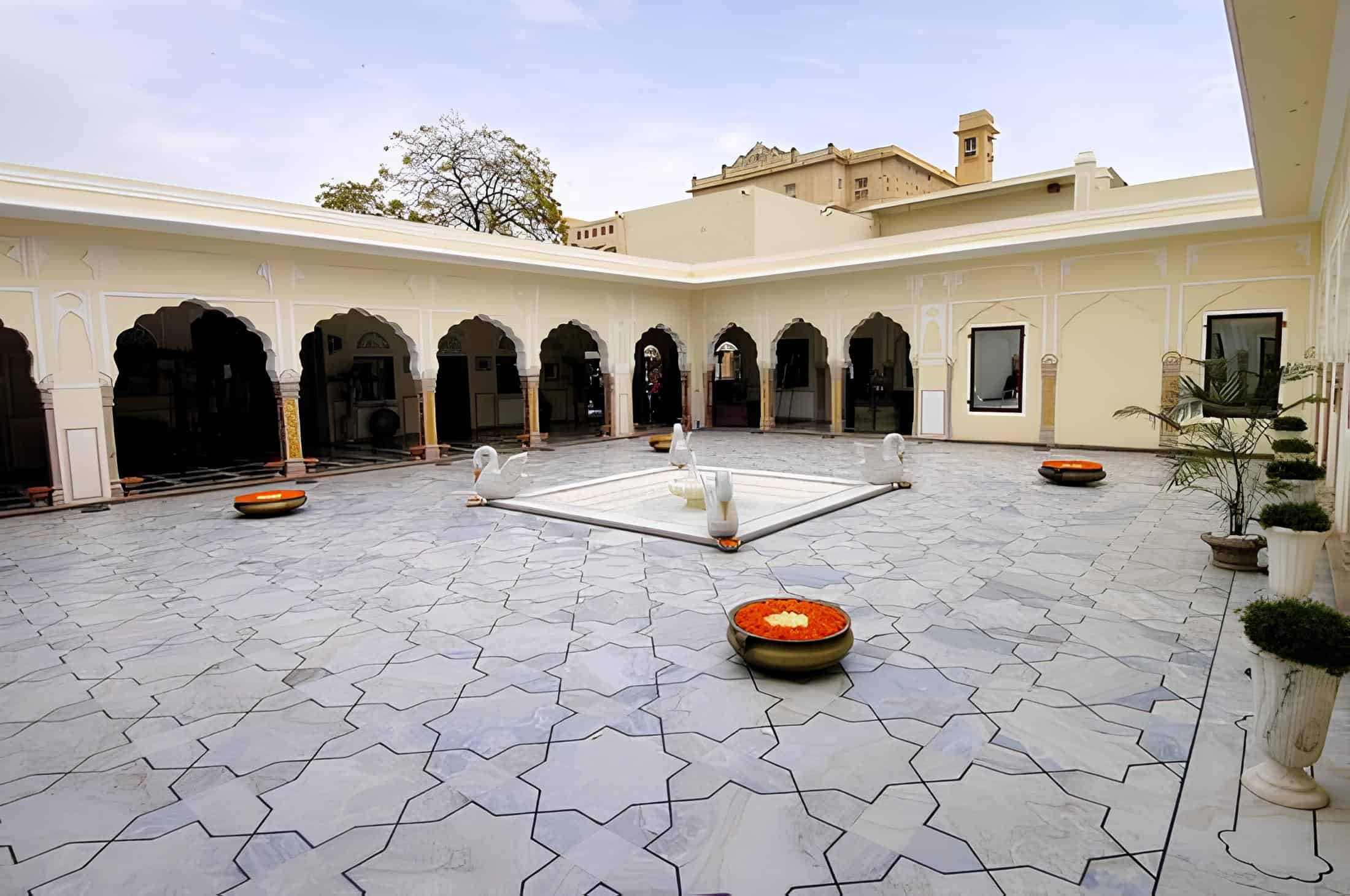
Across Rajasthan, the courtyard answers a harsher climate. Summer lingers, daylight can feel metallic, and winter nights arrive crisp and dry. Havelis in Jaisalmer, Shekhawati and Bikaner soften those extremes through compact planning, thick walls and inner chowks.
Their street facades often display intricate jharokhas, carved stone screens and painted ornament. Still, the household’s true centre lies beyond the gateway. One chowk may serve guests and business, while deeper courts support family life, ritual and domestic work.
Stone and lime provide thermal mass. Small shaded openings limit direct heat, tall volumes release warm air upward, and carefully proportioned courts gather cool night air. Heavy enclosing walls then protect that freshness during the following morning.
Studies of Shekhawati havelis suggest that such passive measures can keep some interiors around 20°F cooler than the street, without mechanical systems. Low reflectance inner floors, deep shade and substantial walls contribute across the day.
Security shaped the plan as strongly as the climate. Massive timber doors and near fortress-like exteriors protected merchants, goods and families along busy trade routes. Inside, galleries looked across open space, and women and children could spend time outdoors while remaining screened against the lane.
The chowk hosted weddings, music, religious observances and evening conversation. Grain was ground there, papads dried under the sun, and children studied near shaded walls. A tulsi plant and a small shrine often gave the centre a sacred focus.
Restored havelis now translate this pattern into a refined guest experience. Morning chai arrives beneath carved pillars while doves cross upper galleries. Afternoon heat stays outside thick walls, and frescoes hold their colour in muted shade. By evening, lamplight settles across stone as voices drift down through balconies.
Across northern India, related haveli forms appear along the Ganga, Punjab and Uttar Pradesh. Regional details shift, yet the layered sequence remains familiar: strong gateway, public baithak, protected family courts and rooms organised around open air.
For the traveller, a haveli offers more than heritage decoration. Its deepest pleasure may come at midday, watching light descend into the chowk before fading across carved stone. Later, the first evening breeze moves through a jaali and touches the skin.
Kerala’s Nalukettu: Rain Inside the House
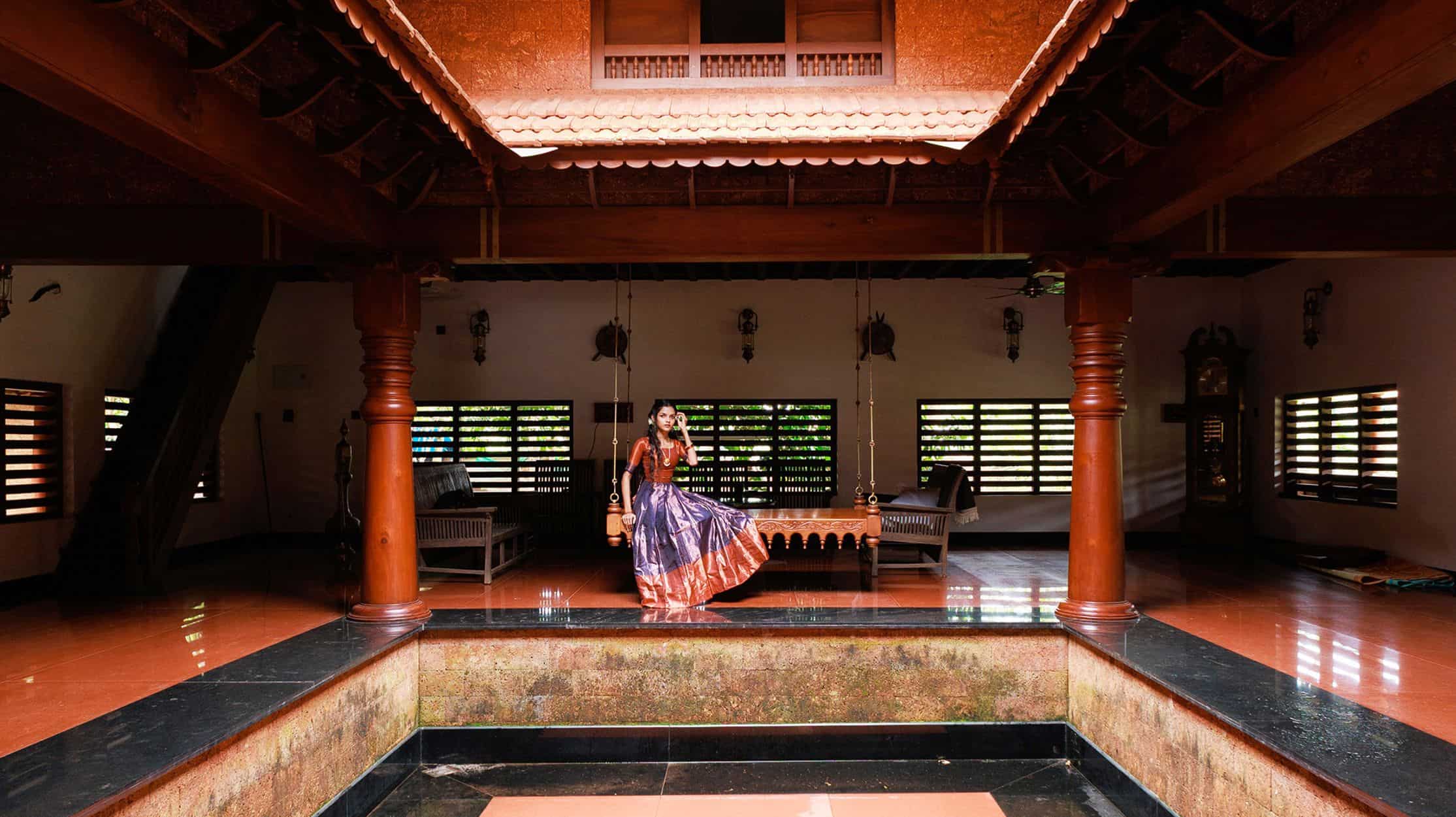
Kerala’s traditional nalukettu house belongs within a climate of heat, humidity and dramatic rain. Four wings gather around the nadumuttam, an open central square beneath sloping tiled roofs. Deep verandahs and extended eaves protect the edges, allowing the house breathing room during the monsoon.
The central opening regulates airflow. Prevailing breezes enter shaded interiors, while warm air rises and escapes. Laterite and brick walls moderate temperature, and roof details guide heavy rain away through drains and storage systems.
During a storm, the nadumuttam changes character. Water enters the heart of the house, while shelter remains close on every side. Rain darkens tile and deepens sound beneath the roof, turning the courtyard into an instrument for weather.
Its cultural role carries equal weight. Lamps, tulsi plants and small shrines often occupy the centre. Families gather here for pujas, elders share stories during humid evenings, and children may sleep beneath mosquito nets during a power cut, listening as rain travels across tiles.
At a heritage homestay and boutique retreat shaped around Nalukettu principles, morning tea in the Nadumuttam can become the day’s most memorable ritual. Light enters gently after rain, birds skim the roof opening, and wet stone reflects a muted sky. A faint breeze crosses the verandah as the guest remains under cover, closely attuned with every shift in weather.
Andalusian Patios: Paradise in Miniature
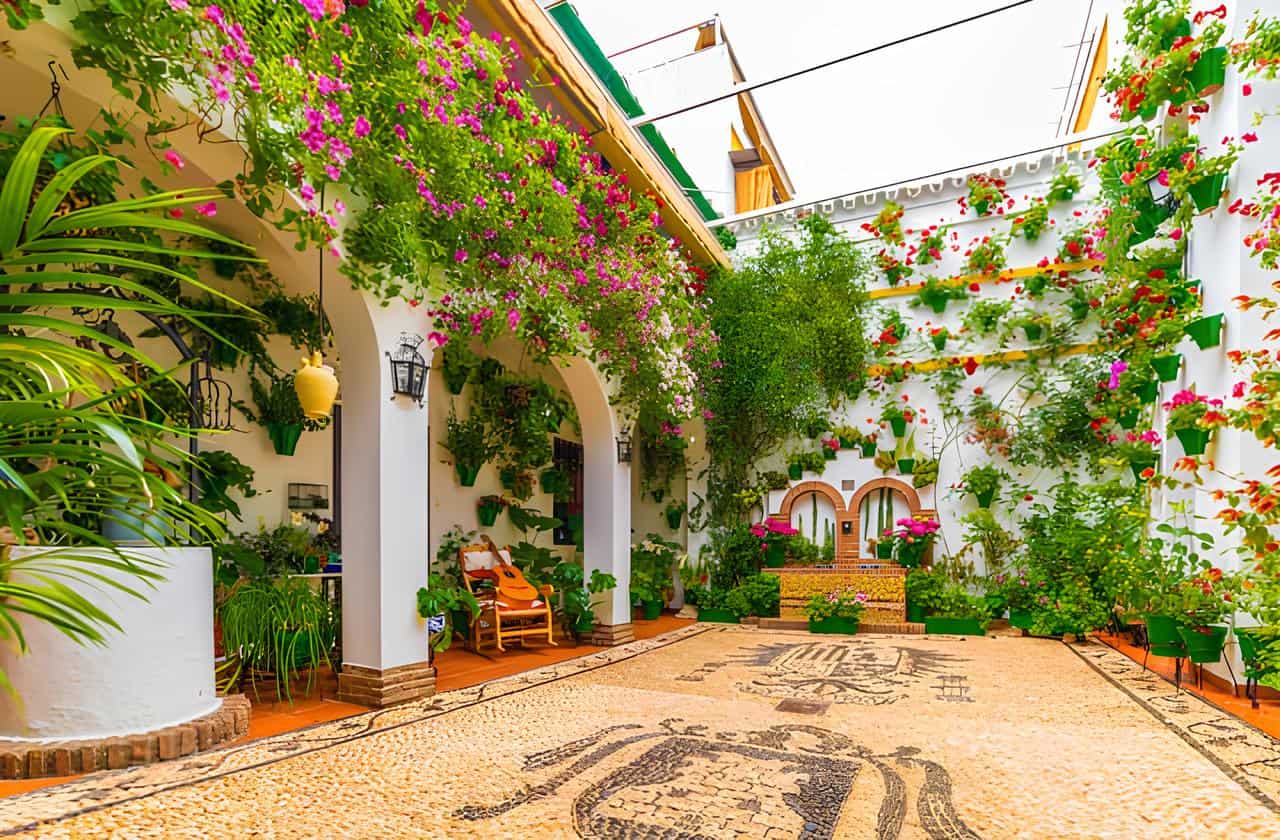
Southern Spain brings a brighter palette. Andalusian patios combine Roman atrium traditions with Islamic garden principles, creating domestic worlds of whitewashed walls, azulejo tiles, fountains and dense planting.
Córdoba and Seville developed patio cultures suited for strong sun and close urban life. Thick masonry keeps interiors cool, tiled floors hold evening freshness, and vines, orange trees and potted geraniums shade the walls while adding scent and colour. A ceramic fountain cools nearby air through evaporation, with its sound extending across adjacent rooms.
These patios bring daylight and ventilation deep inside the house. Vertical walls limit harsh sun, planting breaks radiant heat, and galleries provide protected circulation around the open centre.
Several households once shared certain patios. Neighbours met there, children played there, and domestic routines unfolded within earshot of surrounding balconies.
Córdoba’s Fiesta de los Patios now opens private courtyards across the city, presenting them as living galleries of flowers, tile and water. Visitors move through homes rarely visible behind the street, occasionally meeting residents who tend vast arrangements of pots through the warmer months.
A stay inside a converted casa patio brings that culture into daily life. Breakfast may unfold beside a fountain, afternoon light moves across painted ceramics and evening wine carries the scent of orange blossom. Flamenco heard nearby feels woven into the building, not added as entertainment.
Courtyards as Memory Rooms
A Moroccan riad, Chettinad mansion and Andalusian patio differ in material and mood, though family life concentrates around a visible, protected centre in each case.
Morning begins there as doors open, floors are swept and washed, incense rises into the air, and chairs appear beneath shade. Major life events also claim the space. Naming ceremonies, weddings, prayers, funerals and festival observances gather beneath the open sky.
Use accumulates. A court becomes associated with particular voices, seasons and gestures. Even after a house empties, former residents may speak about its courtyard as though recalling a family member.
Luxury travellers feel that density, even without access across every story. A suite with a balcony offers a view, while a courtyard offers participation within the private rhythm of a house. Light marks time on the floor, rain becomes an event seen at close range, and a fountain keeps speaking after everyone sleeps.
Central courts also offer a rare blend of openness and containment. A guest may sit outdoors in a robe without feeling exposed. A storm can pass overhead while the surrounding gallery stays dry. Women and solo travellers often find inward-facing houses especially comfortable, since street visibility is limited while air, sky and movement remain available.
Historic courtyards give luxury a human scale, making room for stillness without isolating the guest against local climate and culture.
Reading a Courtyard During a Stay
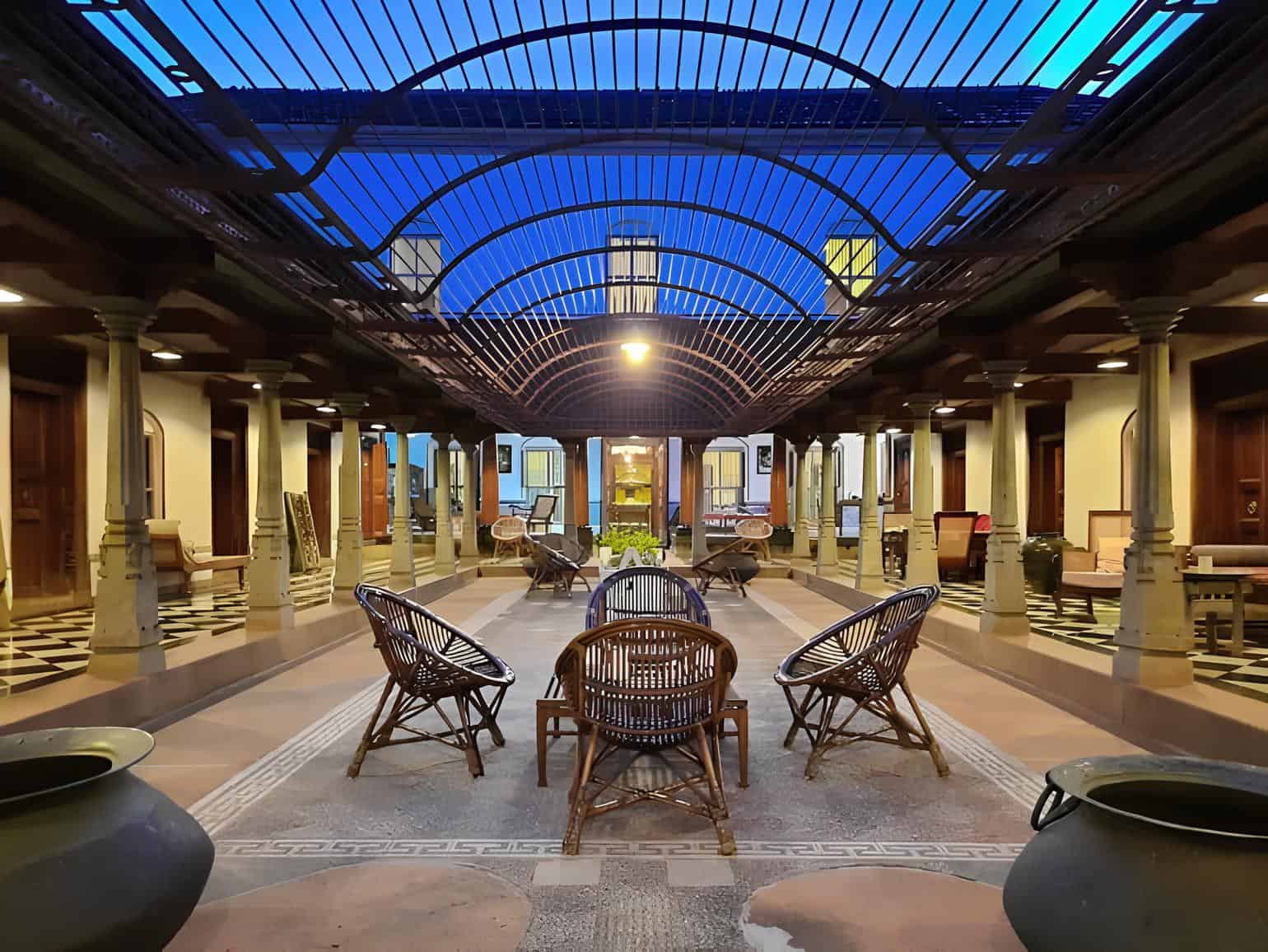
Once noticed, the courtyard becomes an important measure when choosing accommodation. In Marrakech, Córdoba, Jaipur, Karaikudi and Kerala, room category matters, though the relationship between room and court may matter more.
Begin with temperature. A successful courtyard in a warm climate should feel calmer than the street, with an immediate softening across heat and glare. Shade, masonry, vegetation and water each play a role. A visually impressive court that feels airless may have lost its original climatic intelligence during renovation.
Next, notice how the house uses the space. Do bedrooms open onto galleries? Does breakfast take place near the centre? Are staff and residents present throughout the day? A courtyard supporting daily life carries greater character than a decorative atrium used mainly for photographs.
Water deserves attention. One fountain and a shallow basin can transform mood through sound and evaporation. Planting also changes scale, with citrus trees, palms, vines and clustered pots creating moving shade, varied scent and layers of privacy.
Night reveals another side. Many courtyard houses reach their loveliest state after sunset, when lanterns lower the visual field and candlelight warms tile and plaster. Dark sky becomes part of the ceiling, while evening air descends into the open centre and carries conversation across several floors.
Restoration choices deserve equal notice. Polished stone may look glamorous, yet unsuitable finishes can trap heat and erase the tactile character of an old house. Sensitive conversions retain breathable plaster, shaded circulation and the close relationship between open court and surrounding rooms.
A good courtyard should work before it impresses. Its beauty grows through comfort, movement and daily use.
The Return of the Open Centre
As cities grow hotter and travellers become more conscious of energy use, architects are revisiting courtyard planning across warm regions. New townhouses, schools and boutique hotels increasingly use internal courts for daylight, ventilation, privacy and contact with planting.
Across Andalusia, contemporary patio homes reinterpret lattice screens, galleries and fountains with modern materials. Designers in the Gulf and North Africa study Najdi and Maghrebi precedents while creating lower-energy homes suited for cultural expectations around seclusion.
In Kerala and Tamil Nadu, younger architects are bringing nadumuttam and mutram principles into contemporary houses, often at a smaller scale. Ventilation improves, daylight reaches deeper rooms, and heritage becomes practical again.
Scientific modelling supports the revival. Simulation studies now measure the influence of aspect ratio, planting, orientation and surface material. Machine learning assists designers in testing how small courts affect thermal comfort under changing climate conditions.
Even compact open centres can make dense buildings more pleasant, provided their proportions and materials suit the climate. They reduce dependence on sealed cooling, bring vegetation closer and create social space within limited footprints.
Luxury hospitality has begun rediscovering the same value. Small hotels with shaded courts, restored homes with working fountains and contemporary retreats arranged around rain gardens offer a quieter kind of indulgence. Here, real air touches the skin as rain lands on stone within sight of a dry verandah, while morning light enters gradually through a framed opening.
Choosing the Courtyard
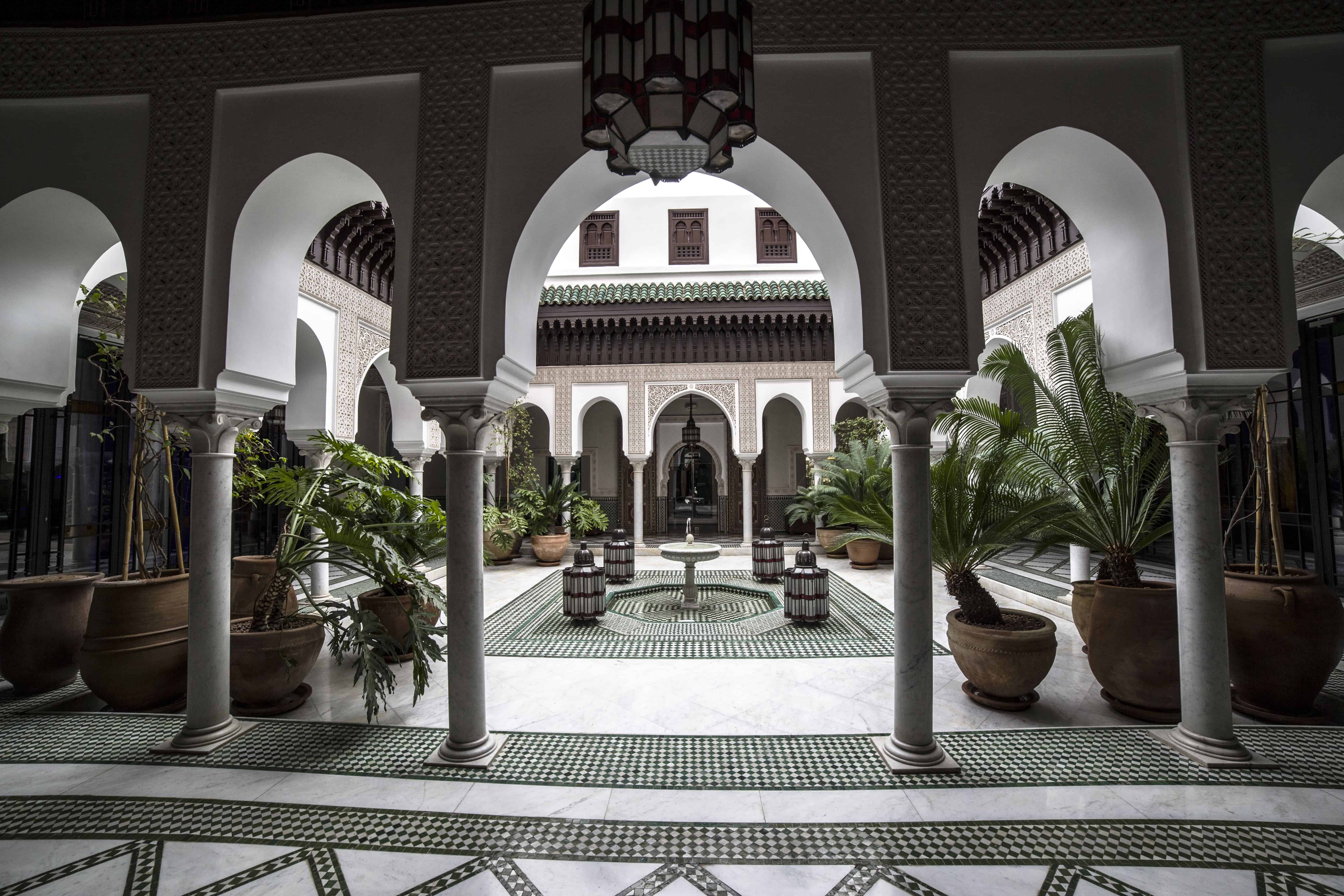
During a journey across a hot, humid and intensely sunny region, one useful question can reshape the search: where does the property keep its open centre?
A riad in the medina draws guests inward through tile, water and shade. A Chettinad mansion reveals court after court, each carrying a different measure of light and privacy. A nalukettu-inspired retreat receives the monsoon within its central square. A casa patio in Córdoba lets the orange blossom and fountain sound define the city at a domestic scale.
The choice reaches beyond aesthetics. Courtyard houses have refined comfort across centuries. Their walls hold heat at bay, their openings guide wind, and their water cools the surrounding air. Inward plans offer privacy while keeping the weather present.
Such places also hold memory with unusual grace. Guests enter briefly, though the house has already witnessed generations of meals, rituals and quiet afternoons. The courtyard gathers those traces without explanation.
Perhaps that is its finest luxury. It allows a traveller access to the life of a place without demanding performance. Sky, stone, foliage and water shape the experience, while the house breathes and time settles into a gentler pace.
A room may be booked for a few nights. The courtyard is what remains afterwards.
Read more – Lifestyle, Weddings, and Wellness