

This Hanuman Jayanti, we look at Hanuman’s shrines from Ayodhya to Rameswaram, revealing India’s powerful devotion, regional memory and sacred geography
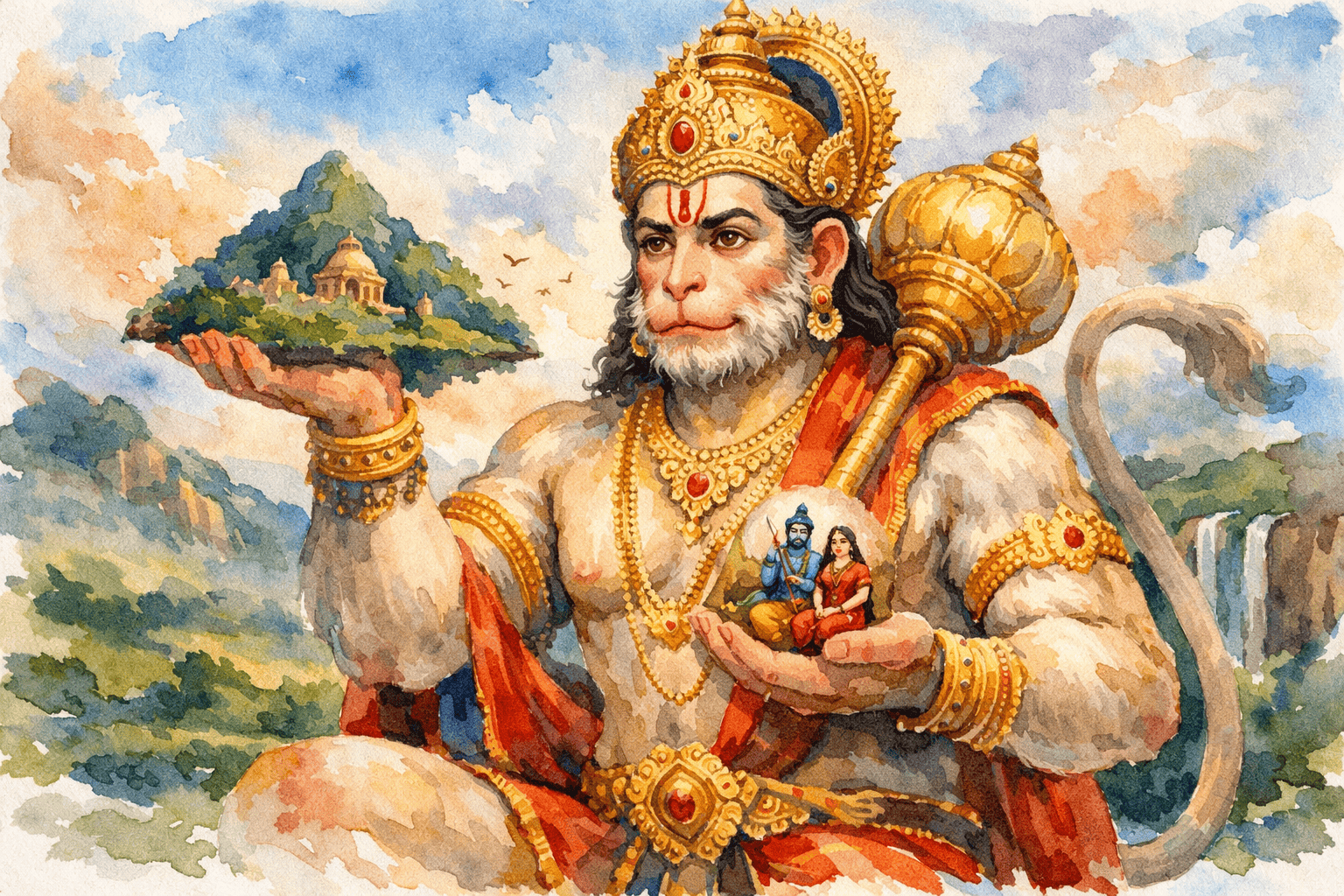
Few deities in the Hindu sacred world inspire the kind of immediate, everyday devotion that Hanuman does. His appeal cuts across region, language, caste, age and even levels of ritual knowledge. One does not need deep scriptural learning to feel close to him.
Hanuman is loved because he feels accessible. He is powerful, yet never remote. He is divine, yet deeply relatable. He stands for courage in moments of fear, loyalty in moments of confusion, discipline in moments of distraction, and protection in moments of uncertainty. It is this living, deeply personal bond that makes Hanuman Jayanti a heartfelt celebration of faith, strength and unwavering devotion.
This is one reason Hanuman worship is so widespread across India. He is not approached only during large festivals or elaborate observances. He is part of daily life. People visit Hanuman temples before exams, court cases, interviews, long journeys, business decisions and difficult medical treatments.
Parents pray for their children. Students seek concentration. Workers seek strength. Families seek relief during times of tension. Devotees turn to him when life feels unstable because Hanuman is seen as a deity who responds quickly, directly and without unnecessary complexity.
His popularity also rests on the quality of devotion he represents. In a religious landscape filled with grand cosmic forms, Hanuman offers a model of service. He is brave, though never arrogant. He is immensely strong, yet never vain. He is wise, yet humble. He is capable of destruction, though always in the service of dharma. That combination makes him singular. People do not merely admire Hanuman. They trust him.
The ritual world around him reflects that simplicity. Hanuman worship often feels uncluttered. A lamp, a small packet of sindoor, some oil, flowers, fruit, a recitation of the Hanuman Chalisa, a reading of Sundarkand, these are enough. The emotional bridge between devotee and deity does not require grandeur. It requires sincerity. That directness has helped Hanuman remain central not only in large temple traditions, but also in neighbourhood shrines, roadside sanctums, city temples and domestic worship.
Another reason for his wide appeal lies in the way he stands at the meeting point of physical strength and spiritual depth. Hanuman represents concentration, celibacy, restraint, memory, learning and devotion. He is at once warrior and sage, servant and hero, humble bhakta and cosmic force. That range allows many kinds of devotees to see themselves in him.
It is also significant that Hanuman belongs equally to the grand epic world and to popular everyday religion. He emerges in the Ramayana, yet he is never confined there. He enters folk memory, regional practice, local healing traditions, oral storytelling, public recitation and urban worship. He moves easily between the world of scripture and the world of lived faith. That, perhaps, is why Hanuman temples are always full. He does not feel far away. He feels present.
The Story of Hanuman and What He Represents
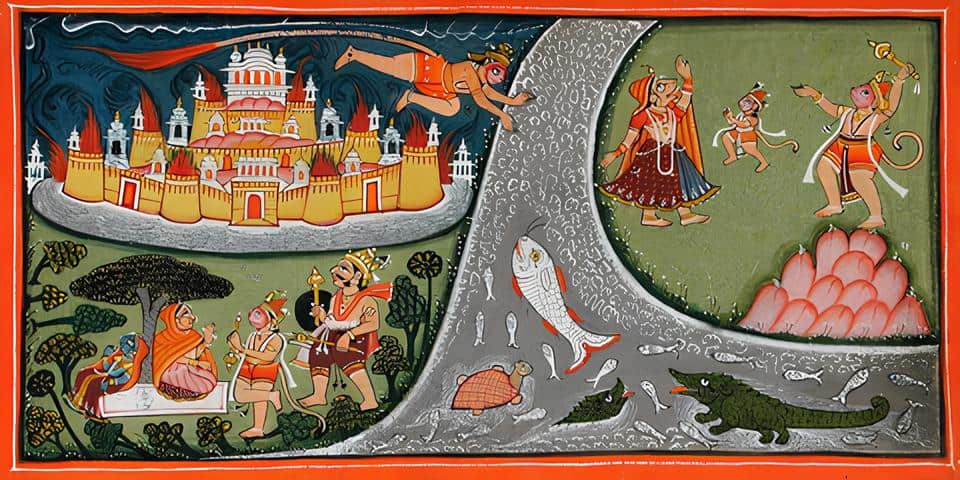
Hanuman’s sacred identity is rooted in the Ramayana, where he appears as the Vanara hero whose devotion to Rama becomes one of the epic’s most enduring moral centres. He is the son of Anjani, and in many traditions is also linked with Vayu, the wind god, which helps explain the immense vitality and movement associated with him. Even as a child, Hanuman is described as full of astonishing energy, mischief and strength. One beloved story tells of him mistaking the rising sun for a fruit and leaping toward it, a tale that captures the daring force already present in him.
Yet Hanuman’s greatness does not rest only in his powers. It rests in the way those powers are used. In the Ramayana, he becomes the ideal servant of Rama, not in a diminished sense, but in a spiritually exalted one. He crosses the ocean in search of Sita. He enters Lanka with fearless intelligence. He consoles Sita in captivity. He burns the city after being captured. He returns bearing crucial knowledge.
Later, during the war, he brings the Sanjeevani bearing mountain when Lakshmana lies close to death. Every famous act reveals strength and devotion guided by purpose.
That is why Hanuman represents much more than heroism. He represents bhakti in action. His devotion moves, carries, rescues, protects, remembers and fights when needed. He is the perfect sevak because his entire being is aligned with the divine will of Rama. This is the source of his spiritual stature. Hanuman is great because instead of seeking greatness, he empties himself of ego.
For devotees, this carries enormous significance. Hanuman becomes a model of ideal conduct under pressure. He combines force and tenderness in rare measure. Even his physical image often reflects this doubleness.
In one shrine, he appears muscular and heroic, mace in hand, chest expanded with power. In another, he appears seated in meditation, inwardly still. In another, he appears as Bal Hanuman, childlike and affectionate. Each form reveals part of what he represents.
Hanuman also embodies memory. In devotional language, he never forgets Rama. That constancy gives him moral clarity. He knows who he serves, why he acts and where his strength belongs. In an age of distraction, that quality continues to hold deep appeal.
Many devotees do not seek Hanuman only for miracles. They seek him for steadiness. He represents the possibility of immense capability governed by devotion, restraint and purpose.
Myths and Legends Around Hanuman
The myths around Hanuman are many, and they help explain the remarkable tenderness and intimacy of his worship. The childhood story of his leap toward the sun is among the most beloved. It presents him as radiant, fearless and full of divine energy.
Another cluster of legends centres on the extraordinary boons granted by gods who recognised his strength. Yet an equally important motif in Hanuman lore is forgetfulness. In some tellings, sages place a condition upon him so that he will forget the full extent of his powers until reminded. This adds a subtle spiritual lesson. Strength exists, but humility veils it. Greatness awakens in service.
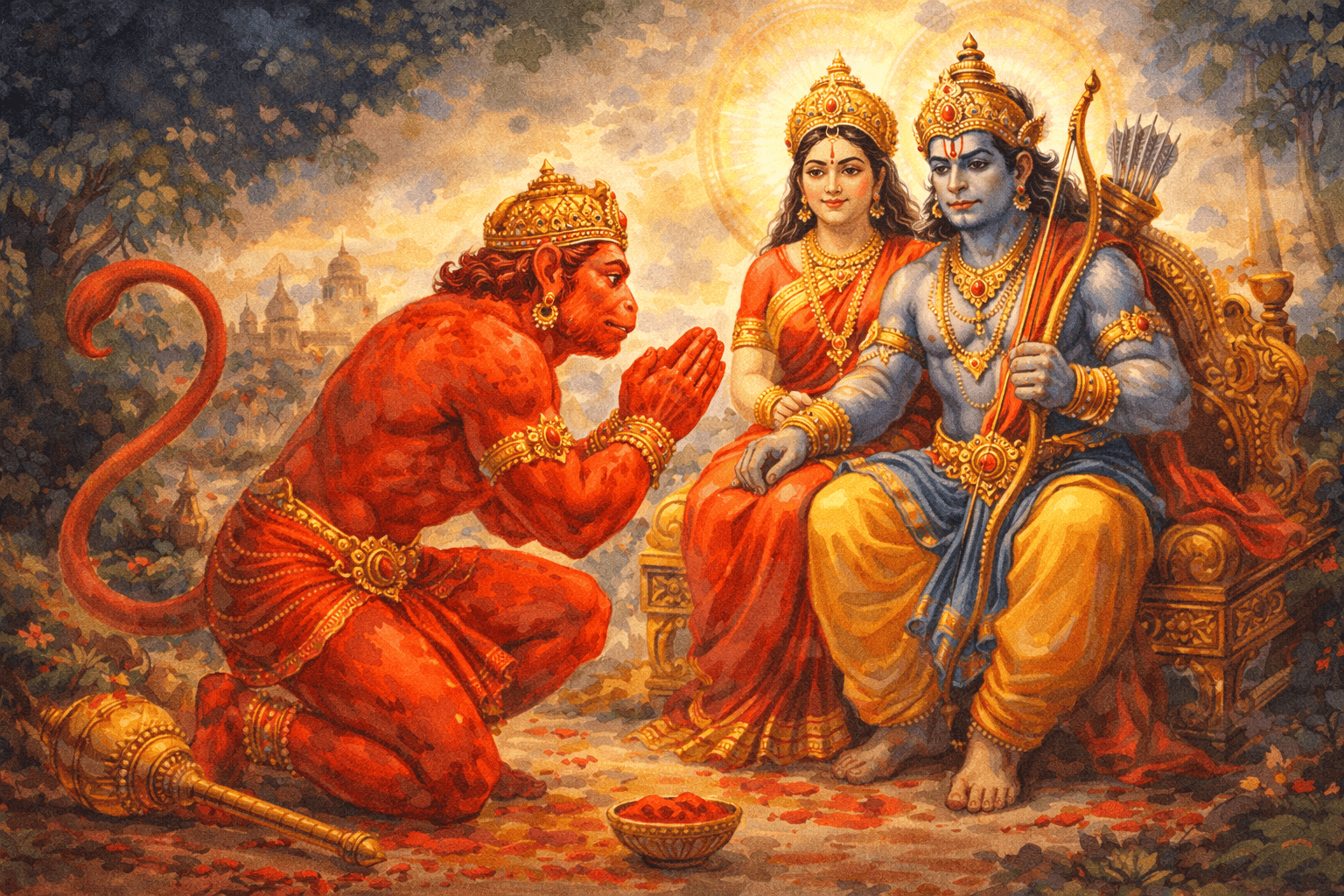
A powerful popular legend also explains the centrality of sindoor in Hanuman worship. When Hanuman saw Sita wearing vermillion for Rama’s long life, he is said to have covered his whole body in sindoor, believing that if a little could benefit Rama, then more must be even better.
The story is deeply loved because it expresses devotion in its purest and most excessive form, innocent, intense and total. That legend continues shaping temple ritual across India, where sindoor mixed with oil remains one of the most recognisable offerings.
Hanuman is also closely linked in popular belief with relief from Shani related affliction. This association helps explain why Saturdays bring such large crowds to Hanuman temples. In many devotional circles, Hanuman is seen as one who can protect devotees from the harsher effects of Saturn and from unseen difficulties more broadly. This protective dimension has strengthened his role as a deity of refuge during periods of hardship, fear and uncertainty.
Then there are the regional legends, which root him in specific landscapes. In Namakkal, he is tied to the story of the Sanjeevani bearing mountain and the sacred geography of Narasimha. In Hampi, the Yantrodharaka tradition places him within a meditative yantra connected with Vyasaraja. In Jharkhand, Anjan Dham is linked with his mother Anjani and with his birth.
In Ayodhya, he remains guardian of Rama’s city. In Salasar and Sarangpur, he becomes a wish-fulfilling and hardship-crushing force in powerful local ways. These legends allow Hanuman to inhabit India not as one distant mythic being, but as a presence rooted in many sacred landscapes.
One Festival, Many Temple Worlds
Hanuman Jayanti draws all these meanings into public view. Across India, the ritual grammar is strikingly familiar. Dawn Aartis begins early. Hanuman Chalisa is recited in groups. Sundarkand paath continues through temple halls. Some devotees fast. Some keep simple satvik meals. Prasad moves through the crowd in forms that feel warm, direct and beloved. Yet the temple experience changes dramatically with region, architecture and local memory.
North India
Sankat Mochan Temple, Varanasi
Sankat Mochan is one of the most loved Hanuman shrines in North India and carries a mood of refuge more than grandeur. Founded by Tulsidas, it is especially famous for relief in times of distress, besan laddoo prasad and an atmosphere shaped by steady recitation and deep public faith.
Hanuman Garhi, Ayodhya
Hanuman Garhi rises like a guardian shrine above Ayodhya and is reached by about 76 steps. It is famous for its fort like presence, its role as protector of Rama’s city and the tender image of Bal Hanuman seated with Anjani, which softens the temple’s martial character.
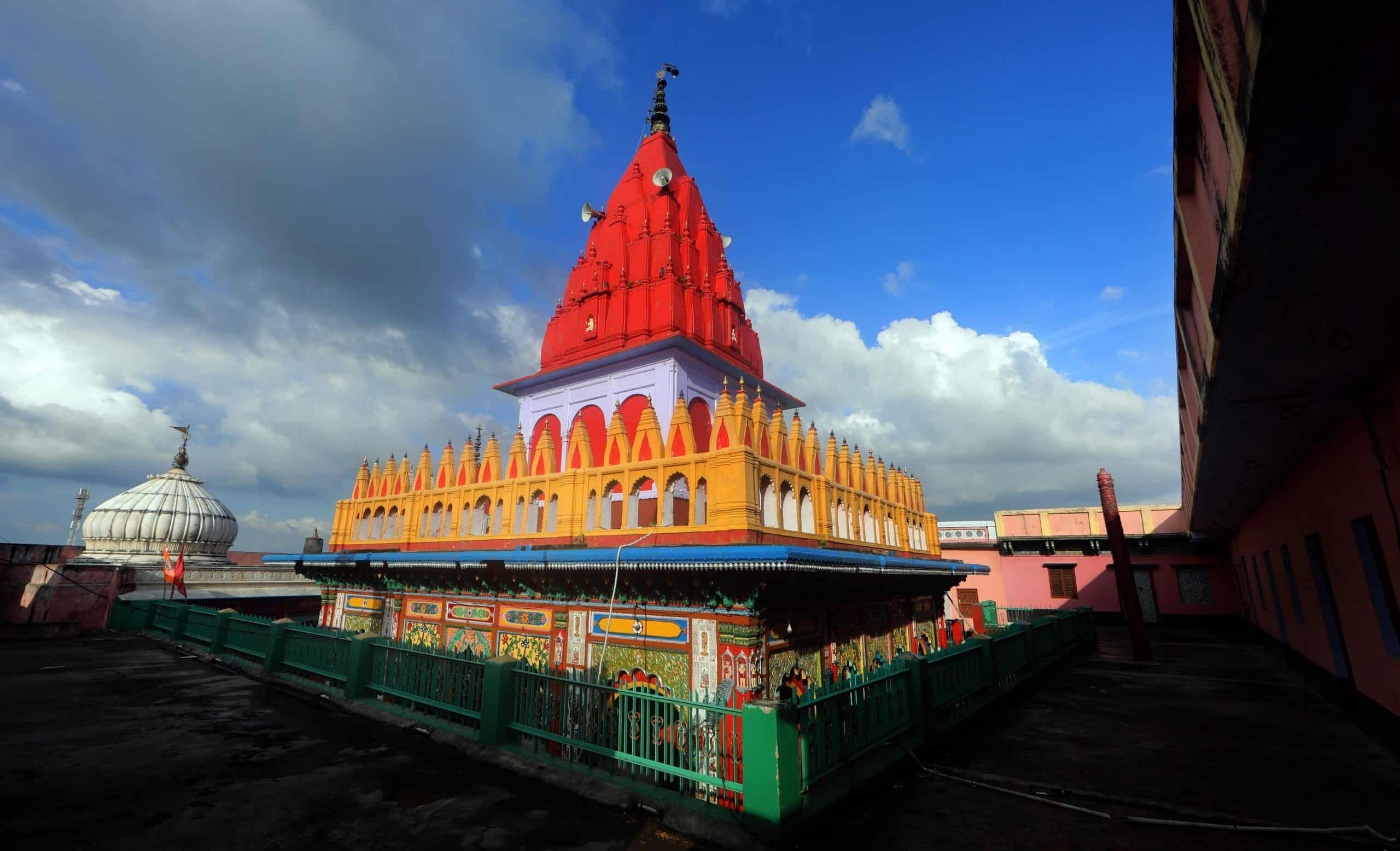
Prachin Hanuman Mandir, Delhi
In the middle of Connaught Place, this old Hanuman temple keeps devotion close to the rhythm of urban life. It is best known for its Bala Hanuman form and its unusual crescent-crowned shikhara, which gives it a distinctive place in Delhi’s sacred landscape.
West India
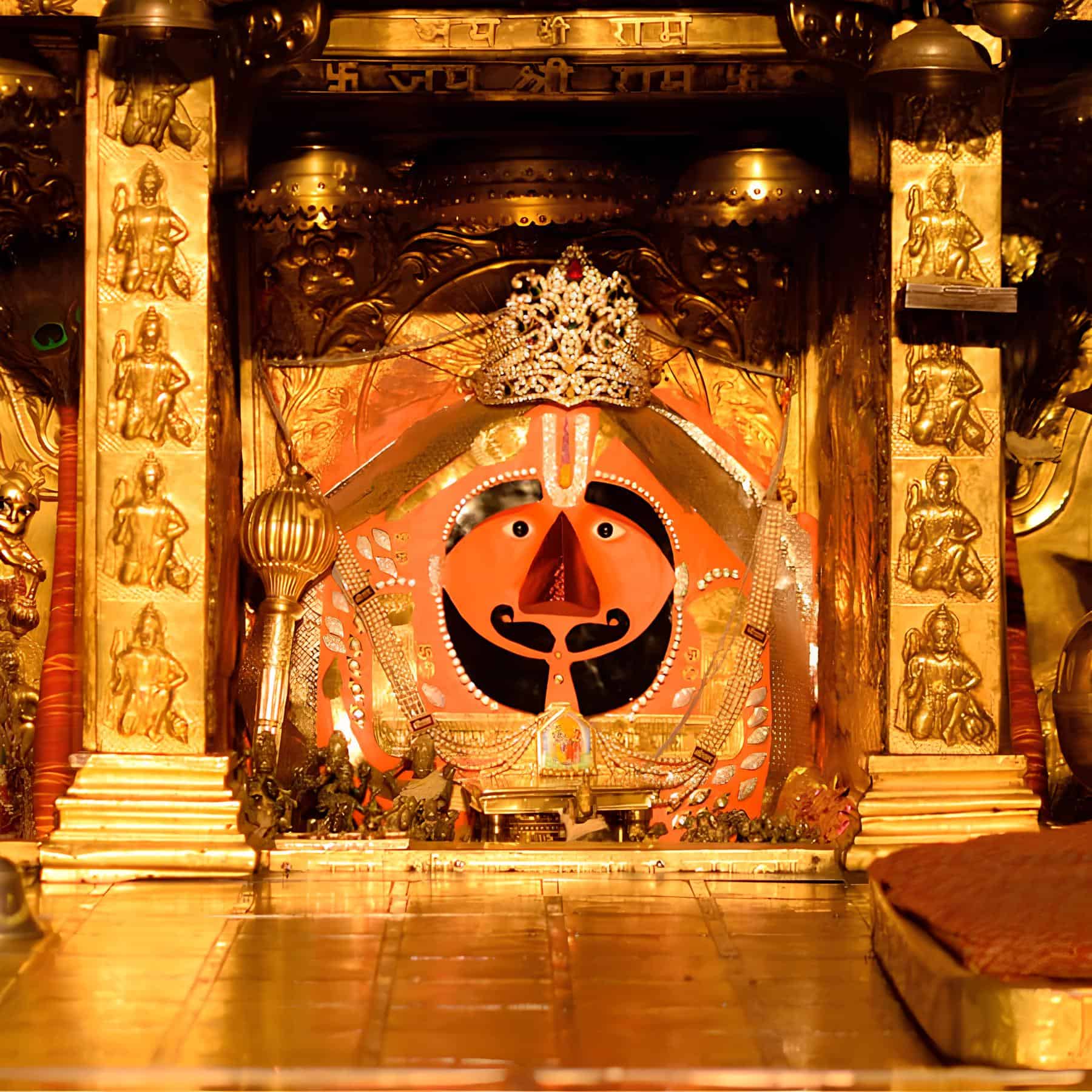
Salasar Balaji, Rajasthan
Salasar Balaji is one of the great vow shrines of western India and is approached with intense personal faith. The temple is especially famous for its bearded and moustached Hanuman and for the discovery legend that gives the idol a unique devotional identity.
Sarangpur Hanuman, Gujarat
At Sarangpur, Hanuman is worshipped as Kashtabhanjan, the crusher of hardship, and that title defines the temple’s power. The shrine is particularly important in the Swaminarayan tradition and is widely known as a place where devotees seek relief, protection and spiritual steadiness.
Bala Hanuman, Jamnagar
Bala Hanuman is famous across Gujarat for its uninterrupted chanting of “Shri Ram, Jai Ram, Jai Jai Ram,” continued without break since 1964. That continuous Ram dhun is the temple’s great identity and gives it a devotional energy unlike any other Hanuman shrine.
South India
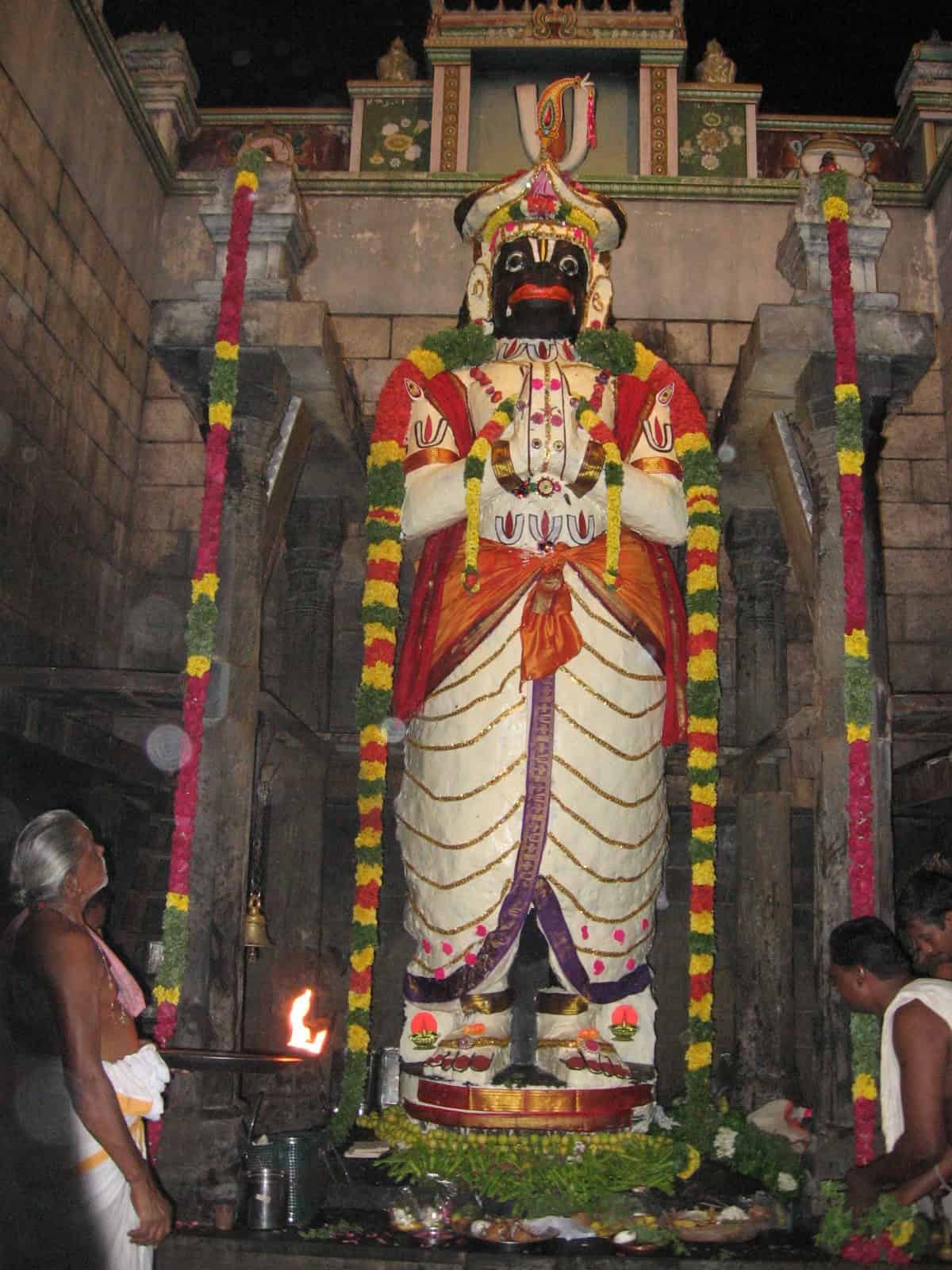
Namakkal Anjaneyar, Tamil Nadu
Namakkal Anjaneyar is one of the most visually striking Hanuman shrines in the south, known for its 18-foot monolithic figure standing beneath the open sky. It is also famous for its close visual and theological connection with the nearby Narasimha shrine.
Yantrodharaka Hanuman, Hampi
Yantrodharaka Hanuman reveals a quieter and more meditative side of the deity. Associated with Vyasaraja, the shrine is known for its seated Hanuman enclosed within a yantra, giving the temple an inward, contemplative mood rare in Hanuman worship.
Alathiyoor Hanuman, Kerala
Alathiyoor is cherished for its close association with Rama and Hanuman and for its intimate local devotional atmosphere. The temple is also known for aval as a characteristic offering, which gives worship here a distinctly Kerala flavour.
Karmanghat Hanuman Temple, Hyderabad
Karmanghat is one of Hyderabad’s old and important Hanuman shrines and is especially remembered for its dhyana form of the deity. Its Kakatiya era association and meditative posture give it a strong, quiet authority within the city’s temple landscape.
Anjaneya Temple, Annavaram
This is a quieter and less widely documented Hanuman stop than the major kshetras above. Annavaram is chiefly famous for Satyanarayana Swamy, yet the wider temple town also includes local Anjaneya devotion, making this more of a regional shrine than a large national pilgrimage centre
Panchmukhi Hanuman Temple, Rameswaram
Rameswaram’s Panchmukhi Hanuman Temple is famous for the five-faced form of Hanuman and for the floating stones displayed there, traditionally linked with Ram Setu. In a town already rich with Ramayana memory, it works as a compact but vivid devotional stop.
East India
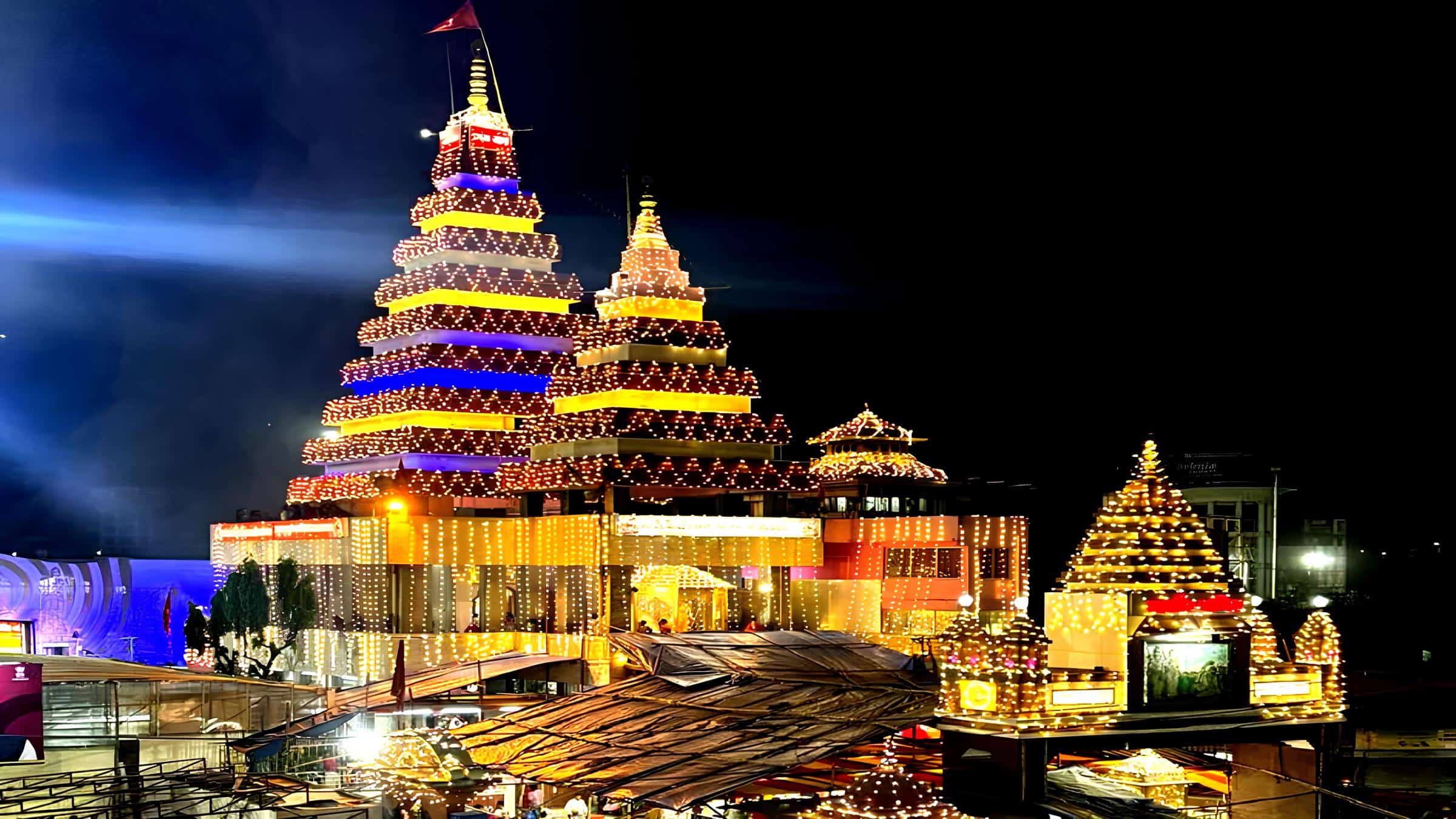
Mahavir Mandir, Patna Image courtesy: bhartisanskriti
Mahavir Mandir is one of the most important urban Hanuman shrines in eastern India and is inseparable from the devotional life of Patna. It is famous for Naivedyam laddoo, for the Ram Setu shila displayed within and for the temple trust’s extensive charitable work in healthcare and public service.
Anjan Dham, Jharkhand
Anjan Dham in the Gumla region is revered as Hanuman’s birthplace and is shaped by the sacred memory of Anjani and the cave associated with her. Unlike the busier city temples, it feels quieter, more rustic and deeply rooted in sacred landscape memory.
What Hanuman Is Offered
The offerings made to Hanuman are among the simplest and most recognisable in Indian temple culture. Sindoor mixed with til oil remains central and deeply symbolic because of the beloved legend connecting Hanuman’s devotion with vermillion worn for Rama’s long life. Lamps lit with sesame oil are also common, especially on Saturdays. Motichoor laddoos, boondi laddoos, imarti, chana gur, urad, bananas and seasonal fruits appear again and again across temple regions.
Many devotees also offer coconuts, flowers, arka garlands and simple packets of prasad. In Kerala, wet avil and kadali bananas shape a more local form of offering. In Patna, the Naivedyam laddoo has become almost emblematic. In Rajasthan and Gujarat, larger sweets, grain and vow-linked offerings may appear during mela periods and on Hanuman Jayanti.
Yet many priests insist that the finest offering remains attention itself, a careful reading of the Ramayana, a sincere recitation of the Hanuman Chalisa, a lamp lit with concentration, a listening heart during Sundarkand. That idea returns us to the core of Hanuman worship. Simplicity. Strength. Service. Devotion without display.
That is why Hanuman Jayanti remains so deeply loved across India. It is not merely a festival marking the birth of a deity. It is a public celebration of courage, loyalty, discipline and refuge. And in shrine after shrine, city after city, that presence continues to feel alive.
Read more – Latest