

Jodhpur RIFF opened its twentieth year to the city, moving from songs at sunrise to a lone flute at midnight
On 22 October, as at every edition, Jodhpur RIFF opened with a day of free events for the city: Jodhpur’s schoolchildren in the day, and anyone who walked up towards Mehrangarh in the evening, could attend short sets by artists from the festival. The next day brought a day and night of song, dance, theatre and ritual.
The free Bal Mela at Veer Durga Das Memorial Park brought schoolchildren within arm’s reach of Rajasthan’s stagecraft. Kathputli marionettes re-enacted the deeds of kings. Acrobats and Bhawai performers, assembled by the Kawa circus, revived the travelling shows that gave India its first circuses. Chari dancers glided with lamps balanced on their heads, and bhapang players from Mewat turned a single string into comedy. At dusk, the free Opening Night City Concert on the parking area on the slope below the fort previewed the days ahead: Rajasthani folk beside visiting Indian and international artists, a swerve into funk, and a closing performance by drummers and dancers.
Day two began, as the festival’s first full day always does, with a sunrise backgrounding the Meghwal of Marwar at Jaswant Thada. The Meghwal were weavers long before anyone called them singers, yet their villages have carried Kabir, Ravidas, Meerabai and Gorakhnath in song for centuries. Bhallu Ram and Mala Ram Meghwal began with bhajans which were at once soulful, plain-spoken and searching. Next came sisters Dariya and Kelam, singing over the burr of the tandura.
Then the fort transformed itself into a place of instruction. Tarini Tripathi ran a Kathak bootcamp in footwork and poise. Vinay Kumar of Adishakti showed festival goers how each of the eight emotions of the Natya Shastra begins in its own pattern of breath. As the day progressed, the museum’s courtyards filled with Bhagoriya, Khari and Bamrasiya dancers as well as the voices of young Langa musicians.
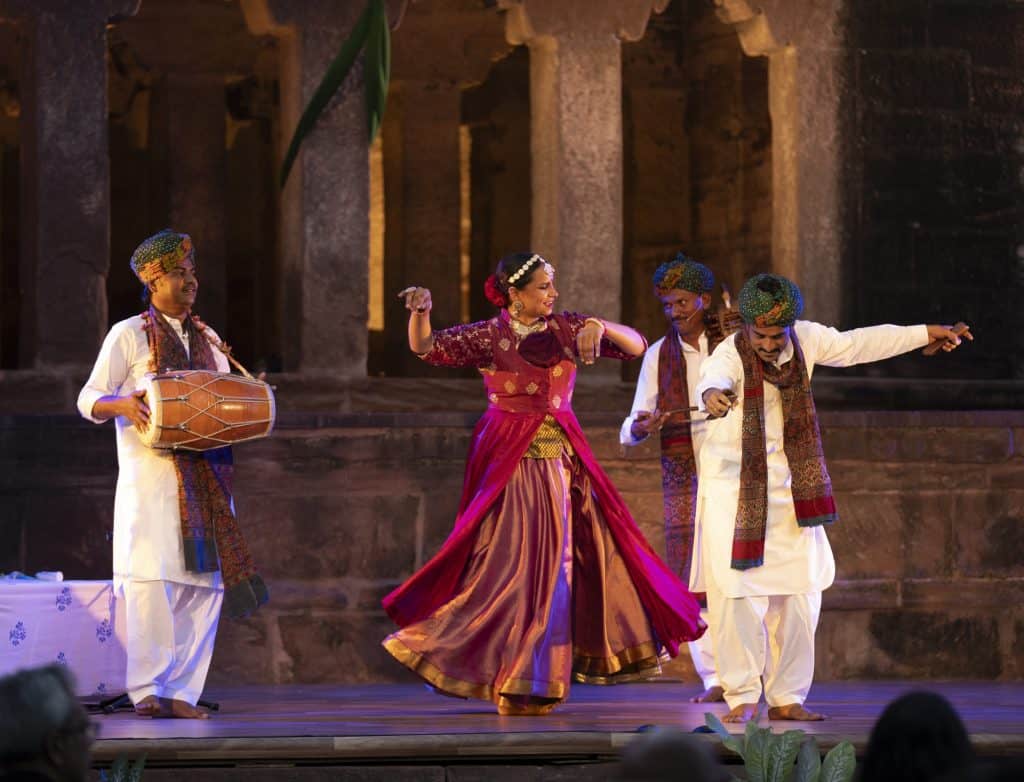
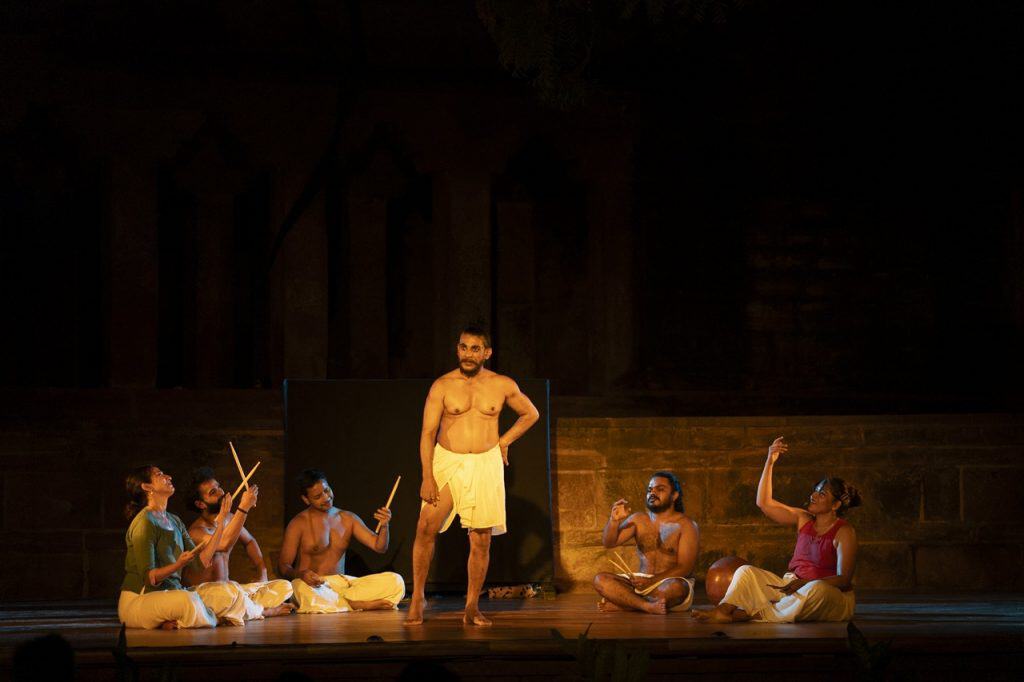
The evening of 23rd October began at Chokelao Bagh with INAYAT- A Duet for Four, commissioned by the festival in 2023 and co-developed with ANKH, Mumbai, returning after performances in Mumbai and New York’s Lincoln Center. In Gauri Sharma Tripathi’s choreography, Tarini Tripathi’s Kathak answers SAZ phrase for phrase- Sadiq Khan on dholak, Aga Khan Music Awards winner Asin Khan on Sindhi sarangi and Zakir Khan Langa on khartal. Then came a first for the festival: a full-length play.
In Adishakti’s Brhannala, directed by the late Veenapani Chawla, Vinay Kumar becomes Arjuna in the last year of exile, hiding as a woman in Virata’s court, and turns a Mahabharata episode into a question about where the self ends. Nearby, at Dhanna Bhiyan Chhatri, devotees of the fifteenth-century saint Jasnath ji, said to have bathed in fire as an infant, danced with fire to hypnotic music.
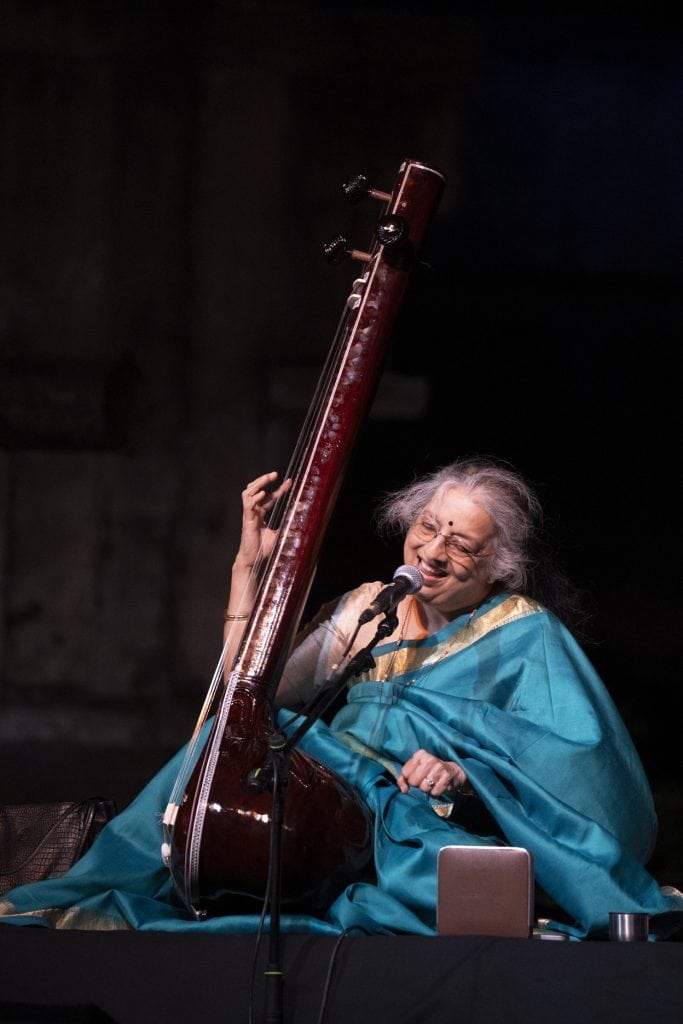
After dark, the Zenana Courtyard belonged to Moody Riffs. Ganga and Sundar, a daughter taught by her mother, who learned from her father, opened with the courtly songs of Rajwadi Maand. Beside them was Mohini Devi, who still sings the old Jogi repertoire, now eclipsed by the fame of Kalbeliya dance. Padma Shri Ashwini Bhide-Deshpande followed with the austere, intricate khayal of the Jaipur-Atrauli gharana.
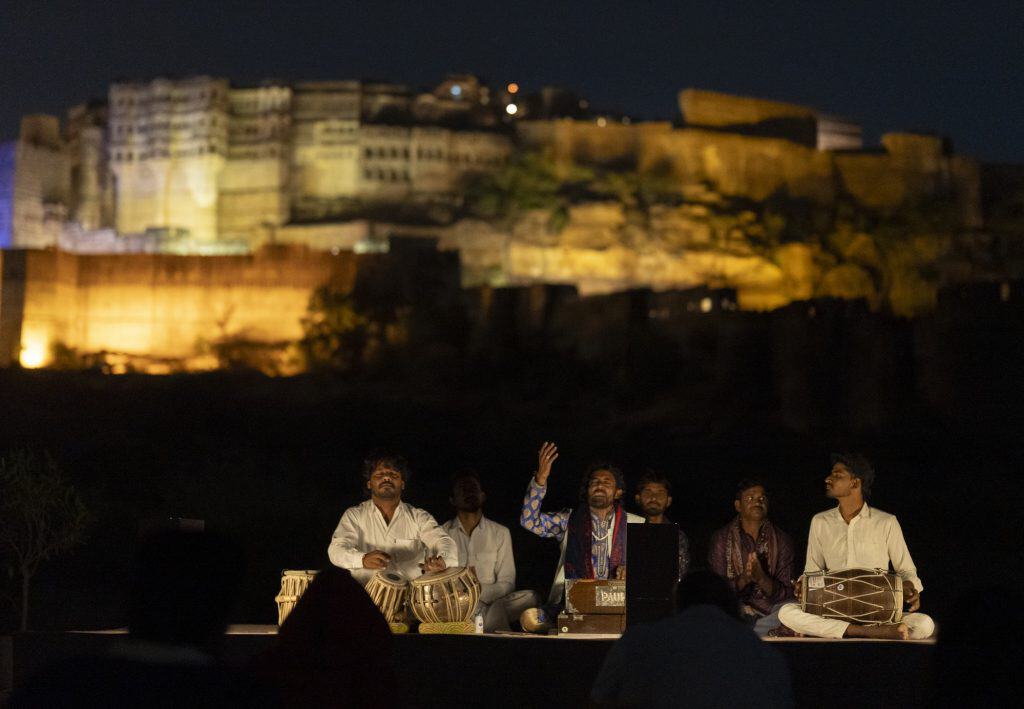
Then, the evening took audiences to other corners of the world. Camila y Silvio, at an Indian festival for the first time, answered with zamba and chacarera on the charango and the deep, fur-skinned legüero. Pedro Dias, schooled in the fado houses of Lisbon, played the Portuguese guitar with Tiago Tomé and the young singer Inês Jacinto. Ilham brought those listening in the courtyard back home: Smita Bellur, a disciple of the Warsi Brothers, set Sufi poetry against the sarangi and dholak of SAZ and Bundu Khan Langa.
At midnight the festival forked. At Club Mehran in Salimkot, Isam Elias spun dabke rhythms and Arab melody into club music. Beneath the fort, in the Rao Jodha Desert Rock Park, the Desert Lounge presented an unamplified performance. Idu Khan Langa played the twin-piped alghoza, once a herder’s compass across the dunes, and Mir Bassu Khan of Bikaner’s Mir community sang Bulleh Shah and Baba Farid in Seraiki under a moon which was close to full.
Through both days ran a line of women: two Meghwal sisters at daybreak, a mother and daughter who claimed a craft long guarded by men, a Padma Shri vocalist of rarely attempted ragas, a young fado singer from Lisbon, and a woman who had made her mark in a qawwal lineage. Jodhpur RIFF, programmed to coincide with Sharad Purnima every year, continues until 26 October.
Read More: Latest