

Perched on Nilachal Hill, Kamakhya Temple offers one of India’s most powerful encounters with Shakti worship
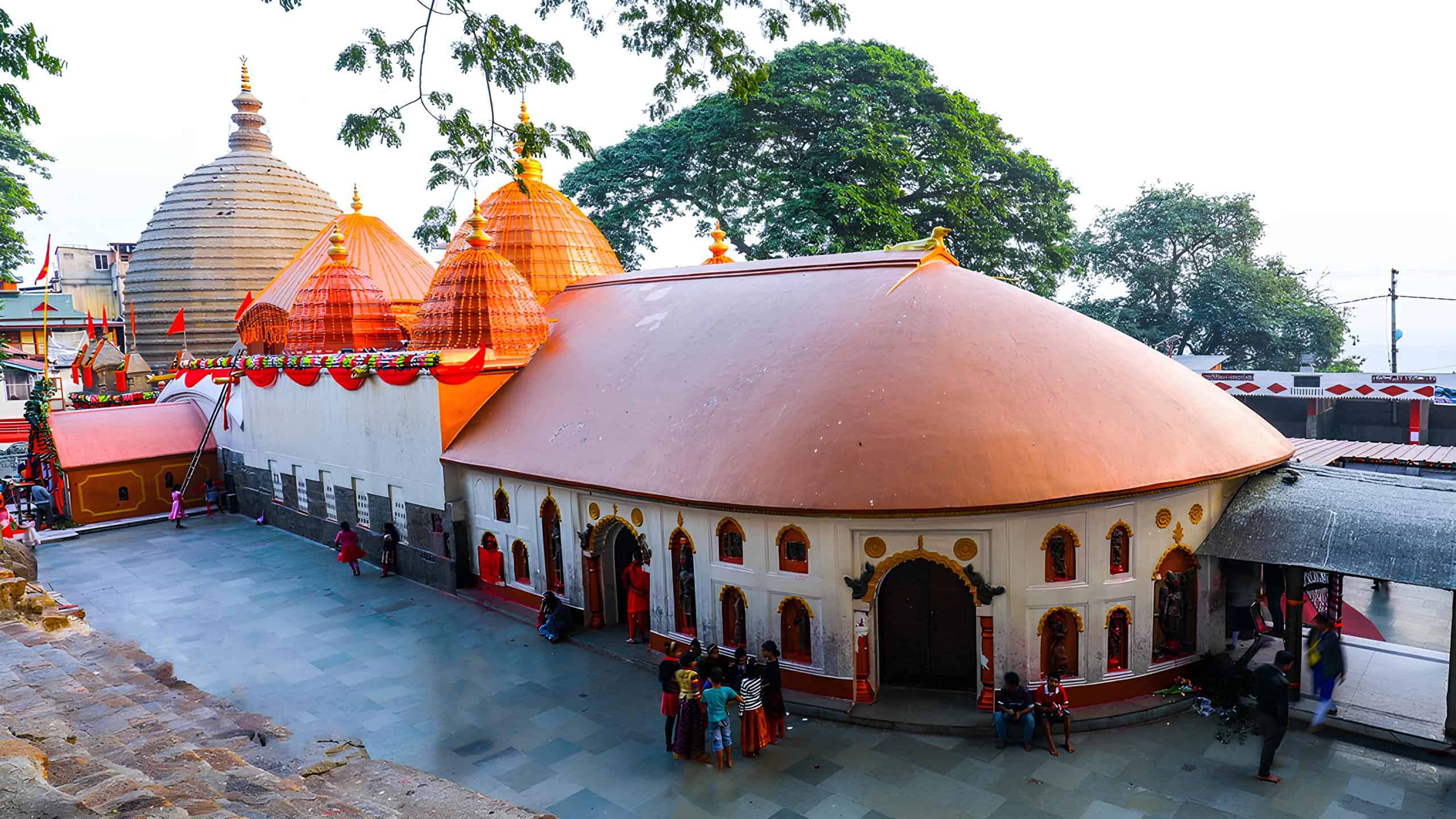
Kamakhya Temple, poised atop Nilachal Hill in Guwahati, Assam, holds a singular place in South Asia’s sacred imagination. Revered as one of the great Shakti Peethas and honoured as a major centre of tantric Shakta worship, it draws pilgrims, seekers, scholars, and curious travellers with unusual force. Popular writing often wraps the temple in melodrama, occult rumours, and easy talk of secrecy. The hill itself feels far more layered. Kamakhya is ancient, intimate, embodied, and very much alive.
At its core lies no sculpted idol. Inside the sanctum rests a natural cleft in living rock, kept moist by an underground spring and worshipped as the yoni of the Goddess. That elemental focus gives Kamakhya its startling power. Fertility, desire, menstruation, generation, and feminine creative energy are not softened or pushed aside here. They sit at the centre of reverence. Few sacred places in the subcontinent hold that vision with such clarity.
For a luxe traveller with a serious interest in sacred landscapes, Kamakhya offers something rare. The experience carries no polished distance. It is tactile, humid, crowded, fragrant, and deeply symbolic. Myth, ritual, architecture, tribal memory, scriptural tradition, and daily devotion all gather on one hill above the Brahmaputra. Its magnetism lies not in sensational stories but in the dignity with which it holds forces many societies still treat with discomfort.
The mythic pulse of Kamakhya
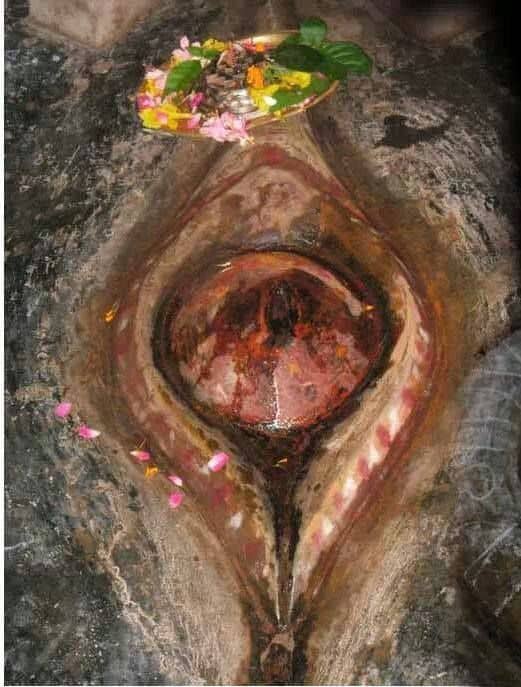
Kamakhya is most widely known as the place where the yoni of Sati fell upon earth. In the larger Shakti Peetha narrative, Sati gives up her life after Daksha humiliates Shiva during a yajna. Shiva, broken by grief, roams the cosmos carrying her body until Vishnu cuts the corpse into fragments, each charged with sacred presence. Wherever a fragment falls becomes a seat of divine power. At Kamakhya, that fragment is the yoni, and that association shapes the temple’s entire spiritual character.
Because the yoni signifies birth, creation, fertility, and the matrix of life, many Shakta traditions regard Kamakhya as one of the most potent among the Peethas. Devotees often arrive with prayers linked with marriage, conception, sensual fulfilment, prosperity, healing, and feminine strength. Here, desire is not dismissed as a lesser force. It enters sacred language as part of cosmic vitality.
A second legend deepens that identity. Kamadeva, god of desire, is burned by Shiva’s fiery gaze after he interrupts the ascetic god’s meditation. Robbed of beauty and bodily form, he reaches Nilachal and performs severe austerities before the hidden seat of the Goddess. Through her grace he regains his rupa, his beauty and presence, and the wider region becomes known as Kamarupa, the land where Kama recovered himself. In that mythic frame, Kamakhya becomes a source of renewal, attraction, fertility, and restored life.
Local traditions and scholarly readings also suggest older roots beneath later Sanskritic layers. Nilachal seems linked with indigenous fertility cults, earth goddess worship, and regional sacred practices among local communities. Over centuries, these currents merged with classical Shakta theology and tantric ritual. Kamakhya does not feel shaped by a single doctrine. It feels accrued across centuries, intimate in texture, and rooted in much older sacred memory.
A sacred hill, not a single shrine
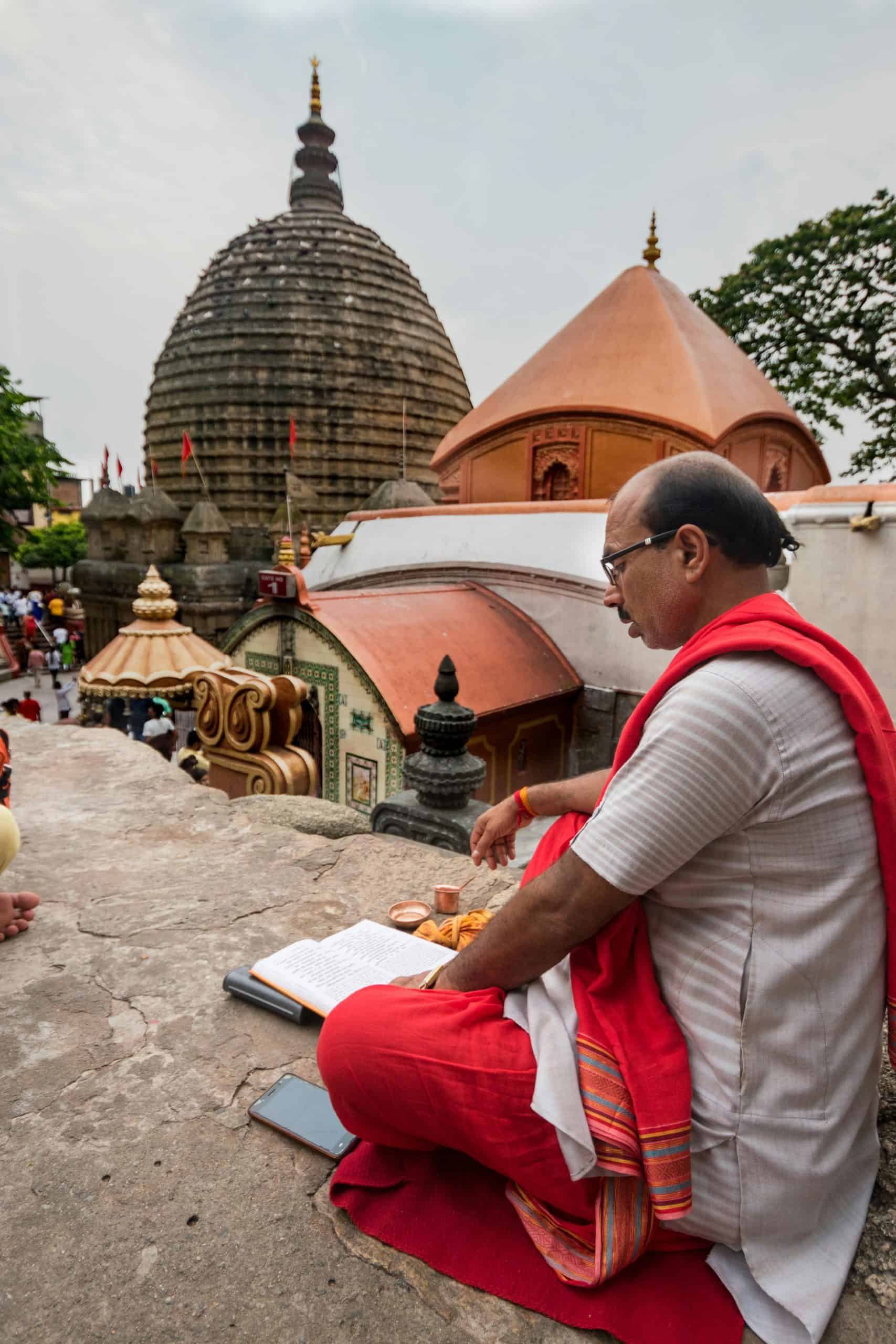
Visitors often speak of Kamakhya as though it were one temple. Nilachal is better understood as a sacred complex. The central shrine anchors a wider landscape of subsidiary temples, ponds, pathways, peethas, caves, and lesser shrines. Meaning gathers across the hill as a whole.
Nilachal rises above the plains beside the Brahmaputra, and the setting quietly intensifies the experience. The river opens in a broad northern sweep, while the hill itself feels elevated yet deeply grounded in rock, water, and old vegetation. The ascent allows that mood time. Pilgrims pass gateways, stalls, resting places, smaller shrines, and glimpses of Guwahati before reaching the denser temple zone.
The present superstructure of the main temple is generally linked with Koch patronage, especially Naranarayan and Chilarai in the sixteenth century, after a period of neglect and damage. Yet older layers endure beneath the later structure. The lower portions and the rock cut sanctum appear far earlier, likely early medieval in date, with the sacred core perhaps older still. Kamakhya thus carries the feel of an architectural palimpsest. Stone, brick, sculptural fragments, later plaster work, and devotional additions coexist easily, as though time itself had settled in visible layers.
Its distinctive Nilachal style tower, rounded and clustered with smaller domed forms, differs elegantly against more familiar North Indian temple silhouettes. The effect is substantial yet never heavy. It suits the hill.
Entering the womb chamber
The deepest encounter with Kamakhya unfolds inside the garbhagriha, the womb chamber. Reaching it involves a descent through a narrow, dim interior where light recedes and air cools. Stone presses close. Noise changes character. The movement feels physical and symbolic at once, a passage inward through earth, body, and myth.
At the base lies the sacred cleft in rock, naturally formed and traditionally understood as the yoni of the Goddess. An underground spring flows through it continuously, keeping the stone wet. Priests place red hibiscus, cloth, and ritual substances upon the site, while devotees bow, touch, and receive darshan in brief moments of intense proximity. No anthropomorphic image mediates the encounter. The rock itself is the deity.
That aniconic focus changes the nature of worship. One does not stand before a face. One enters a presence. Moisture, darkness, touch, smell, chant, crowd, and stone shape the encounter as much as sight. In theological terms, the sanctum presents Shakti as immanent, elemental, and inseparable within land and body. In experiential terms, it leaves many visitors with a sense of primal intimacy rather than ornamental grandeur.
Tantra, discipline, and misunderstanding
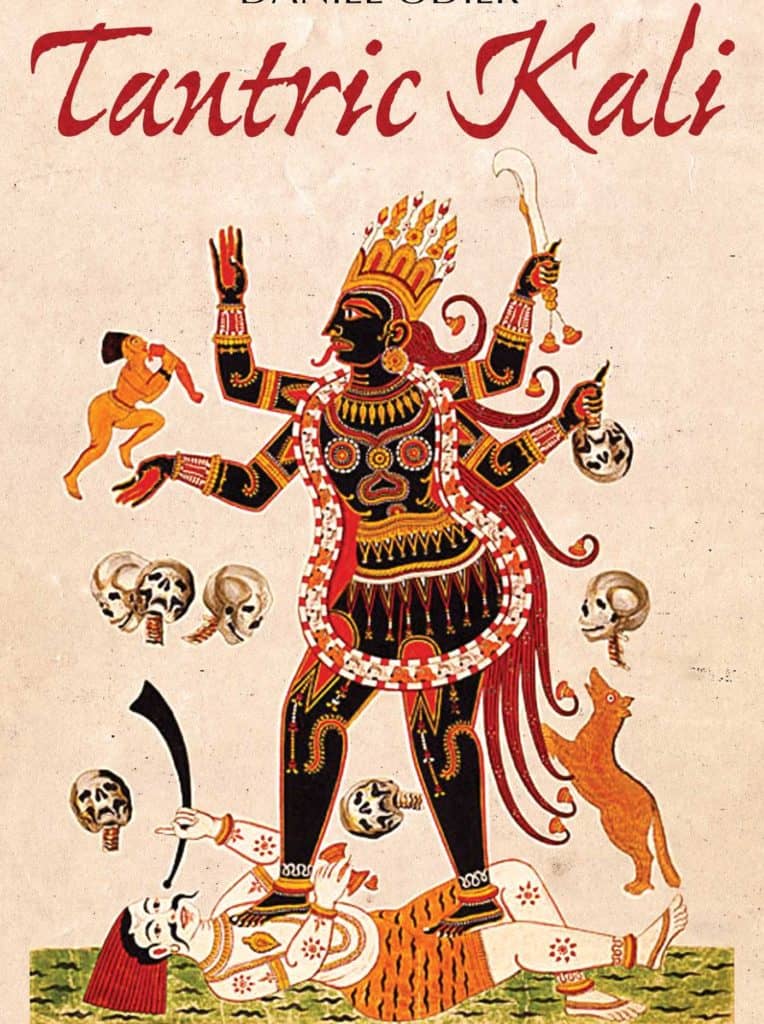
Kamakhya’s association with tantra has long drawn curiosity, fear, fascination, and distortion. The hill certainly holds a central place in tantric Shakta tradition, particularly in texts such as the Kalika Purana and the Yogini Tantra, which elevate Kamarupa as a major seat of esoteric power. Yet tantra here is far more disciplined and refined than popular fantasy suggests.
In these traditions, tantra is a rigorous spiritual grammar involving mantra, yantra, mudra, visualisation, initiation, and carefully structured ritual. Its aim is not spectacle. Its aim is transformation through the union of Shiva and Shakti, consciousness and energy, body and cosmos. Kamakhya embodies that vision through its emphasis on fertility, embodiment, sexual energy, and creative force held within a sacred frame.
Historical accounts suggest the presence of both dakshinachara and vamachara currents at the site. The first leans toward meditation, mantra recitation, symbolic offering, and inward ritual practice. The second, often sensationalised in public imagination, may include taboo substances or deliberate inversions of social norms within tightly controlled initiatory contexts. These practices were never meant as entertainment for outsiders. They belonged within disciplined lineages shaped by guru guidance, secrecy, and consequence.
That distinction deserves emphasis. Casual writing often reduces Kamakhya into tales of black magic, sorcery, and dangerous rites. Such framing flattens a serious spiritual tradition into lurid gossip. The real atmosphere of the hill is not theatrical darkness. It is layered devotion, potent symbolism, and a long conversation between body and spirit.
Temple lore and tantric tradition also map Nilachal through yogini and Bhairava presences. Sixty four yoginis and eighteen Bhairavas are associated with the hill in sacred memory, giving the landscape a mandalic quality. Even without a grand surviving yogini circle in stone, practitioners understand the terrain itself as charged and ritually alive.
Ambubachi and the holiness of menstruation
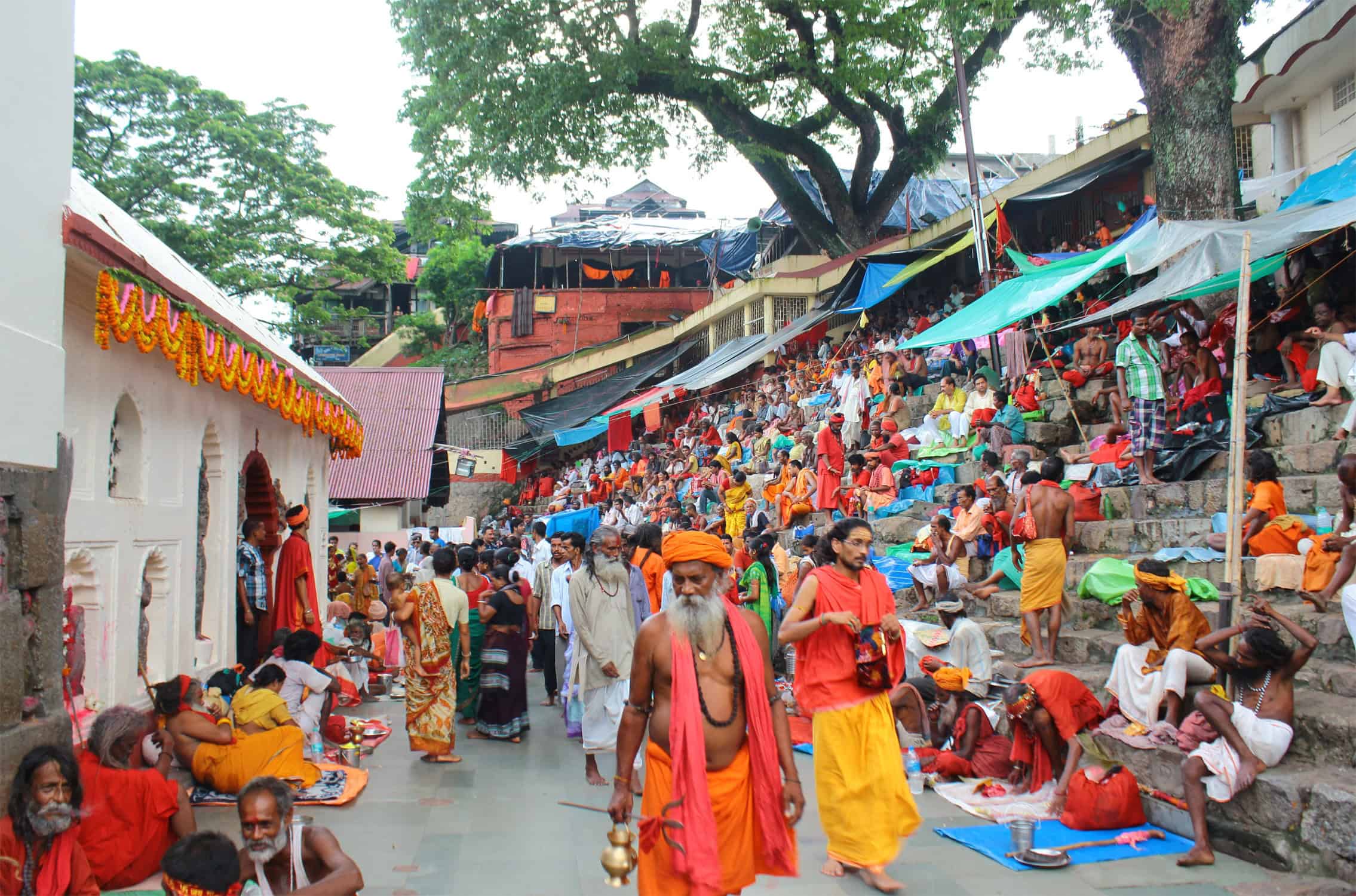
No observance reveals Kamakhya’s singular theology more powerfully than Ambubachi Mela, held annually around mid-June with the onset of the monsoon. During these days, the Goddess is understood as entering her menstrual cycle. The sanctum closes for three or four days. Regular worship pauses. Darshan ceases. The goddess rests.
This interval is not framed in the crude language of impurity. It marks sacred withdrawal, a cosmic rhythm linked with rain, soil, fertility, and renewal. Local belief often treats the season as one of heightened creative potency within earth itself. The covered yoni stone and suspended rituals create an atmosphere of intimate seclusion rather than absence.
When the temple reopens, the moment carries enormous devotional force. Cloth associated with the sanctum, often understood as touched by the menstrual power of the Goddess, is distributed as prasad along with sacred threads and blessed items. These are valued for fertility, protection, and healing. Nilachal fills with priests, household devotees, ascetics, community kitchens, camps, chants, and stories, forming a temporary sacred city.
Ambubachi is often called a great eastern gathering, yet its deepest significance lies elsewhere. Very few major sacred sites in South Asia centre menstruation so openly within ritual life. At Kamakhya, the menstruating goddess is not sidelined. She is honoured. That reverence quietly challenges the discomfort and stigma still surrounding menstruating bodies in many places.
The many faces of Nilachal
Nilachal also carries another distinction, the clustered presence of the Dasamahavidya, the ten great wisdom goddesses of tantric Shakta theology. Kali, Tara, Tripurasundari, Bhuvaneshwari, Bhairavi, Chhinnamasta, Dhumavati, Bagalamukhi, Matangi, and Kamalatmika all hold presence on the hill, either within the main complex or in surrounding shrines.
This makes pilgrimage here richer than a single darshan. The Goddess appears in many moods and metaphysical registers, auspicious, erotic, maternal, sovereign, fierce, withholding, and transformative. For devotees, these are distinct pathways of worship rather than decorative variations.
The hill also includes major Shiva shrines such as Kameshwar, Siddheshwar, Aghor, Kotilinga, and Amratokeshwar, along with smaller temples linked with Bhuvaneshwari, Hanuman, Gadadhara, and forms of Kali. Shaiva, Shakta, Vaishnava, and local ritual streams overlap across Nilachal without rigid borders. That density gives the complex a lived sacredness rather than the stillness of a monument.
Sacred ponds deepen the atmosphere. These waters act as ritual extensions of the Goddess, carrying their own narratives and blessings. Caves and rock shelters on the hill are tied in local memory with sages, yoginis, and tantric practitioners seeking solitude. Legends also speak of hidden tunnels connecting Kamakhya with distant sacred sites. Archaeology offers no conclusive proof for dramatic subterranean routes, yet the endurance of such stories reveals something essential. Devotees do not experience Kamakhya as an isolated shrine. They sense a deeper sacred network beneath the visible surface.
Daily devotion and visitor conduct
Outside major festivals, Kamakhya moves through a steady rhythm of dawn openings, aartis, offerings, priestly duties, and flowing queues of pilgrims. Many arrive with straightforward hopes, blessings for marriage, childbirth, health, exams, livelihood, or peace. The grand theological frame remains, yet everyday devotion keeps the temple grounded.
Red hibiscus is especially beloved as an offering. Fruits, betel leaves, sweets, cloth, and ritual items appear in abundance. Animal sacrifice, still present in regulated form, remains part of the Shakta inheritance here, though contemporary attitudes differ. Some devotees read it symbolically as an offering of lower impulses. Others view it as an inherited custom. Many prefer vegetarian offerings.
Priestly work rests with hereditary lineages who manage worship, darshan, and commissioned rituals for particular intentions. Alongside the formal priesthood, local ritual specialists and tantric practitioners sustain less visible strands of oral and ceremonial knowledge, especially during major observances and night rituals.
For visitors, modest dress and a respectful manner remain essential. Photography near the inner sanctum is usually restricted. Curiosity is natural, yet voyeurism sits badly here. Kamakhya rewards seriousness, patience, and a willingness toward silence in places where instant explanation is neither possible nor desirable.
Experiencing Kamakhya well
For travel planning, cooler months between October and February usually offer the most comfortable conditions. Clearer skies and gentler temperatures make the ascent easier and the wider hill more pleasant for lingering. Early morning often gives the calmest experience before queues swell.
Yet no single season defines Kamakhya. Ambubachi, despite rain, humidity, and heavy crowds, reveals the temple at its most theologically distinctive. Winter offers a quieter mood. Ordinary weekdays outside major festivals suit travellers seeking a more contemplative visit. Each season presents a different register of the same sacred landscape.
It also helps not to rush. Nilachal rewards an unhurried eye. A smaller shrine under a tree, a pond catching first light, a peepal wrapped in red cloth, a side lane leading toward a Mahavidya temple, or a sudden view across the Brahmaputra can deepen the visit as much as the central darshan. Kamakhya is not a checklist stop in Guwahati. It asks for pace, observation, and inwardness.
The sacred feminine, unveiled
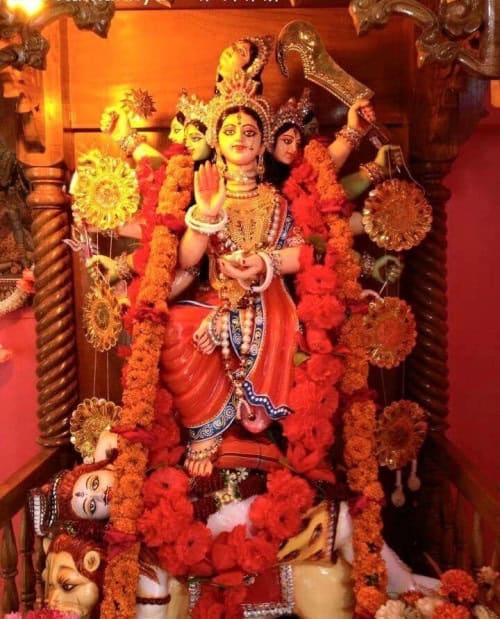
Kamakhya’s enduring power lies in the way it gives sacred room for aspects of life that many traditions often veil. Menstruation, desire, fertility, erotic force, blood, earth, and embodiment stand here within a revered ritual frame. None is treated lightly. It is not reduced to a metaphor alone. The divine appears through them.
That does not make Kamakhya permissive in any simplistic sense. Desire on this hill is linked with discipline. Tantric power is linked with initiation, rule, and responsibility. Sacred intensity here is not licence. It is concentration.
This is precisely why the temple remains compelling in the present day. It stands at an unusual meeting point between mainstream pilgrimage and esoteric lineage, household devotion and fierce theology, public religion and intimate bodily symbolism. A family seeking blessings, a scholar tracing textual history, a traveller drawn by sacred geography, and a practitioner pursuing inner transformation can all arrive at Nilachal and find meaningful ground.
Kamakhya does not yield itself through quick labels such as dark, mysterious, or forbidden. Those words glance off the surface. The hill carries something older and more demanding. It presents the feminine not as a softened ideal but as origin, appetite, blood, creation, risk, and power. That vision can unsettle. It can also clarify.
For a refined travel reader, that is where the site’s real luxury lies. Not in distance, polish, or curated mystique, but in contact with a living spiritual world of enormous depth. Nilachal offers rock, spring, chant, monsoon memory, temple bells, and a goddess whose presence remains startlingly embodied. That is why Kamakhya endures. It asks not for distant admiration, but for presence.
Read more – Discover Your India