

How India’s martial massage traditions treat strength, healing, discipline and self-awareness as parts of the same practice
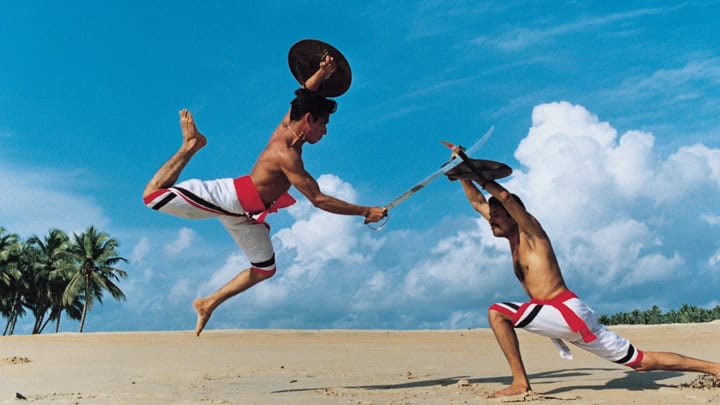
India’s martial traditions have long envisioned themselves as a path to a person’s physical, mental and spiritual development. Practices such as Kalarippayattu, Varmakkalai and Kushti were designed to temper the body while also cultivating concentration, restraint, resilience and inner discipline. Massage and allied recovery methods were also incorporated within this wider philosophy, supporting mobility, healing and endurance while reinforcing the importance of care. Training, recovery, breath, devotion and self-awareness became closely intertwined, turning martial practice into a path towards the holistic development of the individual across body, mind and spirit.
A Holistic Practice
These traditions did not train the body as an isolated instrument. Strength had to remain mobile, awareness had to sharpen under pressure, and martial skill had to be governed by self-control. In the era of sedentary lifestyles, martial arts serve as threads that maintain our connection to our bodies, developing balance, mobility, endurance, and coordination.
In Kalarippayattu and martial arts like Silambam and Adimurai that are connected to Varmakalai, repeated movement drills, breathing practices and meditation help cultivate physical command and focused attention. Over time, consciously learnt sequences became fluid, instinctive responses.
Kalarippayattu and Silambam also carry strong histories of martial identity. Both are associated with older cultures of weapon training, battlefield preparation and regional resistance. Under colonial rule, indigenous martial practices and weapon based training declined sharply due to the heavy repression be the colonial rulers Yet they survived despite the oppressive forces desperate to erase them, carrying the cultural pride along with the traditional wisdom and medicine that had taken root along with them through the ages through teachers, families, performance traditions and local communities that continued to preserve their movement vocabulary and culture around them. Both of them are seeing a strong cultural resurgence and support from various levels of the government.
Traditional Wrestling follows its own integrated discipline, shaped by exercise, diet, rest, devotion, conduct and service within the akhara. Strength is prized, yet ideally accompanied by humility and respect for the guru and fellow wrestlers. It remains instantly recognisable within Indian culture. Earthen akharas, dangals, and the disciplined figure of the pehlwan continue to carry associations with strength, restraint and local pride.
These traditions also developed through spaces that were never merely gyms. The kalari and the akhara functioned as disciplined environments where the teacher, the ground, the body and the daily routine all carried meaning. In Kalarippayattu, awareness was cultivated so deeply that the practitioner could be described as moving with the whole body alert, not only the eyes.
In Varmakkalai, martial training and healing were linked through the kalari and the vaittiyacālai, where knowledge of vulnerable points could be used in both combat and treatment.
Kushti, too, shaped the wrestler through exercise, food, rest, devotion and moral conduct. Together, these traditions suggest that martial training was not simply a way to harden the body, but a way to discipline, restore and refine the whole person.
Kalari Uzhichil
Kalarippayattu asks the body to move with unusual freedom. Low stances flow into kicks, turns, leaps and weapon sequences. Power must arrive quickly, yet the body is ever flexible. Hips, shoulders and spine need mobility, while the limbs must remain responsive through repetitive training.
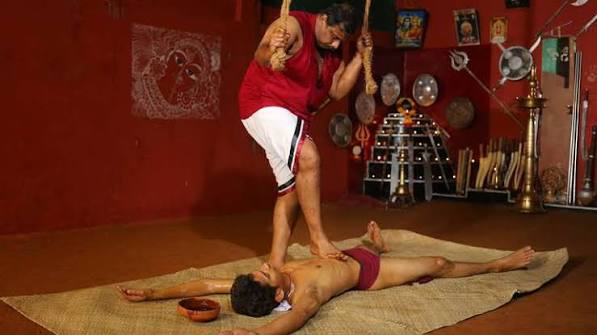
Kai uzhichil, performed with the hands, uses controlled pressure according to the recipient’s condition and, within its traditional Ayurvedic framework, individual constitution. While the most visually striking is chavitti uzhichil, in which the practitioner works with the feet while holding an overhead rope. The rope provides balance and allows body weight to be regulated carefully. This is a skilled practice that can easily apply deep pressure. Pressure is shifted and reduced according to the area being treated.
Massage also allows the teacher to read the student’s condition. Tightness, swelling and imbalance that are noticeable through touch. Since the gurukkal has already observed the student during stances, kicks and weapon practice, the body on the massage floor is understood in relation to the body in motion.
Kalari massage is not a single practice, but a layered system of body preparation and recovery. Its three commonly recognised forms are enna thechu pidippikkal, or oil application; kai uzhichil, or massage performed with the hands; and chavitti uzhichil, the striking foot-administered massage in which the practitioner uses an overhead rope to regulate pressure.
Together, these practices help prepare the body for the demanding movements of Kalarippayattu while supporting recovery after strain. Kalari chikitsa also draws on medicated oils such as Murivenna, which is traditionally prepared according to the knowledge and preferences of different Kalari asans. This reflects the lineage-based nature of the practice, where massage, oil therapy and injury care are passed down as part of the gurukkal’s wider responsibility towards the student’s body.
Beyond massage, Kalari chikitsa, which has now transcended the training grounds, encompasses a broader tradition of injury care developed to meet the physical demands of Kalarippayattu. Depending on the lineage, it may include medicated oils, herbal preparations, bandaging, poultices, manual manipulation and methods used for sprains, bruising, joint injuries and other training-related strains; while also incorporating the wider ayurvedic traditions of Kerala.
Its purpose is not only to ease pain but also to restore movement, support recovery, and help the practitioner return safely to training. It also represented the responsibility of the Gurukkal to his students, and understanding how the body works and how to take care of it, in keeping with the dangerous nature of the art they are engaged in.
Varmakkalai
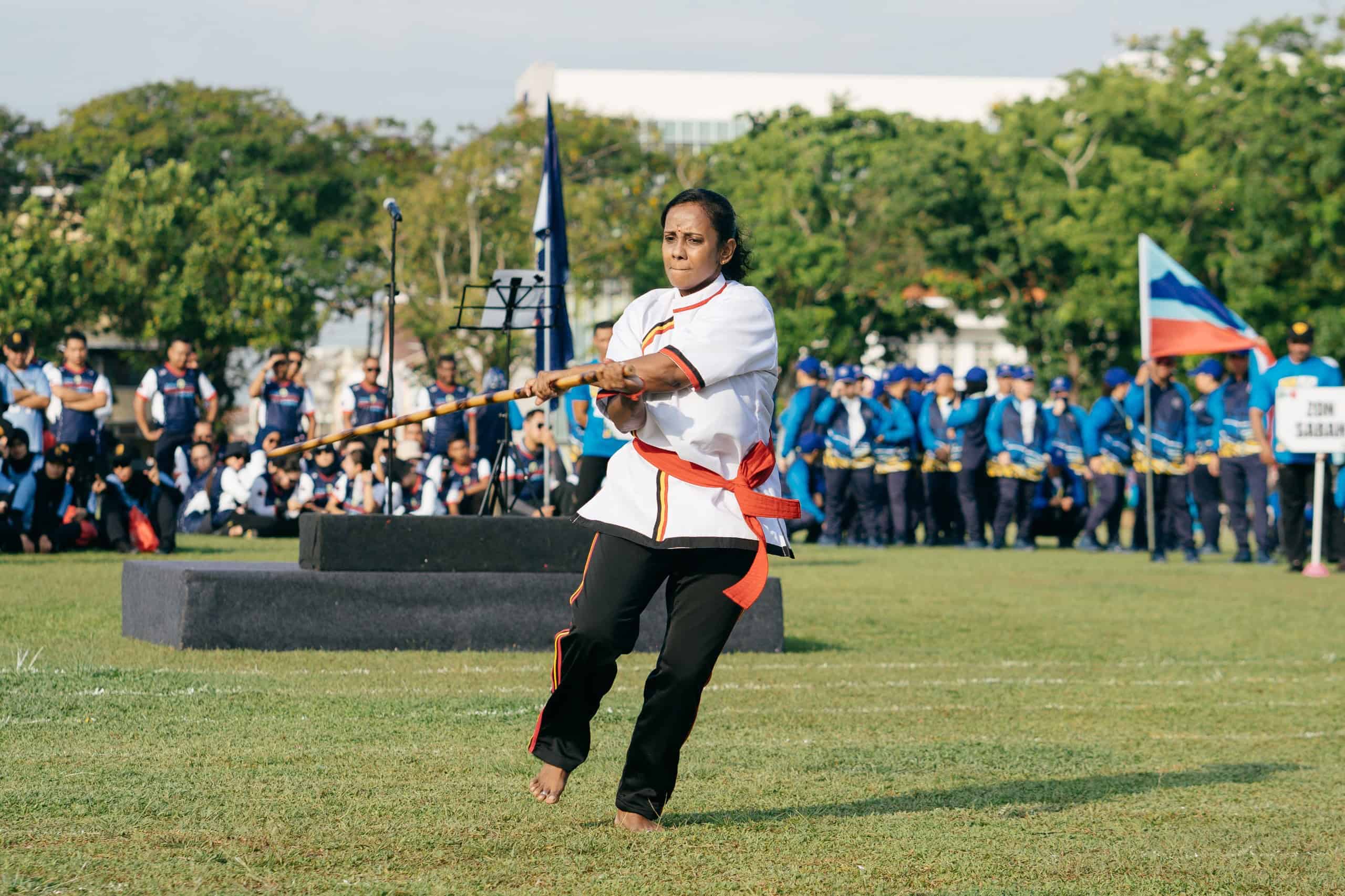
In Tamil Nadu, Varmakkalai represents one of India’s clearest unions of martial training and healing. It is not a single fighting style in the conventional sense, but a wider system centred on varmam, the body’s sensitive or vulnerable locations.
Its martial branch is commonly associated with Varma Adi or Adimurai, which can include bare hand strikes, kicks, blocks, grappling, locks and throws. In some southern Tamil lineages, Silambam, or cilampam staff training, also forms part of the curriculum, though the relationship may vary between schools.
Within the lineages documented in Kanyakumari, martial instruction takes place in the kalari, while treatment traditionally occurs in the vaittiyacālai. The same asan, or teacher, may move between both spaces, training students in combat while treating injuries and other physical complaints.
Students learn by observing treatment, assisting the teacher and experiencing massage themselves. Practitioners may use the hands, feet or wooden implements, depending on the area, the condition and the degree of pressure required.
Administering such treatments also contributes to martial conditioning. Varmakkalai practitioners traditionally value strong hands for forceful massage as well as combat, while the work involved develops endurance useful during staff practice. Students may strike plantain or bamboo stems to strengthen the hands and practise focused contact. Exercises such as crushing neem kernels between different finger combinations develop individual finger strength and control.
Varmakkalai today exists between lineage and institution. In southern Tamil Nadu and the neighbouring Kerala borderlands, hereditary teachers continue to preserve its combined knowledge of combat, massage, vital points and injury care. At the same time, Varmam has entered the formal Siddha medical system, where it is taught and practised as a manual therapy in clinics and research institutions. This recognition has widened access and helped preserve its therapeutic methods, yet it can also separate healing from the martial training, breathwork and ethical discipline that traditionally shaped the complete practitioner.
The Central Council for Research in Siddha identifies Varmam as a form of pressure manipulation therapy, placing it among the special therapeutic practices of the Siddha system. This gives the healing side of Varmakkalai a formal medical identity, even as its martial knowledge continues through hereditary teachers and traditional lineages. The Kanyakumari and Thiruvananthapuram region is especially important, as it is recognised as one of the living centres where Varmam therapy is still practised close to its older form. This regional continuity gives Varmakkalai a strong geographical anchor, linking combat, massage, vital point knowledge and treatment to the cultural landscape of southern Tamil Nadu and the Kerala borderlands.
Pehlwani Malish
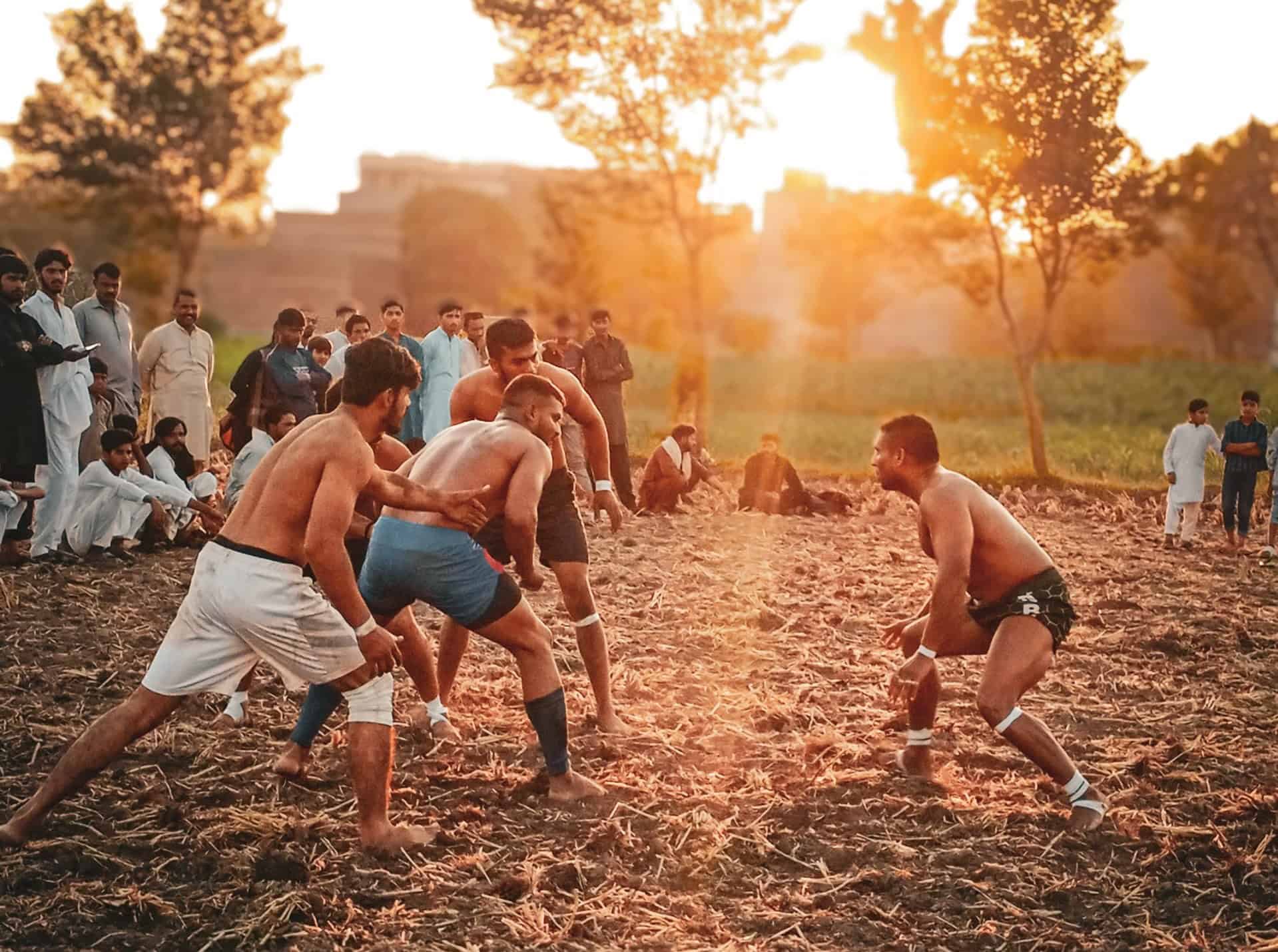
In North India’s akharas, massage forms part of the wider culture of traditional wrestling. The wrestler’s body is built through a demanding routine of dands, bethaks, rope exercises, weighted clubs, grappling practice and long hours in the earth pit. Strength matters, but so do mobility, endurance, suppleness and the ability to return to training after repeated exertion. The ideal wrestler is powerful without becoming rigid, capable of resisting force while remaining flexible enough to move, bridge, turn, grip and escape.
Within this world, malish is not treated as an occasional luxury. Massage is an important part of the wrestler’s exercise regime, with some akharas setting aside a particular day for it. The method could include long strokes across the full length of the muscles, pressure with the heels of the hands, vigorous friction, vibration, forearm work and, in some routines, carefully controlled use of the feet. Mustard oil was commonly applied in the Banaras routines he documented, though techniques varied between gurus and akharas.
The purpose of this massage is closely tied to wrestling itself. Stiff muscles were seen as a limitation because a wrestler needed to bend, resist, twist and absorb force without breaking rhythm. Malish was therefore understood as helping the body remain both strong and supple. It also offered structured relaxation after physical fatigue, linking bodily recovery with mental release. In the akhara understanding, a tired body and a restless mind were not separate problems. Both had to be settled before the wrestler could return fully to training.
Its meaning, however, extended far beyond muscular recovery. The same wrestlers who tested one another in the pit also participated in one another’s care. Younger wrestlers traditionally massaged seniors and gurus as an act of respect, service and humility, while wrestlers of similar standing could take turns working on one another. Giving the massage was itself physically demanding, requiring stamina, attention and controlled pressure. The person receiving the massage recovered, but the person giving it also trained through effort and discipline.
This made Pehlwani malish exercise, recovery and social ritual at once. It reinforced hierarchy within the akhara, but also created fraternity among equals. In Alter’s account, massage helped produce a sense of unity because it required close physical contact across rank and social difference. The wrestler was not shaped as a solitary athlete. He was formed through the hands, discipline and care of the community around him.
Pehlwani tradition also carried a distinctive idea of the athletic body. Wrestlers contrasted their ideal with the segmented physique of the bodybuilder. The desired body was not a collection of isolated muscles, but a smooth, integrated whole, described in Banaras as ek rang ka sharir, a body of one colour and uniform texture. Malish supported this ideal by helping the wrestler remain substantial, balanced, supple and ready for the unpredictable demands of grappling.
Today, Pehlwani malish survives mainly where the communal culture of the akhara remains intact. Many historic wrestling centres face pressure from urbanisation, declining patronage, commercial gyms and the growing dominance of mat wrestling. A 2026 report on Old Delhi described the slow fading of mud wrestling as local competitions declined and younger generations moved away from the severe discipline of the akhara. Yet the picture is not only one of decline. In Prayagraj, reports show renewed interest among young trainees, including teenagers and girls, with some joining wrestling clubs for fitness and sporting ambition.
This makes Pehlwani malish especially poignant today. Modern athletes may increasingly turn to physiotherapy, gym based recovery and sports massage, gradually separating recovery from the social world that once gave it meaning. Yet the older practice preserves a powerful lesson: strength was sustained collectively. Wrestlers trained, fought, rested and cared for one another within the same physical culture. Recovery was not outsourced. It was shared.
Strength Meets Care
At a time when wellness is increasingly shaped by devices, data, performance trackers and recovery metrics, these traditions return attention to something older and more intimate: touch, observation and human connection. They remind us that strength goes beyond the strain the body can withstand or the force it can produce. In the long run, health and power also depend on how intelligently the body is restored, how mobility is preserved, how fatigue is recognised and how injury risk is understood and managed.
This is where India’s martial massage traditions feel especially relevant today. They present recovery not as an afterthought, but as part of training itself. The body is strengthened, tested, read, treated and returned to practice with care. The pursuit of fitness and strength, at its best, asks the practitioner to rest, recover and extend the same care to others. In these traditions, wellness is not passive. It is disciplined, observant and deeply relational.
Yet these practices continue to negotiate with the present in complex ways. Combat becomes sport, massage becomes wellness, healing becomes clinical therapy and ritual becomes performance. Each shift brings visibility, but also the risk of fragmentation. When techniques are separated from the spaces, teachers, ethics and communities that shaped them, something essential can be lost. Their cultural value lies in remembering that movement, medicine, discipline and devotion once belonged to one larger way of shaping and sustaining the practitioner.
Varmakkalai reflects this tension clearly as it moves between hereditary knowledge and institutional Siddha medicine. Its therapeutic side now has greater recognition, yet its older martial, breathwork and ethical dimensions are still preserved most fully through traditional lineages. Silambam, meanwhile, is finding new life as a Tamil cultural sport, especially among younger practitioners who see it as heritage, fitness, performance and self-defence. Kushti remains emotionally powerful and locally rooted, but many akharas face pressure from urbanisation, commercial gyms, declining patronage and the growing dominance of modern mat wrestling.
The modern revival of these traditions is also visible through Khelo India. Kalarippayattu has been included among the traditional sports featured at the Khelo India Youth Games, bringing the Kerala martial art into a national youth sports platform. Silambam, strongly associated with Tamil martial heritage, was introduced as a demo sport during the Tamil Nadu edition, giving it fresh visibility among young athletes and audiences. This official recognition signals a wider effort to preserve indigenous martial practices not only as cultural memory, but as living, competitive and performative traditions for a new generation.
Together, these traditions show that India’s martial heritage is not frozen in the past. It is being preserved, reshaped and sometimes fragmented in the present. Their future will depend not only on competitions, institutions and performances, but also on the quieter knowledge that made them complete: the teacher’s eye, the healer’s hand, the discipline of repetition, the humility of service and the understanding that lasting strength must always be accompanied by care.
Read More: Latest