

Across India, monasteries preserve art, faith, learning and stillness, offering travellers a meaningful pause today
Stimulation. The constant pull into a hundred directions, everything fighting for our attention- that is getting more and more fleeting by the day. The outcomes are familiar with no need for introduction: burnout, overstimulation and accumulating fatigue, all of which untheathers us from our own being, our own life.
In the midst of this constant overwhelm, people search for peace and pause in the age-old spiritual institutions. Monasteries occupy a special space for these attempts at finding peace. There is a silence to these places that has been cultivated over centuries, offering respite from our worries.
The Peace of Passing Through
Long before mindfulness became part of the modern wellness vocabulary, monasteries had already organised entire communities around mindful, devoted living. Their courtyards, prayer halls and libraries were designed for lives shaped by study, ritual and reflection. Visitors may arrive seeking quiet, but what they encounter is something richer: a culture that has practised stillness for centuries.
In the current moment, this has acquired a new meaning. Travellers arrive carrying the pressures of constantly connected lives: phones full of notifications, itineraries built around speed and a habit of looking at places through cameras before truly seeing them. In such a world, a monastery offers a rare interruption. It asks for slower movement, softer speech and a willingness to experience a place without immediately turning it into content.
In Spiti Valley, Tabo Monastery sits close to the valley floor, its earthen buildings blending into the surrounding landscape. As the eyes adjust to the dim temple interiors, murals and stucco sculptures begin to emerge. The experience cannot be hurried. Details appear gradually, encouraging the visitor to remain still and look carefully. Tabo’s painted walls preserve conversations between Indian, Tibetan and western Himalayan artistic traditions, turning the complex into a living archive of Buddhist thought.
That slow act of looking feels especially powerful today. In ordinary life, images pass across screens in seconds. At Tabo, the opposite is required. The visitor must wait for the eye to adjust, for outlines to sharpen, for figures and colours to reveal themselves. The monastery becomes a quiet lesson in attention. It reminds the traveller that beauty sometimes appears only after the first impulse to rush has passed.
Alchi Choskor in Ladakh carries a similar historical depth. Its temples, developed around the eleventh and twelfth centuries, contain some of the Himalayan region’s most remarkable paintings. Rich colours, elaborate figures and Kashmiri artistic influences recall an era when scholars, craftspeople and translators travelled across mountain kingdoms.
Alchi no longer functions like a large residential monastery, yet it retains a powerful contemplative atmosphere. Visitors stand before images created centuries ago and recognise how art once carried philosophy across regions where books, teachers and ideas travelled slowly. Today, that slowness has its own relevance. These painted walls belong to a world before instant transmission, yet they continue to speak across time. They show how ideas once moved through human presence, devotion, discipline and craft.
In the age of quick travel and quicker images, Tabo and Alchi offer a different kind of encounter. They do not overwhelm through spectacle. They invite patience. Their power lies in quiet interiors, fragile surfaces, dim light and the awareness that what survives here has endured through climate, distance, faith and careful preservation. To pass through such places is not merely to visit heritage. It is to practise a more attentive way of seeing.
Soundscapes of Prayer
The calm that these spaces offer is not always silent. It may arrive through many voices chanting together, the sounding of a bell or the deep vibration of ritual horns across a courtyard.
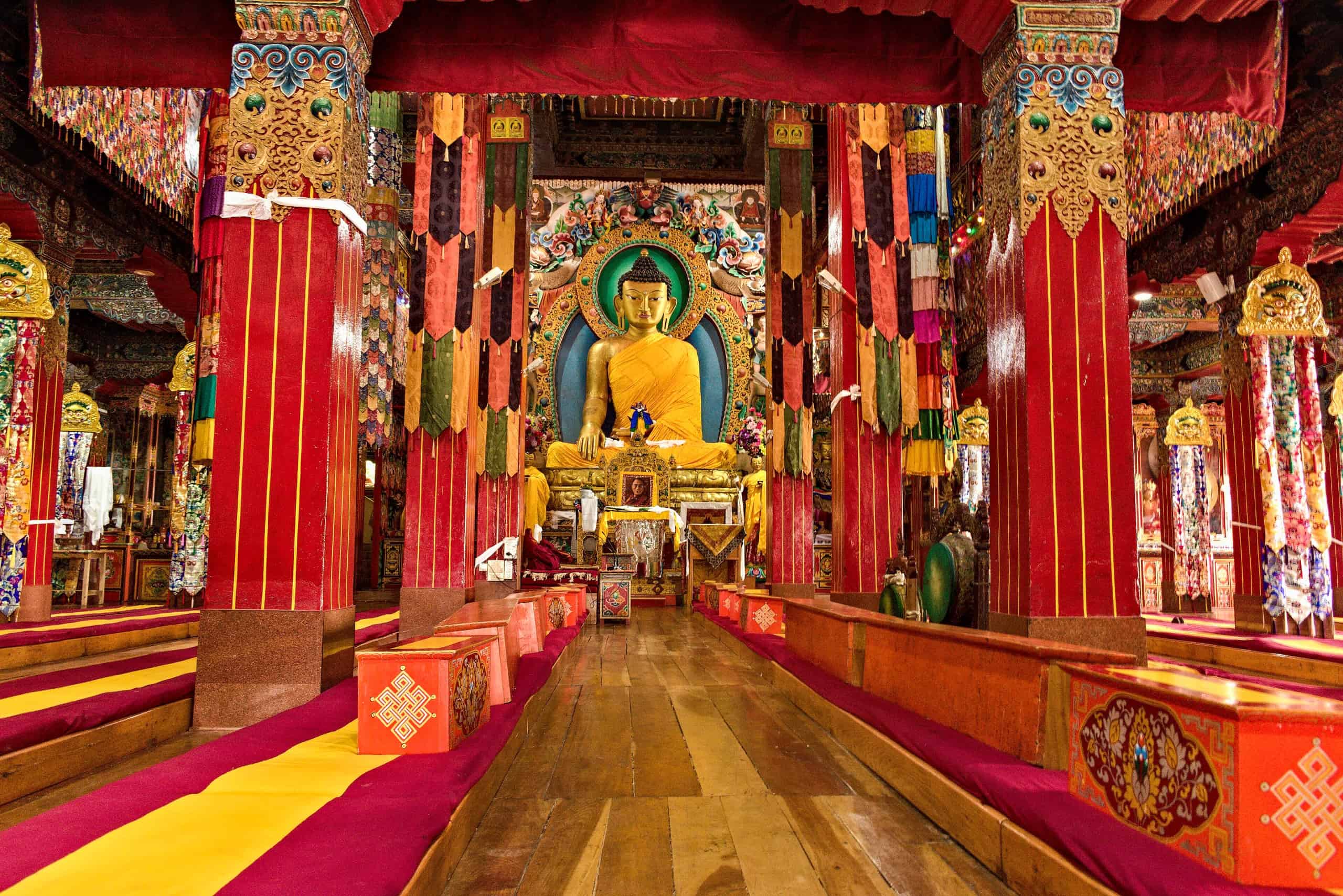
At Tawang Monastery in Arunachal Pradesh, prayer unfolds on a monumental scale. Standing above the valley, the complex remains central to Monpa cultural and religious life. Monks study, conduct ceremonies and gather inside its assembly hall, where rows of reciting voices build a rhythm that can be felt physically.
A traveller permitted to enter during prayer may understand none of the words. Understanding is not always required. The repetition, breath and collective concentration create their own order. Attention settles on the rise and fall of the chanting, the rustle of robes and occasional silence between recitations.
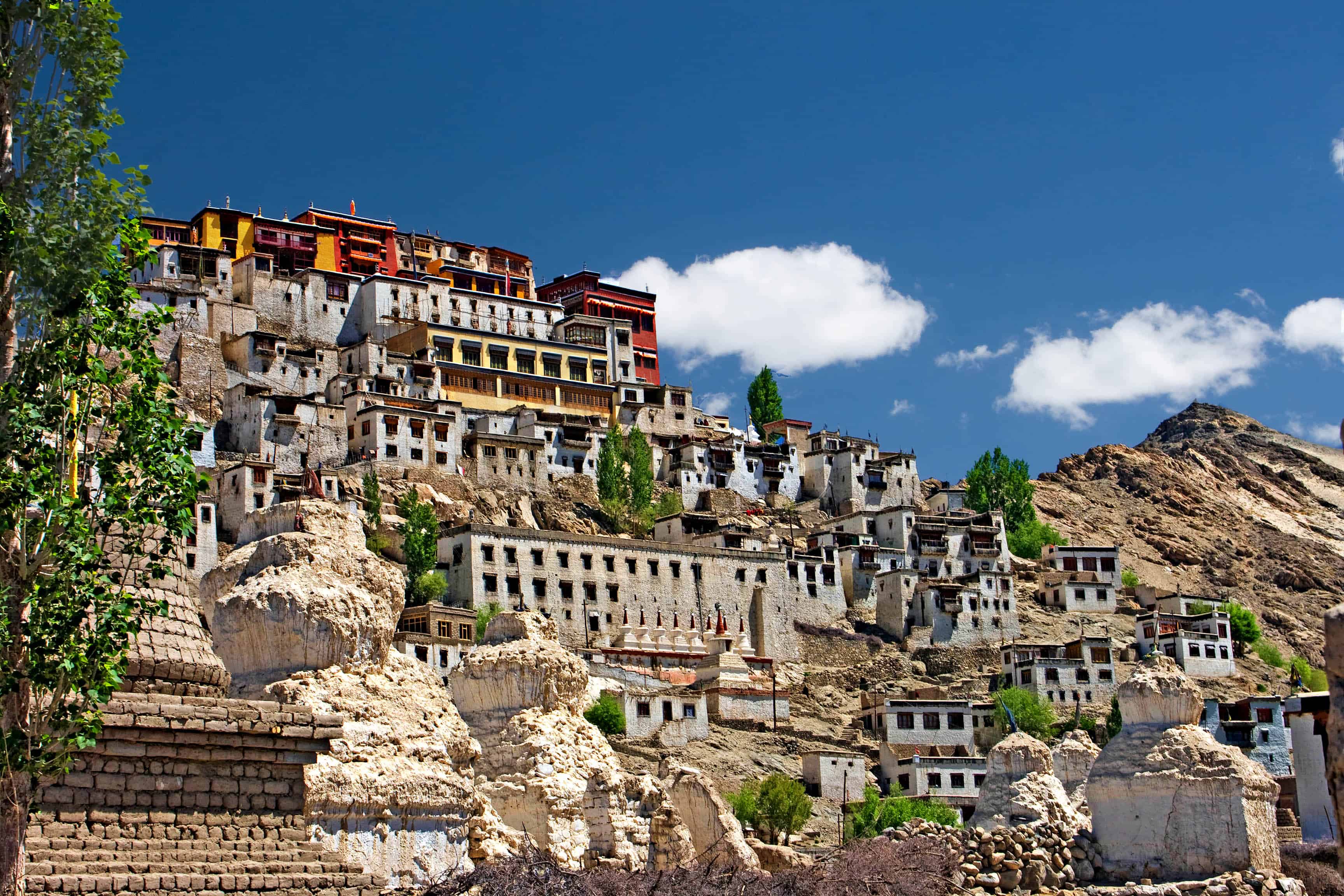
Thiksey Monastery in Ladakh offers another similar encounter. Its white buildings rise in tiers above the Indus Valley, while temples and prayer halls hold images, ritual objects and the monumental figure of Maitreya. Early morning is especially atmospheric. The building slowly fills with light as monks begin their prayers, and the landscape beyond seems briefly connected with the rhythm inside.
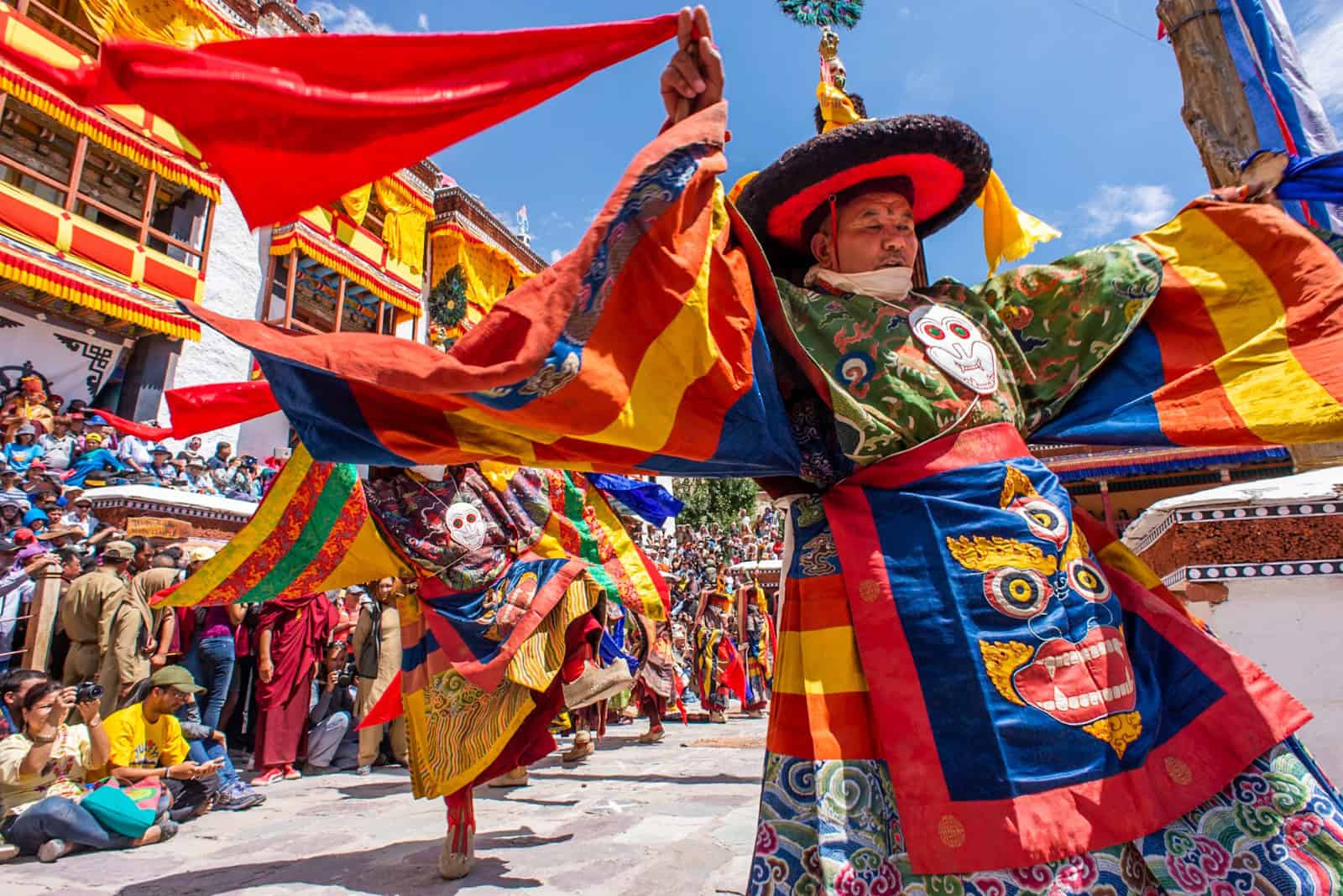
At Hemis, expression of devotion and monastic life can become far more dramatic. During its annual festival, masked dancers cross the courtyard accompanied by drums, cymbals and long horns. The movement is disciplined, symbolic and rooted in religious teaching. Here, calm can appear through repetition, ritual order and the complete attention of the performers.
Monasteries That Think Aloud
Some of India’s most important Buddhist monasteries also function as centres of advanced learning. Their daily life is shaped by intellectual discipline as much as meditation.
At Bylakuppe in Karnataka, Sera Jey and Sera Mey continue Tibet’s great monastic university tradition. Drepung Loseling follows a related scholarly lineage at Mundgod, another Tibetan settlement in the state. In these institutions, philosophical debate remains a central method of education.
For visitors expecting complete silence, this energy can be surprising. Yet the atmosphere is intensely focused. Debate turns learning into a physical and communal activity, bringing together speech, gesture, reasoning and sustained concentration.
Namdroling Monastery at Bylakuppe adds another dimension. Its principal temple, popularly known as the Golden Temple, draws visitors through its monumental gilded images and richly decorated interiors. Beyond the public temple, however, lies one of India’s major centres of Nyingma Buddhist learning.
Thousands of monks and nuns belong to the wider Namdroling community, with many engaged in formal study. Its monastic and nunnery institutes teach Buddhist philosophy, canonical literature, Tibetan language, religious history and other subjects through structured courses and examinations.
Tibetan monastic culture also took root amid Karnataka’s greenery, creating a spiritual and educational landscape far removed from the high plateaux and Himalayan valleys usually associated with Tibetan Buddhism. Monasteries, colleges, nunneries, prayer halls and residential quarters developed within this new environment, demonstrating how a displaced tradition could adapt geographically while preserving its intellectual and spiritual foundations.
Sacred Memory After Displacement
Several of India’s major monasteries carry the memory of institutions rebuilt after exile. Their significance lies not only in what stands today, but in what had to be carried across borders: texts, ceremonies, teaching systems and lineages.
Namgyal Monastery in Dharamshala remains closely associated with the Dalai Lama. Originally established in Tibet during the sixteenth century, it was re-established in India after 1959. Its monks train in philosophy, meditation, ritual and sacred arts, preserving practices connected with the religious responsibilities of the Dalai Lama.
A visit to the Tsuglagkhang area can feel very different from entering an isolated mountain monastery. Pilgrims, residents, monks and international visitors move through the same space. Prayer wheels turn. People walk slowly around the complex. The monastery exists within the daily life of the Tibetan exile community, carrying spiritual continuity through disruption.
Rumtek in Sikkim tells another story of lineage restored. The modern Dharma Chakra Centre became the principal Indian seat of the Sixteenth Karmapa and an important centre of the Karma Kagyu tradition. Its prayer halls, sacred objects and monastic institutions preserve a religious inheritance displaced from Tibet.
Mindrolling Monastery in Dehradun carries the heritage of one of the great Nyingma institutions into a new setting. Its monastic college, temples and Great Peace Stupa form an extensive centre of scholarship, ritual and devotion. The monastery also reflects the contribution of female teachers and practitioners, widening the familiar account of Buddhist institutional life.
The Monastery as a Regional Heart
Elsewhere, monasteries hold the cultural memory of entire regions. They are not only places of worship, but markers of belonging, gathering points for festivals, guardians of local histories and quiet anchors in landscapes shaped by faith.
In Sikkim, Pemayangtse, Dubdi, Tashiding and Rumtek belong to a wider sacred geography where mountains, monasteries, pilgrimage paths and former royal histories are closely connected. Pemayangtse preserves the state’s Nyingma heritage through religious art, scriptures and ceremony, while Dubdi, near Yuksom, remains closely tied to the early history of the Sikkimese kingdom. These monasteries help explain how Buddhism became part of the region’s political, cultural and spiritual identity.
Tashiding carries a different kind of devotional power. Its stupas, mantra-carved mani stones and prayer flags create a pilgrimage landscape where movement itself becomes meaningful. To walk, circle, pause or offer a prayer here is to participate in a rhythm shaped by generations of devotees. The monastery is not experienced only through architecture, but through the body moving across sacred ground.
Rumtek adds another layer to Sikkim’s monastic landscape through lineage and continuity. Its presence connects the region with the Karma Kagyu tradition and with histories of Tibetan Buddhism rebuilt in India. Together, these sites show how Sikkim’s monasteries function as more than individual destinations. They form a network of memory, devotion and identity.
Tawang performs a similar role for the Monpa people of Arunachal Pradesh. The monastery stands not merely above the valley, but at the centre of a cultural world shaped by ritual, language, seasonal festivals and community life. Its ceremonies, monastic education and sacred calendar continue to bind religious practice with regional belonging.
In Spiti, Tabo remains inseparable from the valley’s Buddhist identity. Its earthen presence, ancient interiors and continuing religious significance make it part of the region’s emotional and historical landscape. In Ladakh, Hemis and Thiksey continue to shape the ritual calendar, drawing communities into annual cycles of prayer, masked dance, devotion and renewal.
Seen this way, monasteries are not isolated monuments. They are regional hearts. They hold stories, organise memory, mark time and give communities a shared spiritual vocabulary. For travellers, this adds another layer to the visit. A monastery is not simply a place to see; it is a place through which a region understands itself.
Monasteries are Communities
It is easy to treat monasteries as historic sites, especially when they contain ancient art, striking architecture or celebrated festivals. For travellers, the first impression may be visual: a painted doorway, a courtyard filled with prayer flags, a golden statue, a wall of murals, a view across a valley. Yet many of India’s important monasteries are not preserved backdrops. They remain active communities where religious life continues every day.
Their buildings are homes, schools, libraries, ritual spaces and places of responsibility. Monks and nuns live, study, pray, teach, cook, clean, debate and receive visitors within the same walls that travellers often experience as places of calm. A prayer hall may also be a classroom. A courtyard may become a festival ground. A kitchen may feed an entire community. A library may hold texts that guide years of study and practice.
Understanding this changes the visitor’s gaze. A monastery is not empty because it is peaceful. Its quiet often comes through order: morning prayers, study hours, meals, duties, ceremonies, rest, retreat and service. The sense of calm that travellers admire is shaped by discipline and repetition. It is an organised life, not a decorative silence.
This also raises an important question: how should one visit a monastery? The answer begins with humility. These are sacred spaces before they are travel experiences. A monk is not a visual prop. A ritual is not a performance arranged for cameras. A prayer hall is not an interior design moment. The traveller enters as a guest, and that position asks for restraint.
Visitors should ask before entering restricted spaces, photographing interiors or recording chanting. During prayers, movement should be minimal and conversation avoided. Phones should remain silent and preferably out of sight. Shoes and hats are usually removed before entering temple areas, and modest clothing is always more appropriate. Donations, when offered, should be made quietly and respectfully, without turning generosity into display.
It is also worth accepting that some parts of a monastery may remain closed. A classroom, dormitory, retreat area or private ritual space may not be open to visitors, and that boundary should be honoured without disappointment. Restricted access is not a lack of hospitality. It is part of protecting the rhythm of a living sacred community.
This etiquette is more than politeness. It is part of the contemplative encounter itself. By slowing down, lowering the voice, asking permission and resisting the urge to document everything, the traveller begins to meet the monastery on its own terms. The visit becomes less about collecting images and more about receiving an atmosphere. In that quiet restraint, even the act of not taking a photograph can become a small practice in mindfulness.
The Sacred Calendar
Monasteries also teach a different way of experiencing time. Their year is shaped not by tourist seasons alone, but by lunar calendars, ritual cycles, annual observances and community gatherings. A traveller may arrive for a morning, yet the monastery is moving through a rhythm that has been repeated for generations.
At Hemis in Ladakh, this rhythm becomes spectacular during the Hemis Tsechu, the annual festival honouring Guru Padmasambhava. The courtyard turns into a sacred stage as monks in elaborate masks and silk robes perform cham dances to the sound of drums, cymbals and long horns. The performance is vivid, but its purpose remains devotional. Movement, costume, music and symbolism come together as a form of teaching, blessing and collective memory.
Thiksey has its own ritual calendar through the Gustor festival, when masked dances and ceremonies mark a period of purification, protection and renewal. The monastery’s tiered white buildings, usually associated with quiet morning prayers and the Maitreya image, take on another mood during festival time. The calm remains, but it becomes public, rhythmic and communal.
In Arunachal Pradesh, Tawang Monastery is closely tied to festivals such as Losar and Torgya. Losar marks the Tibetan New Year, while Torgya brings masked dances and monastery rituals associated with protection, prosperity and the removal of negative forces. For the Monpa community, these are not isolated events. They connect faith, agriculture, identity and social life.
Sikkim’s Tashiding Monastery adds another powerful ritual tradition through Bhumchu, a festival centred on a sacred vessel of holy water. The vessel is opened annually, and the level and quality of the water are traditionally read as signs for the year ahead. Pilgrims gather not only to witness a ceremony, but to participate in a shared act of hope, blessing and continuity.
Such festivals reveal that monasteries are never static places. They breathe through calendars. At certain moments of the year, prayer halls, courtyards and pilgrimage paths expand into collective spaces of colour, sound and devotion. For visitors, these occasions can be deeply memorable, but they also require sensitivity. A festival may appear visually dramatic, yet its heart remains sacred. The most meaningful way to experience it is with patience, respect and the understanding that one is entering a living ritual world.
To Slow Down
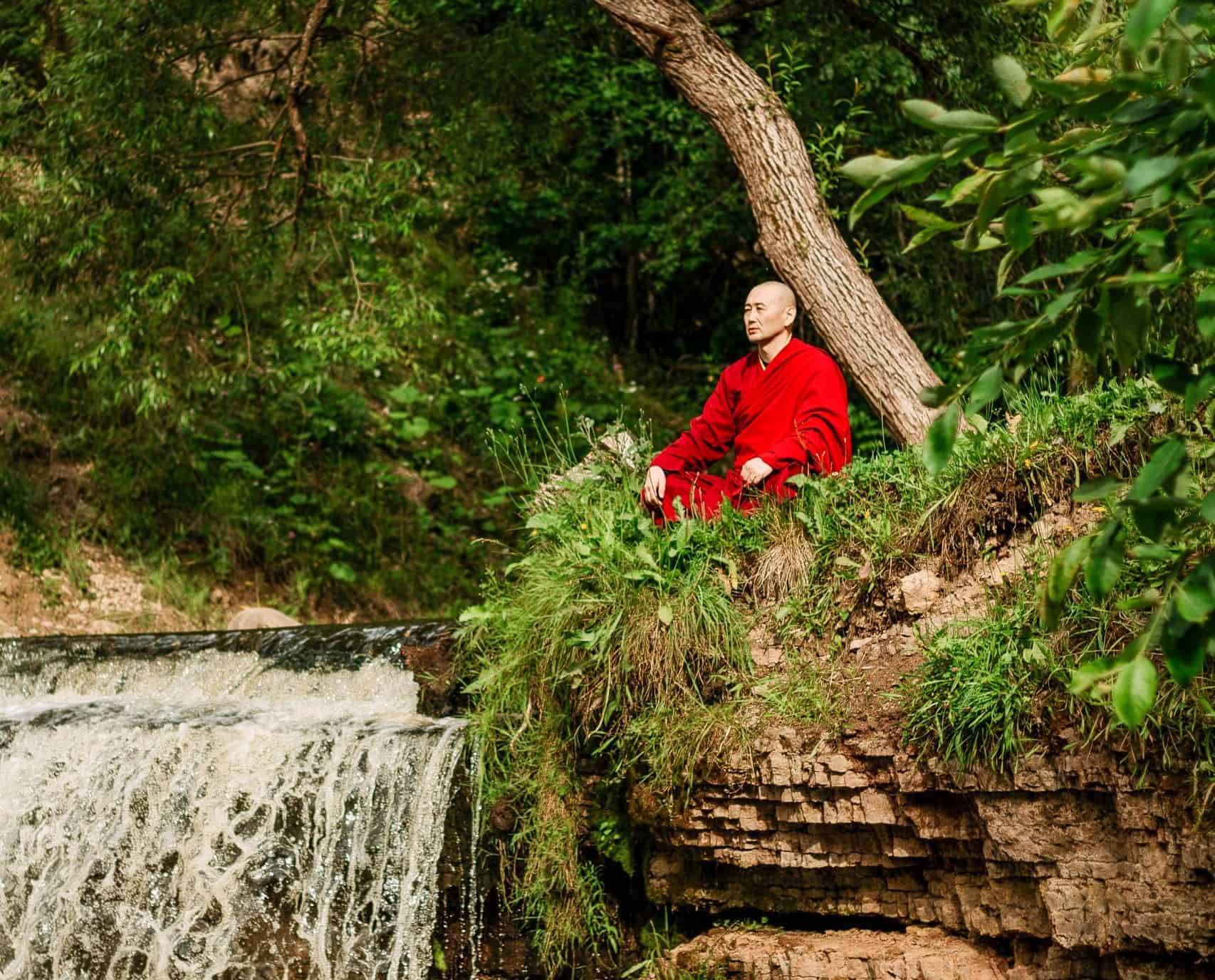
In the end, the value of these monastery visits lies less in escaping modern life than in briefly stepping outside the habitual pace of the daily bustle. A few quiet minutes beside a prayer hall, several days within a disciplined retreat or a longer period of study can reveal how deeply distraction has shaped daily experience. These places do not promise instant serenity, nor will every practice suit every traveller. Nevertheless, the break afforded by such a visit creates space for silence, structure and the chance to pay attention again.
The change may be subtle. It may arrive through the sound of chanting, the slow turn of a prayer wheel, the discipline of removing one’s shoes before entering a sacred hall or the simple act of sitting without reaching for a phone. Such moments gently interrupt the habit of rushing. They remind the traveller that stillness is not always a grand revelation; sometimes it is a return to ordinary awareness.
This does not mean every visit becomes a spiritual awakening. These small encounters remind the traveller that peace is not always found by withdrawing completely from the world; it can often be found by entering places where people have learned, over centuries, to inhabit it with greater care.
Read More: Latest