

Ancient Indian jewellery continues to shape modern design, linking timeless craftsmanship with contemporary cultural expression
Jewellery in India has never been merely ornamental. It has long served as a powerful marker of identity, spirituality, and cultural expression. Across centuries, while styles and materials have evolved, the essence of Indian jewellery has remained deeply rooted in tradition. Intriguingly, many ancient designs continue to inspire contemporary fashion, reaffirming the continuity of India’s artistic heritage.
The sculptures preserved by DAAM stand as living testimonies to this journey. These masterpieces not only highlight the technical brilliance of their creators but also provide invaluable insights into the aesthetic sensibilities, societal structures, and lifestyles of their respective eras. Each ornament depicted, whether a necklace, earring, or girdle tells a story of its time.
Dating back to the 2nd century BCE, the Yakshi sculpture from Bharhut represents one of the earliest sophisticated expressions of Indian jewellery. Depicted within a blossoming lotus, the figure is adorned with intricate five-strand pearl necklaces, elaborate earrings, and layered garlands. She holds a lotus in her hands, while her gentle smile and carefully styled hair reflect the refined aesthetic sensibilities of the Shunga period. The ornamentation illustrates not only artistic finesse but also the cultural importance of adornment in early Indian society.
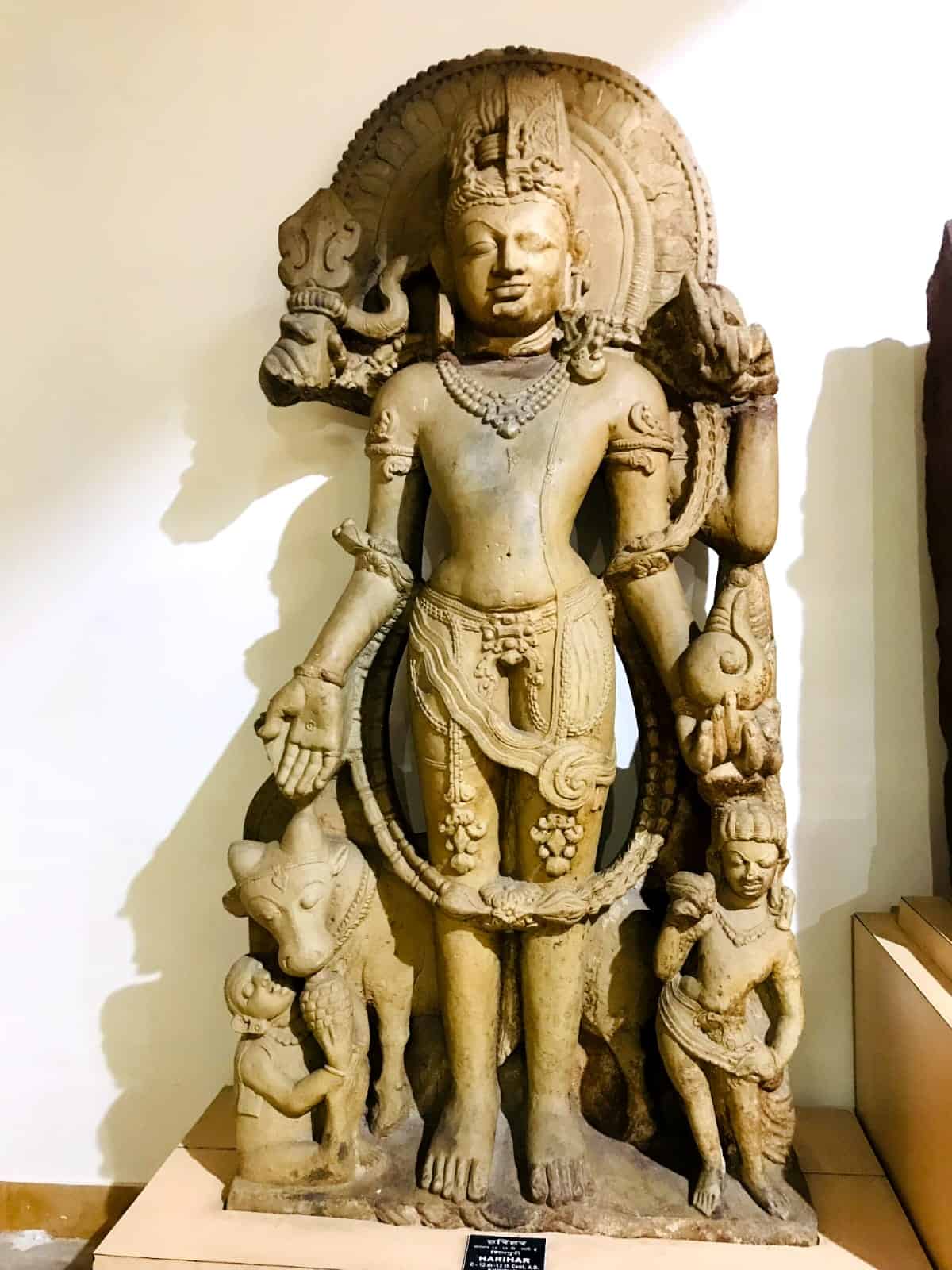
The Harihara sculpture from the 9th–10th century CE is a remarkable representation of the fusion of two major Hindu deities – Shiva and Vishnu. The duality is clearly expressed through contrasting headgear: the matted locks of Shiva on one side and the ornate crown of Vishnu on the other. The jewellery further distinguishes the two aspects; serpent-shaped earrings for Shiva and sun-disc earrings for Vishnu. Additional ornaments such as armlets, necklaces, sacred thread, and waist adornments enrich the visual complexity. The presence of their respective mounts, Nandi and Garuda, reinforces the symbolic depth of the composition.
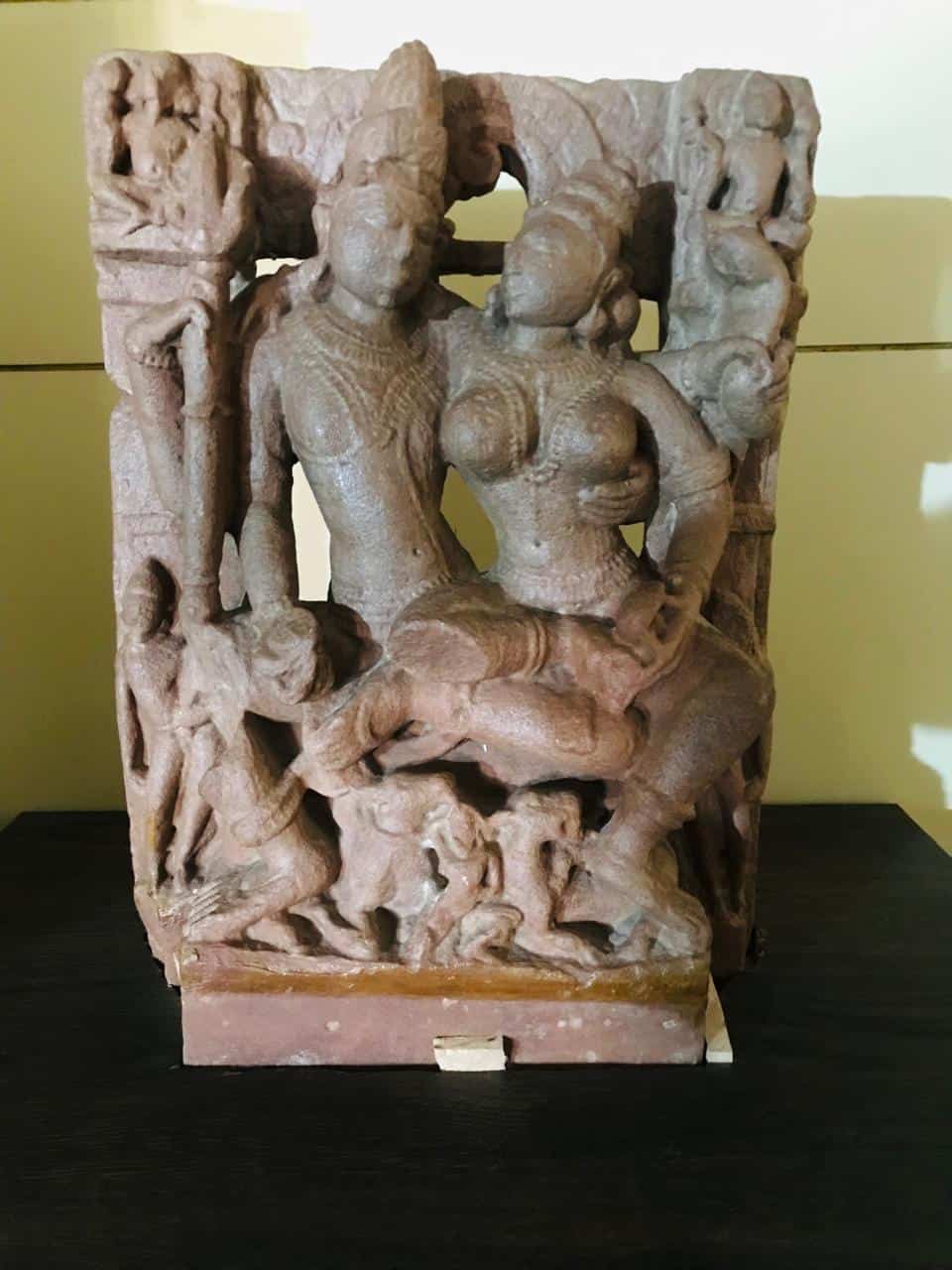
This 11th-century sculpture from the Paramara period narrates the mythological episode of Ravana attempting to lift Mount Kailash. Shiva and Parvati are depicted seated gracefully on Nandi and a lion, respectively. The composition is enriched with detailed ornamentation; circular earrings, pearl necklaces, layered chains, armlets, and floral garlands adorn Shiva, while Parvati is shown wearing earrings, cascading necklaces, and intricate chest ornaments. The scene is further animated by the presence of Ganesha, Kartikeya, Brahma, Vishnu and Gandharvas, making it both a narrative and decorative masterpiece.
The Vaishnavi sculpture from the 11th–12th century reflects strong regional stylistic influences. Depicted in a standing posture, the goddess holds symbolic attributes such as the conch, discus, mace, and lotus. She is richly adorned with a crown, earrings, layered necklaces, waist girdle, Vaijayanti garland, anklets, bangles, and armlets. At the base, an attendant figure is shown receiving her blessings, adding a devotional dimension to the composition. The sculpture exemplifies how jewellery was integral not only to aesthetics but also to divine iconography.
In the words of Dr Manisha Sharma, Joint Director, these sculptures reaffirm that Indian jewellery is far more than decoration; it is a living document of time, society, and human emotion. Every ornament carved in stone carries within it the aesthetic values and cultural narratives of its era. The heritage preserved by DAAM offers a unique opportunity to understand how tradition evolves without losing its essence. The jewellery designs seen in contemporary India are not isolated innovations but echoes of ancient craftsmanship, bridging the past and present in a continuous cultural dialogue.
Read – Latest