

Discover how clothing influences comfort, emotion, identity and memory, transforming the way every textile journey feels
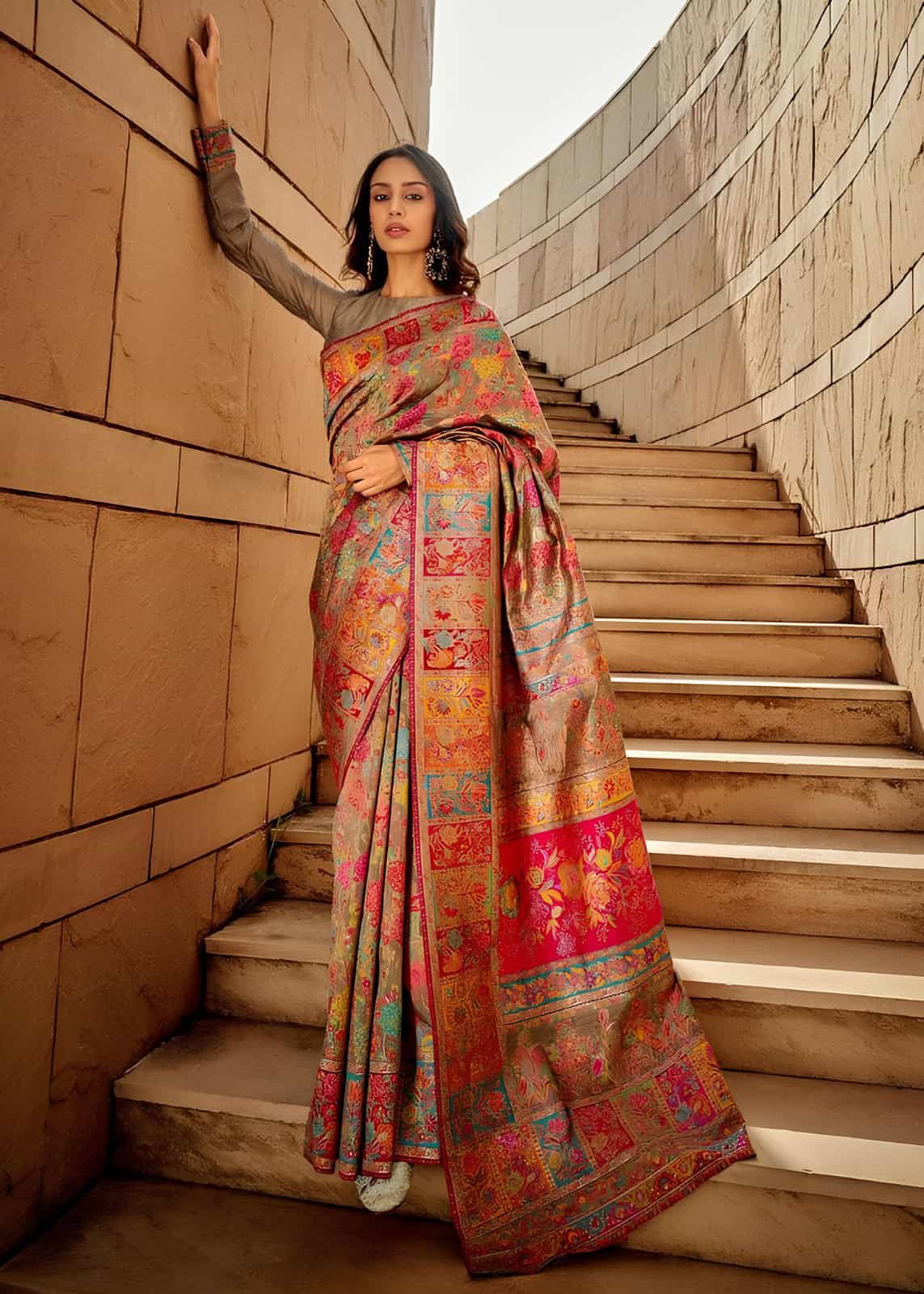
Long before a garment is admired or photographed, it is felt. Linen releases heat on a humid afternoon. A Pashmina shawl holds warmth close as mountain air sharpens. A handwoven sari brings the faint texture of the loom against skin, while a familiar cotton kurta can make a hotel room feel less distant.
Luxury travel has traditionally treated clothing as part of a journey’s visual theatre: the resort dress, tailored dinner jacket or silk scarf placed artfully beside a passport. Yet a sophisticated wardrobe also responds to climate, movement and mood, carrying the wearer between public polish and private ease.
Across fashion psychology, neuroscience and textile research, a compelling idea is taking shape: fabric can offer care. Texture, weight, colour, breathability and meaning affect how a garment feels. Indian handloom traditions understood this relationship long before laboratories gave it terminology. Khadi, Jamdani, Ikat, Ajrakh, Chanderi, Banarasi, Kanjeevaram and Pashmina emerged through particular climates, communities and rituals.
For the traveller, cloth becomes a portable sensory environment. It can relieve the strain of heat, provide composure before an important meeting, communicate respect in a place of worship and preserve the memory of a destination long after the luggage has been unpacked.
The Body Reads Fabric First
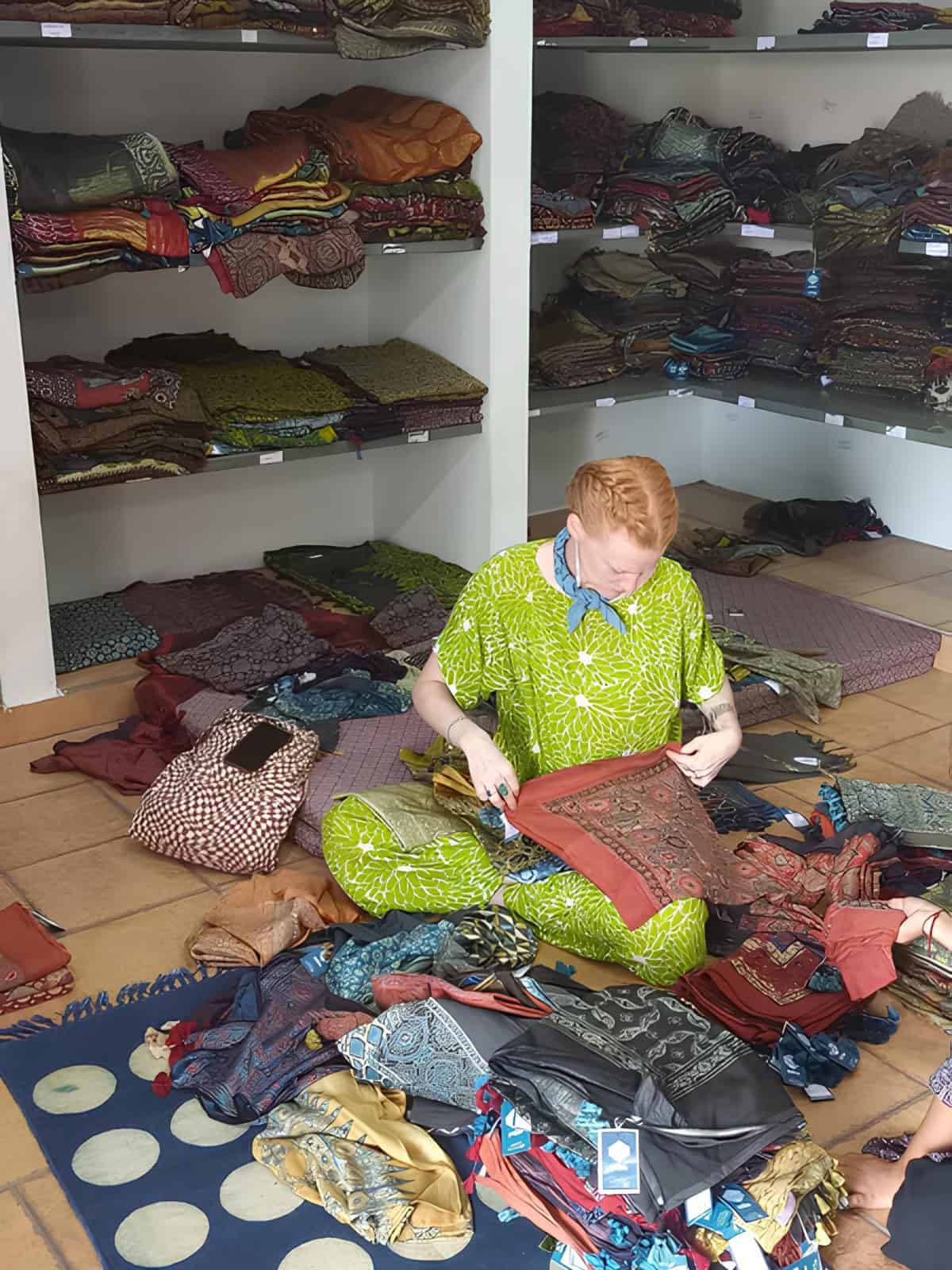
For much of the twentieth century, fashion writing privileged silhouette, status and trend. Fabric often appeared primarily as a visual medium. Psychology and textile science have since drawn attention to something the body has always known: the feel of a garment can matter as much as its appearance.
Skin registers seams, weave, moisture, warmth, pressure and movement even when the wearer has stopped thinking about the garment. Soft, breathable, non-scratchy fabrics are associated with greater comfort and positive emotional responses. Roughness, cling and irritating seams can create lasting distraction.
During travel, fabric that grows heavy in humidity, restricts movement on a flight or prickles during dinner keeps demanding attention. A garment that breathes leaves more attention available for the place itself.
Neuroscience is beginning to map this response. EEG studies indicate that different textiles produce distinct patterns of brain activity, including changes within theta and gamma bands associated with sensory processing and comfort. Subjective sensations such as softness, smoothness, non-itchiness and general ease have shown correlations with those signals. Cloth, in other words, does not register as a neutral surface. The nervous system reads its qualities with considerable precision.
Research involving autistic adults makes the effect especially clear. For people with heightened sensory sensitivity, certain fabrics can become so distracting or distressing that concentration, public movement and ordinary tasks grow harder. Preferred materials such as cotton and satin may ease anxiety; familiar denim has also appeared among favoured choices because of its predictable feel and light contact. These experiences reveal an essential principle of considered design: tactile comfort is not an indulgence. It can shape a person’s ability to participate fully in the day.
Cool Intelligence
Heat trapped close to the skin creates restlessness; moisture that cannot escape makes clothing feel oppressive. In the tropics, an airy weave can transform an afternoon.
Experimental comparisons of cotton, linen, hemp and blended materials show that pure linen and hemp often allow greater air passage than cotton. Bast fibres such as linen and hemp also tend to conduct heat more effectively, helping warmth move away from the body. Research into ramie, banana fibre and blends containing cotton has produced related findings: effective moisture-vapour transfer and heat transmission allow perspiration to clear and body heat to disperse with less resistance.
Fibre alone does not decide comfort. Weave, finishing and construction remain critical. A tightly woven natural fabric behaves differently from an open version of the same fibre. Loosely woven khadi, porous Jamdani and hemp-linen blends create space for air and movement.
Indian handloom is rich in this form of climate intelligence. Khadi’s handspun, handwoven structure contains subtle yarn irregularities that give it character and encourage airflow. Jamdani places inwoven motifs across a sheer ground so fine that the designs appear suspended. Chanderi, woven in silk, cotton or blends of the two, combines feather-lightness with a gently crisp hand. Each offers a distinct answer to heat, ceremony and movement.
At the other end of the temperature scale, Pashmina demonstrates how warmth need not arrive with bulk. Its fine cashmere fibres provide an exceptional warmth-to-weight relationship, creating a soft enclosure suited to cold flights, winter terraces and high-altitude mornings. Comfort may come through coolness, warmth, lightness or a feeling of being held; the finest textiles know which form the body needs.
The Psychology of Getting Dressed
Clothing also works through meaning. Psychologists Hajo Adam and Adam Galinsky introduced the term “enclothed cognition” to describe how garments can influence thought and behaviour through physical wear and symbolic association.
Their well-known laboratory experiments centred on a white coat. Participants who wore a garment described as a doctor’s coat performed better on attention tasks than those in street clothes. Results also differed among participants told that the same coat belonged to a painter and those who merely saw the coat nearby. The effect appeared to depend on two elements working together: the physical act of wearing the clothing and the meaning the wearer accepted.
Later meta-analytic research supports enclothed cognition while showing its dependence on context. Personal association, setting, role and expectation all contribute. A structured jacket can encourage focus; soft loungewear signals release. Dressing for dinner can turn a meal into an occasion before the first glass is poured.
Travel heightens these transitions. One day may begin in sleepwear, move into breathable clothes for a heritage walk, require modest attire for a shrine, and end in a formal dining room. Each change helps the mind enter another role. Clothing becomes psychological scaffolding: a way of preparing for attention, reverence, sociability or rest.
The boundaries matter even when the scenery remains unchanged. During the Covid-19 pandemic, many people discovered that staying in highly relaxed clothes could blur the line between work and home. Some restored a “getting ready” ritual because work clothing improved concentration and motivation. Hybrid life produced the “Zoom shirt”—polished above the camera frame, casual below—yet this compromise sometimes left the mental boundary incomplete.
Research suggests that predictable rituals may reduce anxiety by creating structure and control. Work clothes begin the day; home clothes lower self-monitoring; sleepwear prepares the body for night. The wardrobe quietly keeps time.
Colour Changes the Emotional Temperature
Colour adds another layer. Research across several decades broadly links long-wavelength colours such as red, orange and yellow with higher physiological arousal, while blue commonly appears alongside calmer, lower-arousal responses. Experiments measuring skin conductance have found red environments producing the strongest arousal, followed by green, yellow and blue.
The effect can vary with the task. The alertness associated with red may support simple, detail-focused work; blue has been linked with creativity and complex problem-solving through a calmer motivational state. Clothing can use this emotional register intuitively. Blues, greens and muted shades suit moments of reflection and measured focus. Coral, saffron and red bring energy, presence and sociability.
Culture can deepen or redirect those tendencies, and Indian dress offers one of the richest examples. Saturated red, marigold yellow and green frequently signal prosperity, fertility and auspicious beginnings. North Indian brides may wear red-and-gold Banarasi brocade; South Indian ceremonies bring the lustre of Kanjeevaram silk and its contrast korvai borders; Bengal’s red-and-white sari tradition creates a striking language of celebration and ritual. Colour, jewellery and textile turn the body into part of the ceremonial choreography.
White occupies a very different emotional space. Across many Hindu communities, plain white clothing is associated with mourning, spiritual purity and detachment. Funeral rites often involve white cotton kurtas, dhotis or saris, modest silhouettes and minimal jewellery. Display recedes, allowing grief and collective respect to take visual precedence. Widows in parts of northern India have historically worn plain white saris without ornament, extending this language of loss and social withdrawal into daily life.
Clothing helps create an occasion’s emotional atmosphere. Simple cotton for morning puja, formal workwear and a softer evening change mark passages between sacred time, public duty and private ease.
When Cloth Becomes Sacred
The ability of dress to communicate a role instantly is most visible in sacred clothing. Across religions, garments act as visual shorthand for purity, humility, service, renunciation and authority. The precise meanings differ, yet worshippers learn to read particular colours, forms and objects with an immediacy that inspires reverence.
In Roman Catholicism, the alb, cincture, stole and chasuble collectively clothe the priest in a symbolic narrative. The white alb represents purity; the cincture evokes self-control; the stole carries the weight of priestly authority; and the enveloping chasuble signifies charity. The vestments prepare the wearer for liturgical office and allow the congregation to recognise that role at once.
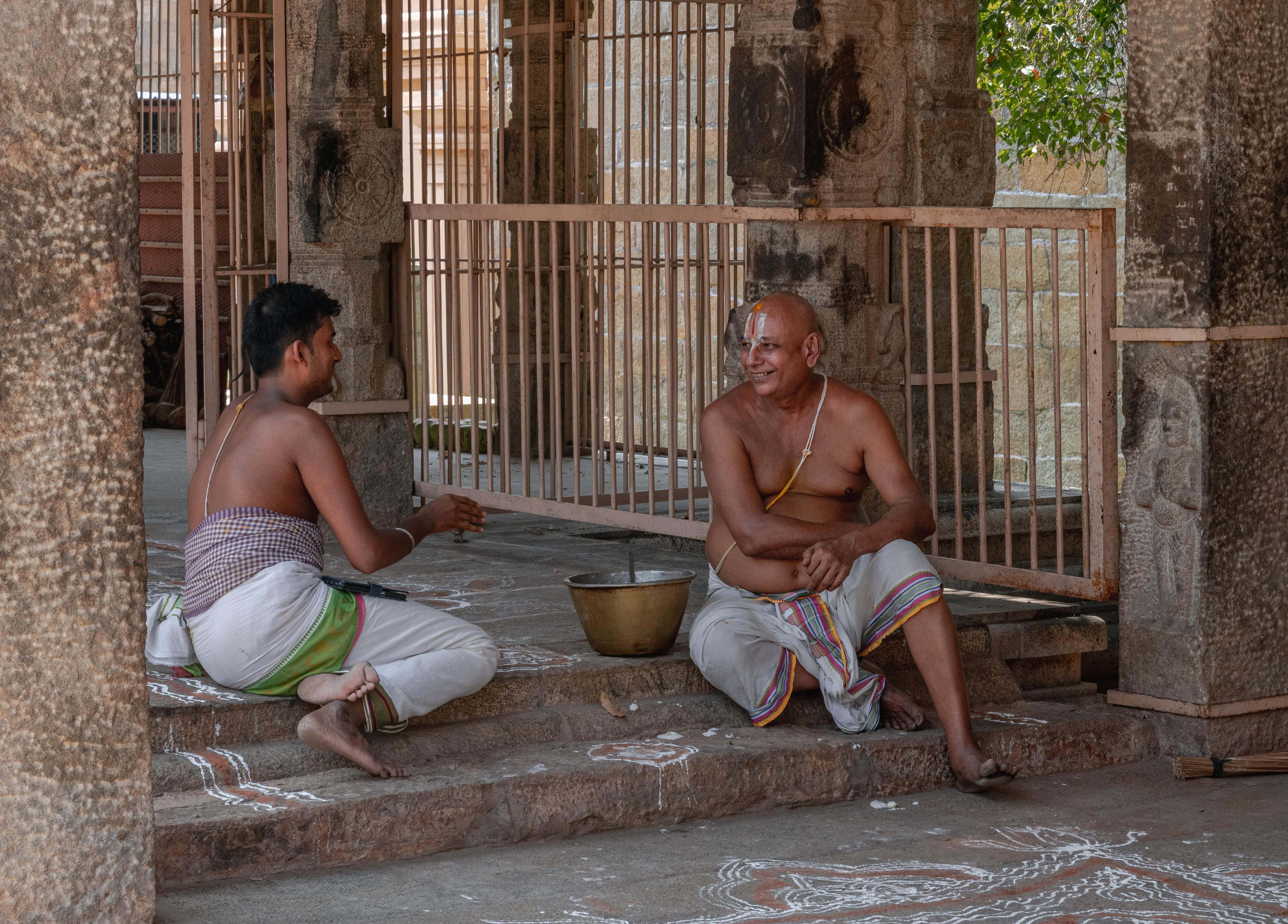
In Hindu contexts, Brahmin priests commonly wear an unstitched white dhoti with an angavastram or uttariya and the yajnopavita, or sacred thread, crossing the torso. Unstitched cloth has long been associated with ritual purity, while white cotton signals cleanliness and simplicity. Temple traditions can prescribe particular drapes and fabrics, reinforcing continuity through a form of dress that devotees understand as ritually appropriate.
Buddhist monastic robes, known as kasaya, communicate another ideal. Their saffron, ochre or maroon shades descend from “faded” colours, and early robes were pieced together from discarded cloth and dyed into unobtrusive hues. Their simplicity expresses renunciation of possession and status. In Judaism, the tallit wraps the worshipper in a physical reminder of the commandments through its tzitzit, or fringes; the kippah signifies awareness of God above, while tefillin place sacred texts upon the body during prayer.
Across Islamic cultures, garments such as the kufi and long, loose robes are associated with modesty, humility and religious identity. Dress worn by an imam can publicly signal commitment to spiritual guidance, while prayer clothing allows worshippers to enter a more attentive state. In Sikhism, the dastar is not clerical costume but an article of faith worn by practising Sikhs. It carries meanings of sovereignty, dignity, courage and dedication to the Gurus, making cloth an everyday declaration of identity and accountability.
Shinto priests in Japan wear codified ensembles that may include the white jōe, formal trousers, a belt and a peaked cap. White conveys purity when approaching the kami, while the standardised form marks an authorised ritual presence. Across these traditions, simple or unstitched garments often communicate humility; white or faded colour suggests purity or renunciation; and distinctive pieces—stole, sacred thread, shawl or turban—hold narratives of duty that extend far beyond decoration.
For travellers entering sacred spaces, clothing becomes part of cultural literacy. Covered shoulders, an appropriate hemline, a head covering or the removal of shoes can express respect more clearly than words. The best travel wardrobes allow such adaptations with ease, helping the visitor participate without turning sacred dress into spectacle.
The Luxury of the Human Hand
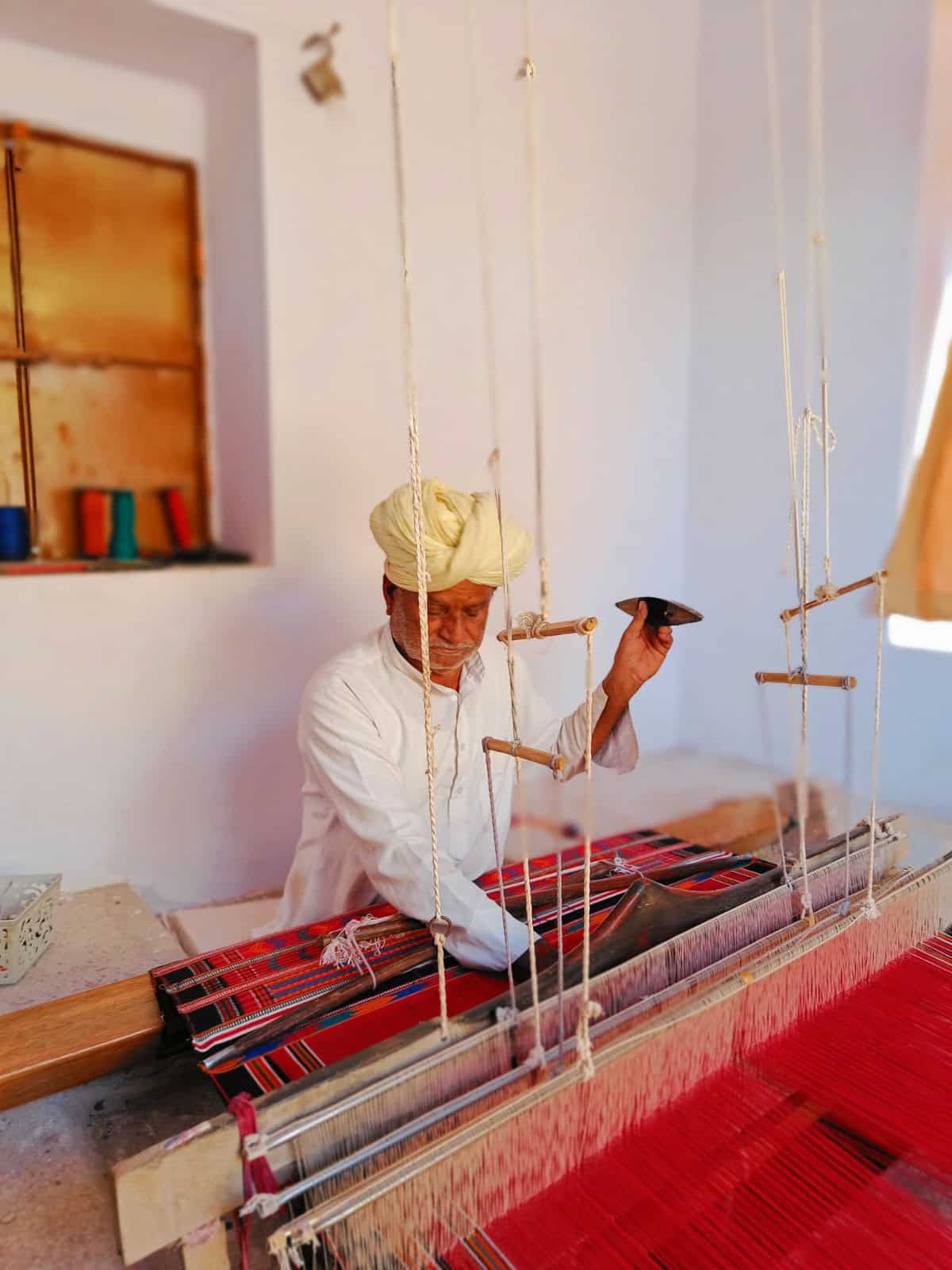
India’s handloom ecosystem encompasses millions of weavers and allied workers, sustaining one of the world’s great networks of living textile knowledge. Its value is usually discussed through heritage, craftsmanship and economics. Yet handloom is also a vast archive of sensory design developed around local weather, ritual and daily life.
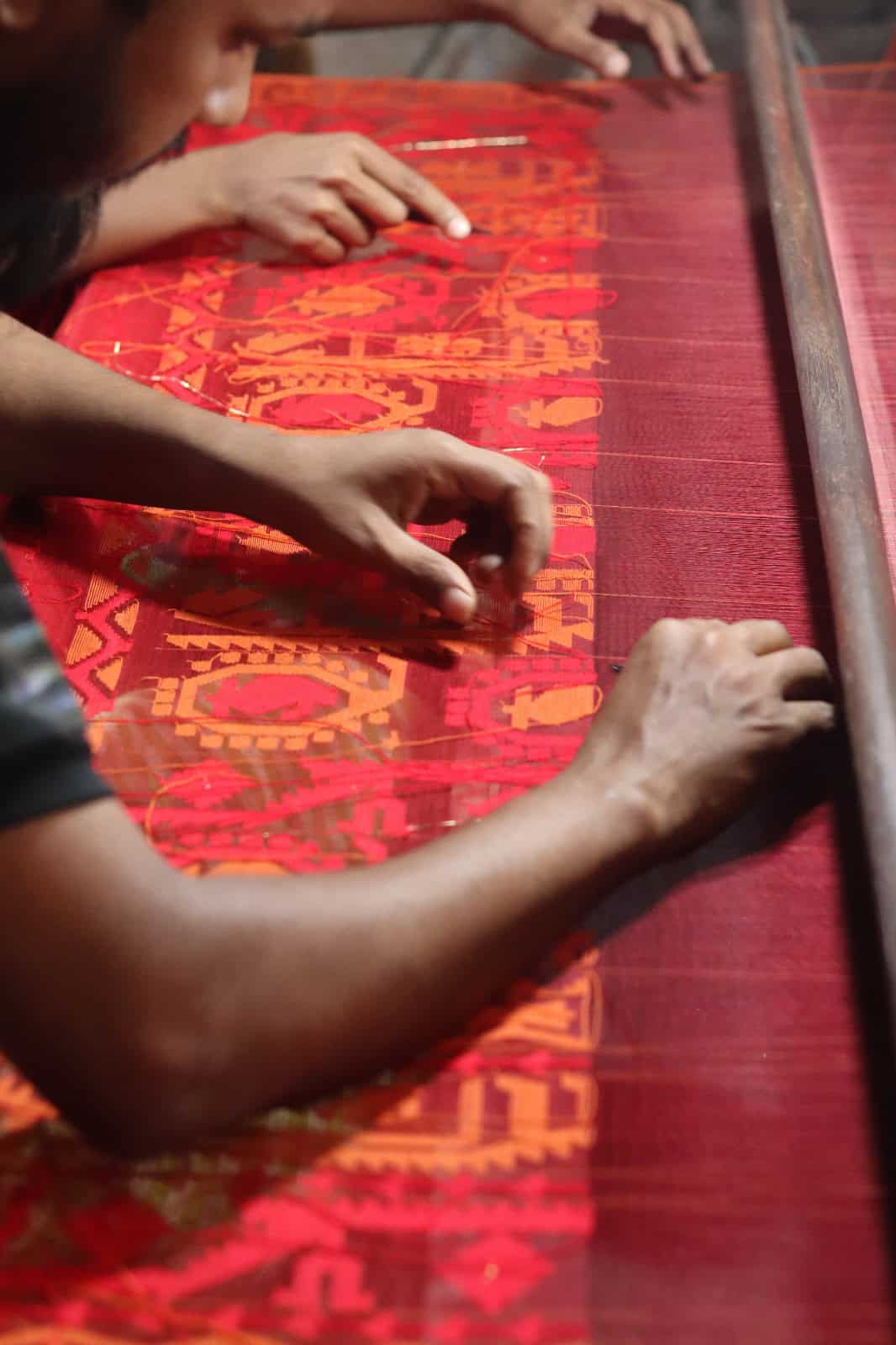
Every tradition possesses its own tactile identity. Ikat’s softly blurred patterns begin with resist-dyed yarn. Ajrakh builds complex geometry through repeated block-printing, often on cotton or silk and traditionally using natural dyes. Banarasi brocade carries kalga, bel and other motifs through lustrous supplementary threads. Kanjeevaram is prized for substantial silk, saturated colour and contrast borders. Jamdani motifs float across transparency; Chanderi balances crispness and softness; Pashmina encloses the body in warmth with astonishing lightness.
The handmade also preserves evidence of process. A slub, a tiny misalignment or a variation in dye may be rejected by an industrial system seeking total uniformity. In artisan cloth, it reveals judgement, time and the presence of a maker. Fingers encounter minute changes in texture; the eye registers variations that prevent the surface from feeling anonymous.
That singularity changes how a garment is valued. A handloom kurta grows softer with washing. A sari gathers associations through festivals, weddings and journeys. A shawl carries the scent of a cupboard, the shape of familiar shoulders and the memory of a winter. The whisper of a grandmother’s Chanderi or the crisp rustle of a bridal Banarasi can return an entire room to the mind.
Slow-fashion thinking recognises this emotional durability. People tend to keep, repair and reuse pieces that feel personal. A relationship forms through material quality, visible labour and accumulated memory. Luxury reaches its most meaningful form here: not flawless sameness or instant novelty, but provenance, longevity and intimacy.
Weight can offer another form of sensory reassurance. Research into weighted blankets suggests that evenly distributed deep pressure may support relaxation, sleep maintenance and reduced anxiety in some adults with insomnia, stress-related conditions or high sensory sensitivity. In one four-week intervention involving adults with insomnia and elevated sensory sensitivity, every participant moved into a less severe insomnia category, while sleep quality improved and most slept longer.
The mechanism may involve sympathetic and parasympathetic regulation. It echoes the affection for a substantial duvet, structured coat or thick shawl during stress. Pashmina creates related protection through warmth and softness despite its low weight: enclosure without heaviness.
Packing for the Person You Want to Be
Vacation dressing often gives travellers permission to meet a more expressive version of themselves. Colours grow brighter, silhouettes loosen and a statement accessory emerges from the suitcase. Resortwear can summon the fantasy self—more playful, romantic or adventurous than the one who dresses for an ordinary weekday.
Yet the outfits most loved in retrospect are often those that performed effortlessly under real conditions. They survived heat, humidity, long lunches, temple steps and unplanned walks. They looked considered without making the body work for the image. The finest travel style finds its elegance through ease.
A compact wardrobe of breathable khadi, linen and Chanderi can move between a morning market and a refined dining room with small changes in drape and accessories. A Jamdani layer adds delicacy without weight. An Ajrakh stole introduces pattern and place. Pashmina travels almost weightlessly and earns its space across aircraft cabins, cool evenings and winter journeys. Such pieces reduce decision fatigue while allowing identity to remain intact across different settings.
The Souvenir That Stays Close
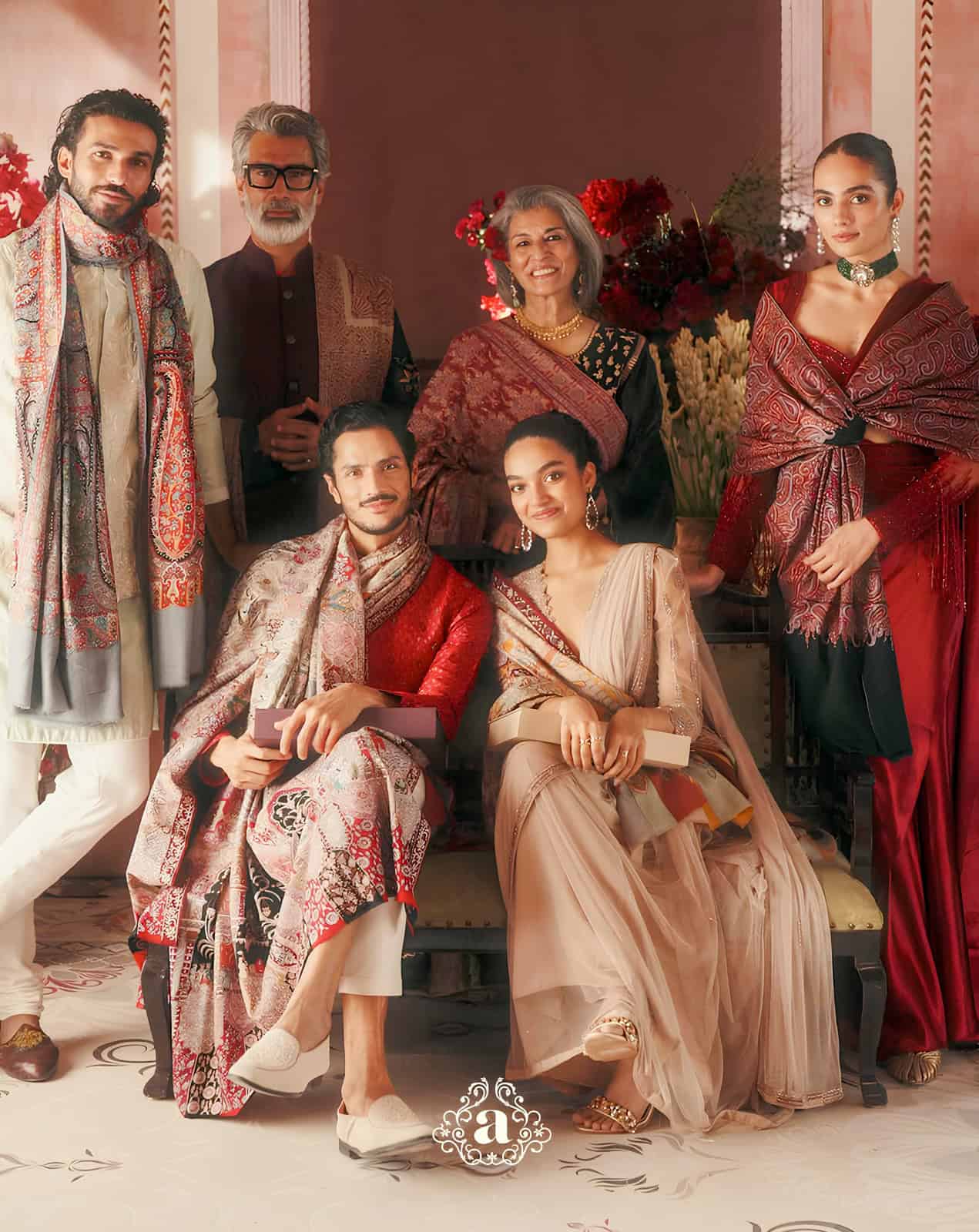
Fewer, better garments also shift attention away from the relentless novelty of trend cycles. They are chosen for touch, versatility, provenance and emotional resonance. They become a form of soft armour: supportive enough for unfamiliar environments, adaptable enough for cultural expectations and gentle enough for the body.
The body reads fabric before the mirror gives its verdict. It recognises air moving through khadi, the near-weightlessness of Jamdani, the crisp softness of Chanderi and the enveloping warmth of Pashmina. It notices the structure that sharpens focus, the relaxed silhouette that invites release, the colour that energises and the familiar weave that steadies an overstimulated day.
Travel makes those responses vivid because climate, role and setting can change within hours. Clothing mediates each transition. It can offer physical ease, create a boundary, express reverence and connect a visitor with the craft intelligence of a place.
Long after a journey, cloth continues to hold what photography cannot: touch. The Ajrakh bought after watching a block printer align the pattern; the fine shawl worn on a cold terrace; the sari chosen in a city where weaving has shaped generations. Such textiles preserve destination, encounter and feeling in a form that remains close to the body.
Care sits inside fibre, weave, weight, colour and ritual. The most beautiful travel wardrobe understands that style is only the visible beginning. Cloth keeps working quietly after the picture is taken, shaping how a journey feels—and how it is remembered.
Read more – Lifestyle, Weddings, and Wellness