

Beyond Everest, Nepal reveals vibrant cultural experiences through heritage cities, monasteries, festivals, crafts, communities and cuisine
Nepal is often pictured in the outline of Mount Everest, snow-covered mountaintops and trekking paths with the immense Himalayan extent. However there is another Nepal you can explore beyond it mountains — a land of traditional cities, monasteries, vibrant festivals, ancient crafts and a local food culture with roots in generations and generations of peoples places around the country.
Nepal is a walk through a living cultural landscape for travellers who are willing to look beyond the well-beaten mountain routes. It is a land of diverse traditions, languages, foods and lifestyles. Be it the historic streets of Kathmandu Valley, the villages of the Terai; culture is not limited to museums or monuments. It still lives with people in one form or another.
Kathmandu Valley: Where History Lives in the Streets
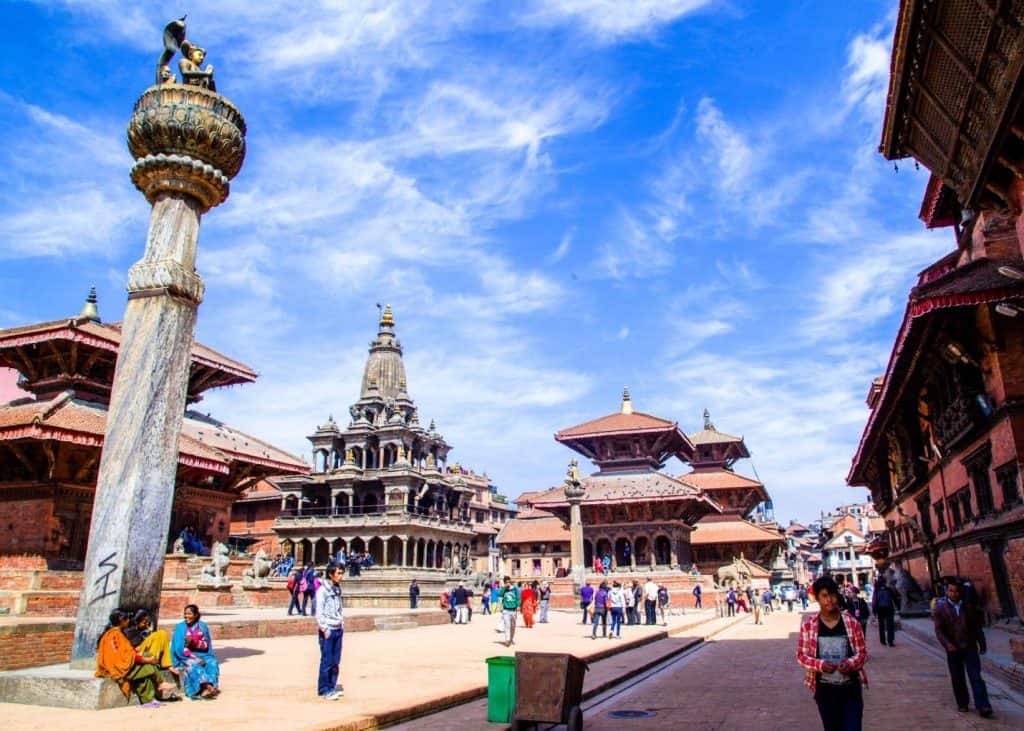
Your adventure through Nepal’s rich culture begins of course in the Kathmandu Valley. UNESCO has designated the valley a World Heritage property containing 7 monument zones:
- Durbar Squares of Kathmandu
- Patan, and
- Bhaktapur
- The Buddhist sites of Swayambhu and Bauddhanath, and
- The Hindu temple complexes of Pashupati and Changu Narayan.
The architectural style of the valley is a testament to centuries of Hindu and Buddhist tradition along with the beautiful craftsmanship exhibited by the Newar people. Extensive elaborately carved brick, stone, timber and bronze structures include Durbar Squares, temples, stupas and courtyards.
The cities of Patan and Bhaktapur both divulge an intricate relationship between their architecture, craftsmanship and everyday life in their communities. UNESCO characterizes the Kathmandu Valley as an outstanding example of traditional Newar civilization, with artistic traditions going back many centuries.
So, for the traveller, a journey through the valley is about more than traversing monuments. Its old neighbourhoods still hide courtyards, temples and workshops, public spaces where heritage still lives with modern life.
Monasteries and Spiritual Traditions
Nepal also has spiritual diversity. Many of the temples, monasteries, festivals and daily customs of the country were influenced by Hinduism and Buddhism, often blending with local traditions.
The monasteries at Swayambhu and Bauddhanaths testify to the Buddhist past of the Kathmandu Valley, and Pashupati is one of Nepal’s major Hindu shrines. UNESCO states that there exists a unique tangible as well as intangible blending and interaction of Hindu and Buddhism with additional local practices throughout the cultural landscape of the valley.
The religious past of the country does not only belong to monumental architecture. Through it all, prayer, festivals, offerings and community rituals remain part of daily life. For a traveller, this gives you the chance to see spirituality not just confined within a temple or monastery, but embedded in the culture of its surrounding communities.
The cultural diversity of Nepal also signifies that these traditions differ significantly from region to region and community to community. This diversity is especially evident as travelers pass from the Kathmandu Valley and into the hills, mountains and Terai.
Festivals That Bring Communities Together
Nepals living culture is best experienced through the festivals that take place throughout the year. Various religious ceremonies, processions and music & traditional performances throughout the year unite communities.
- Tihar-the festival of lights that spans five days, is one of the most well-known celebrations. During the festival, crows and dogs are worshipped on one day, while cows and oxen are venerated on another different day, followed by Laxmi Puja and Bhai Tika separately. Houses are adorned with lamps, lights and garlands, thus making the festival a colourful manifestation of faith and family customs.
- Another short insight into Newar customs comes with Indra Jatra in the Kathmandu Valley. The eight-day festival features chariot processions, masked dances and religious performances – with the Kumari (or Living Goddess) chariot emerging as one of the highlights of festivities.
Festivals like these demonstrate how the heritage of Nepal is still being practiced and not merely preserved. Streets, main squares and yards become the space where generations get together and traditions are shared.
The Art of Traditional Craftsmanship
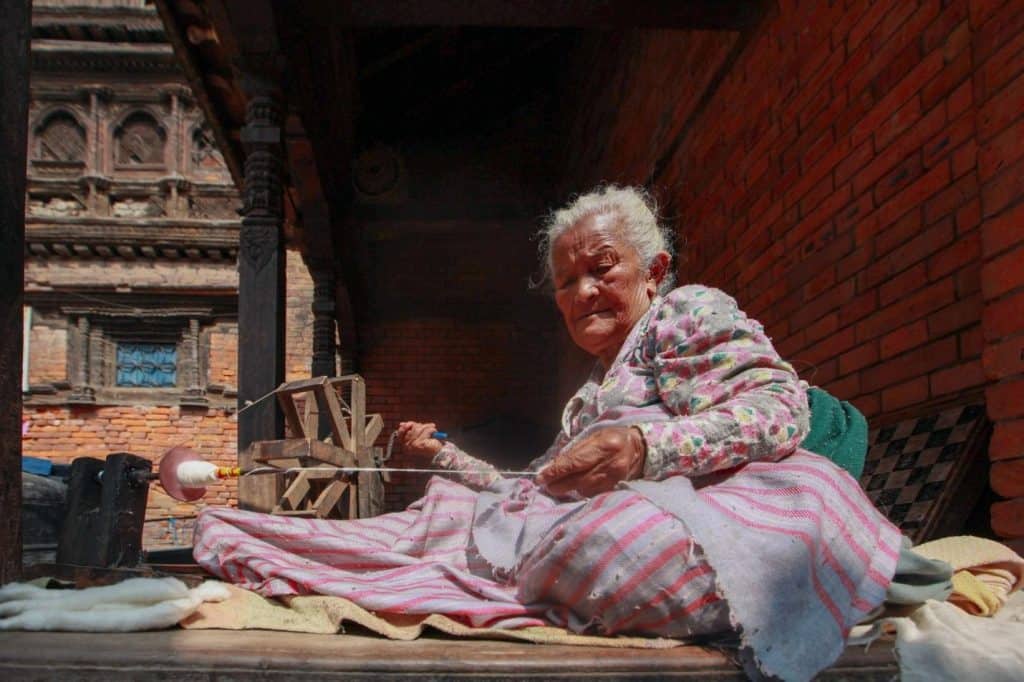
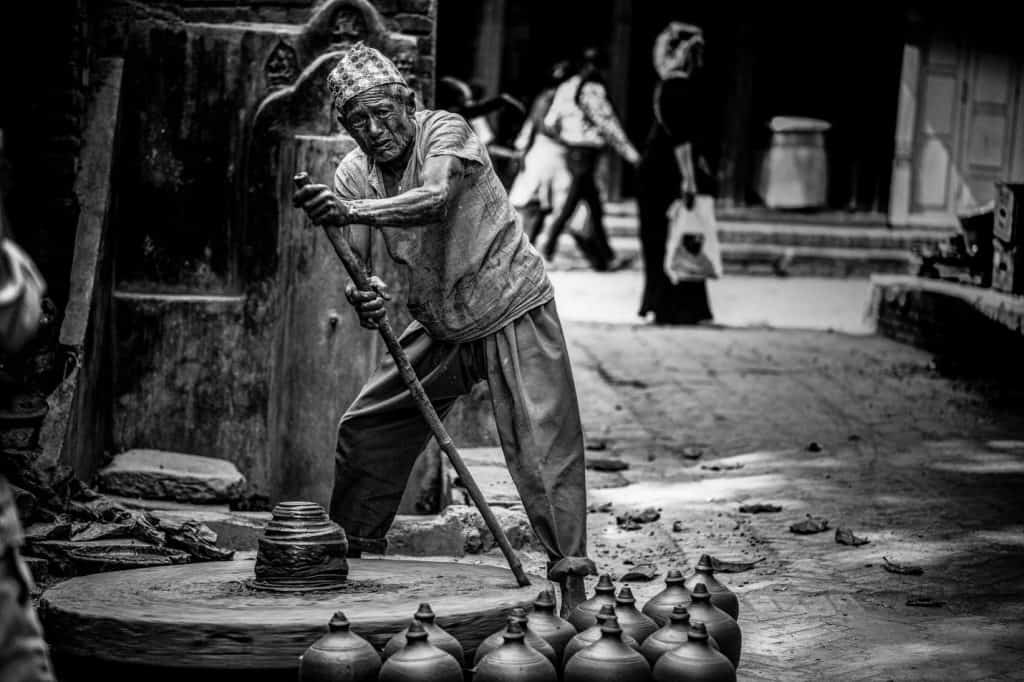
back into hands of artisans from the land of Nepal. Traditional crafts such as wood carving, stone masonry, pottery and Thangka painting has been practised for centuries, especially around Kathmandu valley.
Traditional crafts from around the country are certainly visible today, the Nepal Tourism Board calls out Newari woodcarving, Thangka painting, pottery, metal statues and Himalayan paper and carpets and Mithila wall art as its masters. Most of these arts are still practiced by artisans today.
This is especially evident in the temples and traditional architecture of the Kathmandu Valley. Centuries of craftsmanship in wood, stone and metal have shaped the visual character of the region. For travelers, traditional craft areas are a way to see Nepal through a different lens. Rather than just seeing the finished artefact, you can start to appreciate the craft, patience, and knowledge of culture that went into making it.
Communities and the Landscapes They Call Home
The cultural stories of Nepal change as much as the terrain. The artistic traditions of the Himalayan regions are distinct from those of the country´s middle hills and its fertile Terai plains.
While Chitwan is recognized for its wildlife and national park, the area offers an exploration of Tharu culture. The Tharu are an indigenous people of the Terai, they have different traditions, architecture, festivals and food.
Traditional Tharu houses and community spaces are influenced by the availability of local materials as well as climatic conditions, while music and dance make a significant contribution to celebrations and cultural gatherings.
Experiences that introduce you to local communities can offer travellers a new perspective on Chitwan. Instead of just painting the region through its wildlife, visitors can hear stories of people and culture that have grown with the land.
This is where the relationship between people and place really starts to take shape. Forests, rivers, agricultural landscapes and villages are not separate parts of the experience but rather pieces of the same cultural landscape.
A Taste of Nepal’s Cultural Diversity
Another perspective of the country can be understood through food. Given that the geography and communities are as varied across the country, it stands to reason that they have influenced Nepalese cuisine.
- Dal bhat is still one of the most well-known dishes in Nepal and typically comes with some veggies and achar, while
- momos have become one of the country’s most recognisable foods.
Some however, have their own communities with renowned culinary traditions.
Often, food can also be closely linked to festivals and local identity. Yomari Punhi is an important festival of the Newari community, and it is focused on worshipping Annapurna (the goddess of crops/food). The festival observes making of yomari, steamed dumplings made of rice-flour and usually stuffed with a sweet paste called chaku or khuwa and sesame seeds.
This custom shows how food can signify more than taste. It can save memories of harvests, festivals, community practices and the interplay between people and their environment.
And for travellers, food can then become more than just a checklist item. This might be small but meaningful step to introduce you with the history and cultural diversity of Nepal.
Experiencing Nepal More Slowly
But once you get past Everest doesnt mean you leave the Himalayas behind. It means seeing the country from a different angle.
The traveller can roam on the ancient streets of Bhaktapur, observe artisans at work or attend a local festival and visit a monastery or get to try regional food or stay in communities beyond major tourist centres.
They may lack the peak experience of a large Himalayan summit, but they can allow for a different travel experience to unfold. Travelers can have the chance to understand the people, culture and landscape that give those places their identity instead of just checking landmarks.
Travelling more slowly also means tourists notice details that get overlooked in a tightly arranged itinerary, the architecture of an old neighbourhood, the crafts of a local artisan, a festival taking place in the town square or mealtime that bears its own story.
Beyond the Mountain
There will always be Everest and it has long remained as one of the iconic anchors in the identity of Nepal.
Its tourism has been defined by the mountains; it has inspired generations of travellers and created some of the most spectacular trekking routes on earth.
Nepal though does not just reveal itself through its mountains.
Its heritage is embedded in the stone-carved windows of the Kathmandu Valley, the beat of festival drums, the steady pulse of monasteries and their stillness; in handicrafts that artisans apply themselves to with traditional skills, in kitchens of distinct tastes from different regions and communities, living through time across Himalayan foothills towards Terai plains.
Nepal is a much wider journey for the traveller who lets go of the need to speed up, and stepping beyond what you might expect from such a beautiful country.
It is a journey through the living heritage, where culture is not left as something in history but carried forward through those who continue to practise it.
Maybe this is the Nepal that goes beyond Everest: not just a land of mighty heights, but one in which every landscape can tell a tale, every neighborhood bears its own heritage and each path offers an opportunity for a richer connection to the place.
Read More: Explore the World