

Across bustling cities and quiet islands, cultural festivals in South Asia reveal places through celebration
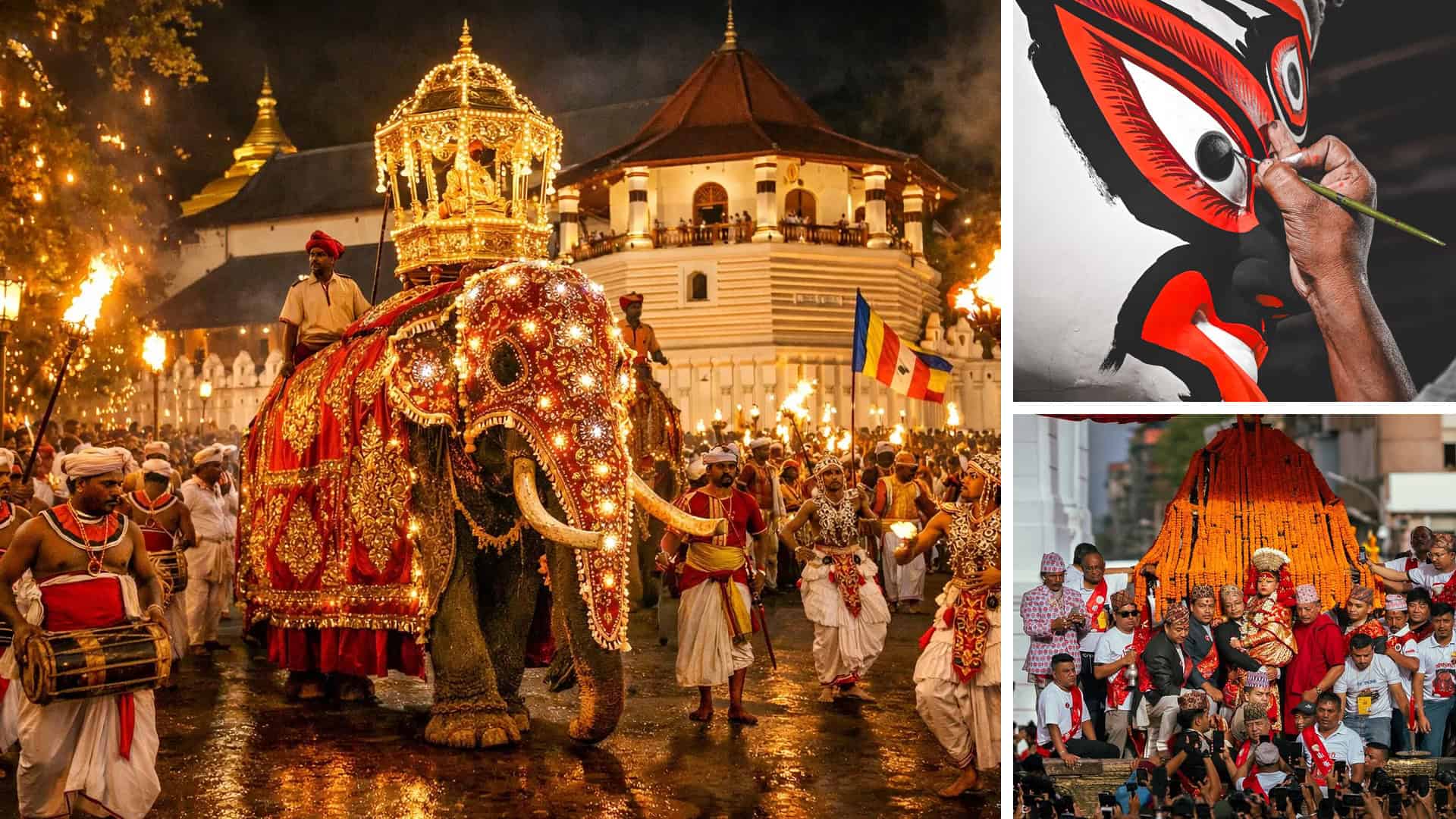
A city takes on a different character when celebration moves into its public spaces. Roads become processional routes, squares gather dancers and musicians, monastery courtyards turn into performance grounds, and island streets fill with drums and movement. Architecture gains a new purpose as communities bring centuries of ritual and artistry into everyday surroundings.
These festivals offer travellers a way to understand places beyond their monuments and landscapes. Their temporary installations, ceremonial routes and shared meals reveal the people who shape a destination. Some celebrations occupy whole cities; others unfold within a single courtyard. Each gives its setting a distinctive cultural identity.
Kolkata After Dark
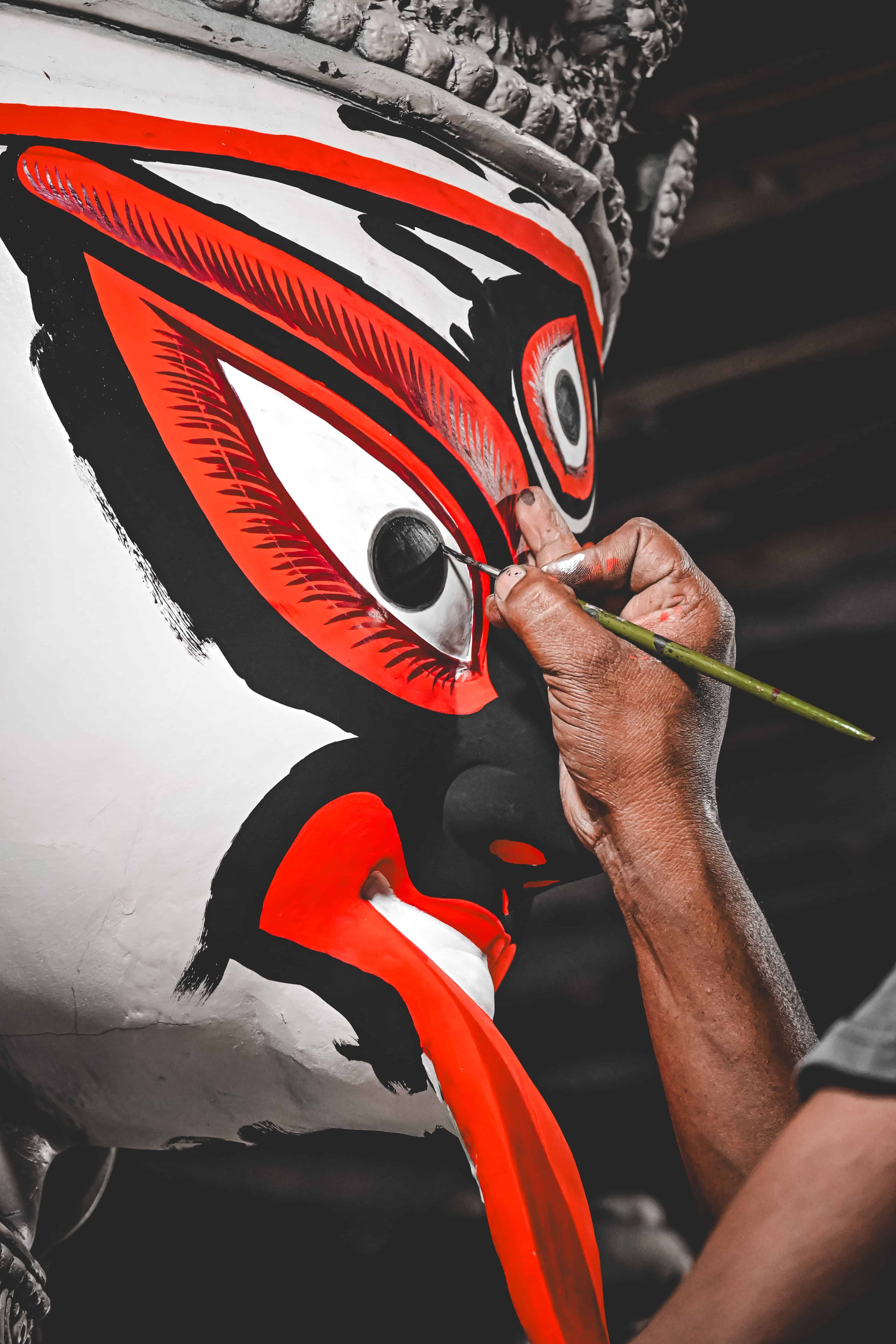
Durga Puja gives Kolkata an entirely new map. By evening, neighbourhoods connect through pandal trails, crowds stream along narrow streets and the beat of the dhaak carries above traffic. Temporary structures rise from bamboo, fabric and sculpture, ranging from traditional shrines to elaborate contemporary art installations. UNESCO inscribed Durga Puja in Kolkata on its Representative List of the Intangible Cultural Heritage of Humanity in 2021, recognising the remarkable meeting of public art and religious celebration.
The spectacle begins months earlier in Kumartuli, Kolkata’s historic potters’ quarter. Inside compact workshops, artisans build straw frames, apply successive layers of clay and shape the figures of Durga and her family. Painting, ornamentation and the finishing of the goddess’s eyes complete a craft sustained across generations. By the time the idols reach their pandals, the work of sculptors, decorators, lighting designers and neighbourhood organisers has come together in a citywide undertaking.
Pandal design has become an art form in its own right. Some installations recreate Bengal’s architectural heritage; others use discarded materials, woven textures or inventive lighting to explore contemporary themes. Visitors often walk through entire environments before reaching the central idol. The creative economy surrounding the festival is substantial: a British Council study estimated that Durga Puja-related creative industries contributed ₹32,377 crore to West Bengal’s economy in 2019, approximately 2.58 per cent of the state’s GDP at the time.
Yet the city’s smaller encounters are equally memorable. North Kolkata offers old neighbourhoods and traditional community pujas, while south Kolkata is known for large installations and ambitious visual design. Between the pandals are phuchka vendors, kathi-roll counters, sweet shops and families making their annual rounds. A detour into a modest lane can reveal a celebration with its own customs and history. The festival encourages visitors to experience Kolkata as its residents do: through neighbourhoods, conversations, food and long evenings on foot.
Dhaka in April
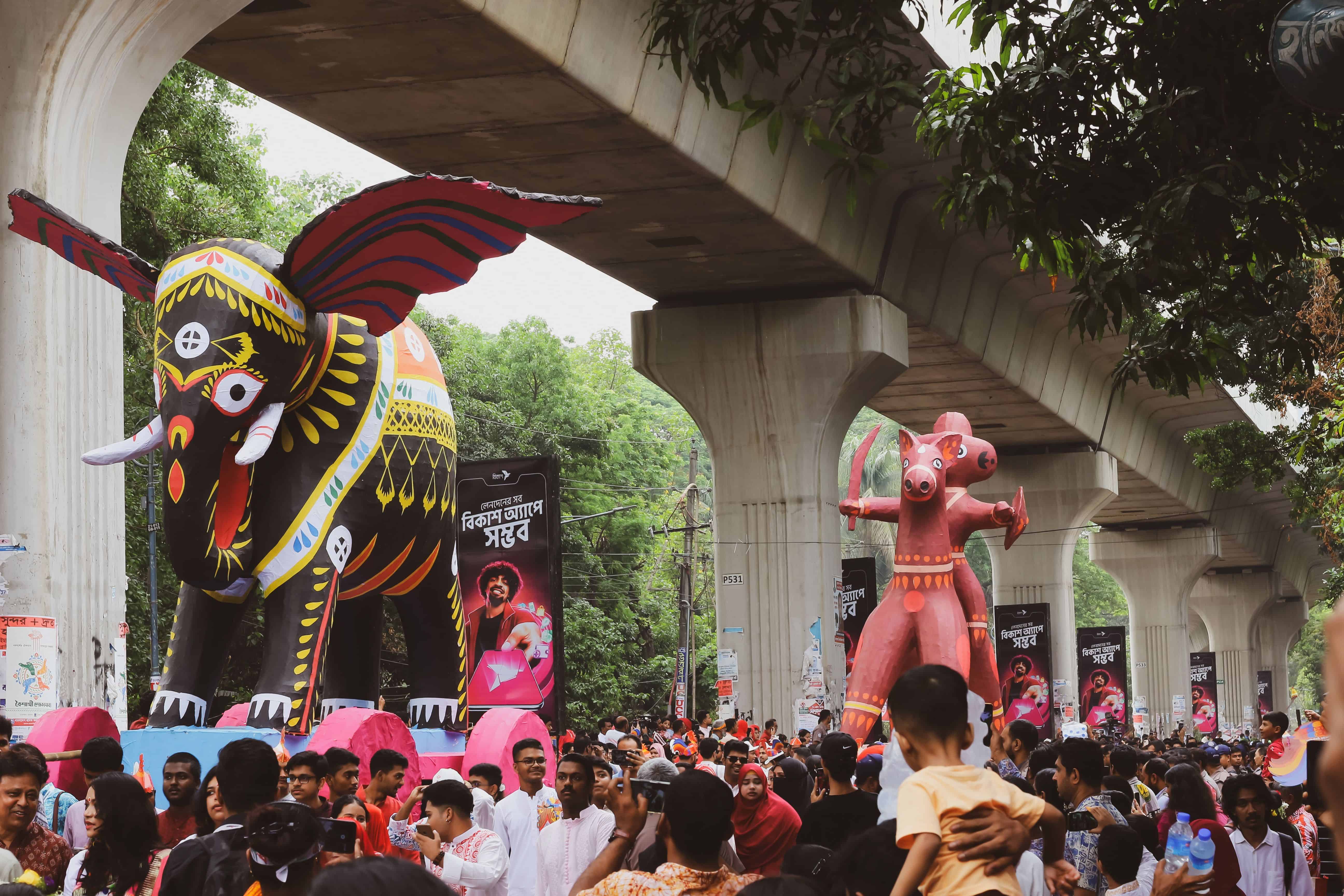
On 14 April, Pahela Baishakh brings the Bengali New Year into Dhaka’s streets and parks. Music, handmade masks, painted figures, craft fairs and traditional food transform the area around Ramna, Shahbagh and Dhaka University into a cultural gathering place. Red-and-white clothing adds to the occasion’s visual identity, while early-morning songs at Ramna Batamul, traditionally organised by Chhayanaut, give the day a reflective beginning.
At Dhaka University’s Faculty of Fine Art, students and artists prepare giant animal figures, masks and sculptural forms inspired by Bengali folk traditions. The procession began in 1989 and gained international recognition when UNESCO inscribed Mangal Shobhajatra in 2016. Conceived as an expression of solidarity and hope, it draws on symbols familiar from rural painting and popular storytelling. The procession was officially called Baishakhi Shobhajatra in April 2026, although UNESCO’s inscription retains its original name. That year’s principal motifs included a rooster, elephant, dove, horse and dotara, a traditional string instrument.
The celebration extends well beyond the procession. Temporary stalls display pottery, cane work, textiles and handmade objects. Seasonal fairs bring folk performers and musicians into public spaces, connecting the city’s student-led artistic culture with older Bengali practices. Food provides another route into the occasion: panta bhat, soaked rice often served with accompaniments, appears alongside bhorta, fish preparations and sweets.
Pahela Baishakh also carries a commercial tradition. Through Halkhata, traders have historically opened new account books and renewed relationships with customers at the start of the year. That link between public celebration and ordinary commerce gives the festival a particular urban character. For travellers, Dhaka in April offers the pleasure of moving from morning music to art-filled streets and busy food stalls within a few culturally significant neighbourhoods.
Kathmandu and the Living Square
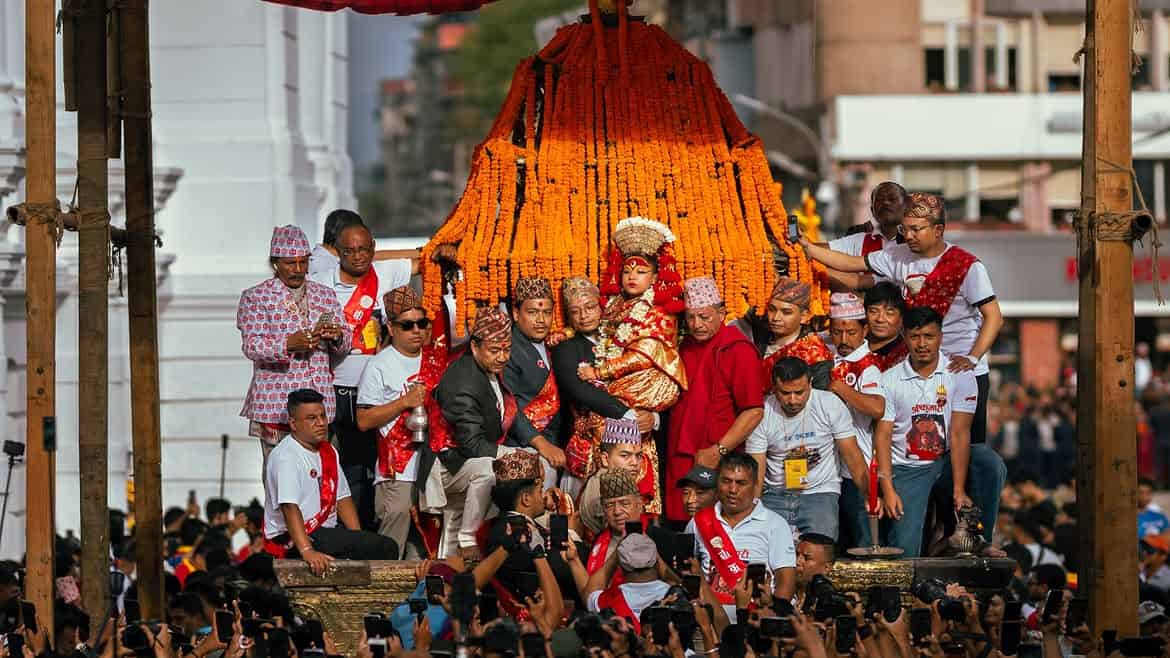
Kathmandu’s festival calendar is inseparable from its historic squares, shrines and narrow lanes. During Indra Jatra, the old city becomes a ceremonial landscape as chariots, masked dancers and drummers move between buildings that have witnessed such gatherings for generations. The eight-day festival, generally held in September, has deep roots in Newar culture and honours Indra, the deity associated with rain and the heavens.
At Basantapur, near the Hanuman Dhoka palace complex, raising a ceremonial wooden pole marks the start of the celebrations. Crowds gather around Kathmandu Durbar Square, on temple steps and balconies, as processions pass through densely built streets. The Lakhey dance brings an especially animated presence: performers wearing dramatic masks and brightly coloured costumes move to traditional percussion, embodying figures from local folklore.
The chariot procession of the Kumari, Kathmandu’s Living Goddess, is among the festival’s most significant ceremonies. Smaller chariots representing Ganesh and Bhairav accompany her journey through the historic centre. The prescribed routes connect Basantapur, Indra Chowk and surrounding neighbourhoods, giving visitors a clearer sense of the city’s sacred geography. Shrines that appear separate on an ordinary sightseeing walk become part of a shared ceremonial network.
Evening performances and the public display of Akash Bhairav add further layers to the occasion. Against carved timber windows, tiered pagoda roofs and brick façades, the festival becomes an unusually vivid expression of Kathmandu’s architectural heritage. The buildings serve as more than picturesque surroundings: their courtyards and gathering spaces remain integral to community life. Indra Jatra offers travellers an encounter with a historic city whose traditions continue to move through its streets.
Bhutan in Festival Dress
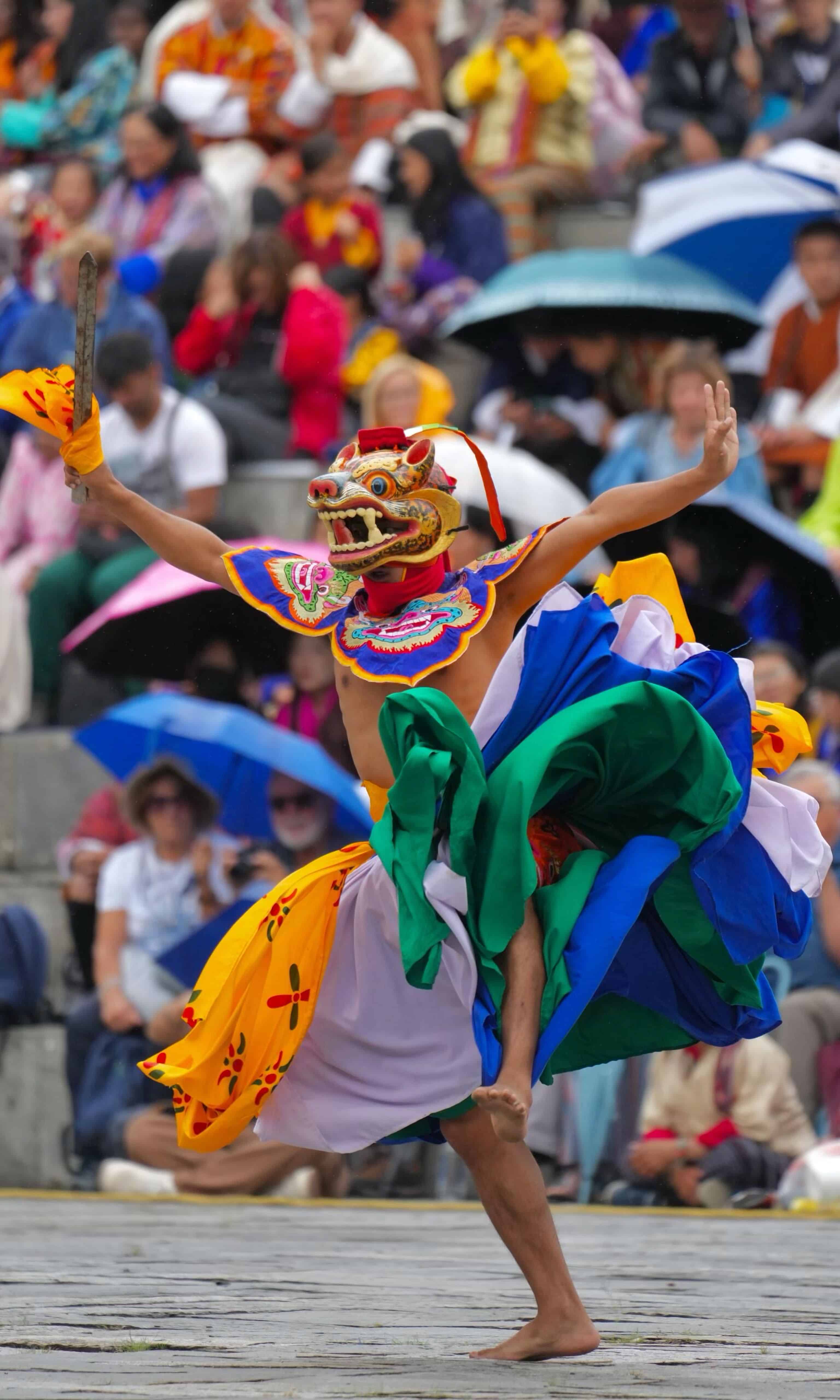
Bhutan’s great public performances unfold against a different landscape: fortified dzongs, monastery grounds and mountain valleys. Its tshechus, religious festivals associated with Guru Rinpoche or Padmasambhava, bring masked dances, ceremonial music and richly coloured traditional dress into these settings. Celebrations in Paro, Thimphu, Punakha and Trongsa draw local families alongside visitors, each festival reflecting the community and religious institutions around it.
Paro Tshechu, established in the seventeenth century, takes place over five days. Ceremonies begin inside Rinpung Dzong before public performances move to festival grounds nearby. Dances known as cham feature monks and trained lay performers wearing elaborate masks depicting deities, animals and figures from Buddhist teachings. Their measured steps and dramatic movements carry stories of spiritual instruction, compassion and the struggle between beneficial and destructive forces.
One of the festival’s defining moments occurs before dawn on the final morning, when a monumental religious textile called a thongdrel is unfurled. Depicting Guru Rinpoche and sacred imagery, it is displayed briefly for devotees to view and receive blessings. As daylight reaches the valley, the scale of the textile and the gathered congregation make the occasion particularly striking.
Another important tradition is Drametse Ngacham, the sacred mask dance of Drametse in eastern Bhutan. Rooted in the sixteenth century and inscribed by UNESCO in 2008, it traditionally involves sixteen masked dancers and ten musicians. Drums, cymbals and horns accompany movements representing peaceful and wrathful deities. The dance has influenced ceremonial performance elsewhere in the country.
Beyond the rituals, tshechus are occasions for families to reunite, wear finely woven gho and kira, and spend time together. The courtyards are social spaces as well as religious ones. Bhutan’s mountains provide a magnificent backdrop, while its festivals reveal the close ties between landscape, faith and community.
Kandy After Sundown
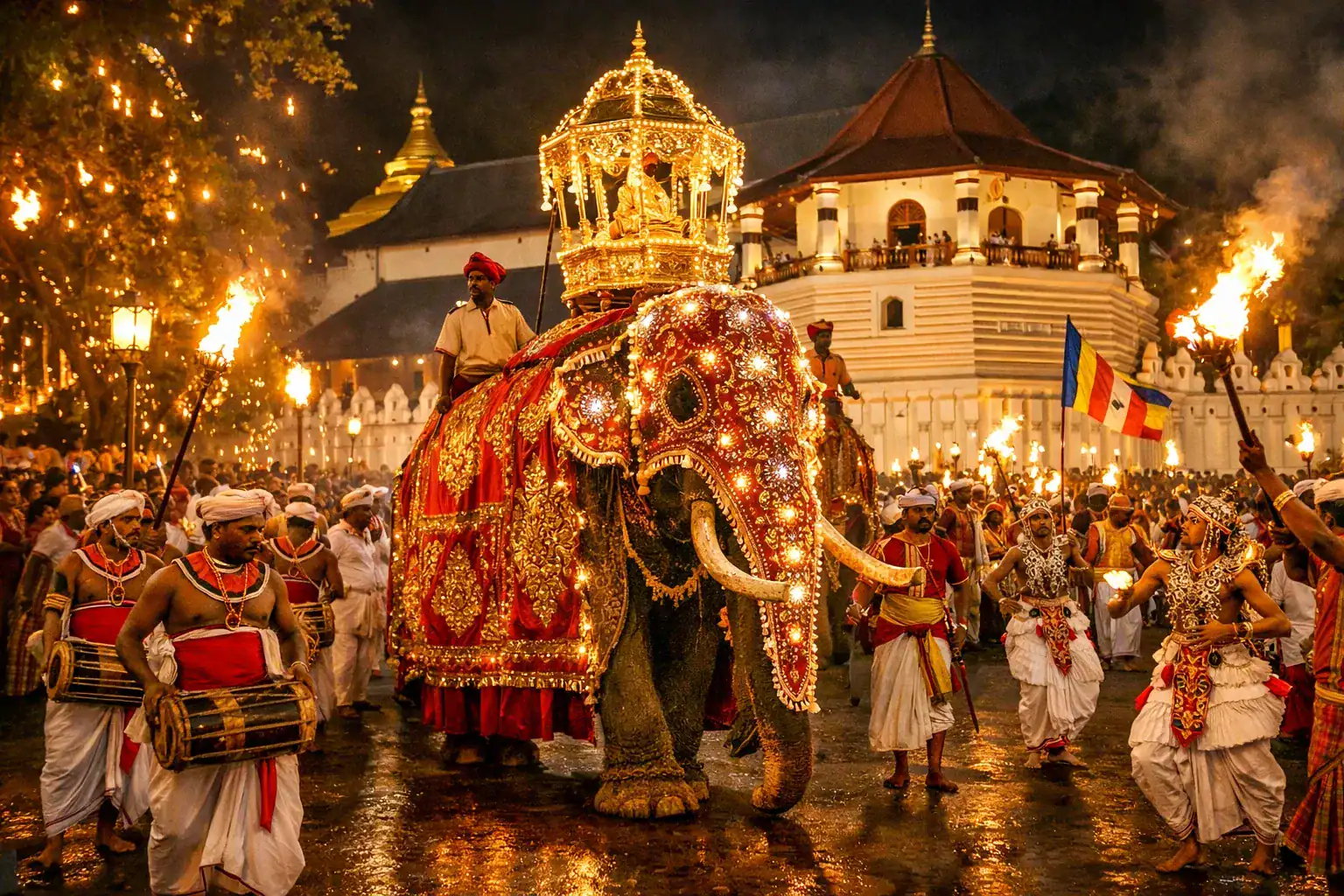
Sri Lanka brings ceremonial movement to an extraordinary scale during the Kandy Esala Perahera. Usually held in July or August, the festival transforms the streets surrounding the Temple of the Sacred Tooth Relic, Sri Dalada Maligawa, into a sequence of night-time processions. Over roughly ten days, rituals build towards increasingly elaborate parades that reflect the island’s Buddhist heritage and Kandy’s history as its last royal capital.
Kandyan drummers, torchbearers, whip crackers and dancers move through the city in carefully ordered groups, accompanied by ceremonially adorned elephants. The main procession is followed by those of four associated shrines honouring Natha, Vishnu, Kataragama and Pattini. Their participation reveals the distinctive layering of religious traditions within Kandy’s cultural life.
The spectacle unfolds beside Kandy Lake and the historic temple precinct, with wooded hills rising beyond the streets. Dancers wear ornate costumes, percussion groups establish changing rhythms and banners mark the progression of ceremonial participants. The routes make Kandy’s sacred geography visible, joining shrines and streets through movement. The festival concludes with rites including the Diya Kepeema, or water-cutting ceremony, at the Mahaweli River near Getambe.
Colombo offers a different festival atmosphere during Vesak, observed around the May full moon to commemorate the birth, enlightenment and passing away of Gautama Buddha. Homes, businesses and temples display colourful lanterns, while elaborate illuminated thorana present stories from Buddhist tradition, including scenes from the Jataka tales. Some structures resemble enormous open-air illustrated panels, drawing visitors along streets transformed by light.
The artistry ranges from intricate lanterns fashioned from paper and lightweight frames to large-scale community installations. A tradition of public generosity also shapes the experience. At dansal, volunteers distribute food and drinks free of charge, often to long lines of residents and visitors. As families explore the illuminated neighbourhoods after dark, Colombo reveals a gentler rhythm of celebration rooted in craft, religious storytelling and community participation. Together, Kandy and Colombo show how distinct traditions can give Sri Lankan streets entirely different personalities.
The Maldives Beyond the Resort
The Maldives is often seen through the imagery of lagoons, coral islands and overwater villas. On inhabited islands, however, communal festivals reveal a cultural world shaped by maritime life, music and folklore. During Bodu Eid, the local observance of Eid al-Adha, some communities gather for games, shared meals and performances in streets, courtyards and open areas close to the sea. Customs vary from island to island, making local participation central to the experience.
The powerful rhythms of Bodu Beru are among the country’s most recognisable musical traditions. Large drums accompany singing and dance, often building from a steady beginning to an exuberant conclusion. Other forms include Bandiyaa Jehun, performed with pots, and Dhandi Jehun, incorporating sticks. Together they reflect cultural connections developed across the Indian Ocean over centuries.
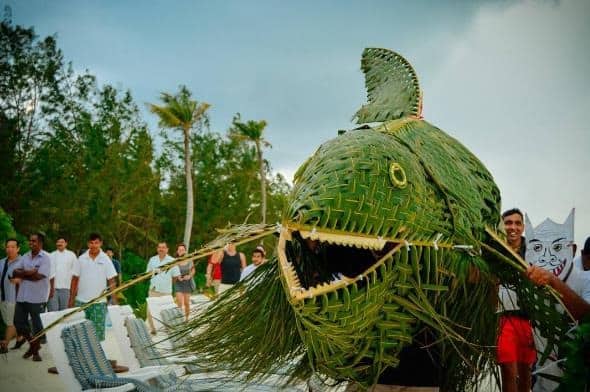
Among the most striking celebrations is Bodu Mas, meaning “big fish”. Participants construct a giant fish from woven coconut-palm leaves and carry it through the community as part of a playful enactment. Maali Neshun performers, dressed as spirits or supernatural figures, accompany the spectacle. The folklore describes a giant fish arriving from the sea and villagers attempting to capture it. Costume, drumming and dramatic movement turn the story into a lively communal performance.
Other customs include Koadi Kendun, involving a decorated palm structure and festive games, and Vedhuma Dhiyun, associated with seeking permission from elders before festivities. Materials drawn from island life—palm fronds, woven decorations and handmade costumes—give these celebrations a visual character far removed from polished resort imagery.
For travellers, such traditions offer an insight into the Maldives as a place of enduring communities. Harbours, village lanes and shared courtyards become cultural settings, while older residents and younger performers sustain stories across generations. The celebrations are shaped by local practice, so their forms and timing differ between islands. Their appeal comes from experiencing island life through the people who preserve it.
The Geography of Celebration
These festivals reveal the Indian subcontinent through the places in which its traditions live. Kolkata’s pandals draw visitors into neighbourhoods and workshops; Dhaka’s New Year turns civic space into a gallery of folk art; Kathmandu’s chariots trace the connections between shrines and squares. Bhutan brings sacred dance into mountain courtyards, Sri Lanka animates streets through procession and light, and the Maldives gives island folklore a public stage.
The installations eventually come down, the music fades and familiar routes return to everyday use. Yet the experience leaves a more lasting impression of a destination, shaped by the craftspeople, performers, families and communities who bring it to life.
Read more – Explore the World