

Step inside disappearing blade traditions where fire, ritual and artistry still shape objects of lasting meaning
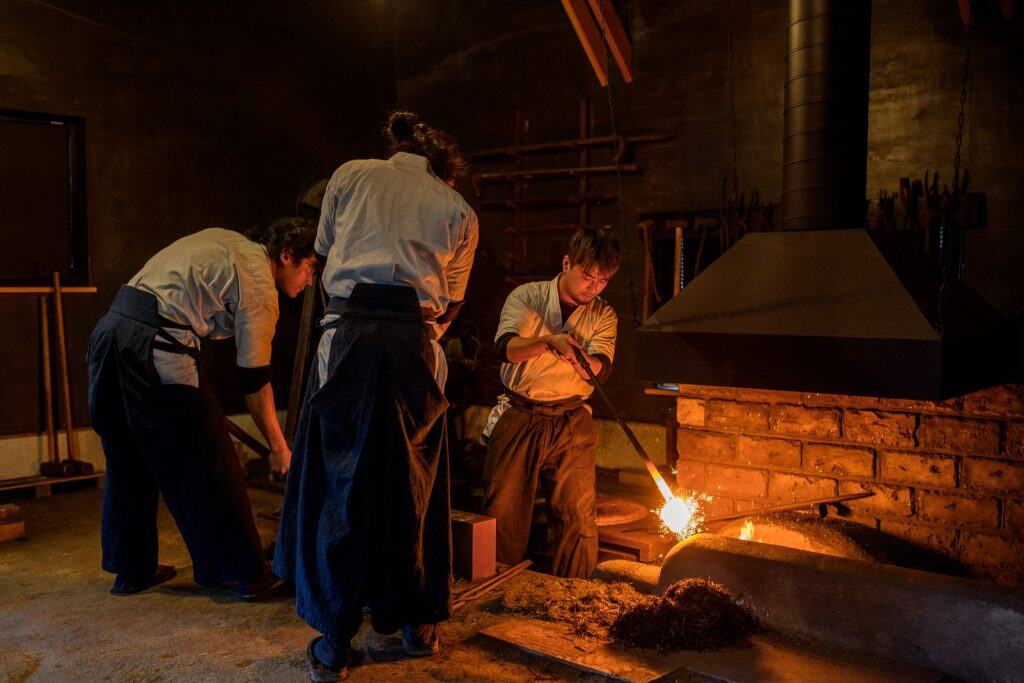
There are still places where fire has memory. Not metaphorically. Not in the diluted heritage-hotel sense but actual memory. Methods handed down in workshops that still smell of charcoal, stone dust and hot metal, where the rhythm of labour has barely adjusted to the century outside. In these corners of Japan, Mexico and Italy, a dwindling number of artisans continues to shape blades and fittings through processes that were once bound to status, ritual, violence, devotion and power. What survives now is not a broad craft economy. It is something narrower, more fragile and much more charged.
For the ultra-luxury traveller, that fragility changes the nature of the encounter. You are not entering a retail world. You are not even entering a conventional heritage experience. You are stepping into a disappearing grammar of material culture, where iron sand becomes sword steel, volcanic glass becomes ritual edge, and wax becomes bronze through fire and loss. The rarest thing on this route is not the finished object. It is proximity to the hands that still know what to do.
The itinerary reads like an impossible line on a private map. Kyoto first, where the discipline of tamahagane and the logic of the sword still shape the day. Then, in southern Mexico, obsidian carries the shadow of Mesoamerican ritual, and the earth still offers a sharper edge than steel. Finally, to Florence, where lost-wax casting and Renaissance refinement turn weapon fittings into sculpture, and history moves through enclosed passages above the street.
Jets, ryokans, vineyard palazzi, discreet fixers and rare-access arrangements all matter here. They create ease around an experience that is, at its core, not easy at all. Heat takes time. Stone resists impatience. Wax has to disappear before bronze can arrive. That is precisely the appeal. These are journeys built around contact with something old enough to remain unimpressed instead of simple spectacle.
Luxury, recast
The older language of luxury still has its place. Privacy. Perfect service. Beauty without friction. Yet at the highest end, those qualities are increasingly assumed. They no longer define the peak. They form the baseline.
What stands above them now is meaningful access. Time inside a forge that does not usually admit outsiders. A morning beside a craftsman who works with finite material and inherited judgment. A casting room where nothing is guaranteed until the mould is broken. A conversation in a farmhouse where a blade is discussed as object, symbol and responsibility in the same breath.
This kind of travel is not soft. It is precise. The comfort around it may be immense, but the core experience still asks for attention, patience and some humility. That shift matters. The most sophisticated travellers are no longer satisfied by merely arriving somewhere beautiful. They want entry into systems of making, belief and survival that are not easily staged.
Across the three destinations, an intimate pattern begins to emerge. In Kyoto, you shape a small blade in tamahagane, the traditional steel of Japanese swords, produced through iron-sand smelting in a clay tatara furnace. One modern tatara cycle may consume roughly ten tons of iron sand and twelve tons of charcoal to yield around 900 kilograms of tamahagane, and only part of that output is suitable for high-level blade work.
In Florence, the material changes, but the logic does not. Lost-wax casting, or cire perdue, still follows the old sequence. Wax model, refractory mould, heat, disappearance, pour. Traditional bronze casting commonly uses an alloy centred on copper with tin, and classic statuary bronze is often described as roughly 90% copper and 10% tin. The mould is used once. Success arrives singularly.
Southern Mexico offers a harder, darker register. Obsidian, formed when silica-rich lava cools so quickly that crystals do not develop, fractures into extremely sharp edges. Some of the sharpest stone artefacts in history were fashioned from obsidian, which helps explain its long use in weapons, implements, mirrors and ceremonial tools across ancient cultures, including Mesoamerica.
Put together, these are craft encounters with threshold materials. Metal and stone shaped at moments where utility, symbolism and prestige once converged.
Kyoto: steel, silence and the discipline of the forge
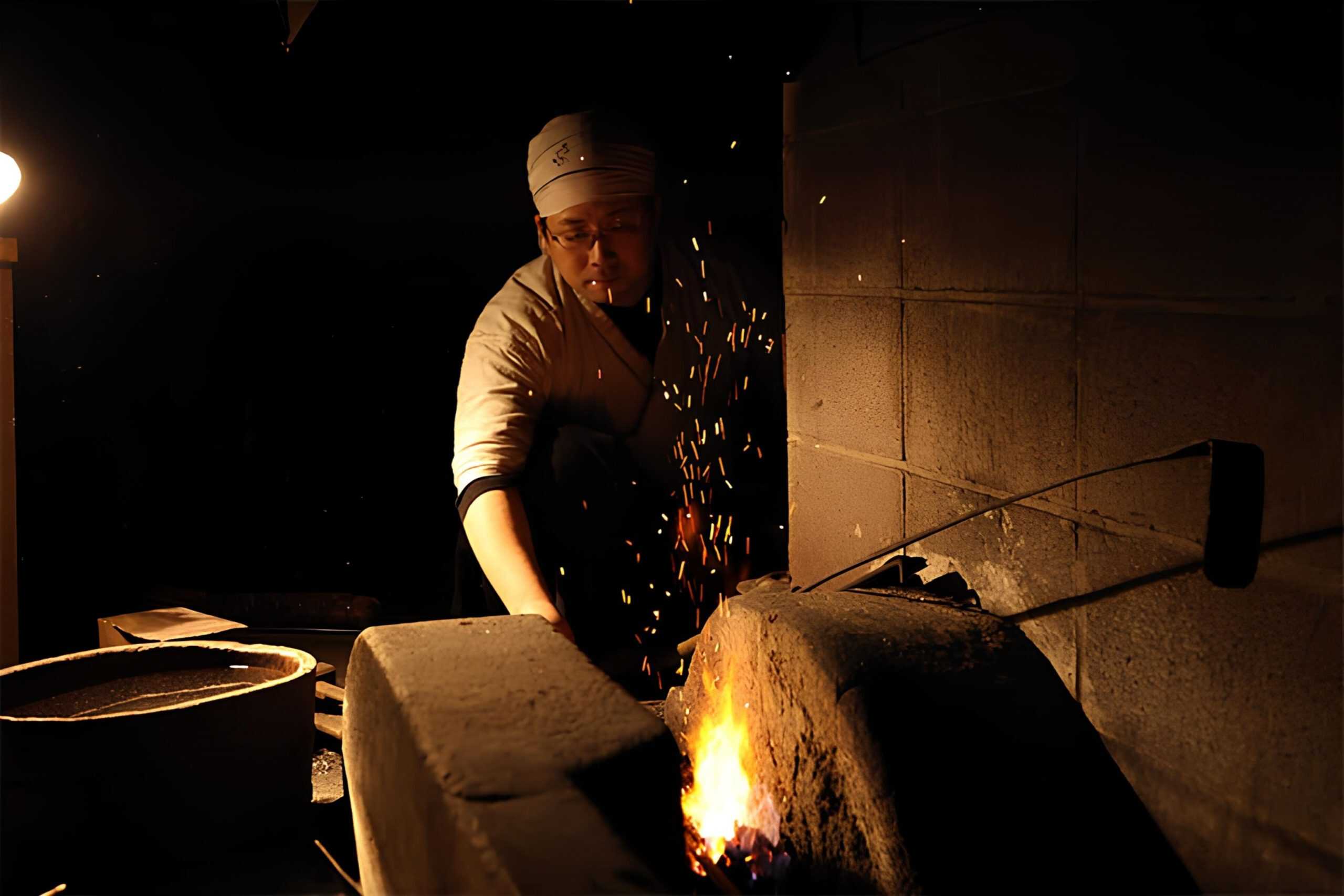
Kyoto’s more obvious seductions are easy to name. Temple roofs, old timber streets, lantern glow, lacquered quiet. Yet some of its most endangered heritage lies outside those postcard frames, in smaller workshops where the day is still organised around fire and strike.
Traditional Japanese sword culture has always depended on tamahagane, the distinctive steel made from iron sand rather than conventional ore. That alone gives the craft a different foundation. The steel is born through tatara smelting, a process that remains heavily controlled and unusually labour-intensive even now. It is not simply old. It is structurally resistant to scale.
Near Kameoka, outside Kyoto proper, sword-related forging experiences now allow a small number of guests to work with tamahagane under a master’s guidance. There are forging experiences at a forge in Kameoka, where participants make a small blade over roughly three and a half hours in a working swordsmith environment.
That matters because the experience is not generic. You are not simulating a forge in a museum annexe. You are entering a real one.
The morning begins early. The road out of Kyoto strips away the city’s polish and narrows into a quieter landscape. By the time you arrive, the forge is already awake. Pieces of steel lie sorted in front of the master, dark and angular, apparently rough to the untrained eye. He studies them as though each fragment has already declared its future. In a sense, it has.
The selected pieces are heated and worked according to the logic that defines Japanese blade-making: shape, refine, fold, reheat, strike again. The popular myth of endless folding tends to overshadow the more interesting truth. The steel is folded not for romance, but for control. Carbon distribution, impurity reduction, resilience, and grain. That is the real point.
You begin clumsily. Everyone does. The hammer lands too high, too late, too softly. The smith corrects without ceremony. Adjust the wrist. Shorten the arc. Let the blow fall through the body rather than the shoulder. Slowly, the sound changes. The strike becomes cleaner. Sparks lift in brief orange showers. For a moment, the distance between observer and participant closes.
It is impossible not to feel the precariousness of the craft itself. A 2017 report on the state of Japanese swordsmithing noted that the Japanese Swordsmith Association had counted around 300 registered swordsmiths in 1989, but fewer than 20 years later that number had dropped to about 188. The same report highlighted the difficulty of the unpaid five-year apprenticeship that deters many younger entrants.
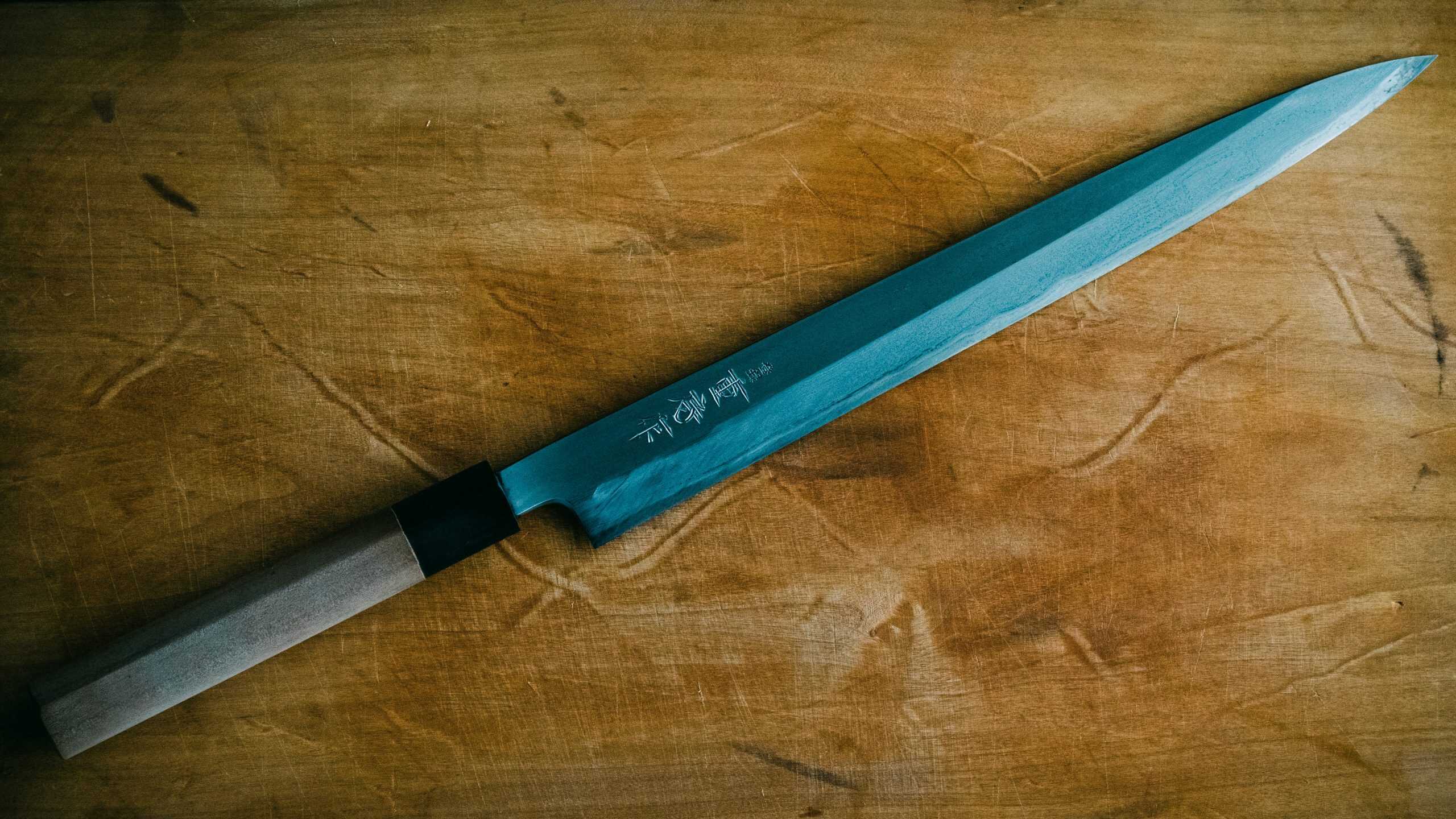
By late morning, the blade begins to resemble intention rather than material. A small crest, monogram or private mark can be discussed for the tang. Nothing too decorative. The atmosphere here does not reward showiness. Better a line with meaning than flourish without it.
Then comes the stage that changes the emotional temperature of the room: the quench. Clay has been applied with care, thicker in some areas, thinner in others, so the blade cools unevenly, and the hardened edge emerges in the manner expected. When it enters water, the sound is immediate and arresting, a sharp hiss followed by a silence that feels almost ceremonial. Later, the hamon will declare itself properly. In the moment, what matters is simpler. The steel has crossed over.
Kyoto knows how to absorb intensity after the forge. That is one reason it works so beautifully in this itinerary. You leave heat for softness. A ryokan with age in its timber. Tatami rooms. A cedar bath drawn in silence. Dinner was served as kaiseki, with exactness but no fuss. Charcoal appears again, though now it perfumes river fish or mountain vegetables rather than feeding a blade. The continuity is subtle and elegant.
The finished object may be small, perhaps a kogatana rather than a full ceremonial weapon, yet that restraint suits the experience. It keeps the focus on method, not theatrics. When the blade eventually arrives at your home, wrapped in paulownia wood, it carries more than craft. It carries correction, repetition, tension and the brief violent beauty of steel entering water.
Southern Mexico: obsidian, earth-light and ritual edge
The move from Kyoto to Mexico feels abrupt on a map, but materially, it makes perfect sense. Another ancient blade world waits here, one that did not rely on smelting at all.
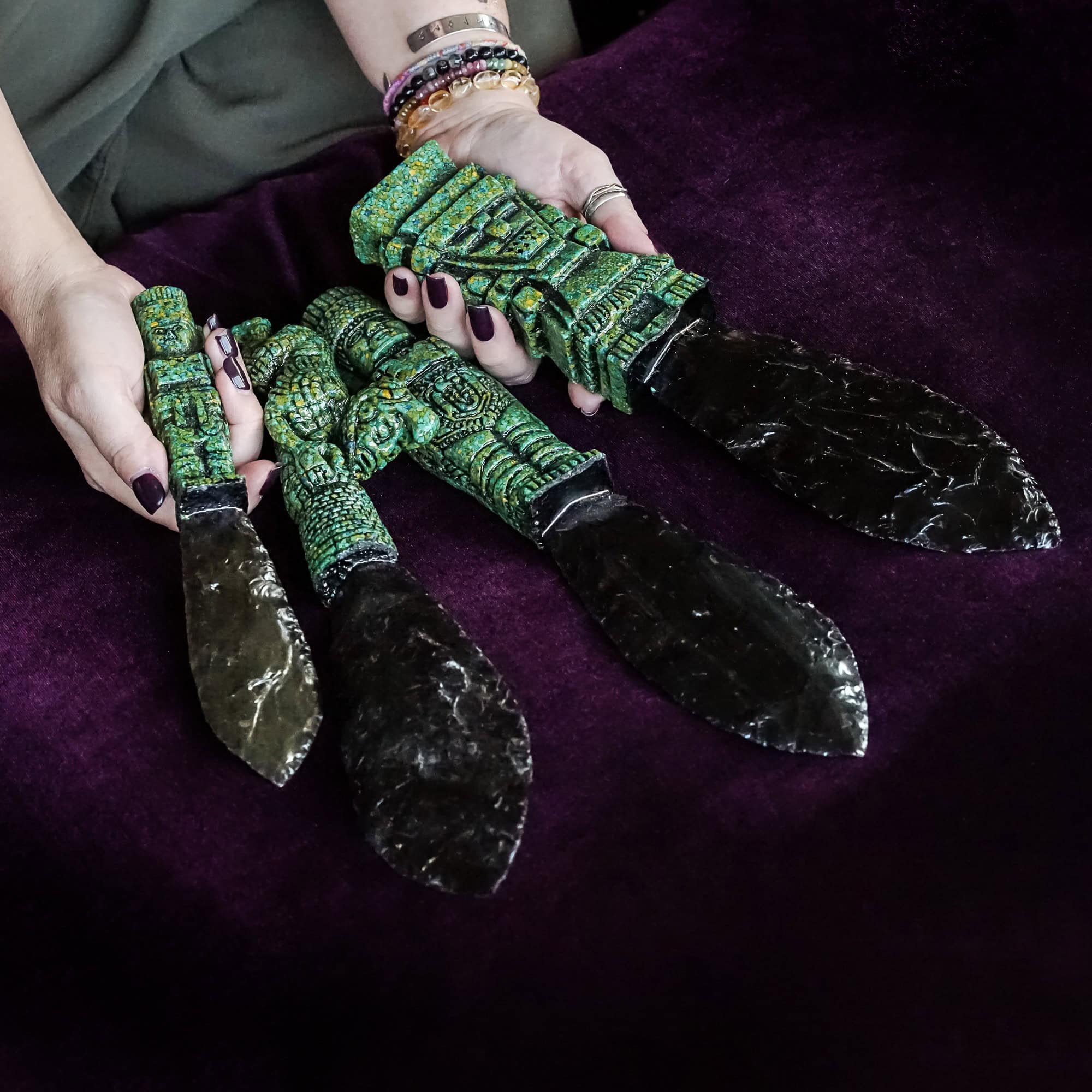
Obsidian is a volcanic glass. It forms when silica-rich lava cools rapidly, too quickly for crystals to grow, and it breaks with a conchoidal fracture that creates astonishingly sharp edges. That physical fact shaped entire systems of use in ancient Mesoamerica, where obsidian served as a cutting tool, trade material, symbolic substance and ceremonial instrument.
Its importance was never merely practical. Scholarly work on Mesoamerican ritual has long linked obsidian to bloodletting and sacrificial contexts, and academic discussion continues to underscore obsidian’s place in ritual life. There is strong evidence that bloodletting was practised regularly with this medium. Earlier experimental work on Maya bloodletting likewise points to obsidian blades as among the tools used in such rites.
That does not mean every obsidian knife belonged solely to temple violence. Quite the opposite. One of the most interesting things about the material is how fluidly it moved between worlds. Domestic and sacred, ordinary and charged, functional and cosmological. A blade could cut in one context and signify in another.
This chapter of the journey benefits from care in how it handles community and place. References to Tzotzil ritual knowledge often appear in luxury storytelling, but the Tzotzil are an Indigenous Maya people associated primarily with the highlands of Chiapas rather than Oaxaca. They live mainly in the higher reaches of central Chiapas, where maize, beans and squash remain central to traditional life. Any actual itinerary would need to respect that geography and name collaborators precisely rather than collapsing southern Mexico into one undifferentiated cultural field.
Handled properly, that precision deepens the experience. The setting may be a highland property, a farmhouse, a stone courtyard, a landscape marked by volcanic histories and cultivated fields. The artisan lays out obsidian nodules with the attentiveness of a jeweller, though nothing about the material feels ornamental at first. It is dark, almost liquid in certain light, severe and beautiful without trying to charm.
The shaping process begins with percussion. A core is opened. Flakes fall away. The action is blunt and exact. Then the work narrows into pressure flaking, using antler, bone or similarly controlled tools to detach tiny fragments and coax out edge, symmetry and intention. It is difficult work to watch without wanting to intervene, and even more difficult to attempt. The margin between refinement and ruin is alarmingly small.
The commission itself can be framed with symbolic intelligence rather than staged mysticism. Some guests choose a form tied loosely to a birth sign, animal association or private emblem. A jaguar suggests one geometry. A deer, another. Yet the stone has final authority. It tells the artisan what it will and will not become. That is part of the seduction. Personalisation meets material truth and loses any tendency toward vanity.
At dawn, the object may be taken to a simple altar or water source for a restrained gesture that acknowledges older ritual without descending into performance. Copal smoke. Maize. Spoken intention. Perhaps a symbolic blood-marking, slight and controlled, if that is part of the agreed framework. The blade is washed. Underwater, it nearly disappears.
And that, perhaps, is the most compelling image in this entire route: the almost invisible knife. A weapon reduced to light, line and vanishing.
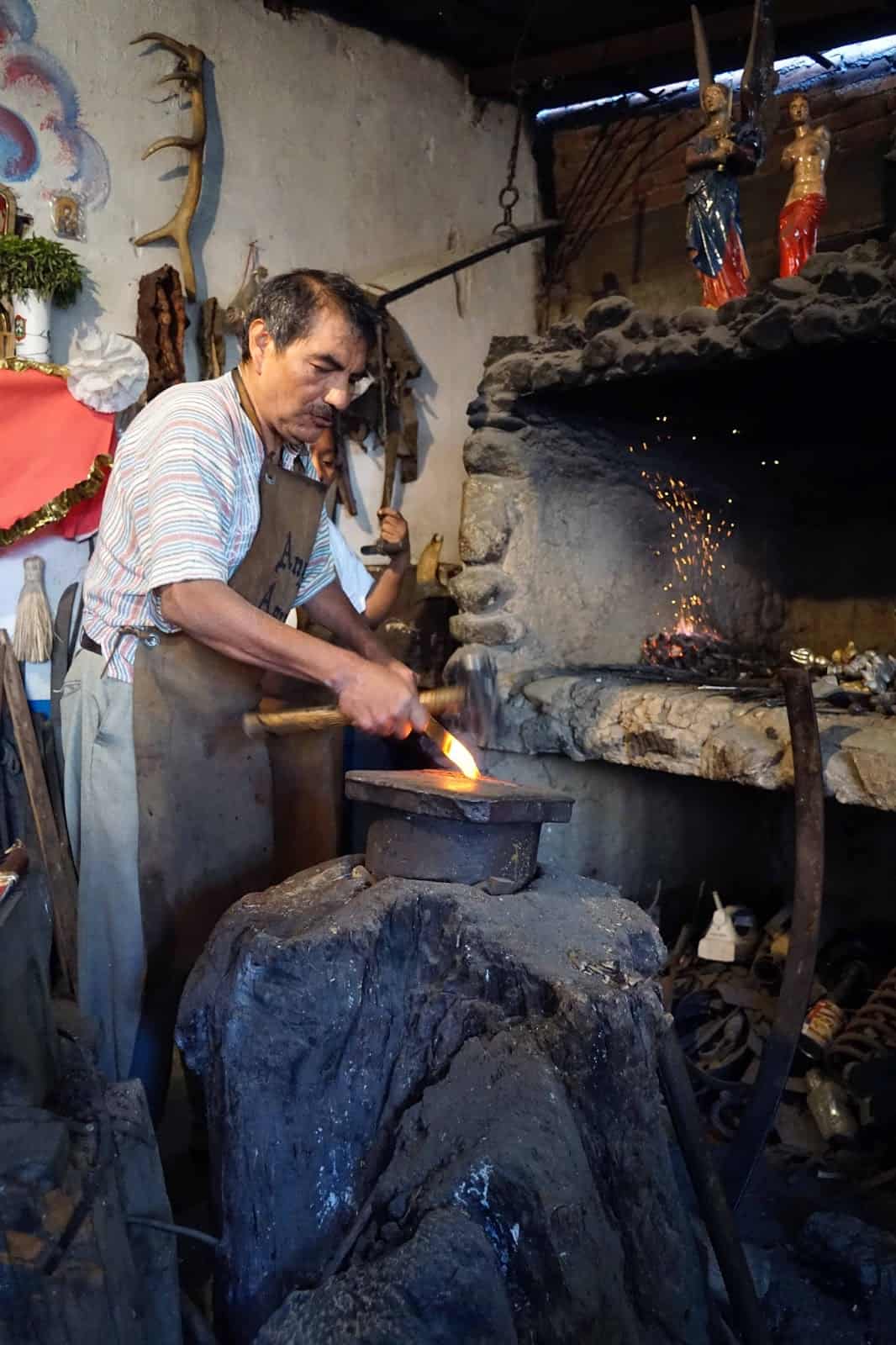
Accommodation in this section should resist over-styling. Adobe walls, woven textiles, handmade ceramics, slow meals built around maize, beans, herbs and fire. The luxury lies in atmosphere and access. Long lunches become discussions of material, land, craft continuity, mining pressure, language and memory. None of it feels academic in situ. It feels like context paid for by time.
The dagger that leaves with you is not polished into generic perfection. Obsidian’s authority lies partly in its tension, its capacity to appear both elegant and dangerous at once. To own such an object is about accepting that beauty can remain hard.
Florence: wax, bronze and the elegance of one-time making
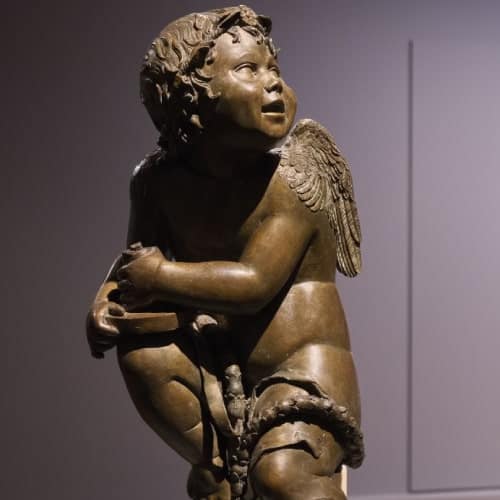
Florence closes the journey with a different kind of heat. Here, the atmosphere shifts from forge and volcanic field to workshop and foundry, from elemental austerity to Renaissance control. Yet the underlying attraction remains remarkably similar: a process that cannot be rushed, repeated casually or separated from lineage.
Lost-wax casting has extraordinary longevity. The process still follows the familiar sequence of mould, wax layer, heat-resistant shell, vents and bronze pour, and remains fundamental to the production of highly detailed cast work. Traditional metalwork references likewise note that bronze was long cast by the cire perdue, or lost-wax, method, with the mould used only once. That one-time nature is central to its appeal because there is no exact second chance. The mould must be destroyed to reveal the result.
In a Florentine workshop, the first encounter is often surprisingly modest. Wax on a bench. Tools with no decorative ambition. Refractory shells wait quietly. The glamour enters later, once you understand what the room can do.
A personal commission begins in wax. A cameo for a pommel. A family crest simplified into a stronger line. A motif drawn from an ECG trace or a handwritten signature. In wax, everything still feels provisional. Slight changes remain possible. Then channels are attached for airflow and pour, the form is invested, and heat takes over. The wax disappears entirely. Only then is the metal invited in.
When the bronze emerges, it has an authority that wax never possesses. It is denser, less forgiving, and more final. A small hilt element or rondel fitting can suddenly feel as serious as sculpture.
Florence, naturally, knows how to frame this with history. The most potent setting is the Vasari Corridor, the elevated passage built in 1565 by Giorgio Vasari to connect Palazzo Vecchio and the Pitti Palace above the city streets. The corridor was closed in 2016 for safety works and reopened to the public on 21 December 2024. Access is now booked in advance through the Uffizi system, and groups remain limited, preserving a sense of control even after reopening.
That detail matters because the corridor is an architecture designed around elite movement, discretion and insulation. To walk it now, especially in a carefully arranged setting, is to enter a very old performance of privilege.
An ideal Florentine finale begins after hours. The Uffizi softens once the daytime rush fades. Paintings breathe differently. The city outside lowers its volume. Then comes the corridor itself, stretched above the streets and over the Ponte Vecchio, leading toward the Boboli Gardens as the Medici once intended. Even reopened, it retains something of its former aloofness.
The dagger fitted with your newly cast bronze element does not need theatrical consecration. Florence prefers elegance to emphasis. A private garden or vineyard attached to a historic property is enough. A small patch of soil. A bottle opened at the right moment. Metal pressed briefly into the earth. A promise spoken once.
What remains
These three chapters do not sell the same fantasy, yet it is exactly why they belong together.
Kyoto offers discipline. Mexico offers tension. Florence offers refinement. One begins with iron sand and fire, one with volcanic glass and fracture, one with wax and disappearance. Yet all three revolve around the same increasingly rare condition: a craft that still has consequences.
That, perhaps, is the real luxury now. Not abundance. Not volume. Consequence.
A tamahagane blade shaped in a working forge. An obsidian dagger that still carries the aura of earth, blood and light. A bronze fitting born through a process that destroys its own mould in order to succeed. None of these objects can be reproduced in any meaningful way, even if someone attempted to follow the same steps again. The material would differ. The hand would differ. The day would differ. So would you.
In an era obsessed with replication, that kind of singularity feels almost radical.
The finest version of this journey also leaves behind something useful. Patronage for apprenticeships. Income for workshops that refuse simplification. Respectful, accurately framed collaborations with Indigenous and local knowledge holders. Attention is directed towards the actual conditions that let a fragile craft stay alive.
When the objects finally rest in your home, they will look extraordinary, certainly. Yet their deepest value lies elsewhere. In the fact that they were made inside living systems. In fact, those systems are narrowing, and for a brief time, you were allowed in.
Read more – Explore the world