

Today’s Traveller Upskilling Team joins forces with Lalit Suri Hospitality School in a dynamic and progressive initiative, #HospitalityFirst, to bring solution-led perspectives shaped by the student and academic community, for manpower development for the hospitality industry. In this feature, we will have a look at why India’s hospitality boom now demands stronger leadership systems
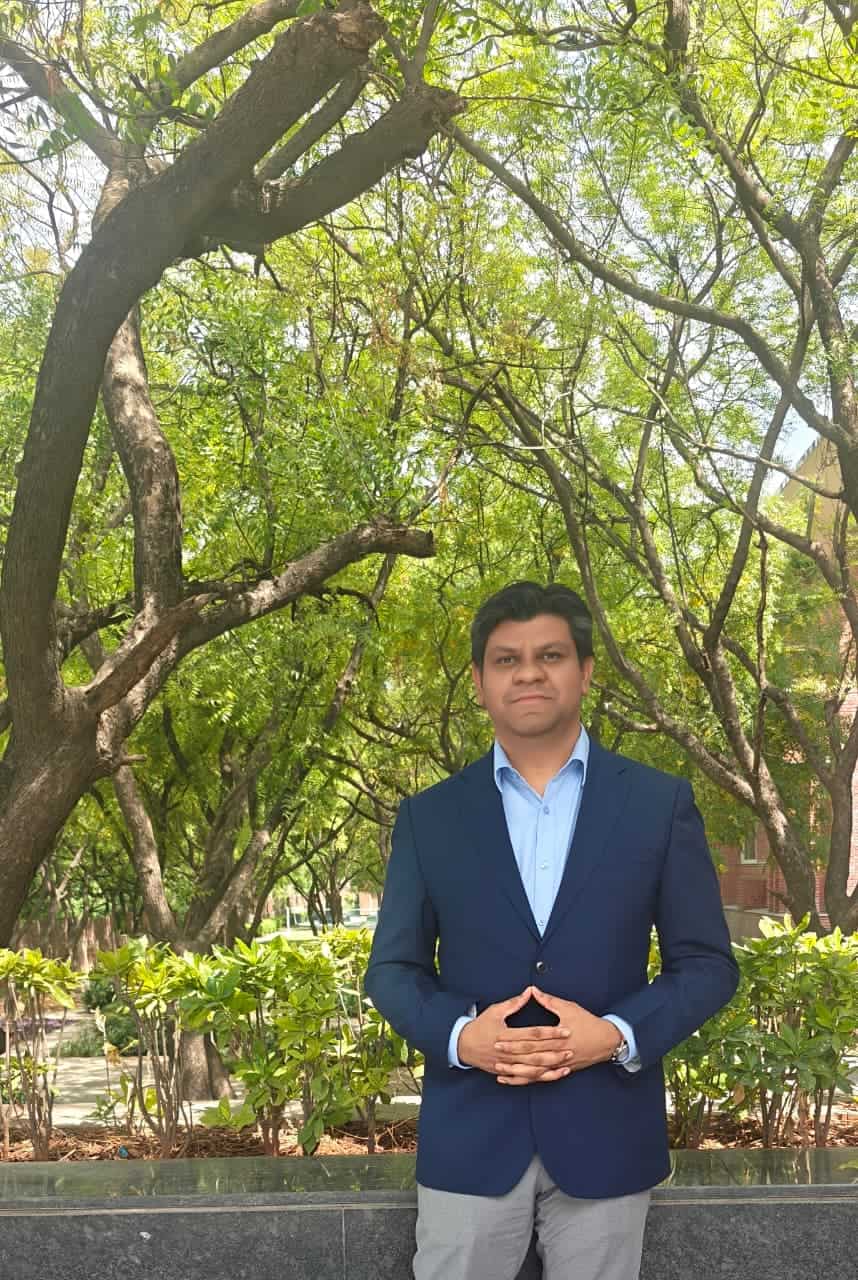
In this article, Ravi Verma, Head Academic Operations at Lalit Suri Hospitality School, shares his take: Industry and academia must build future-ready managers who can sustain performance, protect brand value and support long-term stability.
TT Upskilling Team: India’s hotel sector is expanding rapidly. Yet you’ve suggested that growth may be outpacing leadership maturity. What do you mean by that?
Ravi Verma: India is witnessing one of its strongest expansion cycles in hospitality history. According to the HVS–ANAROCK Hospitality Overview 2024, hotel signings grew by 62% in 2024, adding approximately 47,000 rooms to the pipeline. That scale of growth is significant.
Growth is positive. But infrastructure often grows faster than leadership ecosystems. When expansion accelerates, promotions accelerate. Capable managers rise quickly — and that is encouraging. However, the competencies required at the General Manager or Department Head level are fundamentally different from operational excellence.
Operational managers execute. Strategic leaders design systems. In high-growth environments, the absence of structured leadership systems does not show immediately. But over time, it creates performance volatility. Growth builds assets. Leadership builds stability.
TT Upskilling Team: Where does this leadership gap manifest in real terms?
Ravi Verma: It becomes visible in patterns rather than isolated incidents.
- You see variability in service consistency across properties.
- You see talent instability and retention pressure.
- You see margin leakage caused by cross-functional misalignment.
- You see short-term decisions that gradually weaken brand equity.
- And you see excessive reliance on crisis management instead of predictive management.
In my experience, one of the clearest signals appears during leadership transitions. When a high-performing GM exits and performance metrics fluctuate sharply, it is rarely a talent issue. It usually indicates that systems were personality-driven rather than institutionalised.
Recent sector reporting has also highlighted stress in the formal talent pipeline. Thousands of seats across NCHMCT-affiliated institutes have gone vacant in recent admission cycles. That suggests a structural strain between expansion and leadership supply.
In such an environment, leadership cannot be accidental. It must be intentionally built.
TT Upskilling Team: Many argue that short-term skill-based courses are solving talent shortages. Isn’t that enough?
Ravi Verma: Short-term skilling solves staffing velocity. It does not build strategic capacity. The Tourism & Hospitality Skill Council’s demand and skill-gap reporting has consistently pointed to employer concerns around communication, problem-solving, leadership, digital capability, and decision-making depth. These are not just entry-level skills. They are foundational leadership capabilities.
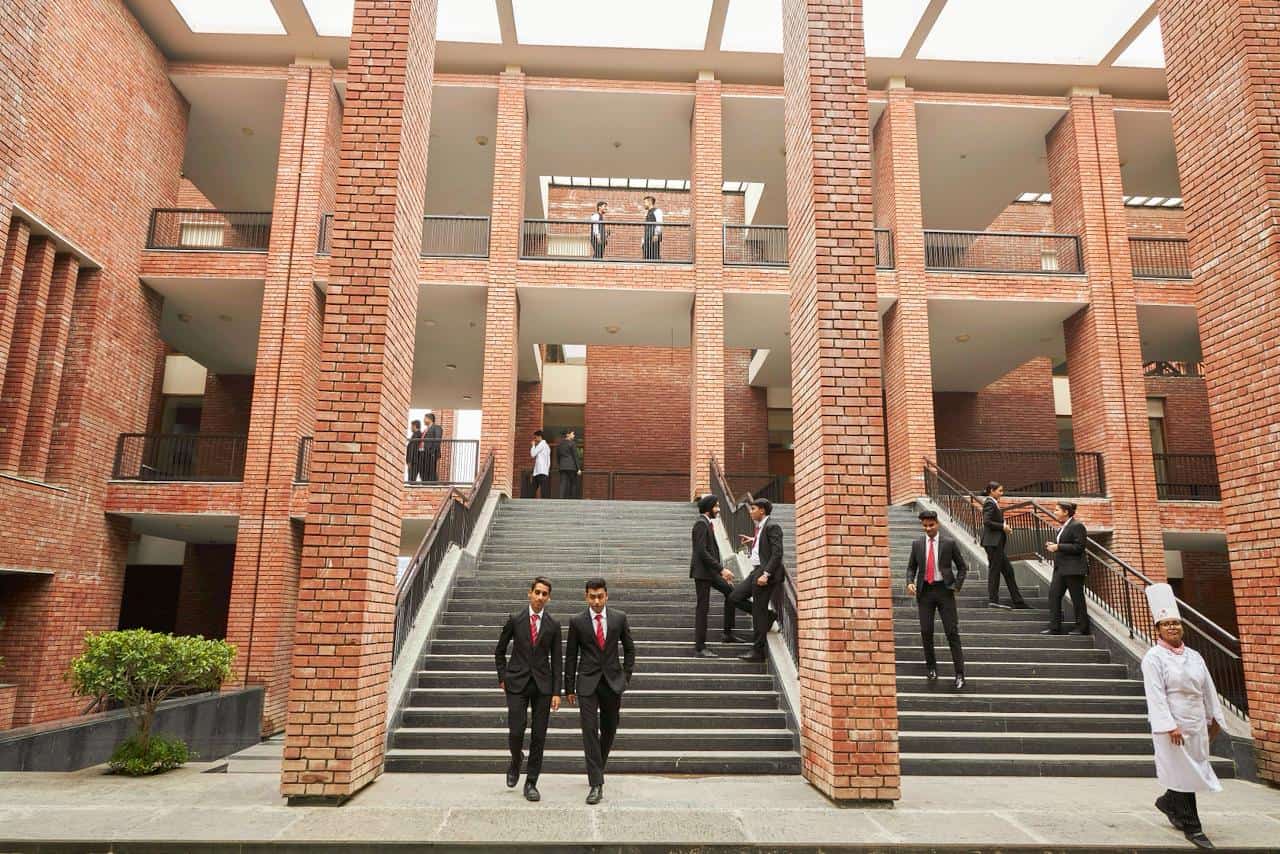
We need both: Job-ready professionals & Future-ready leaders. One addresses today’s vacancy. The other protects tomorrow’s asset value.
TT Upskilling Team: Let’s address a difficult question directly: Are we over-romanticising “strategic leadership” when hospitality is, at its core, an execution-driven business?
Ravi Verma: Execution is the visible layer of hospitality. Strategy determines whether execution is sustainable.
If a department performs well only when a strong individual is present, that is execution. If performance remains stable across shifts, staffing fluctuations, and leadership transitions, that is a strategy. Strategic leadership does not replace execution.
It institutionalises it. High demand can temporarily compensate for weak systems. But stability across cycles is what ultimately defines leadership maturity.
TT Upskilling Team: If you were advising a large hotel group today, what structural interventions would you recommend?
Ravi Verma: I would recommend building a clear leadership architecture aligned to the organisation’s growth trajectory.
Five structural levers:
1. Codify Leadership Competencies Clearly
Define in measurable terms what strategic leadership means for that brand:
- Commercial acumen
- Culture building
- Service design thinking
- Data literacy
- Risk anticipation
Clarity reduces variance across properties.
2. Strengthen Cross-Functional Commercial Exposure
Future GMs must understand:
- Revenue architecture
- Productivity ratios
- Guest sentiment analytics
- Cost-value trade-offs
Silo excellence limits portfolio stability.
3. Institutionalise Structured Decision Forums
Create structured environments where managers solve real operational challenges under guidance. Strategic thinking is not inherited. It is developed through deliberate practice.
4. Align KPIs with Long-Term Value Drivers
If leaders are measured only on occupancy and cost control, short-termism becomes inevitable.
Metrics must also track:
- Talent stability
- Guest sentiment consistency
- Training cadence
- Repeat guest behaviour
- Service variance reduction
What gets measured shapes behaviour.
5. Strengthen Industry–Academia Collaboration
Expansion data and intake stress signals indicate structural imbalance. Industry cannot remain a passive consumer of talent. Institutes cannot operate in isolation. Leadership capability must be co-developed.
TT Upskilling Team: So this is less about criticism and more about structural evolution?
Ravi Verma: Exactly. This is not a talent crisis. It is a leadership design challenge. India will continue to build hotels. The more important question is whether we are building leadership systems with the same intentionality. Hotels are physical assets. Leadership determines whether those assets appreciate or depreciate over time. High-growth industries eventually shift from an expansion focus to a stability focus. The more proactively we invest in leadership depth now, the smoother that transition will be.
TT Upskilling Team: You’ve outlined a structured approach to building leadership capability at an organisational level. How are you applying these principles within an academic environment to prepare students of The Lalit Suri Hospitality School for this reality?
Ravi Verma: In an academic environment, the challenge is not just to train students for current roles, but to prepare them for a constantly evolving industry. That requires anticipating change, not reacting to it.
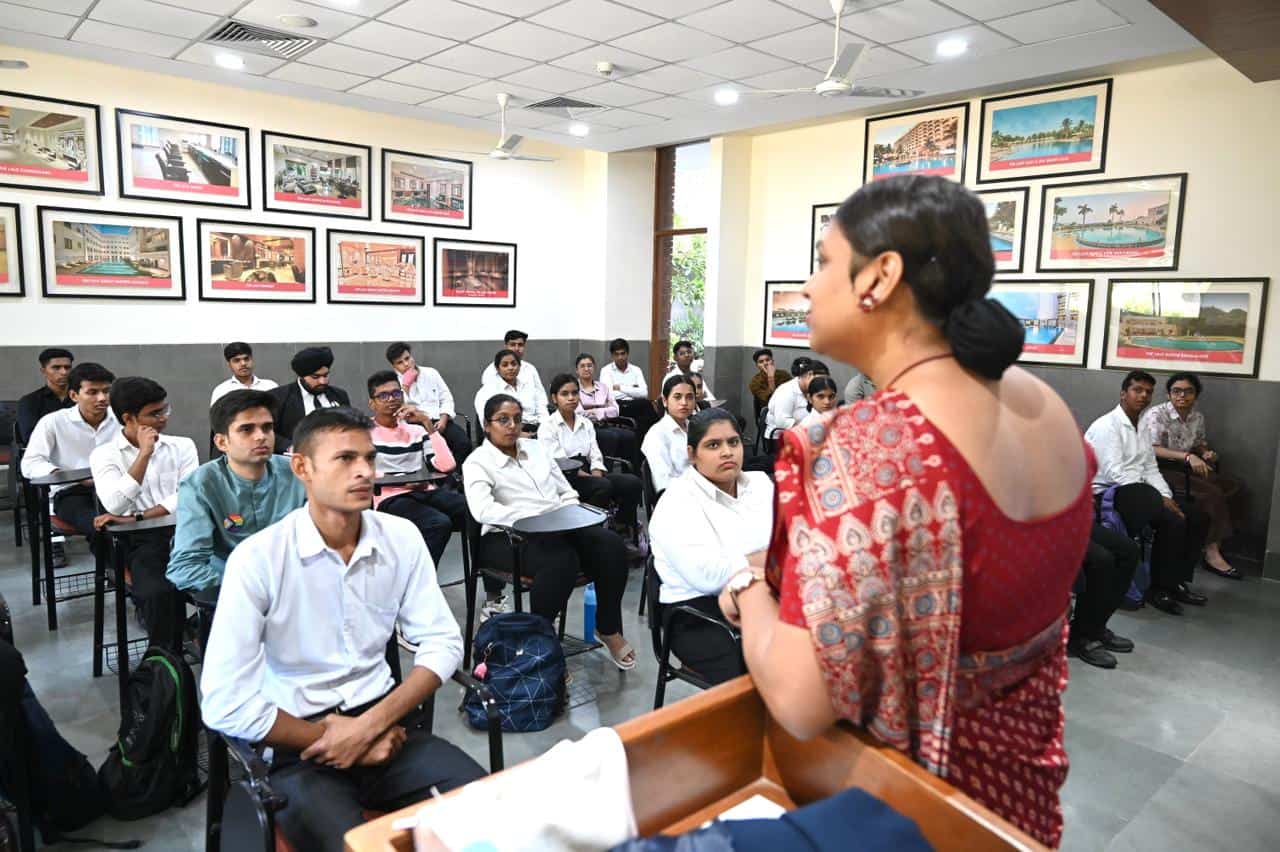
At The Lalit Suri Hospitality School, we are trying to approach this through deliberate exposure rather than linear training.
For instance, students are taken beyond traditional hotel environments to understand how hospitality intersects with sustainability, supply chains, and large-scale operations. Visits to eco-sustainable organisations, distilleries, and storage and logistics facilities help them see how systems function beyond the visible front-end.
We also ensure that they participate in live industry environments. Our students and faculty recently volunteered with IFCA at Indus Foods 2026, working alongside over 300 chefs, including international participants. Experiences like these expose them to scale, coordination, and real-time pressure.
At a more foundational level, we are integrating concepts like farm-to-plate through our own herb and vegetable garden. This allows students to understand sourcing, seasonality, and product integrity in a practical way.
We also take them into spaces like facility management organisations and leading service sector companies, where they can observe how design, efficiency, and guest experience are structured in different formats.
The intent is to create a learning ecosystem where students begin to see connections across functions, industries, and systems.
Because the future of hospitality will not be defined by isolated expertise.
It will be defined by the ability to adapt, integrate, and respond to evolving guest and business expectations.
Read More: Upskilling India