

Kerala cuisine carries trade, faith, migration and memory in every coconut-rich, spice-scented bite
Kerala’s kitchen has always faced the sea, but its story begins equally in forests, fields, river valleys and village hearths. Long before fusion became fashionable, Malayali cooks were absorbing new ingredients, utensils and ideas, then submitting them to a local grammar of rice, coconut, pepper, curry leaves, fish, fermentation, sourness and memory.
That grammar was never fixed. Black pepper belonged to Kerala’s ancient trade economy and helped draw merchants across the Indian Ocean. Chilli arrived much later through Portuguese maritime networks, yet now seems inseparable from local cooking. Tapioca, introduced on a wider scale in the nineteenth century, moved from scarcity food to a beloved staple. Cashew, pineapple, papaya and tomato also travelled before becoming familiar presences at the Malayali table.
Kerala’s culinary history lies in this act of naturalisation. New foods did not remain foreign for long. They entered households, religious calendars, wedding feasts, toddy shops, bakeries and migrant kitchens, changing form as they met local weather, belief and appetite.
Rice, meat and Malabar hospitality
The Arab-Malabar relationship is among the clearest examples of this process. Links between Arabia and the Malabar coast predate Islam, while later trade, settlement, intermarriage and religious life helped shape the Mappila Muslim community. Its cuisine cannot be reduced to Arab influence. It is a local Indian Ocean cuisine, built through exchange but grounded in northern Kerala.
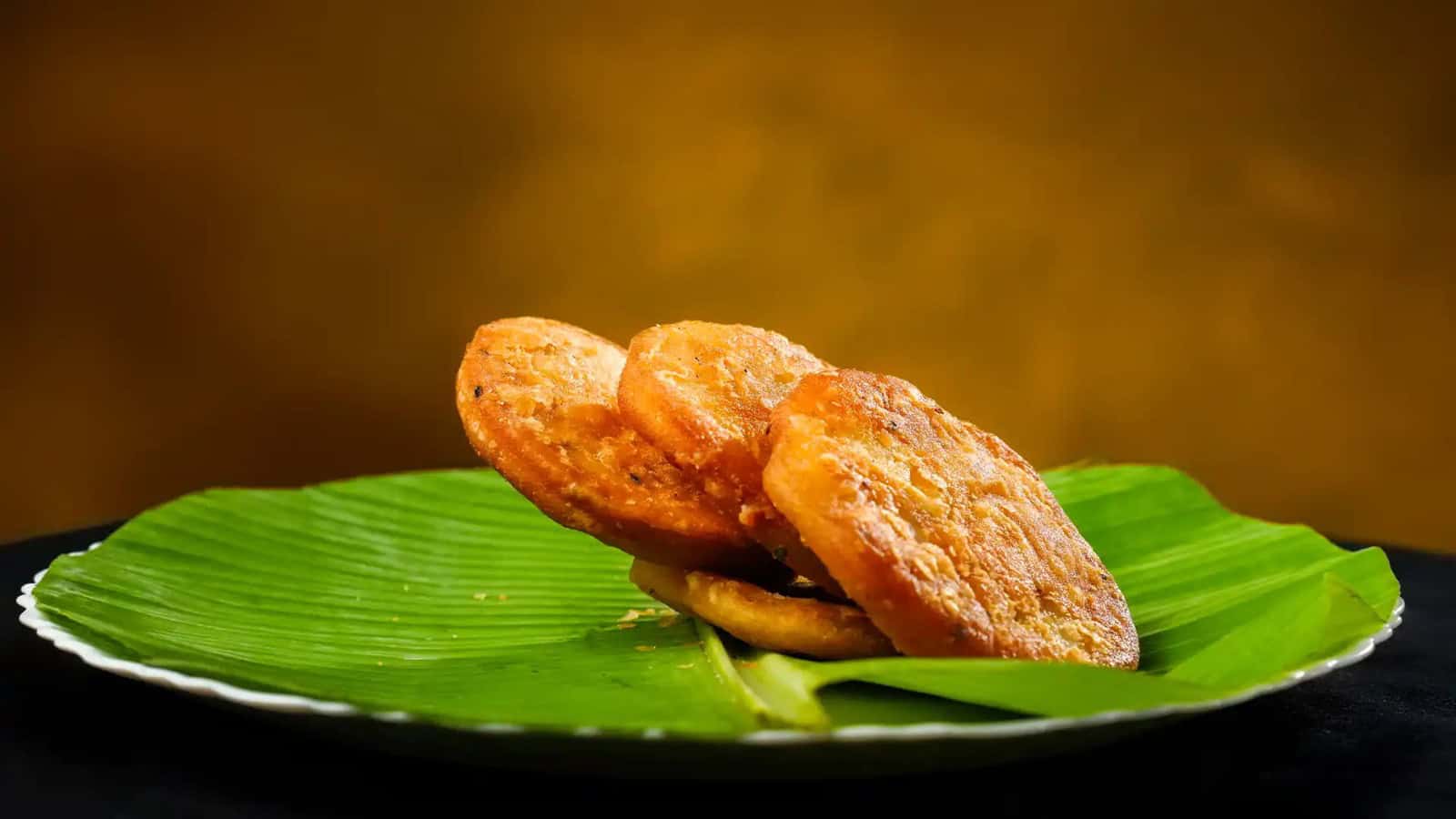
Rice is central, yet it appears in many forms. Ari pathiri begins with rice flour, hot water and salt, worked into a soft dough, rolled thin and cooked on a tawa. Pale and tender, it is made to carry chicken, mutton, beef or fish curry. Other versions are fried, layered or filled. Nei pathiri is richer. Irachi pathiri holds spiced meat. Chatti pathiri stacks thin sheets with savoury or sweet fillings, creating a festive construction associated with Ramadan and celebration.
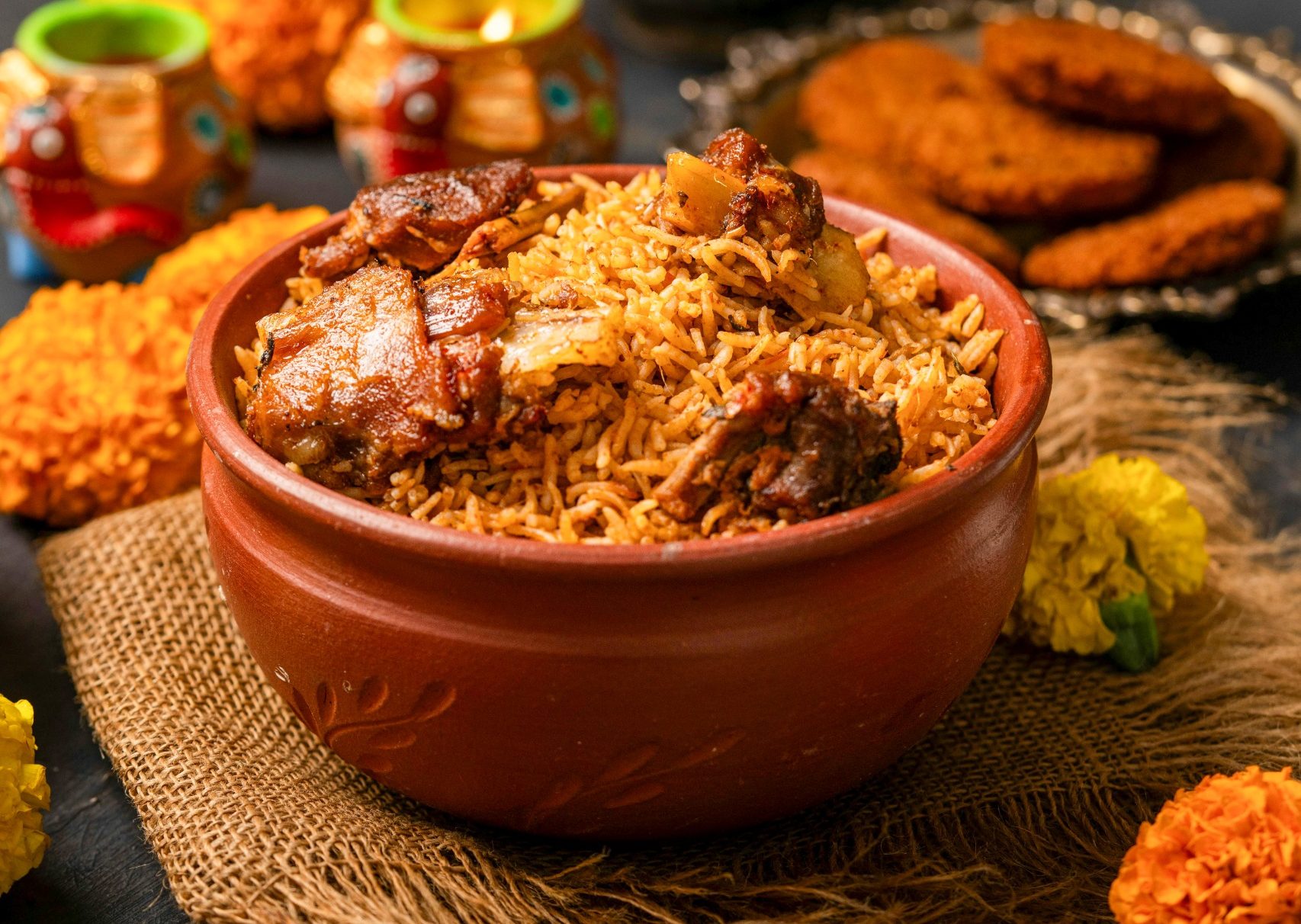
Malabar biryani expresses the ceremonial side of this kitchen. Short-grain jeerakasala or kaima rice, aromatic and soft, gives the dish its character. Much of this rice comes from Wayanad, linking the feast tables of Kozhikode, Kannur and Thalassery with inland farms and traditional growers.
Meat is cooked separately with onion, ginger, garlic, green chilli and spice. Rice and meat are layered with ghee, fried onion, cashew, raisin and herbs, then finished gently. The result is fragrant, supple and restrained.
Mappila food also carries a strong language of hospitality. Arikkadukka combines mussels with a spiced rice filling. Unnakkaya encloses coconut, egg, nuts and raisins inside ripe banana. Mutta mala turns egg yolk into delicate golden threads cooked in syrup. Aleesa, a slow-cooked wheat and meat porridge, recalls wider West Asian foodways while remaining rooted in local ritual.
These dishes belong to more than recipe collections. They live inside Ramadan, weddings, nercha observances and family gatherings. Their survival also depends on women’s domestic knowledge, specialist cooks and the considerable labour required to feed large communities.
Coconut milk, kosher law and a vanishing community
Cochin Jewish cuisine developed through another form of adaptation. Jewish dietary law determined which foods entered the kitchen, how they were prepared and which ingredients could be combined. Meat and dairy remained separate. Pork and shellfish were excluded. Fish needed fins and scales. In Kerala, coconut milk offered richness without dairy, making it an elegant answer to both faith and climate.
A Cochin Jewish fish curry might use coconut milk, turmeric, ginger, pepper, curry leaves and a local souring agent. Its Jewish identity lies not in coconut milk alone, but in the permitted fish, the utensils, the meal and the family tradition carrying the recipe.
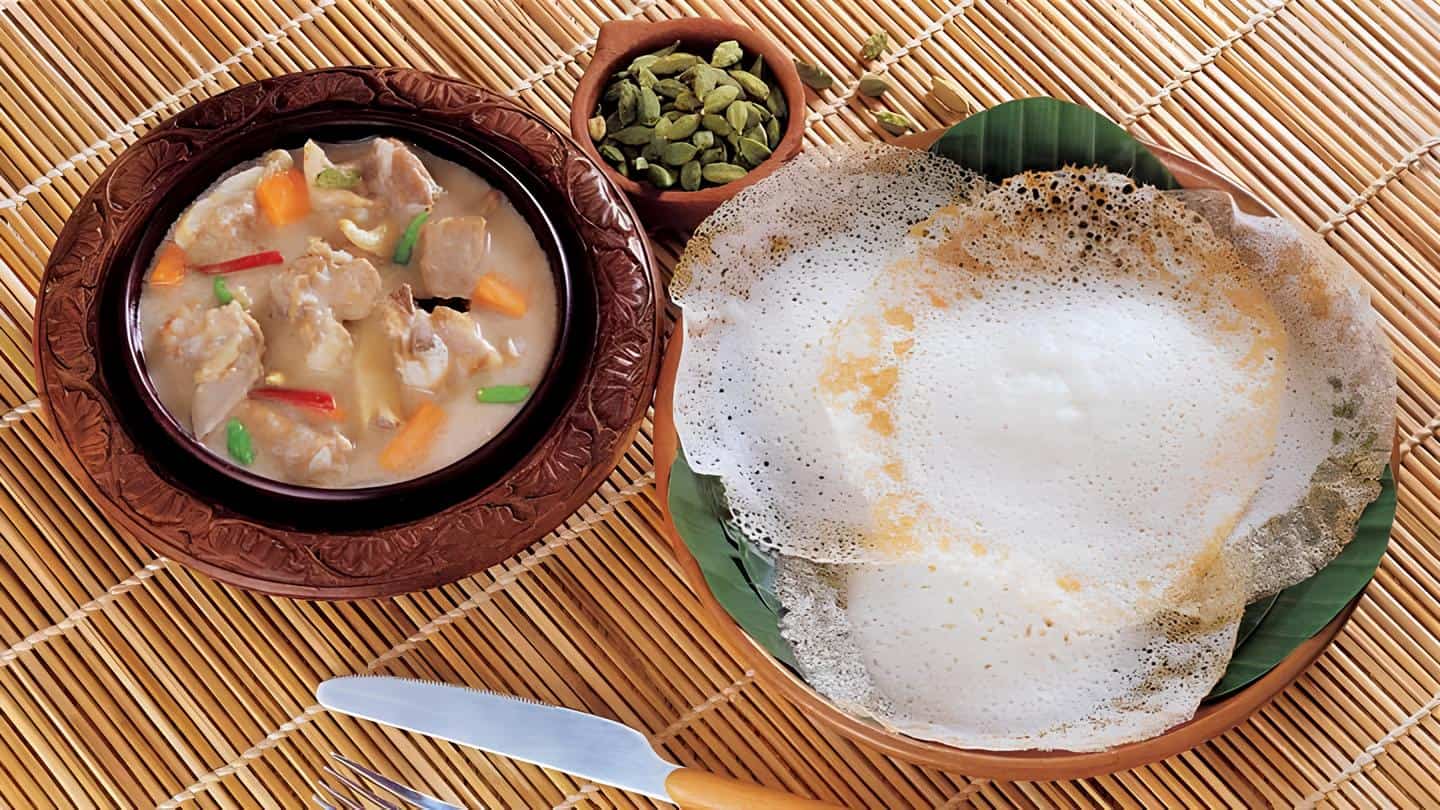
In some Cochini Jewish homes, appam served as bread for Shabbat, accompanying slow-cooked meat or chicken dishes. Pastel, a fried pastry commonly filled with spiced chicken and potato, may carry echoes of the Iberian journeys of later Sephardic arrivals, though its exact genealogy remains uncertain. Coriander-rich chicken preparations, rice dishes and curries made with locally available vegetables reveal a cuisine shaped jointly by Kerala’s abundance and Jewish dietary law.
Kerala’s Jewish history also resists easy simplification. Older Malabar Jewish communities and later Paradesi arrivals did not share identical histories or social positions. After much of the community migrated to Israel, recipes became portable archives. Kochi survived in Sabbath meals, festive breads and family memories prepared far beyond the coast.
An older Christianity meets Europe
Kerala Christian cuisine also needs more than a single colonial explanation. Saint Thomas Christian communities had deep roots in Kerala before Portuguese intervention. Their food evolved through local agricultural life, caste, feast days and long contact with neighbouring communities. Portuguese, Dutch and British rule later added new ingredients, techniques and tastes.
Fish moilee is often linked with the Portuguese period, though its exact origin remains uncertain. Popular stories say coconut milk softened fish curry for European palates, but firm documentation is limited. What is clear is that the present dish belongs fully to Kerala. Fish cooks gently with coconut milk, ginger, garlic, green chilli, curry leaves, turmeric and mild acidity. Some homes fry the fish first; others lower it directly into the gravy.
Vindaloo has a clearer Portuguese-Goan lineage through vinha d’alhos, a meat preparation involving wine or vinegar and garlic. Kerala Christian kitchens produced their own versions, using vinegar, chilli and local spices. It is more accurate to view Kerala vindaloo as an adaptation that travelled along the western coast, then settled into regional practice.
The Christian table extends well beyond these two dishes. Appam with stew, duck mappas, beef ularthiyathu, pork preparations, fish with raw mango, achappam, kuzhalappam and vattayappam all carry community histories. Wedding meals, funeral feasts, Lenten restraint and Christmas baking reveal how food follows the religious calendar.
The Portuguese also changed Kerala through ingredients. Chilli gradually became a more common source of heat than pepper in everyday cooking. Cashew entered sweets and festive dishes. Pineapple found a place in pachadi, preserves and celebratory menus. The most lasting foreign influence may therefore be an ingredient that now appears entirely local.
Dutch and British traces survive in Kerala’s bakeries and club food. Breudher, a rich, lightly sweet bread associated with the Dutch colonial world, lingered in Fort Kochi and Eurasian households after the political order around it had disappeared.
British plantation and club culture expanded the appetite for tea, bread, biscuits, rusks, cutlets, puffs and cakes. Thalassery became central to Kerala’s bakery story. Mambally Bapu is widely credited with baking one of India’s earliest recorded local Christmas cakes in the nineteenth century.
Imported forms were recreated with Kerala spice, local alcohol, new ovens and commercial skill. Once again, imitation became invention.
Nets, jars and uncertain journeys
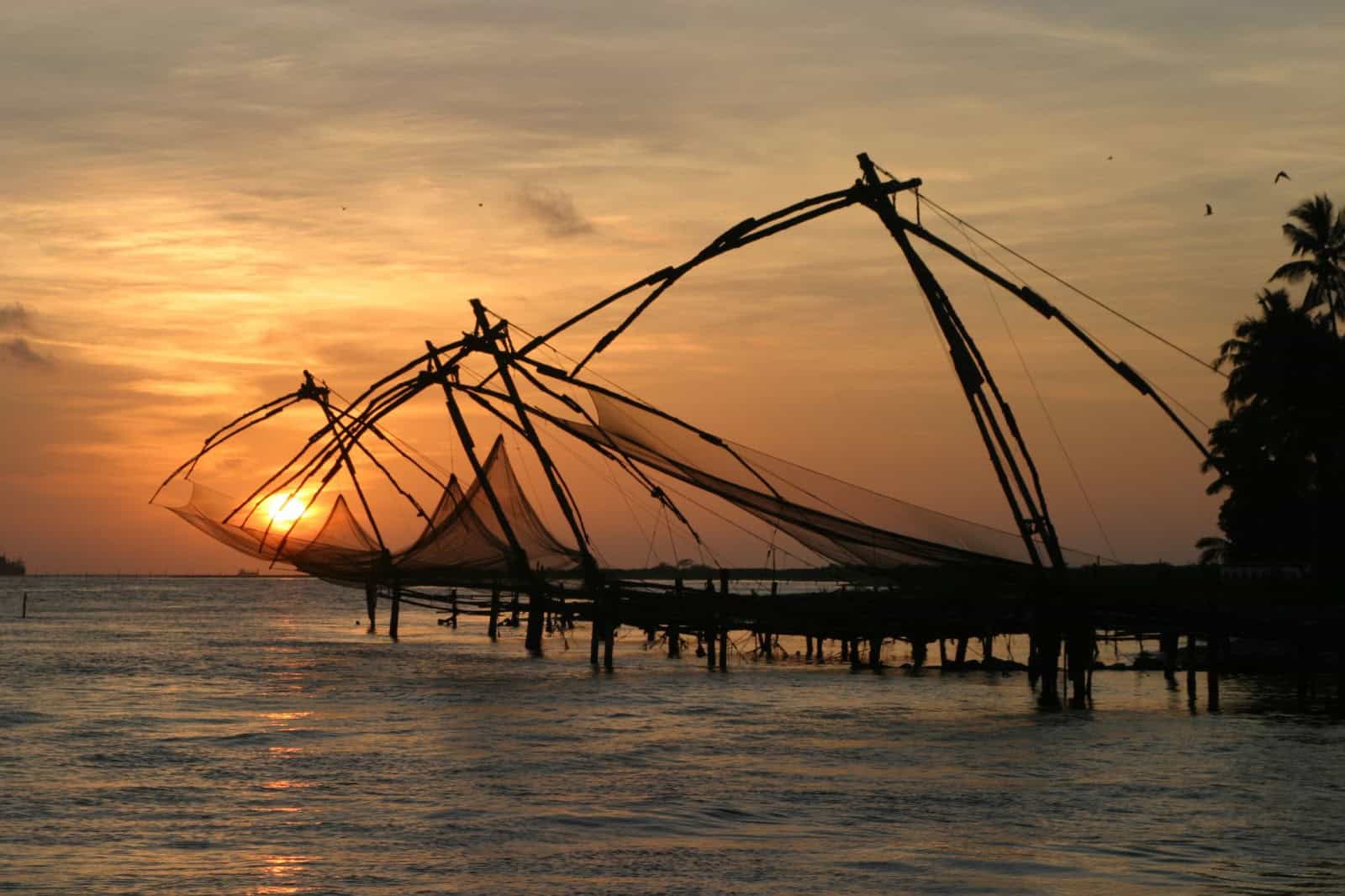
Chinese memory survives most visibly in the names of objects. Kochi’s cheena vala, the large cantilevered fishing nets, have long been associated with China. Some accounts connect them directly with Chinese traders; others suggest Portuguese networks carried the technology across Asia. Their local name preserves a cultural memory even when the historical journey cannot be settled.
The cheena chatti, a wok-shaped iron vessel, and cheena bharani, a glazed jar used for pickles and preserves, offer similar traces. These objects indicate material contact and trade. Their importance lies in how foreign forms became domestic essentials, folded into frying, tempering, storage and preservation.
Kappa, toddy and the inland table
A port-centred history can overlook kitchens that faced no sea. Kerala’s inland foodways include tubers, forest produce, aromatic rice, game histories, farming knowledge and everyday strategies of survival.
Tapioca, or kappa, became especially important during periods of rice scarcity. Once associated with poorer households, it later became a cherished partner to fish curry and toddy-shop food.
The toddy shop itself shaped a distinct public cuisine of duck, pork, squid, fish and intensely seasoned gravies. Dishes born in working-class spaces now appear on luxury hotel menus, often stripped of the social history that made them.
Wayanad’s Adivasi communities carry another essential body of knowledge through tubers, seeds, forest foods and ecological cultivation. Their food traditions remind us that Kerala’s cuisine was made not only by ships and merchants, but by indigenous farmers, foragers and women preserving biodiversity across generations.
The sadya belongs in this wider map too. It is often presented as a fixed vegetarian banquet, though its composition, order and meaning vary by region, caste, community and occasion. Banana-leaf etiquette, temple kitchens, payasam, Onam, Vishu and local feast customs reveal a more diverse history than the standard restaurant version suggests.
The Gulf comes home
Modern Gulf migration created another major culinary chapter. From the 1970s onwards, movement between Kerala and West Asia reshaped homes, restaurants, family life and everyday aspiration. Mandi, kuzhimanthi, shawarma, al faham, shawai, khubz, hummus, kunafa and large shared platters entered Kerala’s urban and small-town food culture.
These dishes did not remain unchanged and were adapted to suit local habits. At the same time, Malayali migrants carried fish curries, pickles, biryanis and pathiri into Gulf kitchens. Recipes travelled through phone calls, handwritten notes and memory. Food moved in both directions, carrying homesickness, ambition and belonging.
This modern exchange differs from the older Arab-Malabar relationship. One grew through medieval trade, settlement and faith; the other through labour migration, remittances, restaurants and families living between two shores.
The cuisine and the world
Kerala is not one kitchen. North Malabar carries Mappila rice, meat, seafood and snack traditions. Kochi holds Jewish, Christian, Anglo-Indian and port-city memories. Travancore brings appam, stew, fish, tapioca and feast food. The high ranges and inland regions speak through tubers, plantation crops, forest knowledge and local rice.
Across these regions, the larger pattern remains consistent. Kerala receives an ingredient, vessel or technique, then subjects it to coconut, rice, pepper, sourness, faith, climate and memory. The result belongs to no single foreign source.
That is why Kerala cuisine can contain pathiri, pastel, moilee, breudher, kappa, biryani and shawarma without losing its centre. It changes continuously, but it does not drift. Every arrival is tested against the tastes of home. What survives is transformed into belonging.
Read More: Latest


1 Comment