

In an exclusive interview with Kamal Gill, Executive Editor, Today’s Traveller, Antony Doucet, CxO, Kerten Hospitality, speaks about his personal connection with India, the gap the company sees in the country’s hospitality landscape, its owner-first model, and why the brand believes India is ready for experience-driven hotels across both established and emerging destinations

Antony Doucet, Chief Experience Officer at Kerten Hospitality, crafts immersive experiences across Europe, GCC and MENA that fuse ESG principles with hyper-local storytelling and community ecosystems.
Before joining Kerten Hospitality, he led the VIP and Celebrity department at Park Hyatt Paris-Vendôme for seven years before moving to Park Hyatt Istanbul as Director of Rooms. Alongside his hospitality career, he also contributed as a food editor for the Istanbul edition of the Louis Vuitton City Guide, bringing together operational expertise with a strong curatorial perspective on culture, design and guest experiences.
Today’s Traveller: India is not new to you personally. What has shaped your connection with the country, and why is it now important for Kerten Hospitality?
Antony Doucet: India is not a new country for me. I have visited several times over the years. My first visit was in 2006 on a business trip, and since then, I have returned on multiple occasions, both professionally and personally. On a personal level, I have visited Kerala for an Ayurvedic retreat, and more recently, I was in Jaipur to celebrate a friend’s birthday. This was my fourth visit to India, and I will be back again from 22–29 June.
India became important to us for obvious business reasons. It is a huge and fast-evolving market. But there is also a personal and sentimental connection for the company, as our Chairman, Michael O’Shea, has strong roots and longstanding ties to India. So, for us, India matters both strategically and emotionally.
Today’s Traveller: When you look at India’s hospitality landscape, where do you see the gap that Kerten Hospitality can fill?
Antony Doucet: When we began considering how best to approach India, we studied the hospitality landscape closely. The country already has the major international brands, including Hilton, Hyatt and Marriott. It also has very strong home-grown players such as Taj and Oberoi, particularly in the luxury segment. I believe around 68 per cent of hotels in India are locally owned.
We identified a clear gap between large international brands and local hospitality players. We see strong potential for affordable, mid-scale to upper mid-scale hotels within the lifestyle segment. In many cases, the offering in this category remains quite basic. It is often limited to a room, a shower and a restaurant, with little or no experience built around the stay.
For us, the cultural element and the experience element come first when we speak to a new hotel owner. We are not like larger brands that operate with rigid standards. We have brand guidelines, but we adapt them to the destination. What works in Saudi Arabia may not work in Jordan or Kuwait.
We study the target audience, whether it is primarily local, international, or a mix of both. We also look closely at the existing hotel offering in that destination. Only then do we define what we can bring that is different, relevant, and not already present in the market.
Today’s Traveller: What is your growth strategy for India, and where do you see the strongest opportunities ahead?
Antony Doucet: The priority for us is not location alone. What matters most is finding hotel owners and developers who share our vision. Goa, Shimla, Mumbai or Delhi, the destination is secondary to the strength of the partnership and the alignment of intent.
We may see more opportunities in tier-2 and tier-3 cities, where there is undersupply, and where hotels are often very basic rather than lifestyle-driven or cultural experience-driven. So yes, we may see more opportunities in those underdeveloped areas.
Our Chairman has set us a clear target: to sign 1,000 keys by the end of 2026. It is an ambitious goal, but India is a vast market with many cities that remain undersupplied.
Before entering India, we carried out extensive research and found that demand is not the challenge here. The demand already exists. The real opportunity lies in creating the right supply to meet it. For hotel operators like us, that makes India an exceptionally promising market.
Today’s Traveller: Kerten Hospitality is entering India after a period of strong international momentum. How does that recent global performance shape your India play?
Antony Doucet: India comes at a very important point in Kerten Hospitality’s global expansion journey. The announcement follows one of the most successful years for the group, with a 55 per cent increase in operating revenues, 69 per cent growth in GOP, and a 44 per cent rise in management fees year on year.
Over the past year, Kerten Hospitality has continued to expand aggressively across the Middle East, Africa and other high-growth markets, further strengthening its international footprint. With 60 projects now in the pipeline across three continents and 12 proprietary lifestyle brands in the portfolio, India stands out as one of our most significant new market moves.
It is not an opportunistic entry. It is part of a larger expansion strategy built on disciplined growth, geographic diversification and strong demand from owners and investors for differentiated lifestyle hospitality.
Today’s Traveller: Indian travellers are becoming far more experience-led in what they expect from hospitality. Why does that shift make the market especially relevant for Kerten?
Antony Doucet: At the heart of Kerten Hospitality’s offering is a simple but powerful conviction: today’s travellers, whether on business or leisure, are seeking genuine experiences, not interchangeable hotel rooms that could exist in any city in the world.
That is why India is such a compelling market for us. It is a fast-growing hospitality market, but it is also one where the traveller is increasingly young, digitally savvy and drawn to immersive, culturally authentic experiences over conventional hotel stays. Our model is built around bespoke lifestyle and community-focused hospitality, so we see a very natural alignment with how demand is evolving in India.
As India’s hospitality market continues to expand, the conversation is shifting beyond room inventory and standardised stays. Travellers are looking for hotels that reflect culture, community, design and a deeper sense of place. For Kerten Hospitality, this evolution creates a strong opportunity to enter India with a differentiated lifestyle-led approach. For us, this is not only about adding supply. It is about creating destinations and hospitality experiences that bring together culture, design, creativity and a stronger sense of place.
Today’s Traveller: For Indian asset owners, what makes Kerten Hospitality’s model meaningfully different from a more traditional brand-led approach?
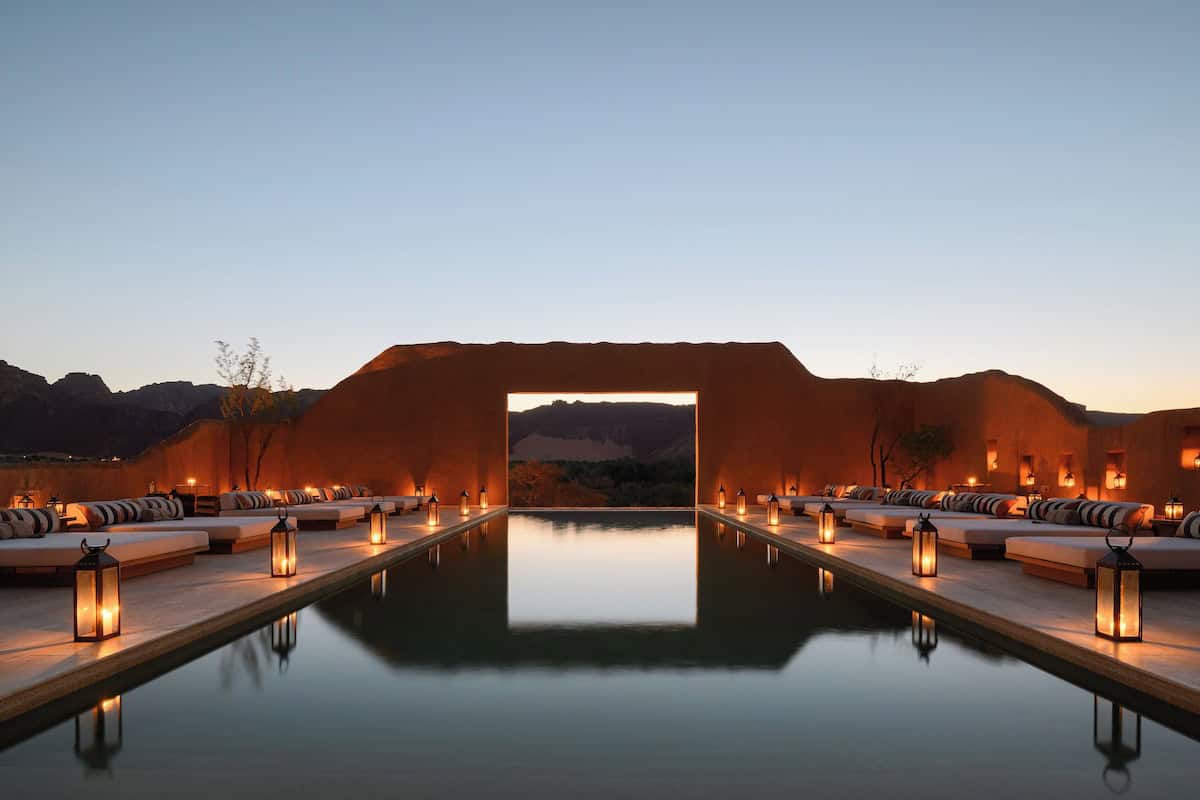
Antony Doucet: Kerten Hospitality’s model is very much owner-first, and that is a major point of difference for us. Rather than imposing rigid brand manuals, we work with flexible brand guidelines that allow asset owners to bring their own vision to life, while still benefiting from our global operational expertise, recruitment infrastructure and marketing platform.
We believe local identity and institutional-grade management do not have to compete with each other; they can work together.
That is especially important in a market like India, where cultural nuance, destination character and local relevance matter enormously. In the first phase of our India launch, we are targeting 1,000 keys with three brands: The House Hotel, a bespoke luxury offering rooted in local culture; Cloud7 Hotels, a design-led lifestyle hotel concept; and HOSME, where affordability meets social hospitality.
Together, these offer owners a suite of proven, scalable concepts that can respond to diverse opportunities across the market.
Read more – Today’s Traveller Interviews


1 Comment