

Somewhere between flood and drought, rock and reef, South Asia’s wildlife destinations keeps rewriting its routines
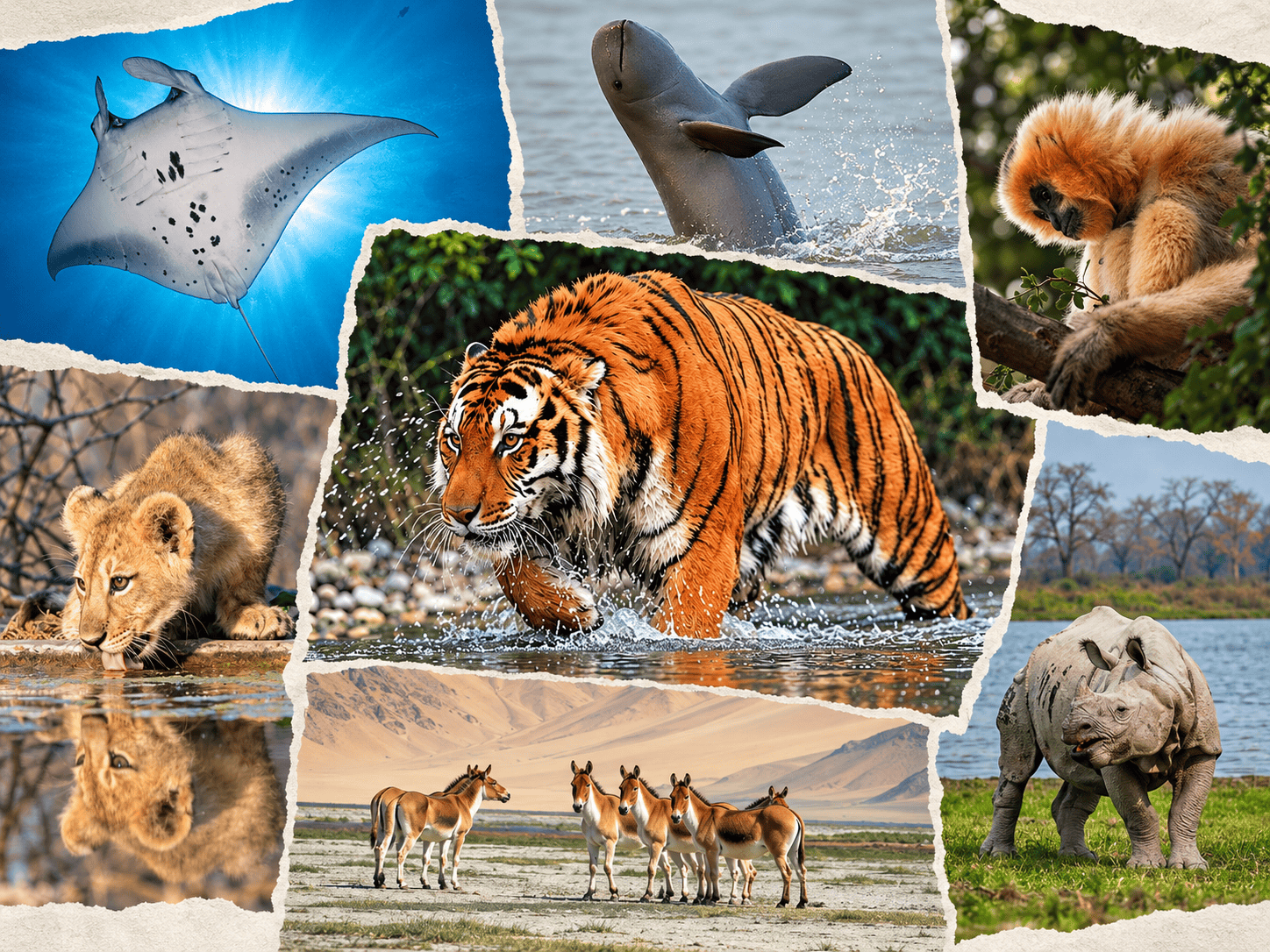
Floodplains, high mountains, mangrove forests and coral seas reveal the extraordinary wildlife of the Indian Subcontinent, where nature follows the rhythms of land, water and season.
Wild country across the Indian Subcontinent takes many forms. In Assam, tall grass rises above the heads of rhinoceroses, and the Brahmaputra spreads across floodplains that change with every monsoon. Gujarat’s dry forests shelter Asiatic lions, while the cold mountains of Ladakh provide refuge for the elusive snow leopard. Farther east, the wooded foothills of Bhutan connect with India’s great forest reserves, creating an immense landscape through which wildlife continues to move.
The scenery changes dramatically towards the coast. Mangroves occupy the shifting islands of the Sundarbans, Sri Lanka’s dry-zone forests meet the Indian Ocean, and the coral waters of the Maldives become seasonal feeding grounds for manta rays. Each landscape supports its own extraordinary collection of wildlife, shaped by rainfall, temperature, vegetation and the availability of food.
For travellers, these protected areas offer experiences that change throughout the year. A familiar waterhole may attract several species during summer. Winter opens views across Himalayan slopes, and receding floodwaters bring fresh grazing to Assam’s grasslands. Understanding these seasonal changes brings greater depth to the wildlife encounter, revealing the relationships that sustain some of South Asia’s most important natural habitats.
Grasslands in Motion
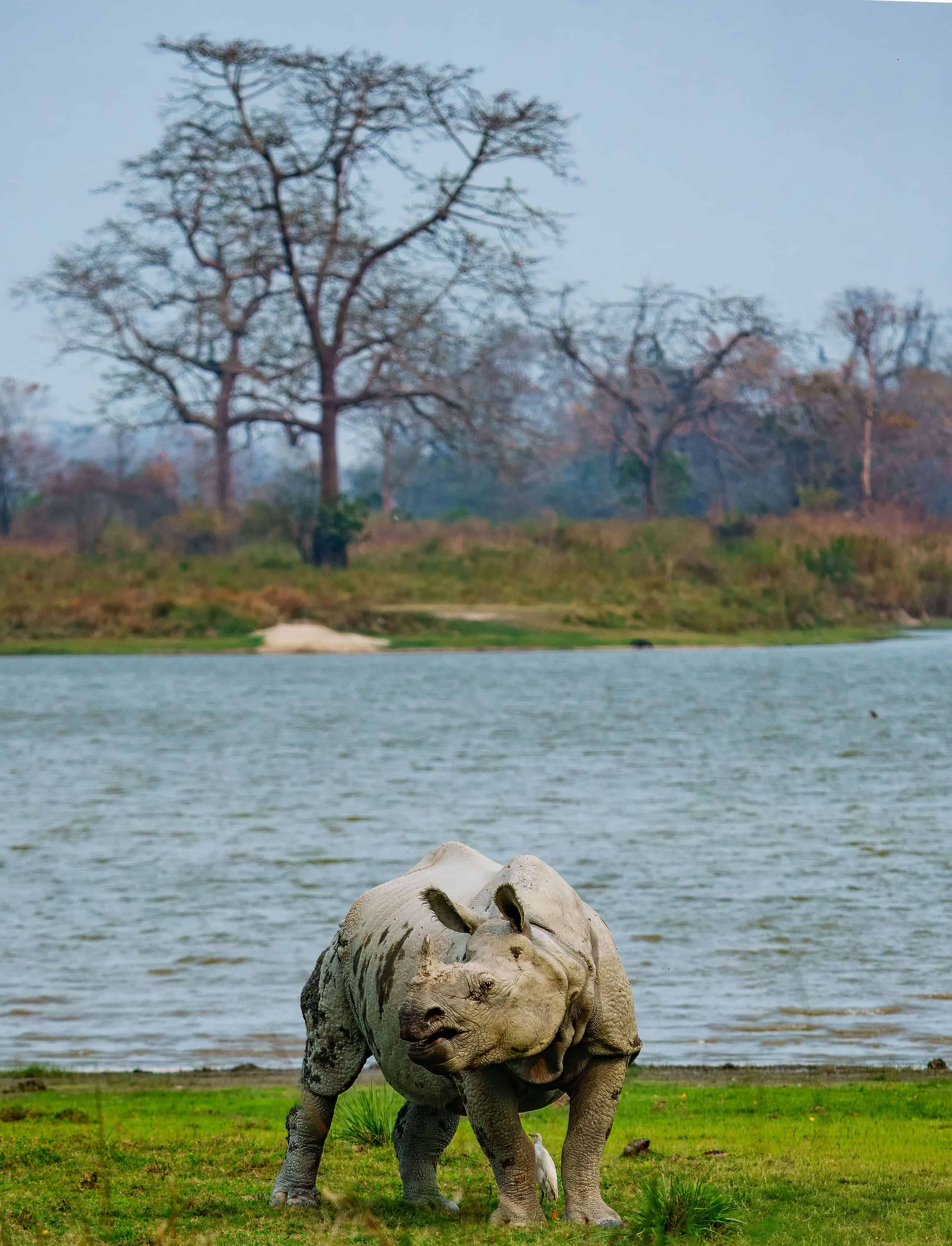
Kaziranga National Park in Assam owes much of its character to the Brahmaputra. The great river rises during the monsoon, replenishing wetlands, spreading fertile sediment and reshaping the grasslands along its banks. Some stretches remain submerged for weeks. Elsewhere, fresh channels appear and existing water bodies change their outlines.
This annual disturbance supports one of the world’s most remarkable concentrations of large mammals. A UNESCO World Heritage Site, Kaziranga holds the largest single population of greater one-horned rhinoceroses, alongside Asian elephants, wild water buffalo, eastern swamp deer and tigers. Its wetlands also provide habitat for migratory birds and the endangered Ganges river dolphin.
Early morning is particularly rewarding. Mist hangs above the elephant grass, and the first sunlight catches the water in shallow beels, the local name for wetlands. Rhinos emerge to graze, sometimes accompanied by calves. Hog deer move through shorter grass, while bar-headed geese, storks and other waterbirds gather along exposed banks. Occasionally, an elephant herd appears beyond the trees, its movements announced by the shifting grass.
The appearance of tranquillity conceals a landscape in constant motion. Flooding maintains the productive grassland habitat, although exceptionally high water can force animals to leave the park. Many move south towards the Karbi Anglong hills, crossing roads and other developed areas.
Protecting these traditional routes has become a major conservation priority. A wildlife-friendly highway project incorporating a 34.5-kilometre elevated corridor along the Kaziranga landscape received government approval in 2025. The project is intended to improve safe passage for animals moving between the floodplains and higher ground.
Across the border in Nepal, Chitwan National Park offers another expression of the Terai landscape. Here, extensive sal forests, riverine woodland and tall grasslands surround the Rapti and Narayani river systems. The setting feels more enclosed, with forest paths passing beneath substantial canopies before opening suddenly towards rivers and broad grassy clearings.
Greater one-horned rhinoceroses are among Chitwan’s defining residents. Nepal’s 2021 national count recorded 752 rhinos, including 694 in and around Chitwan, its buffer zones and adjoining forests. This recovery reflects decades of conservation efforts involving park authorities, local communities and anti-poaching teams.
Bengal tigers occupy the forests, while gharials inhabit the river systems. These slender-snouted crocodilians are particularly adapted to catching fish, and their conservation depends on healthy rivers and suitable nesting banks. Marsh crocodiles, sloth bears and numerous deer species add to the park’s diversity.
Grassland management is an equally important part of Chitwan’s story. Invasive vegetation, particularly Mikania micrantha, can smother native plants used by rhinos for feeding. Maintaining suitable grasslands and riverine habitats therefore remains essential even where major wildlife populations have recovered.
Lion Country
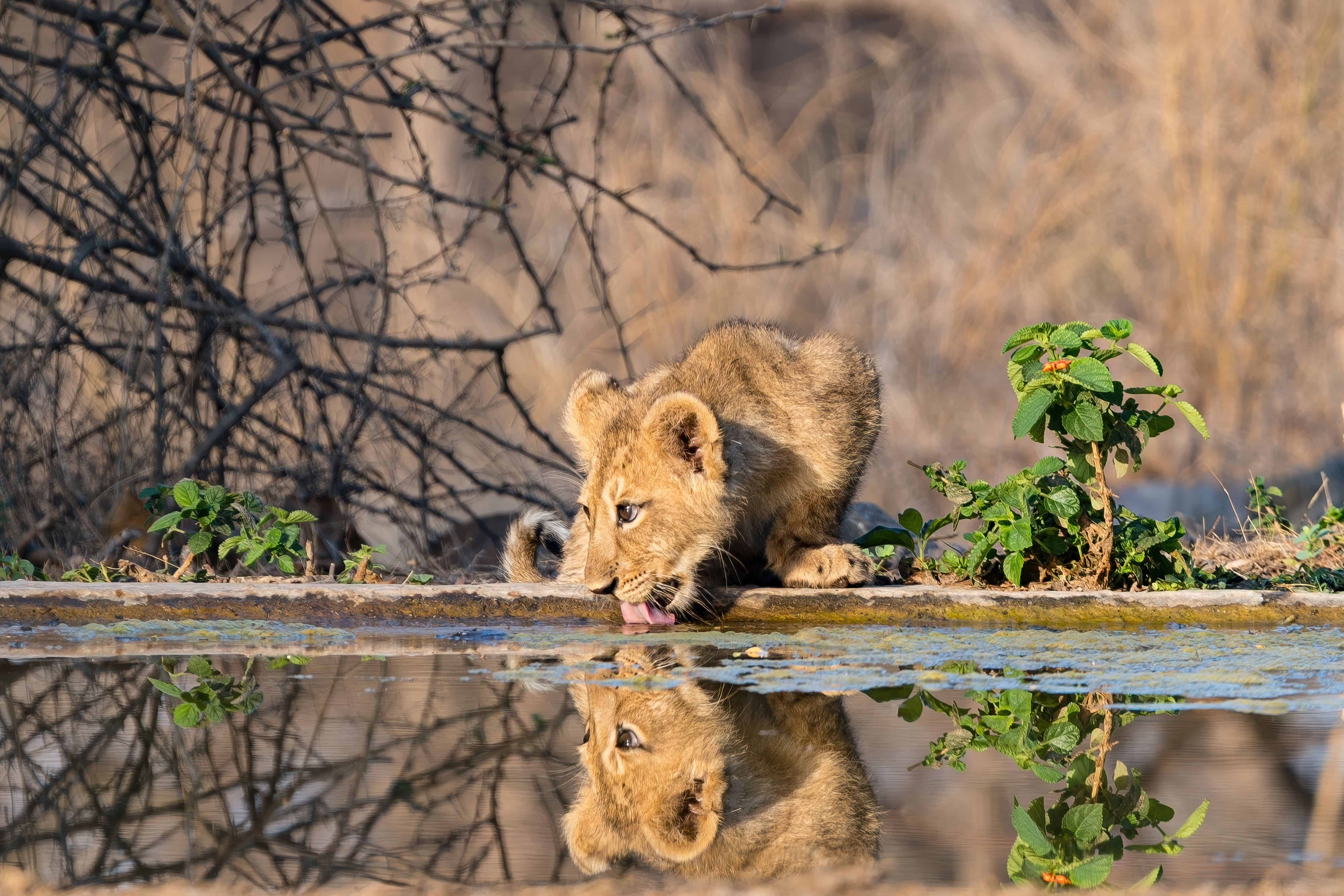
Gir National Park and the surrounding protected forests of Gujarat’s Saurashtra region have a distinct landscape character. Teak woodland alternates with scrub, open grassland, rocky ground and seasonal watercourses. During summer, the vegetation becomes sparse, and the forest takes on shades of ochre and pale brown.
This is the heartland of the Asiatic lion, one of the world’s most significant large-carnivore conservation stories. The species survived a severe historical decline through protection in western India and has since expanded beyond its original stronghold.
Gujarat’s 2025 lion population estimation recorded 891 animals across the wider Saurashtra landscape, an increase from 674 in 2020. Their distribution now includes forested areas, agricultural surroundings, river corridors and other habitats beyond Gir’s protected boundaries.
Lions are often encountered against surprisingly open scenery. A male may rest in the shade of an acacia, while a pride moves slowly across a dry riverbed. The famous mane of the Asiatic male is generally less luxuriant than that of many African lions, and a characteristic fold of skin along the abdomen is another distinguishing feature.
The forest has a rich supporting cast. Leopards are widespread, although considerably harder to observe. Chital, sambar, nilgai, four-horned antelope and wild boar occupy different habitats, while marsh crocodiles inhabit reservoirs and rivers. Birdlife is extensive, with raptors, owls, peafowl and woodland species making the park rewarding even when the lions remain out of sight.
Gir’s conservation story has entered an important new phase. Lions have naturally established a presence in Barda Wildlife Sanctuary, offering the possibility of a broader population distribution. Their expansion also brings practical challenges, including encounters with livestock, roads and settlements. Veterinary surveillance, habitat management and cooperation with surrounding communities are increasingly important.
The changing range of the Asiatic lion demonstrates how successful wildlife protection can reshape an entire landscape. Villages, grazing lands and wildlife corridors have become part of the conservation geography of Saurashtra.
Above the Tree Line
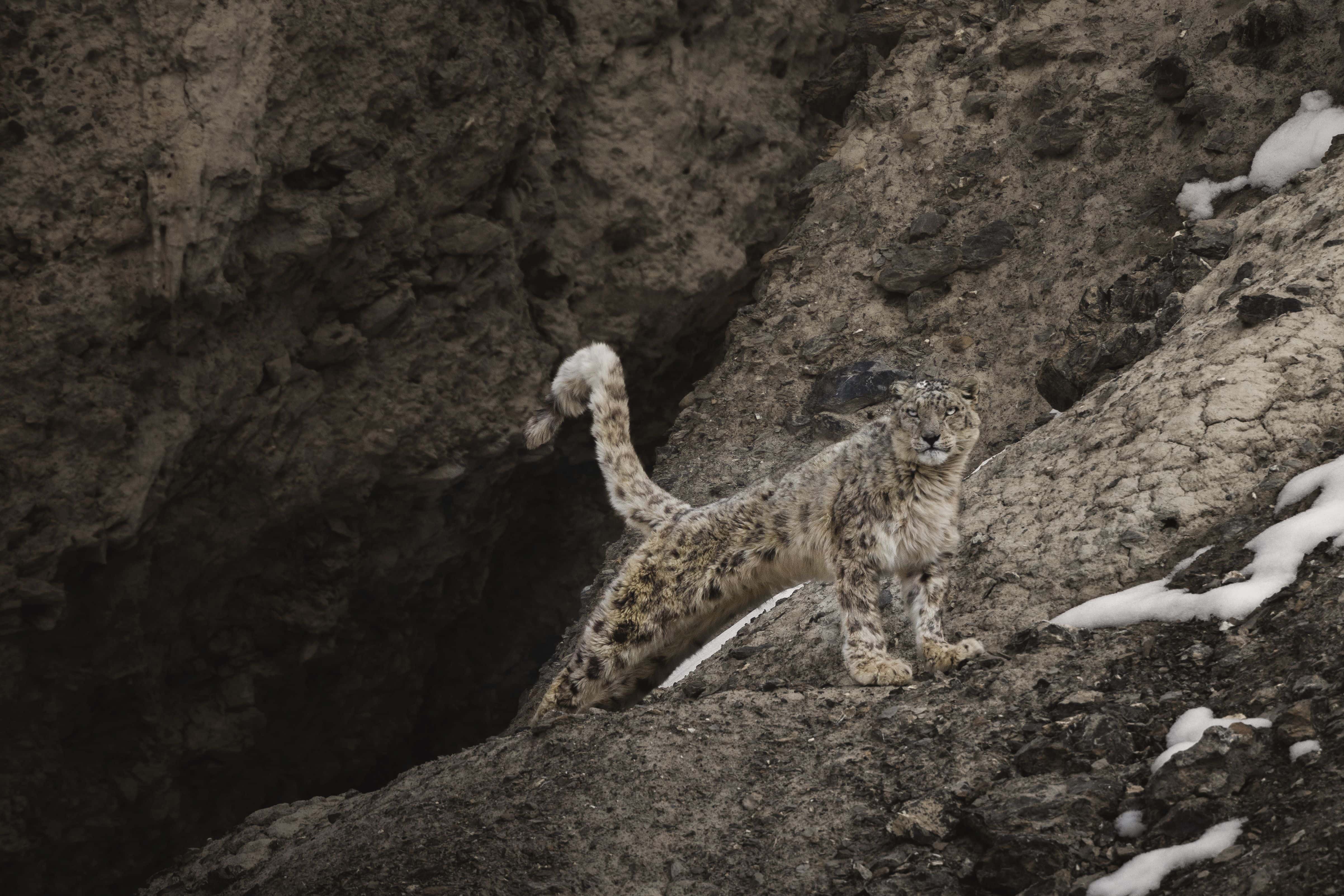
In Ladakh, Hemis National Park introduces a world of steep rock faces, deep valleys, alpine pastures and mountains that remain snowbound through much of the year. The thin air and sparse vegetation create demanding conditions, yet these high-altitude habitats support one of Asia’s most remarkable predators.
The snow leopard moves through broken ridges and rocky slopes with exceptional agility. Its thick coat, long tail and powerful limbs are adapted to the mountain environment. Often described as the ghost of the mountains, it is extraordinarily difficult to detect, even when relatively close.
Blue sheep, also known as bharal, and Asiatic ibex provide important prey. Herds navigate slopes that seem almost vertical, using narrow ledges and rocky outcrops for protection. The presence and distribution of these herbivores influence where snow leopards hunt and establish territories.
The first scientific nationwide assessment, released in 2024, estimated India’s snow leopard population at 718, with approximately 477 in Ladakh. This was an estimate for the wider Union Territory, reflecting the importance of its extensive mountain habitats.
Winter brings opportunities for specialised wildlife tracking, although sightings remain unpredictable and may require considerable patience. Local guides identify pugmarks, scent-marking sites and signs of recent movement, helping visitors understand the landscape through details that might otherwise escape notice.
Conservation here is closely connected with village life. Snow leopards sometimes prey on domestic animals, affecting pastoral livelihoods. Community homestays and responsible wildlife tourism have helped create additional income, giving residents a direct interest in protecting the predator and its habitat. The Himalayan Homestays programme, developed by the Snow Leopard Conservancy, began in Hemis National Park in 2002 and has since extended to other parts of Ladakh.
Forests Across Frontiers
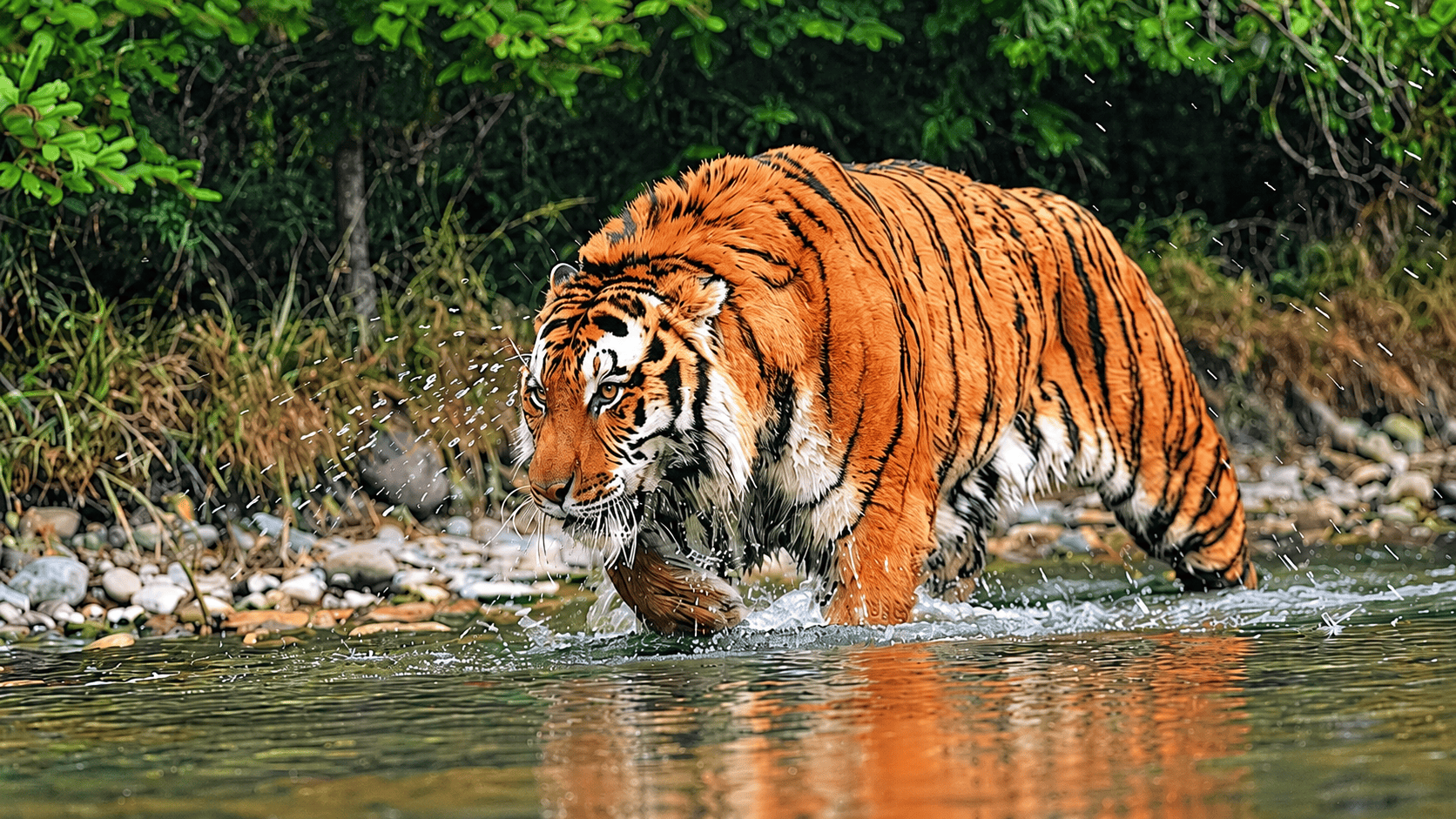
Royal Manas National Park occupies Bhutan’s southern foothills, where tropical and subtropical forests stretch towards India’s Manas Wildlife Sanctuary in Assam. The international boundary passes through a broader ecological landscape of woodland, rivers and grassland, giving wildlife access to habitats on both sides.
Established as Bhutan’s oldest national park, Royal Manas is particularly important for its diversity of mammals and birds. Tigers, Asian elephants, gaur, clouded leopards, golden langurs and several smaller wild cats inhabit its forests. Great hornbills and the rarer rufous-necked hornbills are among the remarkable birds associated with the landscape.
The golden langur is especially distinctive. Found naturally in a limited region of western Assam and southern Bhutan, this endangered primate moves through the forest canopy, its pale golden coat sometimes catching the sunlight against dark foliage. Its survival depends on maintaining connected woodland, particularly where habitat has become fragmented.
Rivers also influence the character of Royal Manas. Flowing down from Bhutan’s hills into Assam, they support different vegetation communities and provide movement routes for wildlife. During the monsoon, rainfall transforms the forest, making certain areas difficult to access.
Bhutan’s network of biological corridors connects Royal Manas with other protected landscapes, including Jigme Singye Wangchuck National Park and Phibsoo Wildlife Sanctuary. These connections are particularly valuable for wide-ranging species such as elephants and tigers, whose movements regularly extend beyond individual reserve boundaries.
There is a sense of scale here that extends beyond the visitor experience. Forests continue across hills and valleys, their ecological relationships largely indifferent to the borders marked on maps. The Manas landscape remains one of the region’s most compelling examples of transboundary conservation.
Where Forest Becomes Tide
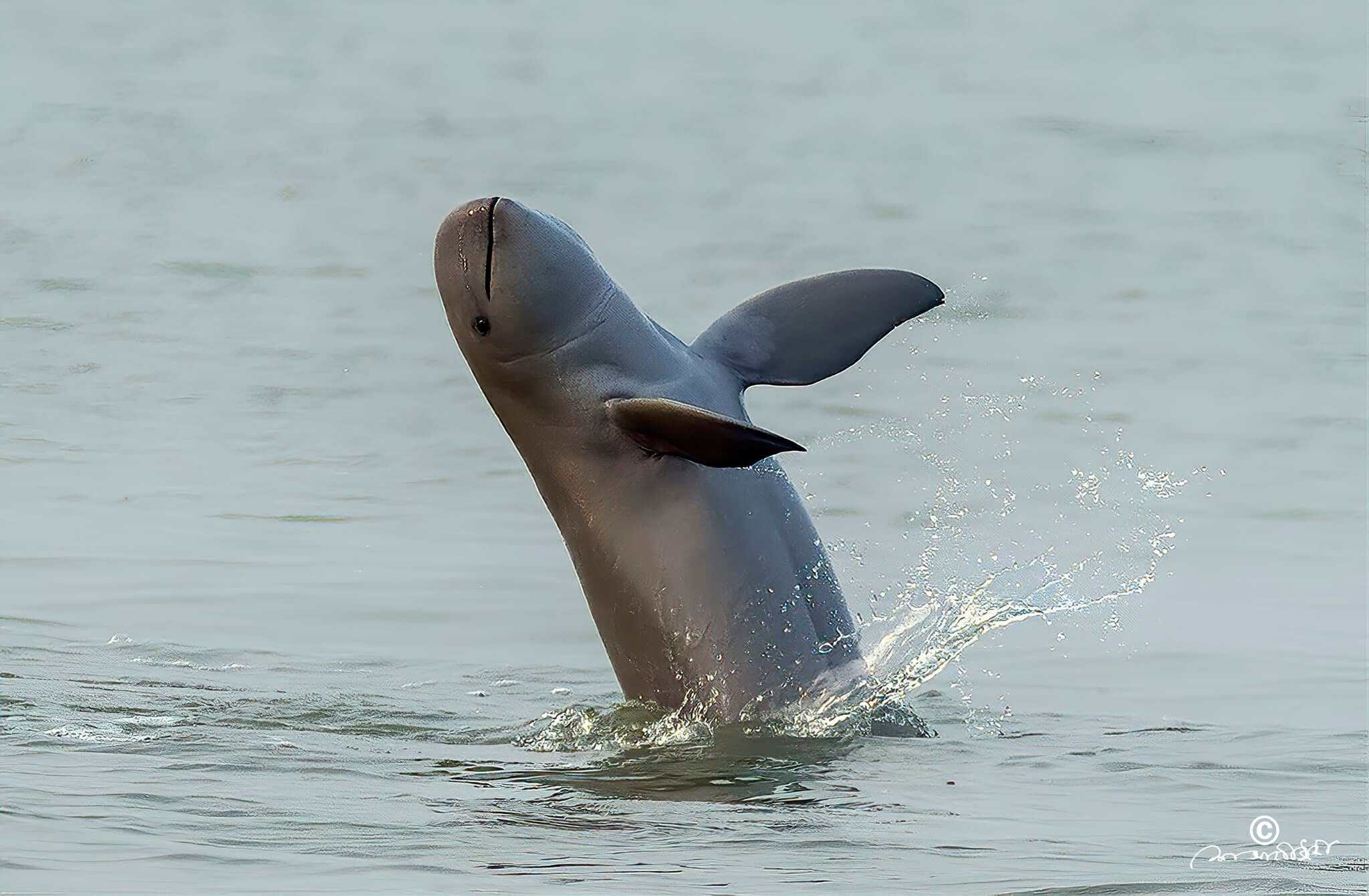
The Sundarbans present an entirely different kind of wilderness. Across India and Bangladesh, the great delta of the Ganges, Brahmaputra and Meghna supports the world’s largest mangrove forest system. Its islands, waterways and exposed mudflats continually respond to the movement of tides and sediment.
Travel here takes place largely by boat. Narrow creeks divide the forest into seemingly endless channels, where mangrove roots rise above muddy banks and dense foliage conceals much of the wildlife. Kingfishers perch over the water, mudskippers move across exposed ground, and crocodiles occasionally rest along the banks.
The Royal Bengal tiger is the Sundarbans’ most celebrated resident. Adapted to an environment dominated by tidal waterways, these tigers swim between islands and hunt through mangrove habitats where visibility is limited. Their diet can include deer, wild boar and smaller aquatic animals.
Sightings are exceptionally unpredictable. The forest is dense, the channels are extensive, and much of the tiger’s movement happens beyond the reach of passing boats. For visitors, the experience often lies in observing the mangrove habitat itself and recognising how its animal life has adapted to the changing water levels.
The Sundarbans also support estuarine crocodiles, fishing cats, waterbirds, reptiles and threatened aquatic mammals, including Ganges and Irrawaddy dolphins. The critically endangered northern river terrapin is another important species associated with the delta’s conservation efforts.
Human communities have lived alongside this environment for generations. Fishing, honey collection and other traditional livelihoods remain closely tied to the forest and its waterways. These activities require careful management because local livelihoods and wildlife conservation occupy the same vulnerable landscape.
Cyclones, coastal erosion and rising salinity bring further challenges. Mangrove forests help stabilise shorelines, trap sediment and reduce some of the impact of coastal storms. Changes in freshwater supply can also influence the balance of vegetation across the delta.
The Sundarbans offer a vivid reminder that conservation extends well beyond individual animals. Here, the survival of the tiger is connected with the health of the mangroves, the movement of freshwater and the future of communities living throughout the delta.
The Sea as Sanctuary
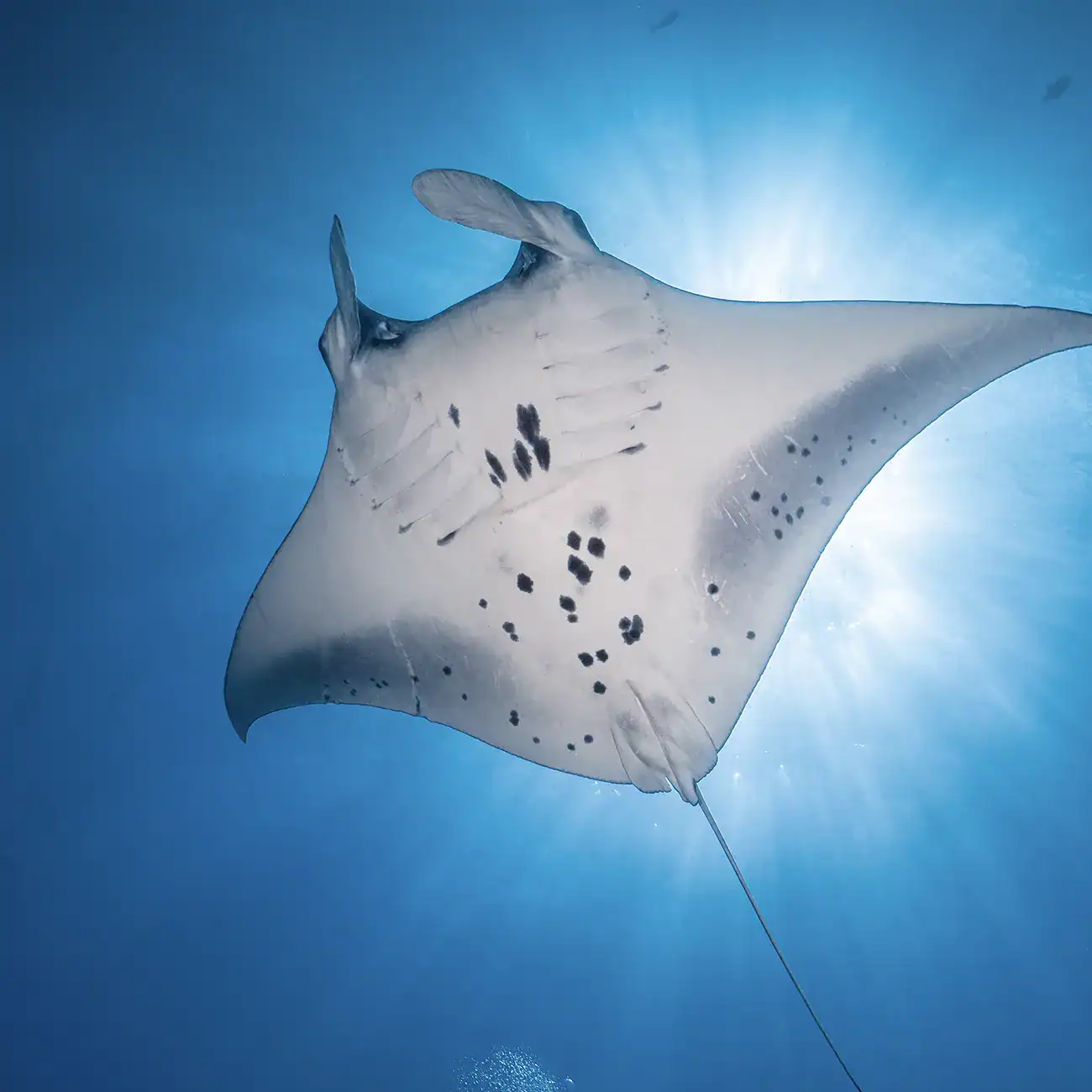
At Hanifaru Bay in the Maldives, the wildlife experience moves beneath the surface. Located within the UNESCO-recognised Baa Atoll Biosphere Reserve, this protected marine area is internationally important for its seasonal gatherings of reef manta rays.
The spectacle is closely linked to the southwest monsoon. From approximately May to December, ocean currents and strong tides can bring plankton-rich water towards the atoll. The shape of Hanifaru Bay creates a natural concentration zone, where circulating water traps enormous quantities of microscopic marine life.
For manta rays, these conditions produce an exceptional feeding opportunity. Large groups gather in relatively confined waters, swimming with their mouths open to filter plankton. Sometimes they form feeding chains or circular formations, following concentrations of food through the water.
Research published in 2026 further examined how tidal eddies and the bay’s underwater topography create predictable feeding hotspots. These small-scale movements of water help explain why such large aggregations occur in a particular location.
For visitors, watching these enormous rays pass through the water can be extraordinary. Their broad bodies and sweeping fins create an impression of effortless movement, even when dozens are feeding close together. Whale sharks, which also feed on plankton, occasionally enter the area.
Hanifaru’s popularity has made careful management essential. Scuba diving and fishing are prohibited within the bay, and visitor numbers, boat movements and permitted activities are regulated. Snorkelling visits are managed to reduce disturbance, with strict rules against touching or chasing marine animals.
The encounter depends on several conditions coming together: monsoon currents, tidal movement, plankton availability and suitable weather. Each visit is different, and large gatherings cannot be guaranteed.
Hanifaru illustrates how an apparently small marine area can hold exceptional ecological importance. Protecting its feeding conditions helps safeguard a species whose movements extend across much larger stretches of the Indian Ocean.
Sri Lanka’s Wild Edge
Yala National Park lies along Sri Lanka’s southeastern coast, where dry woodland, thorny scrub, rocky outcrops, grassland and lagoons create a varied wildlife habitat. The Indian Ocean forms a striking boundary to parts of the park, bringing coastal scenery into an otherwise dry landscape.
Yala is particularly well known for its Sri Lankan leopard, an island subspecies that occupies the top of the local terrestrial food chain. In the park’s rocky terrain, leopards may rest on elevated outcrops, move through scrub or appear beside forest tracks during the cooler hours.
Yet the broader landscape has considerable wildlife interest. Asian elephants wander between feeding areas and waterholes, while sloth bears search for insects and seasonal fruit. Spotted deer, wild buffalo, crocodiles and an impressive variety of birds occupy the open plains and wetlands.
During the dry months, the remaining water sources become important gathering places. Painted storks search the shallows, crocodiles bask along muddy edges, and deer move carefully towards exposed waterholes. The quieter coastal stretches reveal lagoons, sand dunes and rocky headlands, giving Yala a landscape character unusual among South Asian wildlife parks.
The park also contains traces of an older cultural landscape. Ancient Buddhist sites, including Sithulpawwa, stand within the wider protected area, recalling centuries of human occupation and pilgrimage in this part of Sri Lanka.
Wildlife tourism has brought considerable attention to Yala, particularly Block 1, where leopard sightings attract large numbers of safari vehicles. A 2025 study commissioned by the Sri Lanka Tourism Development Authority highlighted serious overcrowding, with multiple vehicles frequently gathering around sightings and some peak periods bringing hundreds of jeeps into the park.
Visitor management is consequently an increasingly important conservation issue. Responsible safaris require drivers to maintain appropriate distances, avoid obstructing animals and minimise disturbance. Allowing time for birdwatching, landscape observation and less crowded routes can also make the experience considerably more rewarding.
Yala offers some of South Asia’s finest opportunities to observe large mammals, supported by a landscape whose ecological richness deserves attention in its own right.
A Landscape Still in Motion
Across the Indian Subcontinent, wildlife remains closely connected with the forces shaping its habitat. The Brahmaputra renews Kaziranga’s grasslands, while Nepal’s riverine forests sustain recovering rhino populations. In Saurashtra, Asiatic lions are establishing themselves across an expanding range, and Ladakh’s snow leopards continue to follow mountain prey through remote valleys.
Elsewhere, the Manas forests connect protected areas across an international frontier. The Sundarbans change with every tide, Hanifaru Bay comes alive with seasonal plankton blooms, and Sri Lanka’s dry-zone wildlife responds to the availability of water.
These landscapes offer a remarkable journey through the region’s natural diversity. Their appeal lies in the possibilities of each encounter, the changing character of the terrain and the continuing conservation efforts that allow wildlife to flourish. The seasons may alter the scenery, but the essential relationship between animals and their environment remains the defining feature of wild country.
Read more – Discover Your India