

India’s heritage landscapes come alive through heritage adventures; climbing, trekking and movement across stone, memory and terrain
History and adventure are often seen as opposites, but this idea is easily dispelled once you experience how history also sleeps in the landscape, in the rocks cut, moulded and stacked. Reaching some of them requires you to climb, trek, and scramble into the sites of history. We often box down places and destinations into a type, rarely exploring what lies beyond the obvious market pulls of a destination. This is a problem of imagination, and by not knowing what lies beyond, we remain far away from what all these places have to offer. People looking for adventure in India might dismiss places known for their historical significance, not knowing what the destination actually has to offer.
Hampi: boulders, empire and memory
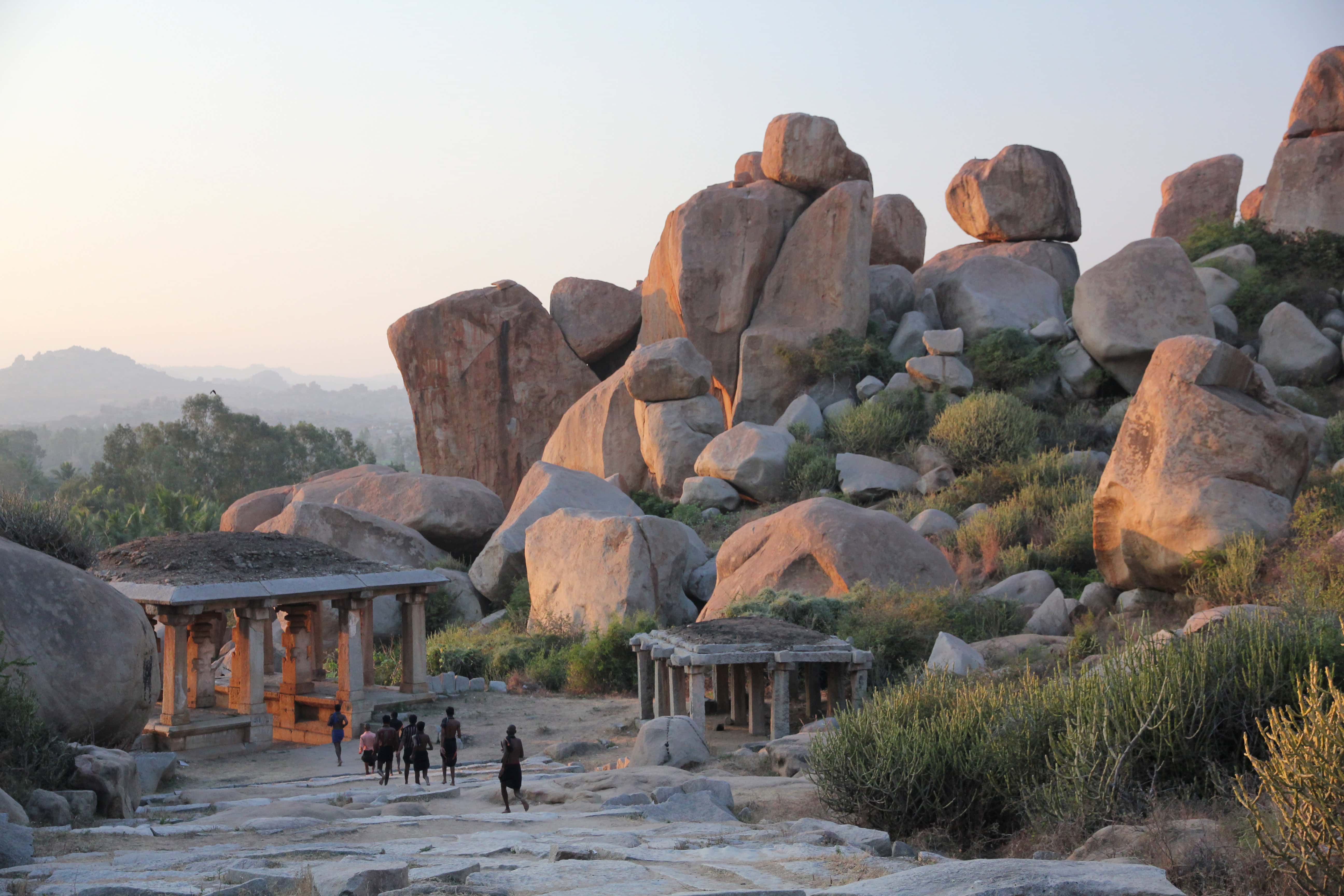
Hampi, the last capital of the Vijayanagar empire, is spread across hill ranges and open plains with over 1600 surviving remains, including forts, temples, gateways, mandapas, water structures, and pillared halls. Hampi is not a neat little heritage compound bound within walls; it is the past overflowing into the present through the many ruins spread across the granite hills.
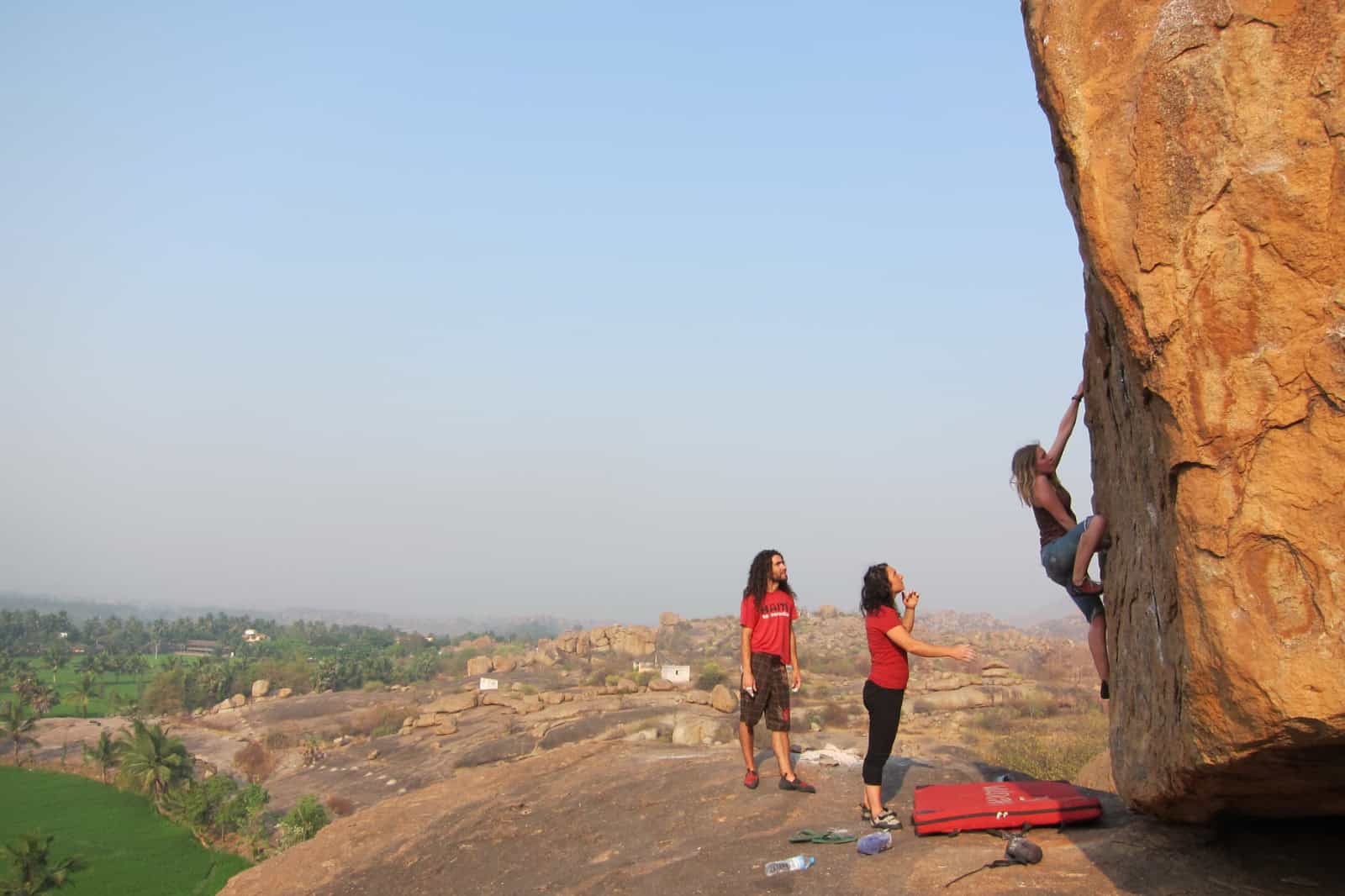
It is this very terrain that gives Hampi its second identity, the granite hills and boulders spread across the geography of this ancient capital are very appealing to those drawn to movement, adventure and adrenaline. Hill climbs such as Matanga Hill deepen that feeling. The ascent is not especially technical, but it returns the body to the landscape and reveals Hampi as it was always meant to be understood: not as a set of disconnected monuments, but as a broad sacred and imperial terrain that offers a huge spread of bouldering opportunities across the wider Hampi area with significant variety: slabs, faces, overhangs and technical movement, often in zones such as Virupapur Gaddi and Anegundi.
Hiking and climbing in Hampi makes you feel that this is how the city is meant to be understood, experienced like this, the temples, ruins, river, pavilions and boulder fields begin to read as one continuous world. It creates room for climbers, photographers, architecture lovers and slower cultural travellers alike, proving that heritage can be experienced not only through looking, but through movement.
Badami: where the mountain is the monument
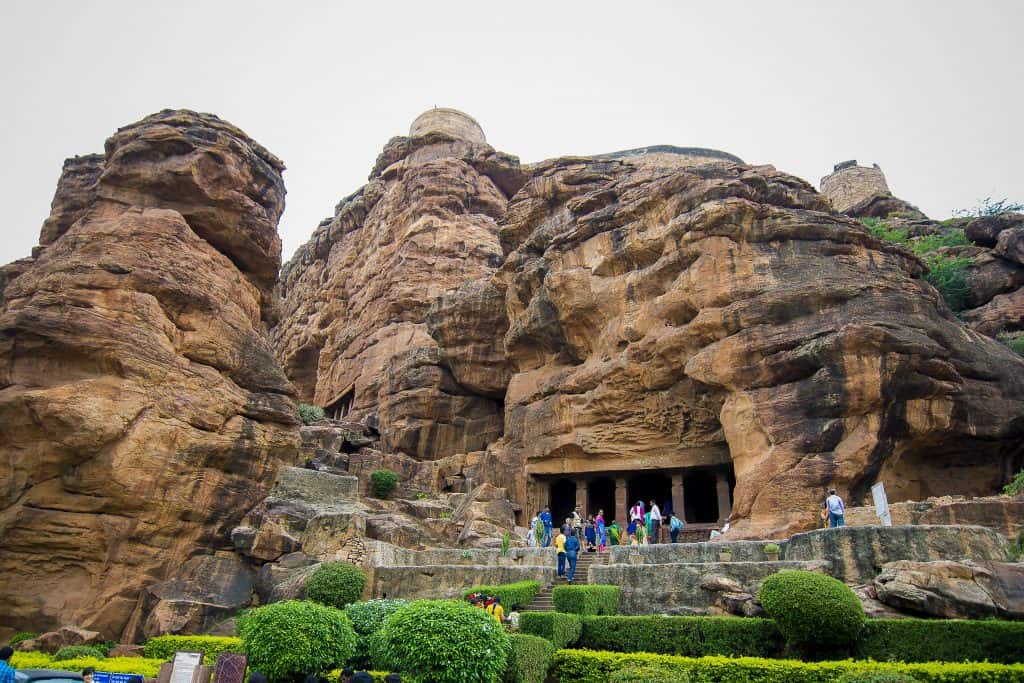
Badami was a major Chalukya centre that rose to prominence between the 6th and 8th centuries. Badami’s four cave temples, cut into the cliffs above Agastya Lake, are among the most important expressions of early Deccan rock-cut art. These caves are alive with sculpted façades, pillared halls and interiors that seem to emerge naturally from the rock itself. The lake, the cliffs, the temple fronts and the surrounding ridges belong to one visual idea, which is why the town reads so powerfully even at first glance. Badami also belongs to the wider Aihole–Pattadakal–Badami architectural corridor, which makes it more than an isolated site.
The landscape of Badami is an invitation to explore the rocks, both sacred and mundane, whether it be through climbing the rocks or walking the caves. For most travellers, the adventure of Badami lies in the ascent itself: climbing to the caves, moving along the cliff edge, and looking back over the lake and temple landscape from above. Recent conversations on rock climbing see Badam developing a second identity in climbing circles, with its red sandstone walls now regarded as one of India’s notable sport-climbing destinations. This dual identity is immediately identifiable, unlike Hampi Badami’s attractions, which congregate in one area.
Rajmachi: the fort you must earn
Rajmachi stands apart among the rest of the entries in the list as the one most clearly shaped by trekking, showing how the route to a place can be as much a part of the history as its adventure. Even though it is one of the more popular treks in the Sahyadris, its appeal goes well beyond the satisfaction of a scenic climb.
Rajmachi is tied to the old Bor Ghat corridor, which once made this landscape strategically important. The twin forts of Shrivardhan and Manaranjan stand at the end of the trail, rising out of the terrain, reinforcing the strategic importance of the place. The trek is not an added activity around the fort. It is the way into understanding the fort itself, its placement, its atmosphere and the larger landscape that shaped its history.
Beyond the obvious fortifications, namely the twin forts of Shrivardhan and Manaranjan, that tower over the landscape, which are the major attractions of the trek, the region also boasts a wider cultural inheritance of Kodane caves, Buddhist rock cut heritage, and the beautiful greenery. Especially during the monsoon, when mist, waterfalls and saturated greens take over the Sahyadris, Rajmachi becomes almost cinematic.
While the trek is often described as being simple, since the fort trek is not a technical climb, this is not a trivial endeavour; weather, stamina and the route choice can greatly affect your experience in climbing to this fort. In the monsoon, the trek is all mist, waterfalls, wet rock and saturated green slopes, giving the fort a cinematic, half-veiled presence. In the drier months, the route feels clearer and more open, and the plateau, ridgelines and fort walls begin to read with greater precision. Rajmachi is as adventurous as it is scenic and approachable, giving its visitors a comprehensive trekking and heritage experience.
Kangra: the fort in the valley of trails
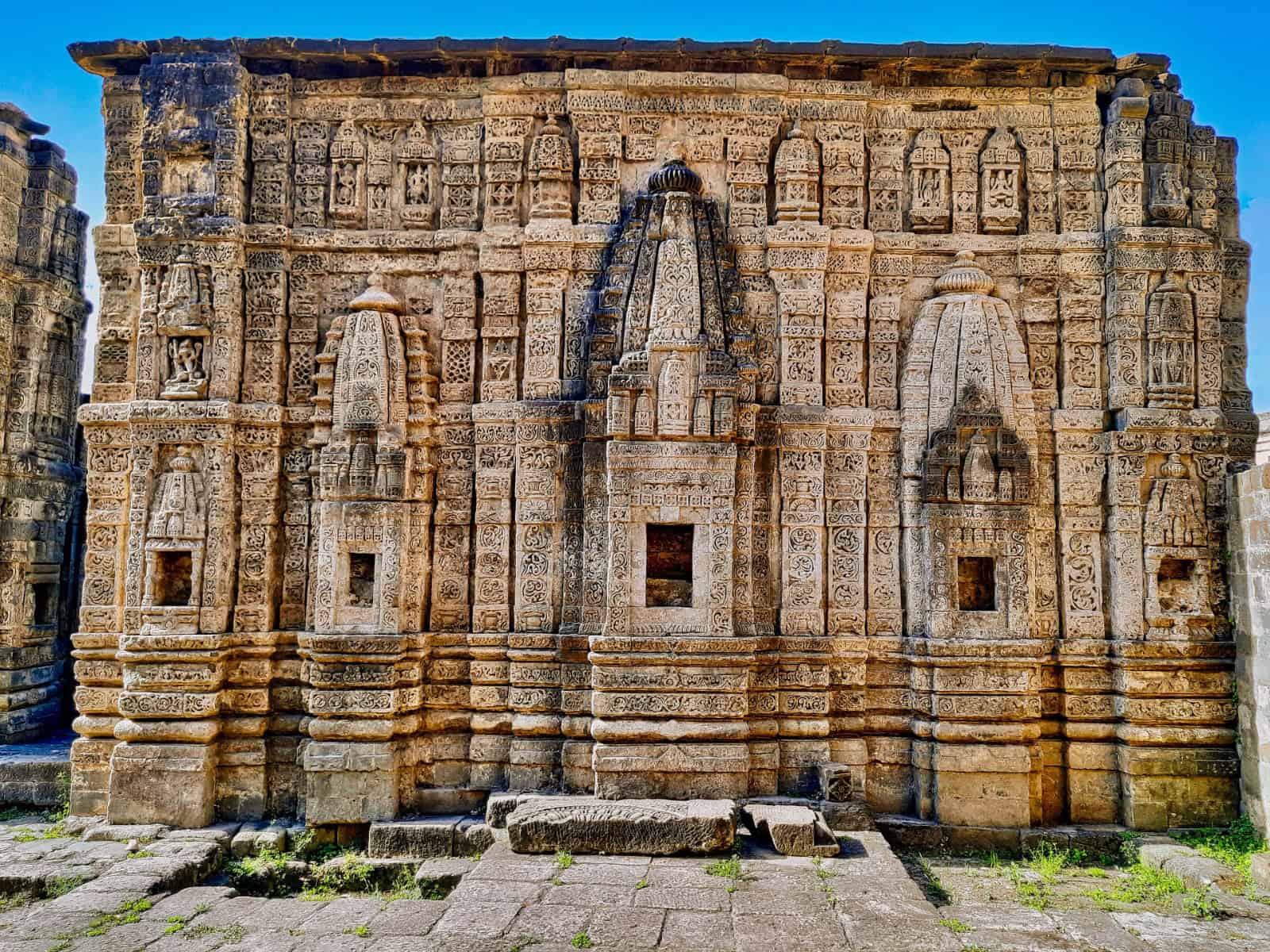
Kangra is one of the oldest and largest forts in the Himalayas, proving that history and adventure travel need not always arrive with steep stairways or exposed rock faces. Here, the appeal is quieter, broader and more atmospheric. Kangra Fort, built by the Katoch rulers and spread across rugged ground above the Banganga and Majhi rivers, is described as the largest fort in the Himalayas. Its bastions, gates, temples and defensive placement make clear that this was a stronghold shaped as much by topography as by masonry.
The approach to the fort is active without being severe, with a moderate-grade route of roughly 2.5 kilometres through bushes, boulders and narrow passages, which gives the visit a physical dimension without turning it into a punishing trek. You do not simply arrive here; you move toward it, and the valley slowly opens around you.
The wider district strengthens its position as a place for historical and adventure tourism. Kangra lies within an active mountain region of trekking routes, alpine meadows and high-altitude viewpoints, while Bir-Billing adds one of the world’s best-known paragliding sites to the same district.
Daulatabad: the fortress designed to be climbed with caution
Daulatabad, once known as Deogiri, rises out of the Deccan like an argument in stone. Founded by the Yadavas and later fought over by the Khiljis, Tughlaqs, Bahmanis, Nizam Shahis, Mughals and Marathas, it is one of those places where power can still be read in the landscape itself. The fort sits on a 200-metre-high conical hill and was important enough to become a seat of power for more than one kingdom; most famously, Muhammad bin Tughlaq renamed it Daulatabad and attempted to shift the capital of the Delhi Sultanate here in the 14th century. That history gives the fort unusual density. It is not only a monument of one dynasty, but a citadel layered with ambition, siege, reinvention and control.
Daulatabad’s adventure lies in the architecture of defence itself. This is not a fort reached by a scenic trail alone; it is a fortress built to slow the body, confuse the eye and exhaust the attacker. Its narrow rock-cut approach, steep ascent, moats, zigzag gates with iron spikes, fortified walls, bastions and the famous andheri, the dark passage cut into rock that turned movement into a military test. Even today, the climb to the summit is part of the fort’s meaning.
The experience is neither a technical trek nor a casual monument stop. It is a fortress climb shaped by strategy. Structures such as the Chand Minar, Chini Mahal and Baradari add depth to the journey, but the real drama lies in the ascent itself, where the Deccan plains gradually open below and the intelligence of the fort’s design becomes impossible to miss. Daulatabad proves that sometimes the most compelling adventure is not in wilderness alone, but in moving through a place built to resist movement.
Adventure-History Travel in India
The conception of adventure tourism in India is unique; the national strategy recognises physical activity, nature and cultural immersion as integral aspects of adventure tourism. The best history and adventure-led tourism understands this and reveals how and why these places exist as they do and how history and geography are inseparably connected to each other. The rock, stone, hills and rivers are not mere accessories to history but part of it.
This also asks for a more thoughtful kind of tourism, for a slower, more attentive mode of travel, one that understands that the route to a place can matter as much as the place itself. They remind us that history does not only survive in walls, gateways and carved surfaces. It also survives in the paths people took, the hills they fortified, the rivers they crossed and the terrains they learned to inhabit. Approaching these destinations like this suggests a richer, more immersive way of seeing India, one in which the past is not sealed off behind interpretation boards, but encountered through the geography that gave birth to it.
Read More: Latest