

A study of 58 tiger reserves and national parks highlights Manas, Panna and Banke as leaders in India and Nepal’s tiger recovery
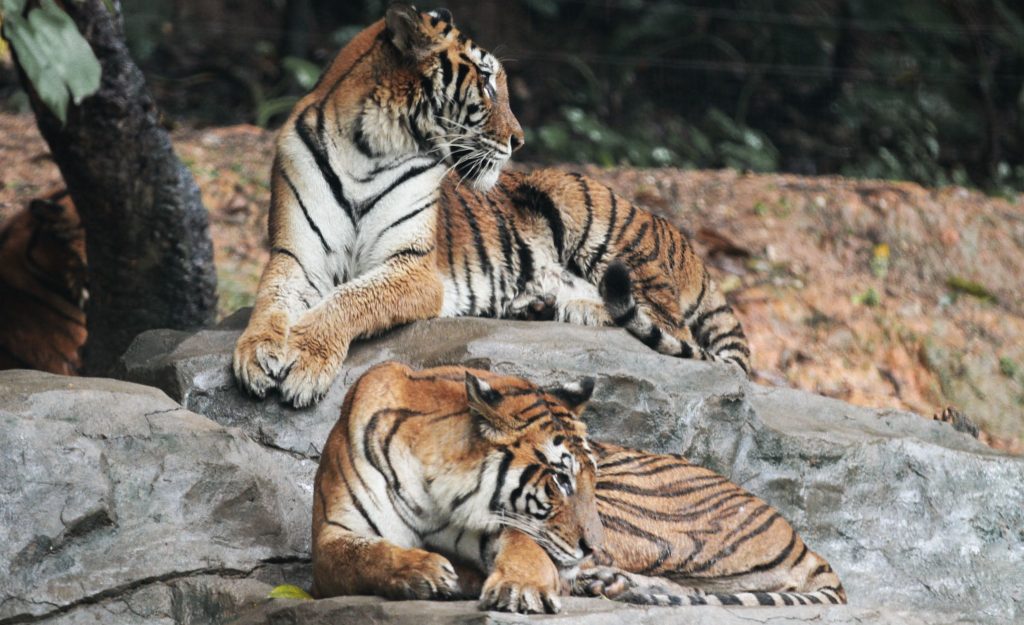
Image Courtesy: MehmetTurgutKirkgoz Pexels
Tiger populations across India and Nepal have recorded substantial gains over the past two decades, with several reserves recovering from historically low numbers. A study by bespoke luxury travel provider Pettitts Travel identifies the reserves leading this recovery and examines population growth, density, and projected numbers through 2030.
India’s tiger population has more than doubled since 2006, rising from 1,411 to 3,682 in 2022, according to official estimates. Meanwhile, the study reports that Nepal’s 2026 census recorded 429 tigers, with further growth projected by 2030.
The research analysed official tiger census figures from India’s NTCA and Nepal’s NTNC, covering 58 tiger reserves and national parks.
The findings coincide with the reopening of India’s wildlife parks in October, bringing renewed attention to tiger safaris as the 2026 season progresses. Visitor interest has also grown, with Uttar Pradesh’s Dudhwa and Pilibhit reserves attracting a record 133,000 visitors last season. Kaziranga National Park in Assam has recorded a fourfold increase in visitor numbers over the past decade.
India’s Fastest-Growing Tiger Reserves
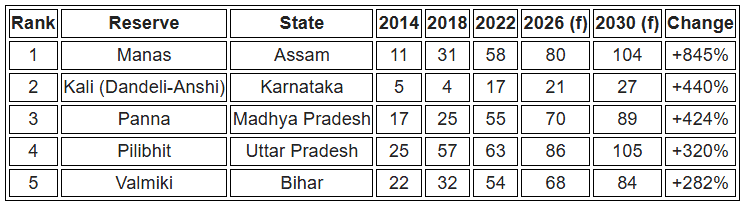
Manas in Assam ranks first, with numbers rising from 11 in 2014 to 58 in 2022 and forecast to reach 104 by 2030, an 845% increase. Its density is forecast to rise 641% between 2014 and 2030. That would make it India’s third-densest reserve after Corbett and Kaziranga, based on our forecasts from NTCA’s published density estimates.
These results are even more impressive considering Manas was once close to ecological collapse due to years of insurgency, which in turn led to increased poaching. A $2.35m rehabilitation plan launched in 1997 helped restore its habitat. After more than a decade of work, UNESCO finally removed Manas from its “in danger” list in 2011.
Kali in Karnataka is second, with numbers forecast to reach 27 by 2030 (up 440%). Village relocation is a key factor: all 498 voluntary relocations completed in Karnataka have been in Kali.
Panna in Madhya Pradesh is third. Numbers rose from 17 in 2014 to 55 in 2022, with 89 forecast by 2030 (up 424%). That’s a remarkable recovery for a reserve that had become a “zero tiger” park by 2009, when two tigresses were brought in from Bandhavgarh and Kanha.
India’s Fastest-Growing Tiger States
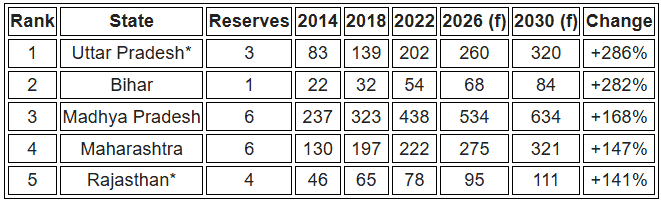
Uttar Pradesh leads India, with numbers rising from 83 in 2014 to 202 in 2022, and forecast to reach 320 by 2030 (up 286%). Bihar ranks second, with numbers forecast to rise from 22 in 2014 to 84 by 2030 (up 282%). With all present in Valmiki.
Madhya Pradesh is third, rising from 237 in 2014 to 438 in 2022, with 634 forecast by 2030 (up 168%). With a number to spare, 15 were translocated to other states.
Nepal’s Fastest-Growing National Parks
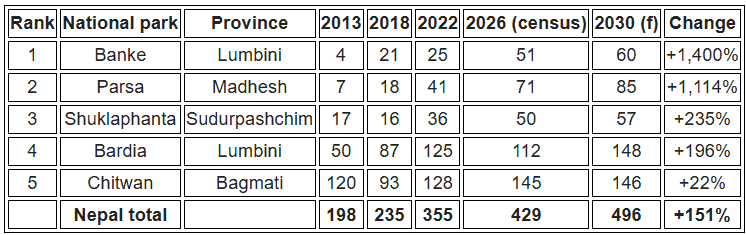
Nepal is also seeing a resurgence, with its 2026 census counting a record 429 tigers. Our study forecasts 496 by 2030, up 151% since 2013. Growth is concentrated in the parks of Banke, Parsa and Shuklaphanta, helped by better water infrastructure and cross-border habitat connectivity with India.
Banke is the fastest-growing National park in either country, going from only 4 in 2013 to 51 in 2026, with 60 forecast by 2030 (up 1,400%). Translocation from Chitwan boosted its population.
Parsa is close behind, rising from 7 in 2013 to 71 in 2026 and forecast to reach 85 by 2030 (up 1,114%). That makes Madhesh Nepal’s fastest-growing province. A joint DNPWC, NTNC and ZSL study found that relocating settlements from the park’s core largely drove the growth, along with tigers dispersing from Chitwan.
David Pettitt, Head of Product at Pettitts Travel, commented on the study, “The results of our latest study have been fascinating to review. It’s uplifting to see India and Nepal’s incredible progress in supporting the growth over the last decade, particularly as some of the top-scoring reserves in our study were near or at ‘zero tiger numbers’ within the last two decades.”
Read More: News