

The Indian kitchen shifts towards speed and shared tastes, while fragile regional food memories endure silently
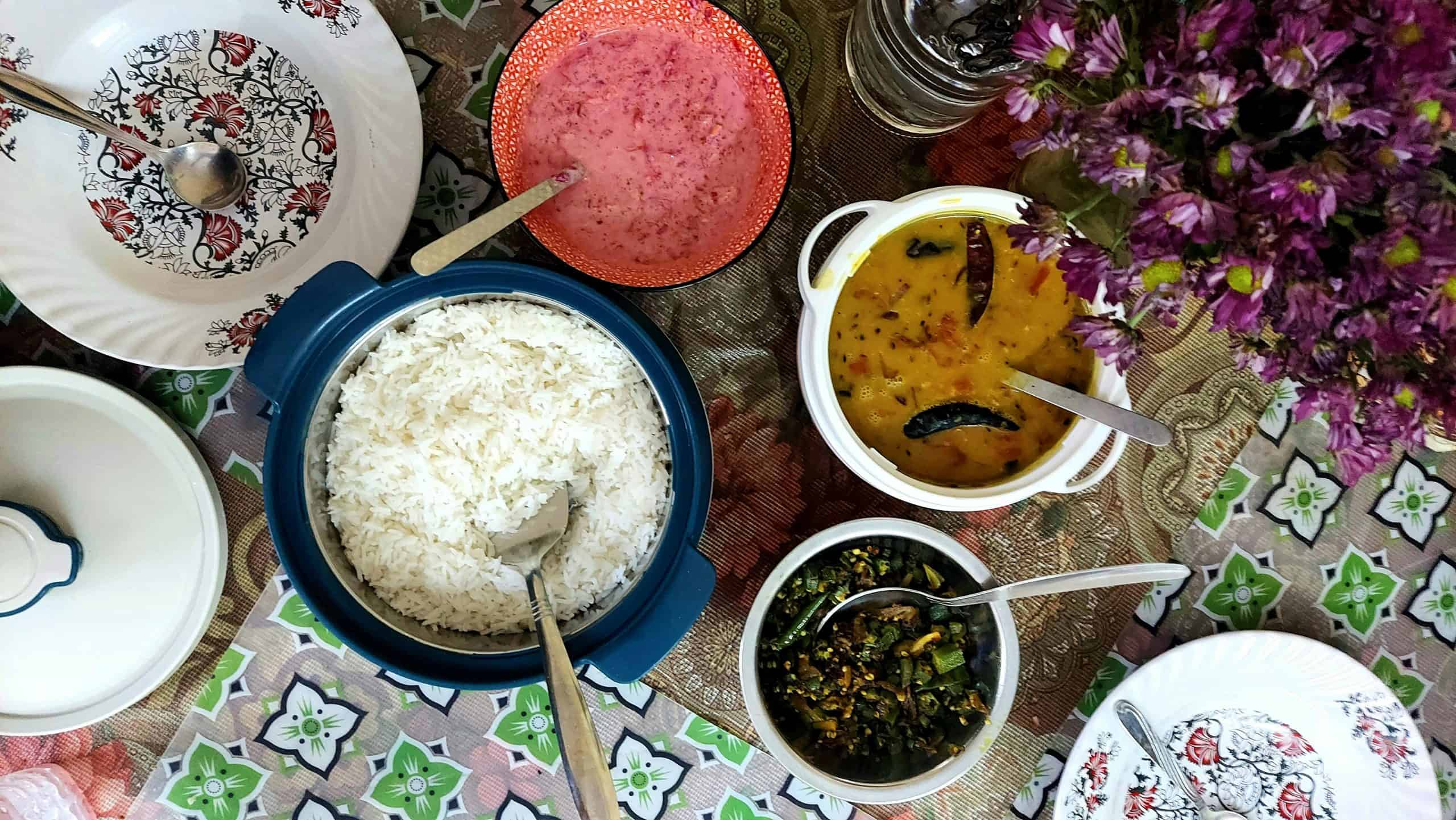
The Indian kitchen is changing quietly and steadily, taken up by the changing world, much like its people. The change goes beyond what simmers on the stove; it is also about who has the time to cook, how long they can stand there, and which recipes survive long enough to be remembered at all. Seeping in slowly, it shows up in shorter cooking times, in borrowed recipes, in half-remembered techniques, and in the growing distance between what is eaten daily and what is remembered fondly.
Across India, apart from finances, time pressure, migration, and modern life are reshaping what appears on the plate. From high-rise apartments in Bengaluru and Gurugram to forest-fringe hamlets in the Nilgiris and the Deccan, cooking is being simplified, shared, outsourced, and sometimes quietly set aside.
This raises difficult questions that we need to face and address. Is India slowly losing its food heritage? Or is it preserving parts of it in new ways, forgetting others, and reimagining many more to fit a time-starved age?
A Changed Indian Kitchen
A contemporary urban kitchen is often filled with industrial pickles, ready-made batters, leftovers from the day before, and takeouts that can be traced from dhabas to restaurants. More and more people resort to readymade rotis, meal prep and hundreds of jugaad that keep the house fed. A far cry from the freshly cooked meals and slow-cooked delicacies that perhaps they themselves grew up on.
While it is true that most people in India do live in rural areas, more and more people are moving into cities, just as the hustle and bustle of the urban is seeping into the villages. This has now turned into something that cannot be ignored or sidelined as only being a ‘city thing’.
The torrent of the times is pushing us into outsourcing every bit and piece of regional culture, washing us clean of our own inherited heritage; podis, special batters, unique pickles and masalas from the various corners of the vastness we call India, all slipping slowly between our fingers.
Beneath what we broadly call “regional Indian food” lies another, often unseen layer: tribal cuisines and the rural cuisines that are deeply rooted in the land. These traditions often rely on seasonal foraged greens, wild tubers, small millets, smoked meats, insect-based chutneys, and intricate ferments: surviving largely through oral memory and lived practice, they rarely appear on restaurant menus or glossy cookbooks, yet they hold deep ecological and cultural knowledge.
They are also the most fragile, destabilising quickly when forest access shrinks, wage labour rises, or younger generations migrate away. Adding to these complications is the fact that many ingredients used in these cuisines are hard to find and may even be endemic to the region they come from.
Time, Convenience, and the New Everyday Plate
Time is now the most powerful ingredient in the modern Indian kitchen. Urbanisation, long commutes, dual-income households, and the decline of joint families have squeezed daily cooking into tight windows, pushing the everyday plate towards speed.
Weekday meals grow simpler, quicker, and more predictable. One-pot dishes replace elaborate thalis. Khichdi, pulao, dal-chawal, and quick vegetable stir-fries shoulder the responsibility of nourishment through the week. Cooking becomes functional rather than expressive. Complexity is postponed for Sunday afternoons, religious festivals, or family gatherings.
Rural kitchens still follow a steadier rhythm, with home cooking anchored by coarse grains, fresh vegetables, and dairy. Even so, packaged snacks, instant noodles, and bottled drinks have entered the scene as wage labour leaves less time for soaking, sprouting, fermenting, sun-drying, or pounding grains.
For tribal and non-market cuisines, the squeeze is harsher. Their foodways often rely on collective foraging, seasonal gathering, slow smoking, and long ferments, practices that rarely fit into thirty or forty minutes, practices that become less and less feasible with migration.
When the choice is between hours toiling over food and a quick trip to the shop, time and infrastructure quietly decide what endures. Convenience does not merely simplify recipes. It decides which foods survive at all.
Migration and the Pan-Indian Kitchen
If time reshapes the kitchen from within, migration reshapes it from outside. Internal migration for work, education, marriage, and displacement has created shared urban kitchens where multiple food traditions meet daily.
In a Bengaluru flat, a Tamil professional may share space with a Manipuri designer and a Gujarati analyst. In Hyderabad, a Telugu household might rent rooms to students from Odisha, Bihar, or the North-East. In these homes, the stove becomes a site of negotiation, between mustard oil and curry leaves, coconut oil and ghee, dried fish and paneer. Everyday staples travel easily. Thepla becomes a desk snack in IT offices. Idli finds their way into North Indian canteens. Tribal rice dishes adapt to pressure cookers and induction stoves.
Food travels less through restaurants than through tiffins, hostels, messes, and rented flats. These informal kitchens often experiment well ahead of formal “fusion” dining. Going beyond the narrow walls of authenticity, what gets cooked here and carried back home holds the story of migration: shared groceries, borrowed recipes, improvised masalas, and the quiet intimacy of cohabitation. Each dish is a portable memory.
What Gets Lost and What Stays Invisible
Even though food migrates through home kitchens and shared apartments, it becomes most visible in markets, restaurants, and delivery apps, and that visibility reshapes it.
Menus often flatten India’s diversity into a small set of familiar dishes, leaving out everyday greens, steamed tubers, fermented sides, tribal porridges, and many regional staples. To sell well on a screen, complexity is simplified, and distinct food cultures are reduced to neat labels. Still, exposure matters: a pop-up tasting or an online recipe can spark curiosity and carry flavours back home.
The result is a split between public food culture and private food memory. Public food is what gets marketed and photographed. Private food is what lingers quietly, cooked rarely, held by elders, or tied to a ritual. Without deliberate care, what stays invisible is easier to lose.
In the end, what gets lost is always that food item that couldn’t be passed on, the one from our childhoods that could not be made in a metropolitan flat, something beyond the scope of the improvisations that the supermarket could provide. The answer is simple, the food that will be remembered are the ones that was passed down to you and the ones that you decide to pass on.
Preserving Food in a Time-Starved Age
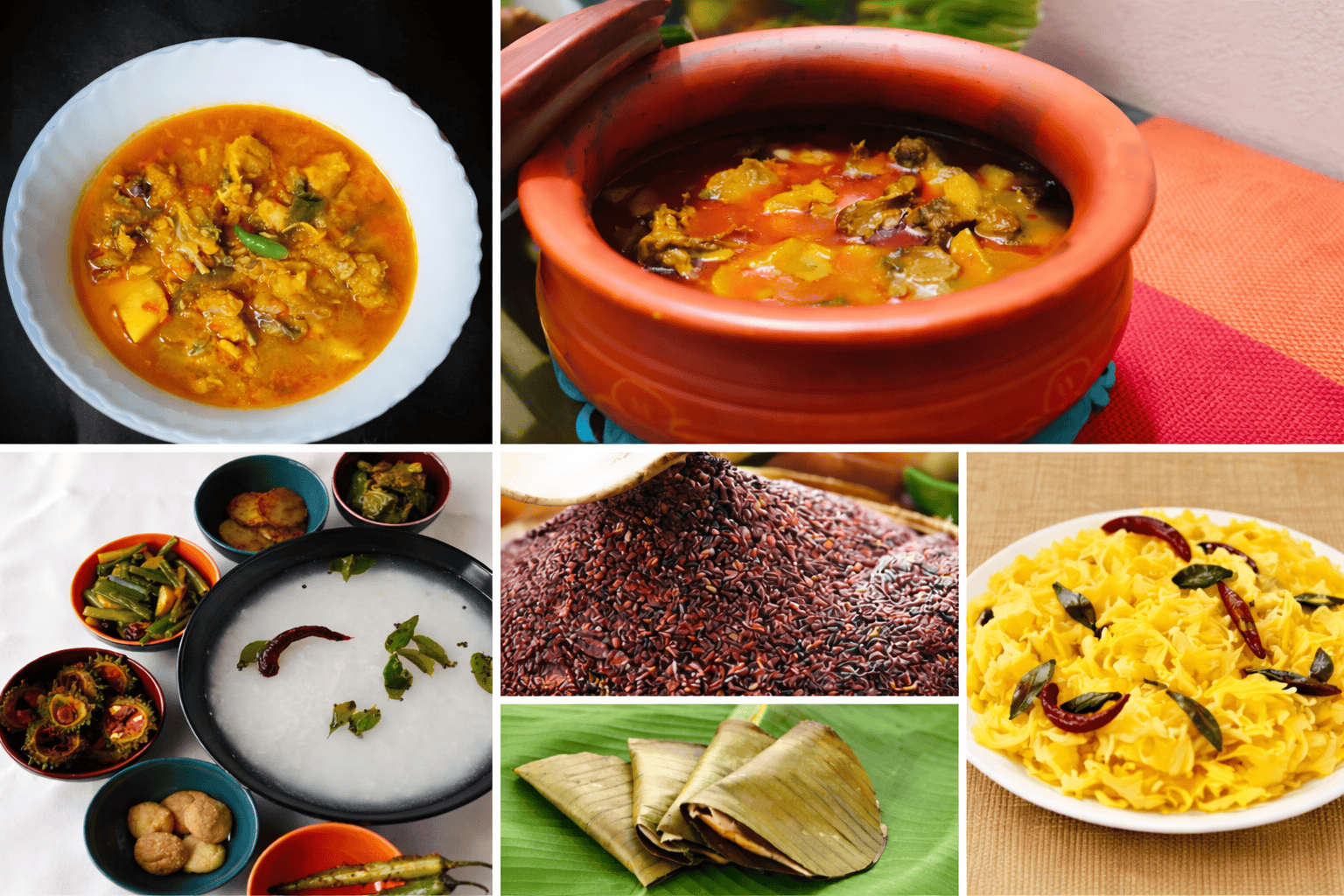
Against this backdrop, a quieter movement is unfolding. In the face of cultural erosion, people are turning back to food journaling and recording family recipes. Families are becoming archives. Elders are filmed while cooking. Recipes move through voice notes, PDFs, and shared folders.
Food journaling has emerged as a form of cultural memory. People photograph meals to remember and brag. The rare cultural indulgences reserved for festivals, where you walk down memory lane to cook and eat what you grew up on. Over time, these images and choices reveal patterns: what disappears first, what survives only on holidays, what refuses to vanish even as it gets pushed to the crannies of daily life.
Cookbooks are changing, too. New regional and community volumes document micro-cuisines with care, offering context, history, and adaptations for modern kitchens. Digital archives rescue handwritten manuscripts and fragile pamphlets before they are lost. Tribal food documentation, often led by communities themselves, records ingredients and techniques alongside conversations about land, access, and survival.
Authenticity shifts meaning here is no longer about rigid replication. It is about remembering where a dish came from, even when it is cooked differently.
The Future Indian Plate
The Indian kitchen also carries hidden social costs that often go unspoken, as deeply gendered cooking responsibilities compound time scarcity in dual-income households already negotiating the pressures of culture, convenience, and finances. Beyond rising living costs, migration creates a quieter rupture: access. Everyday ingredients become scarce or unaffordable, as migration distances us not only from familiar flavours but from the methods and culture that shaped them. The food that once sustained daily life becomes harder to recreate elsewhere.
It is happening in front of our eyes. Soaking and grinding are being replaced by ready-made batters, fermentation is being outsourced to factories, and pickling is becoming a purchase rather than a process. The kitchen adapts, but something subtle is lost with each shortcut, each readymade batter, pickle and each packaged masala we forget to make at home.
Indian food today operates on two layers. One is the fast, everyday plate, simple, hybrid, and shaped by time and convenience. The other is a consciously preserved archive of regional and community food stored in journals, videos, cookbooks, and memory that only surfaces on occasions and special moments.
The future will not be a return to an imagined past, nor a slide into uniform fast food. It will be an ongoing negotiation between speed and memory. Between what fits into a weekday evening and what a family or community refuses to let go of.
As long as those foods are named, recorded, shared, and occasionally tasted, the wild greens, the slow ferments, the millet porridges, the Indian plate, however changed, will continue to carry echoes of the forests, fields, coasts, and kitchens that shaped it.
Read More: Latest