

Across orchards, royal courts, wedding doorways, export pack houses and climate-stressed farms, the Indian mango records how the country grows, celebrates, trades and remembers
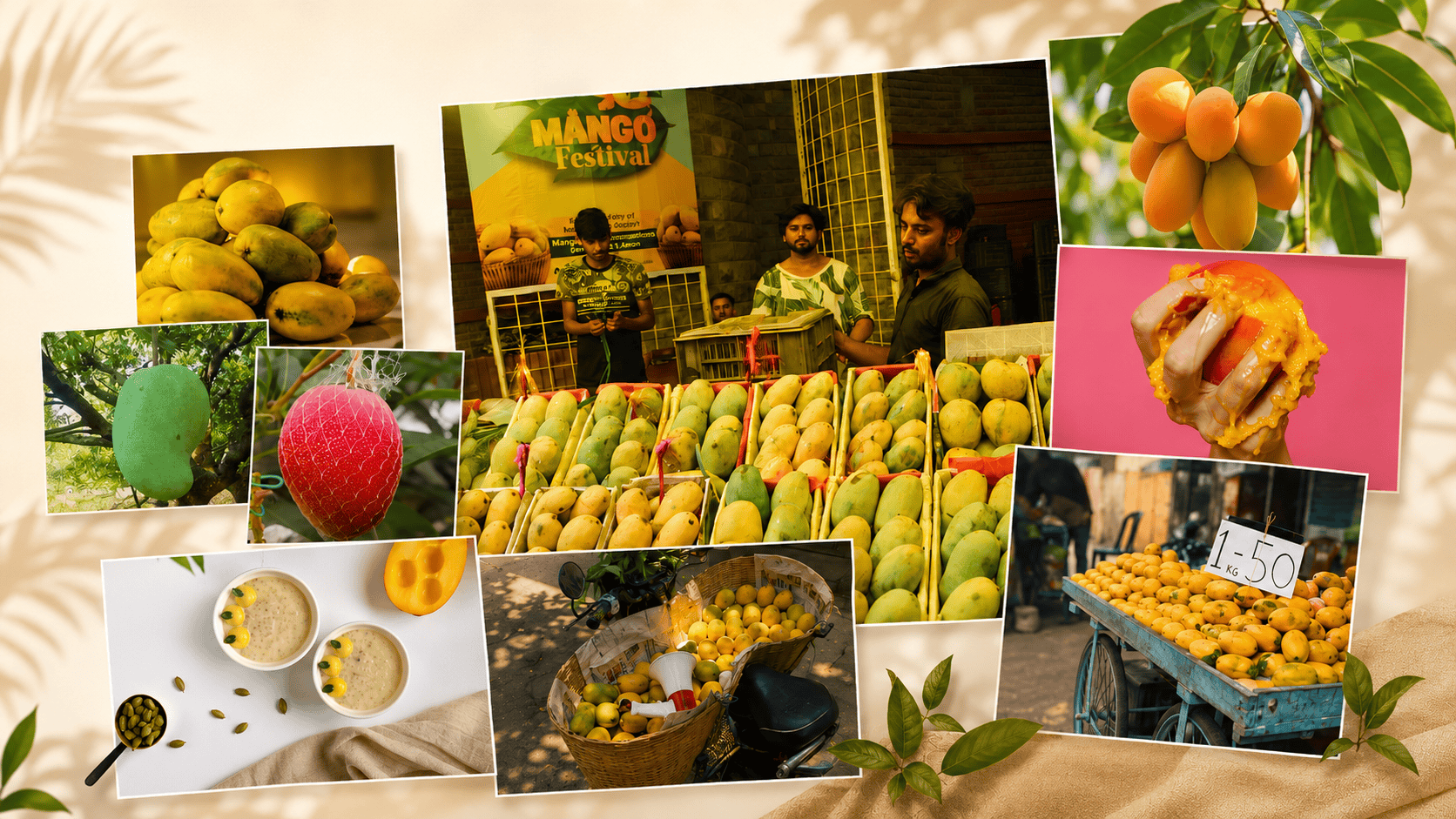
There are fruits that belong to a season, and there are fruits that seem to create one. In India, the mango does the latter. Its arrival is announced less by a date than by a change in public mood. Sellers arrange yellow, green, and blush-pink pyramids beneath handwritten varietal names. Couriers carry cartons across cities. Families debate sweetness, fibre, fragrance and provenance with the seriousness usually reserved for politics. Recipes reappear, childhood loyalties sharpen, and the first good mango becomes a small private ceremony.
Yet sentiment explains only part of the fruit’s hold over India. This is also a story of agricultural scale, regional economies, royal patronage, export ambition, legal protection and environmental uncertainty. India produced about 22.66 million metric tonnes of mangoes in 2024–25, close to 43% of global production. Uttar Pradesh and Andhra Pradesh lead output, followed by Bihar, Karnataka and Gujarat. Almost all this fruit is consumed within India, a striking fact in an age when agricultural prestige is often measured by export performance.
The mango is both abundant and rare. It can be eaten over the kitchen sink, gifted in velvet-lined boxes, processed into pulp, offered in ritual, displayed at a festival or protected through a Geographical Indication tag. Few foods move so easily between intimacy and industry.
A Country of Many Mangoes
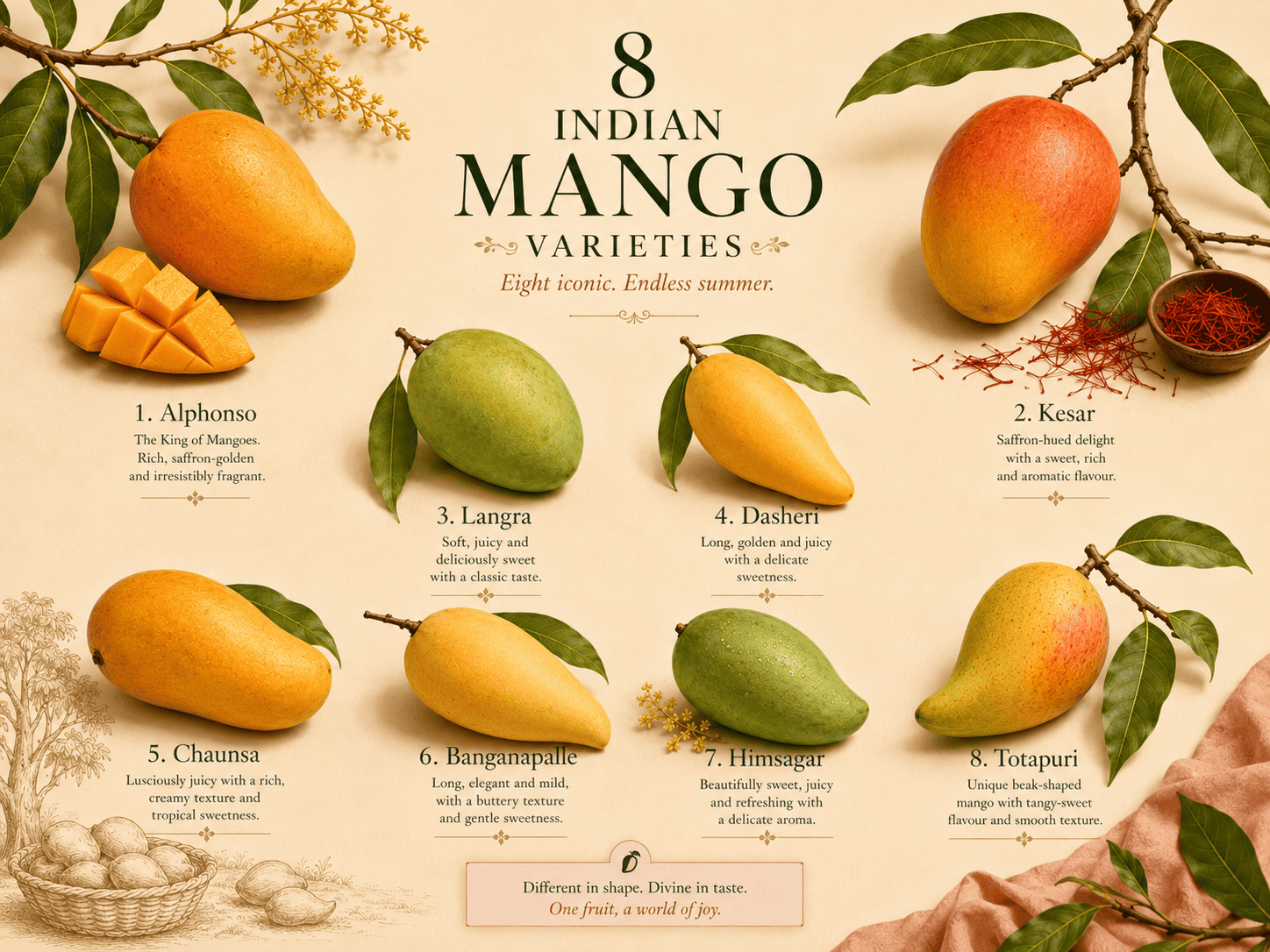
India is believed to have around 1,500 named mango varieties, with roughly 1,000 of them having some commercial relevance. The number is difficult to fix. Local names overlap; the same cultivar may be known by different names across districts, and wild or semi-wild forms survive in parts of peninsular India and the northeast. More important than the final count is the diversity it represents.
For most consumers, the national mango vocabulary is built around a familiar cast: Alphonso, Kesar, Langra, Dasheri, Chaunsa, Banganapalle, Himsagar and Totapuri. Beyond them lies a wider archive of flavour and form. Mangoes may be floral, resinous, honeyed, or gently acidic, with flesh ranging from firm and fibrous to melting and custard-smooth.
Regional loyalty turns these distinctions into identity. Coastal Maharashtra speaks for Alphonso with almost proprietary affection. Gujarat celebrates Gir Kesar. Malihabad’s orchard culture is inseparable from Dasheri. Eastern Uttar Pradesh and Bihar claim Langra. Bengal brings Himsagar, Lakshmanbhog, Fazli and Kohitur into the conversation. Southern India reserves special admiration for Imam Pasand, also known as Himayat.
Each variety carries a sensory character shaped by soil, heat, rainfall, cultivation and grower knowledge. Alphonso from Ratnagiri and Devgad is prized for saffron coloured, nearly fibreless pulp and a fine balance of sweetness and acidity. Gir Kesar is bright, floral and vividly orange. Langra remains green when ripe and inspires fierce allegiance. Dasheri is slender and fragrant; Chaunsa is lush and intensely sweet.
The mango’s pleasure lies partly in its refusal to become standard. It arrives carrying place, weather and argument.
Sacred Tree, Storied Fruit
Long before the mango became an agricultural commodity or a marker of seasonal luxury, it had entered India’s imagination as a tree of desire, wisdom, fertility and renewal. Mango blossoms, fruit, leaves, and groves recur throughout folklore, devotional traditions, Buddhist memory, and classical literature. Their meanings shift with every story, yet they share one understanding: the mango tree holds life in abundance.
Its evergreen canopy offered shade, its spring blossoms announced regeneration and its fruit carried summer’s fullest colour and sweetness. A mango could be eaten in minutes, while a well-tended tree might feed several generations. The fruit was fleeting; the tree suggested continuity.
Among the mango’s most evocative folk associations is the story of Surya Bai. In versions of the tale, a princess returns to life through a mango tree, transforming loss into renewal. Her presence survives in its branches and ripening fruit, giving the mango an aura of rebirth and concealed beauty. The golden fruit becomes a vessel through which identity, memory and life reappear.
The tale belongs to a wider Indian storytelling tradition in which human lives cross into the botanical world. Trees remember what kingdoms forget. Flowers reveal hidden identities. Fruit carries the trace of someone believed lost. In the Surya Bai story, sweetness is inseparable from survival. The mango’s seasonal return suggests that disappearance need not be final.
Indian poetry gives another life to the mango blossom. Its first panicles appear as the air warms, carrying a faint fragrance and signalling the approach of a season associated with longing, courtship and reunion. Literary and mythological traditions connect the blossom with Kamadeva, the god of desire. In classical poetry, flowering mango trees become companions to romance, anticipation and viraha, the ache of separation. Spring may be beautiful, but for the absent lover, every scented blossom sharpens longing.
The grove, therefore, becomes more than a backdrop. It offers privacy, perfume, shade and the restless energy of a landscape coming into bloom. Its trees seem to respond to the emotional lives of those who pass beneath them.
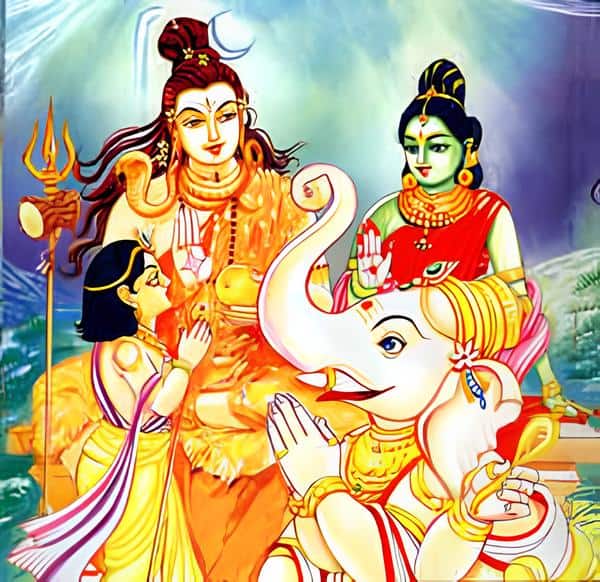
One of the best-known divine legends centres on a celestial fruit presented to Shiva and Parvati. In popular retellings, the fruit is a golden mango containing perfect knowledge. It cannot be divided, so their sons, Ganesha and Kartikeya, are challenged to race around the world, with the mango promised to the winner.
Kartikeya sets out on his peacock, relying on speed and physical prowess. Ganesha takes another path. He circles Shiva and Parvati, declaring that his parents contain the whole world. His interpretation wins him the fruit. The legend turns the mango into concentrated wisdom, valuable because it must be understood as a whole. Kartikeya reads the challenge literally; Ganesha sees the idea within it.
In Tamil traditions connected with Murugan, the story carries another emotional ending. Angered by the result, Murugan withdraws, while his parents remind him that he himself is the fruit of wisdom. The mango becomes more than a prize. It is an image of knowledge, completeness and the limits of competition.
The fruit also carries a quieter spiritual association through the story of Amrapali, the celebrated woman of ancient Vaishali whose name is linked with the mango tree. Buddhist tradition recounts that she hosted the Buddha and later donated her mango grove to the Buddhist order. Here, the orchard becomes a place of hospitality, teaching and renunciation. Its value lies not in rare fruit sold at a premium, but in land freely given.
The story adds generosity to the mango’s symbolic vocabulary. A tree offers fruit, but a grove offers shelter, stillness and a place where knowledge may be shared. Across Indian history, mango orchards have served social as well as agricultural roles. Their dense canopies created gathering places, resting grounds and landscapes suited to contemplation.
The mythology has never remained confined to texts. It continues in leaves tied above doors, arranged around ritual vessels and placed at wedding entrances. Fresh mango leaf garlands, known as toran or toranalu, signal that a household or ceremonial space has been prepared for an auspicious occasion. They appear at weddings, festivals, housewarmings and religious observances, carrying wishes for prosperity, fertility, protection and continuity.
The ceremonial kalasha is commonly filled with water, framed by mango leaves and crowned with a coconut. The vessel represents abundance and the source of life; the leaves extend outward like living signs of energy and growth. At a wedding mandap or home entrance, their greenness matters. They make prosperity visible before the fruit has even formed.
The familiar kairi or paisley shape carries some of this symbolism into textiles, embroidery, jewellery and mehndi. Its curved form evokes the mango, a seed, a leaf or a young shoot, all images of fertility and continuing life.
By the time royal courts began cultivating favoured varieties, the fruit already possessed a cultural authority no luxury campaign could manufacture. Its prestige had been built across centuries of story, worship, poetry and everyday ritual.
The Imperial Orchard
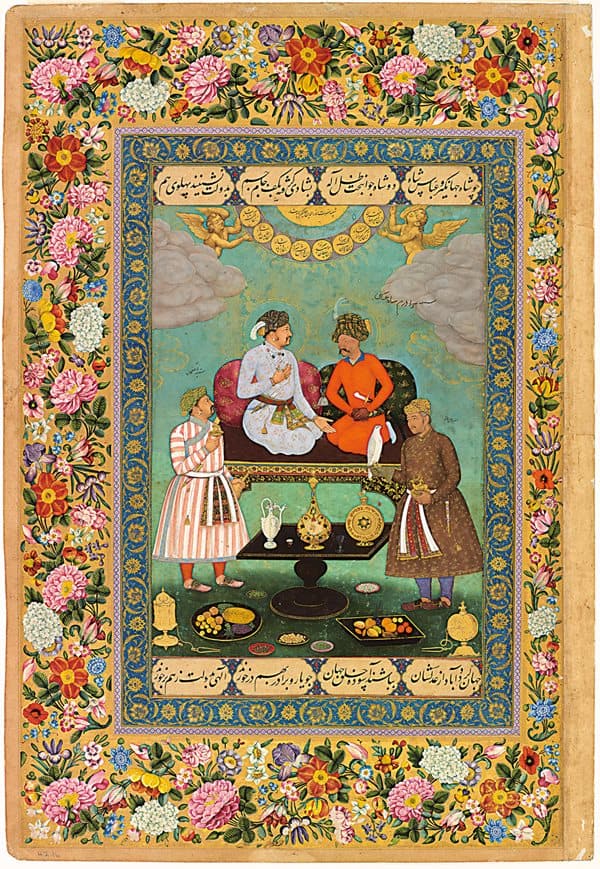
Royal courts added connoisseurship to symbolism. Mughal emperors encouraged the cultivation of orchards, commissioned avenues of mango trees, organised elaborate tastings, and treated the fruit as an object of discernment. Courtly patronage encouraged grafting and selection, turning the orchard into a place where taste could be refined, reproduced and named.
Akbar’s famous orchards and Jahangir’s admiration belong to a larger history in which rulers compared varieties, rewarded growers and used fruit as a form of hospitality. The mango travelled through courts as tribute, a diplomatic gesture and a seasonal gift. Varieties later associated with elite taste, including Kohitur and Imam Pasand, gained value through stories of exclusivity as much as through flavour.
The Making of a Luxury Mango
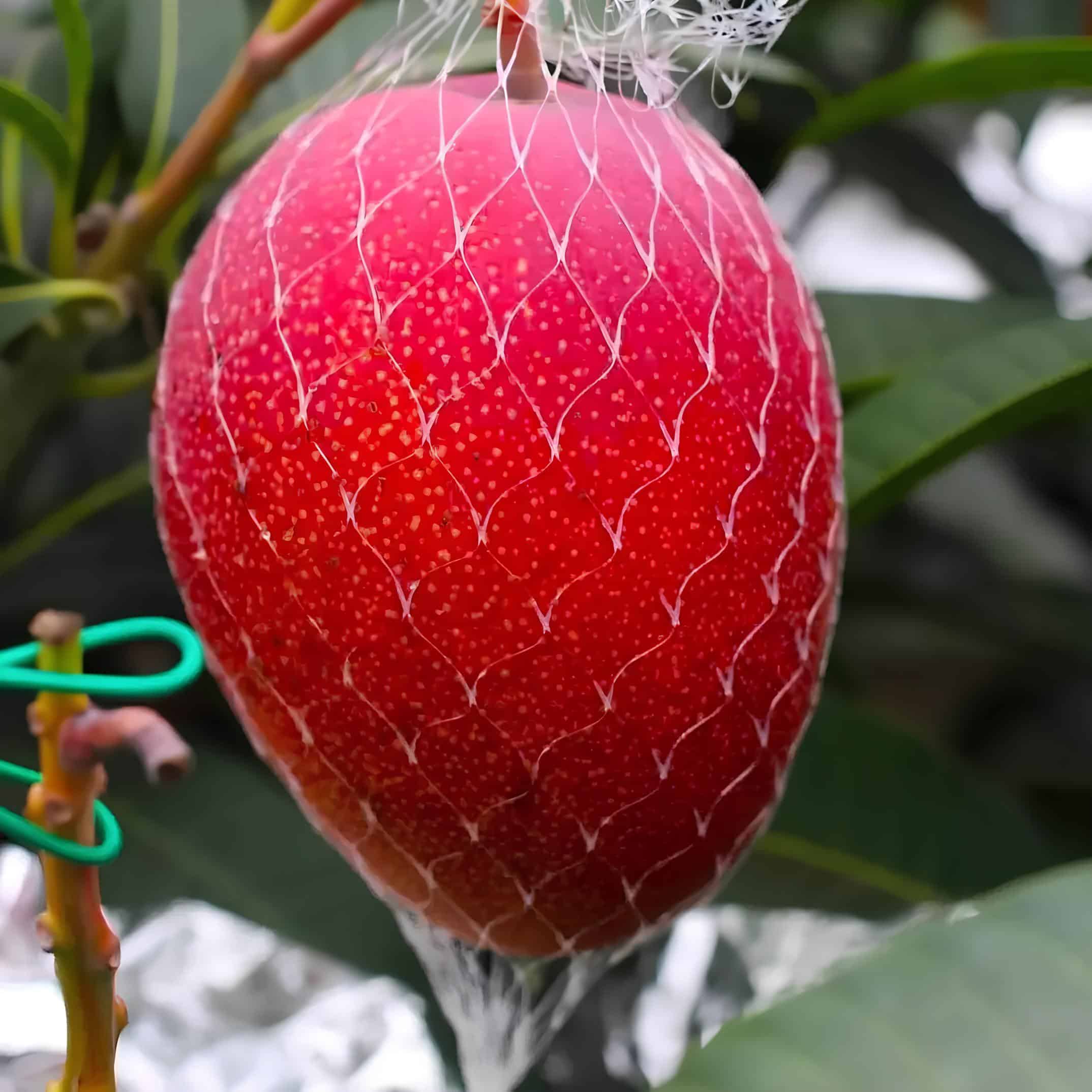
Every mango season produces dramatic headlines about fruit priced like jewellery. Some figures deserve scepticism. Viral claims often quote an auction value, a ceremonial gift price, or an exceptional retail listing as though it were an ordinary farm-gate rate. Even so, the premium mango market is real, and its economics reveal how luxury is constructed.
The Japanese Miyazaki is the best-known contemporary example. Recognised by its ruby-red skin, high sugar content, and carefully managed ripening, it is now grown in small plantings in India. Reports of prices reaching ₹2.5 lakh or ₹3 lakh per kilogram generally refer to exceptional Japanese fruit, auctions or prestige gifts, not routine Indian sales. Its appeal rests on novelty, colour and the theatre of meticulous cultivation.
Noorjahan tells a different story. Grown around Kathiwada in Madhya Pradesh’s Alirajpur district, individual fruit may reach 11 inches and weigh between 2.5 and 5 kilograms in a favourable season. Supply depends on very few old trees maintained through grafting. Limited yields and advance bookings have pushed prices to ₹1,500, ₹3,000 or more per fruit in some seasons.
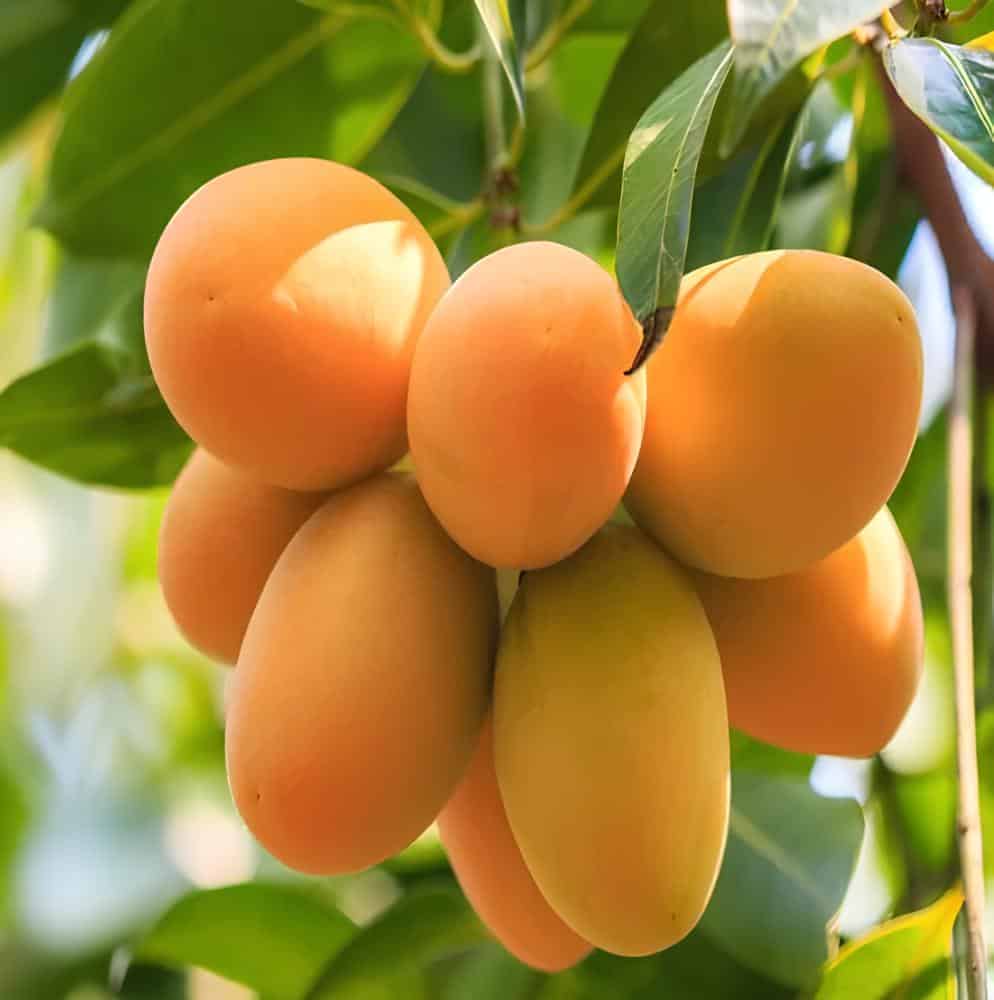
Kohitur belongs to Murshidabad’s nawabi legacy. Delicate-skinned and scarce, it is sold less as a snack than as an encounter with history. A fruit that bruises easily and appears briefly acquires a ceremony around it.
Imam Pasand, or Himayat, is less sensationally priced but frequently judged by connoisseurs as one of India’s finest eating mangoes. Its creamy flesh and layered flavour demonstrate an important distinction: the best mango and the most expensive mango are not always the same thing.
Rarity is only one ingredient in premium value. Size, appearance, labour, low yield, short harvesting windows, climatic vulnerability and a persuasive story also matter. So does packaging. A carton labelled with a district, orchard and harvest date commands more confidence than an anonymous heap of fruit.
When Geography Becomes a Guarantee
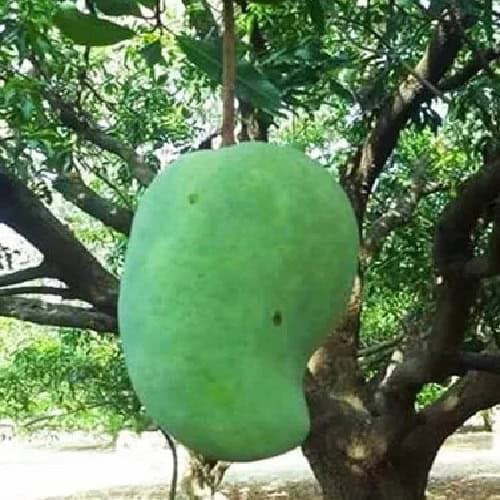
Geographical Indication protection gives legal form to the link between a product and its place. India now has several GI-tagged mango varieties, including Devgad Alphonso, Gir Kesar, Banganapalle, Malihabad Dasheri, Lakshmanbhog, Khirsapati Himsagar, and Fazli.
A GI tag links a recognised name to a defined geography and production tradition. In a market crowded with mislabelling, especially around Alphonso, it helps growers defend regional identity and gives consumers a clearer basis for judging authenticity.
Devgad Alphonso is valued for its aroma, colour, texture, and sugar-acid balance linked to coastal conditions. Gir Kesar carries its own sensory code, often smaller, immediately sweet, floral and richly coloured.
The opportunity reaches beyond premium boxes. GI protection can strengthen traceability, cooperatives, export storytelling and action against misuse of famous names. It can also support orchard tourism: blossom-season visits, grafting demonstrations, varietal tastings, and summer menus in places such as Malihabad, Devgad, Ratnagiri, Gir, Murshidabad, and Malda.
The Fruit India Keeps
Despite producing close to half the world’s mangoes, India exports only a minute share of its crop. In FY 2024–25, fresh mango exports were reported at about 29,938 metric tonnes, valued at roughly USD 56.5 million. Against national production, that is around 0.12%.
The numbers reveal an unusual agricultural power. India’s mango prestige is sustained by an immense domestic appetite. Famous cultivars circulate through mandis, neighbourhood sellers, online platforms and family networks. India remains the decisive audience.
The United Arab Emirates is the leading destination for Indian fresh mangoes, while Indian fruit also reaches the United States, the United Kingdom, Saudi Arabia, Oman, Japan, Canada, Australia, South Korea and European markets. Exporting it is far more technical than placing fruit in a box and putting it on a plane. Depending on the destination, consignments may require vapour heat treatment, irradiation, quarantine inspection, and approved packhouse handling.
India’s opportunity may lie in carefully branded, high-value consignments aimed at diaspora communities, chefs and consumers interested in provenance. A box of GI-protected mangoes can carry a richer story than a generic commodity, but it requires reliable traceability and stronger infrastructure.
The Industrial Mango

Fresh mangoes attract the romance, but mango pulp is one of India’s quieter export strengths. Processing clusters around Chittoor in Andhra Pradesh and Krishnagiri in Tamil Nadu produce aseptic pulp for beverage, dairy, confectionery and food companies. In FY 2024–25, India exported about 63,253 metric tonnes of mango pulp valued at approximately USD 80.34 million.
The journey bears little resemblance to the gift box. Mangoes are washed, sorted, pulped and sealed in aseptic bags or cans. A mango drink in the Gulf may begin in a Totapuri orchard in southern India. Processing also allows fruit that cannot meet premium appearance standards to be made into pulp, puree, preserves, or dried products.
Festival, Memory and Soft Power
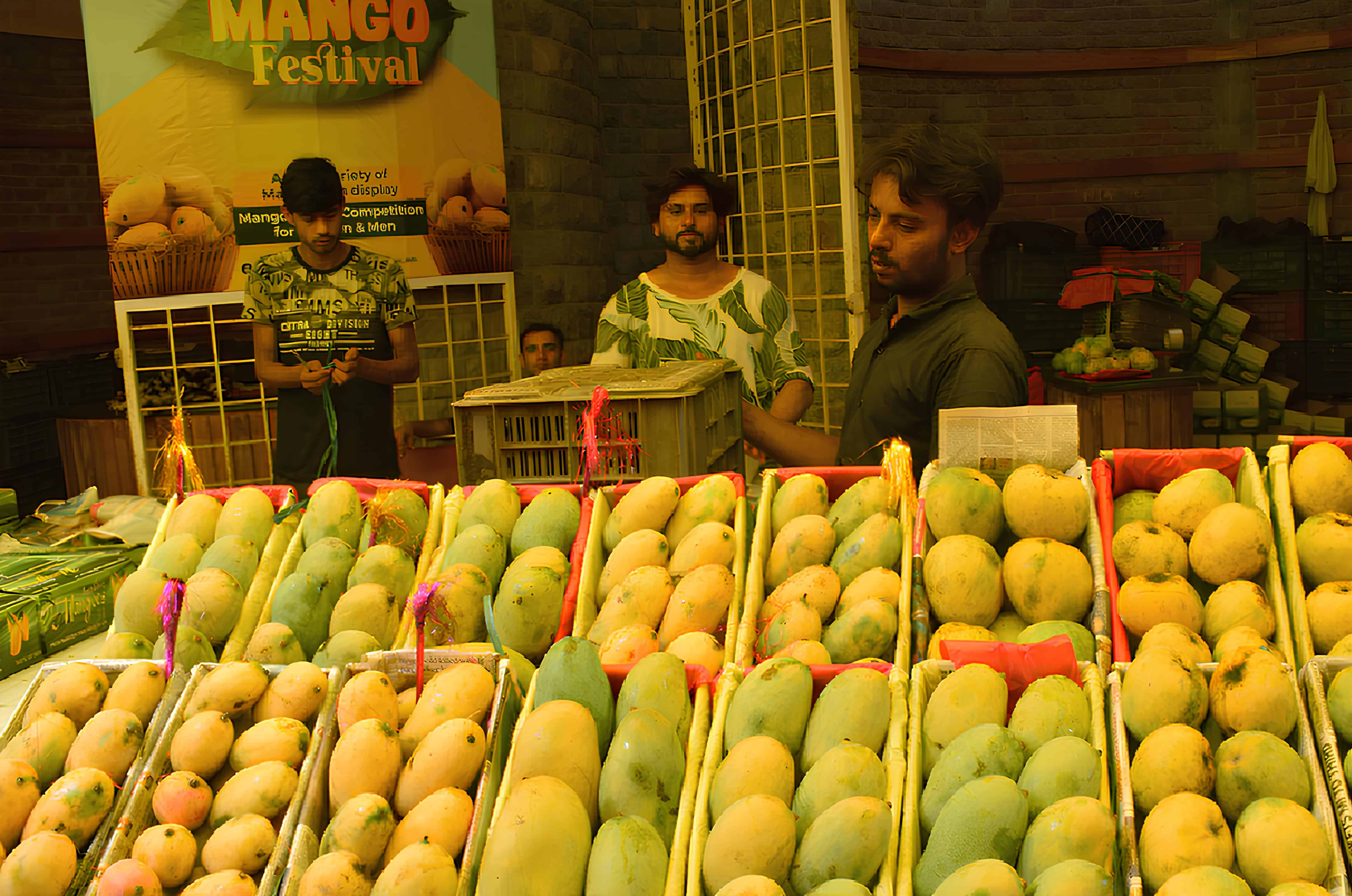
Delhi’s International Mango Festival, held since 1987, brings varieties, growers and visitors into one arena. Displays, tastings and competitions turn agricultural diversity into spectacle while connecting celebration with trade.
The mango also travels privately. Boxes move as diplomatic gifts, seasonal courtesies and tokens of home. For the Indian diaspora, Alphonso, Kesar, Chaunsa or Dasheri can carry intense emotional force. The flavour is not only sweetness; it is school holidays, grandparents’ homes, and newspapers spread across the floor.
Summer Under Pressure
For all its abundance, the mango is highly sensitive to weather. Flowering and fruit set depend on a delicate sequence of temperature, moisture and seasonal timing. Unseasonal rain damages blossoms. Heatwaves reduce fruit set or cause fruit drop. Hail can destroy a crop within minutes. Warmer nights shift flowering patterns, while sudden daytime heat stresses emerging panicles.
Climate change becomes tangible inside an orchard. It is a missed flowering window, smaller fruit, an uneven crop or a season in which the expected harvest never fully arrives. Prices may rise, but higher prices do not always compensate growers for lower yields.
Rare cultivars face a sharper danger. Noorjahan’s fame rests on very few heritage trees and a narrow microclimate. Fruit size and yield fluctuate with temperature and rainfall. Publicity alone cannot protect such varieties. They need systematic propagation, grafting, field documentation, genetic conservation, and support for the communities that maintain them.
There is narrative diversity to preserve as well. Langra’s name, Kohitur’s nawabi associations, Imam Pasand’s courtly reputation and Noorjahan’s giant fruit connect communities to place. Lose the cultivar, and the story becomes folklore without a living object.
The Taste of a Living Archive
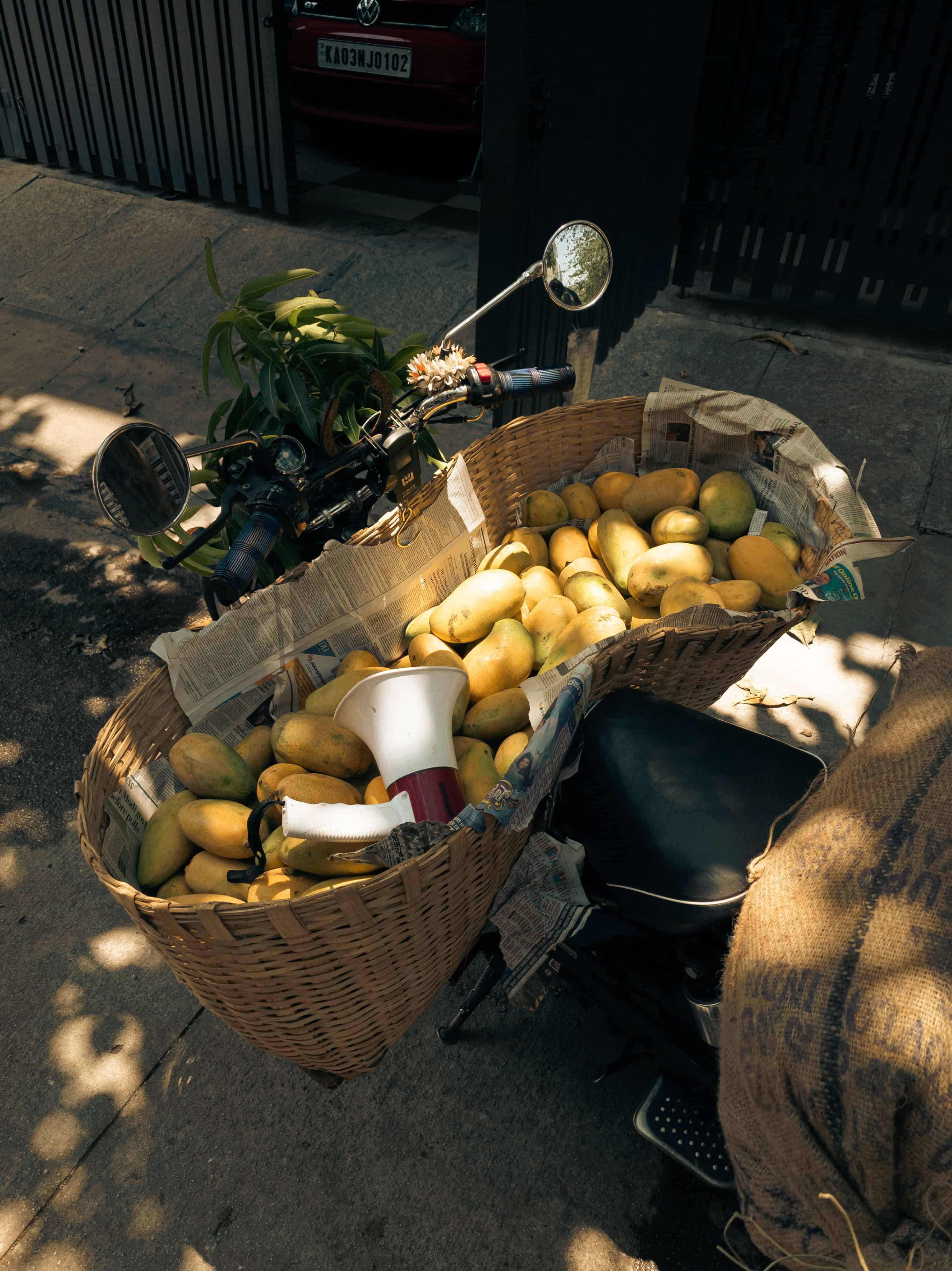
The mango contains many Indias at once. It is sacred foliage above a wedding doorway and a consignment moving through irradiation; a Mughal obsession, an online gift, a roadside pleasure, a collector’s fruit and an aseptic drum bound for a factory.
Its future depends on holding these worlds together. Production, export growth and processing matter, but so do varietal diversity, domestic culture and meaningful returns for growers.
India’s mango is not one flavour or one story. It is a living archive, ripening each summer briefly, asking to be tasted before it disappears.
Read more – Food Voyager