

Jyoti Mayal, Chairperson of THSC, assesses India’s tourism recovery, workforce challenges, and growth priorities heading into 2026

India’s tourism and hospitality sector closed 2025 on a resilient and forward-looking note, marked by steady recovery, structural reforms, and renewed growth opportunities. According to Jyoti Mayal, Chairperson of the Tourism & Hospitality Skill Council (THSC), the industry displayed “remarkable adaptability and renewed confidence despite periodic disruptions,” creating a stable base for 2026.
The year opened strongly, supported by rising domestic tourism, improved air connectivity, and sustained demand for spiritual circuits, adventure travel, and short-duration micro-vacations. Several states recorded double-digit growth in domestic tourist footfall, aided by festive travel demand and strengthened digital booking platforms. India’s G20 legacy continued to enhance inbound visibility, particularly across Southeast Asia, Europe, and the Middle East.
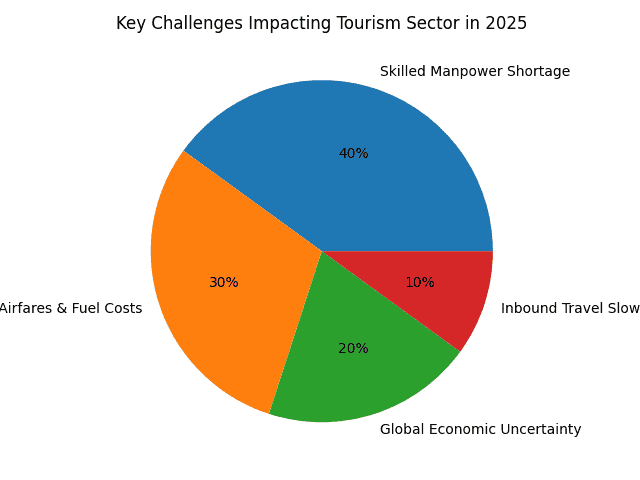
At the same time, 2025 presented challenges. Global economic uncertainty affected long-haul inbound travel during parts of the year, while volatility in aviation fuel prices pushed airfares upward, influencing travel sentiment and operating costs. Persistent shortages of trained manpower across tourism, hospitality, and aviation-linked services further highlighted the urgency for focused skilling interventions.
Momentum improved in the second half of the year, supported by policy and infrastructure measures. Enhanced e-visa facilitation, tourism infrastructure upgrades under Swadesh Darshan 2.0, and targeted skilling initiatives led by THSC contributed to stabilising the ecosystem.
Reflecting on the year, Mayal said, “2025 was a defining year for Indian tourism, where resilience met transformation. Our emphasis on workforce skilling, strengthening domestic circuits, and improving service quality has positioned the sector in a far more future-ready state. Going forward, aligned tourism and aviation policies, along with stronger public-private partnerships, will be essential to sustain growth. Expanding skilling outreach across regional and neighbouring countries, and creating dedicated skilling clusters and hubs, will further strengthen the ecosystem by improving service standards, generating employment, and narrowing skill gaps. The momentum achieved in 2025 will play a decisive role in shaping India’s global tourism presence in 2026.”
Looking ahead, THSC expects 2026 to be shaped by three key drivers: continued dominance of domestic travel, increased hospitality investments in emerging destinations, and growing demand for specialised skills in sustainable tourism, digital hospitality, culinary innovation, and experiential travel services. With younger travellers driving aspiration-led demand and global attention shifting towards India as a culturally rich, value-driven destination, the sector is positioned for sustained expansion.
Jyoti Mayal added, “To fully capitalise on upcoming opportunities, bridging skill gaps, adopting technology with agility, and strengthening collaboration between industry and training institutions will be critical. 2026 will be a year of consolidation and opportunity for Indian tourism.”
Read more – Latest