

Breathable fabrics, neutral tones, and Indian craft quietly redefine what luxury travel dress codes truly prioritise

Travel strips style back to its truth. When you are moving through unfamiliar weather, long drives, early starts, late dinners, and rooms that swing between heat and aggressive air-conditioning, clothes either support you or become another problem to manage. Anything stiff, fussy, or attention-seeking starts to feel like work. You do not want to spend a trip adjusting seams, battling creases, or second-guessing what to wear on. You want to feel good, look composed, and get on with the day.
That is why understated luxury has become the new travel uniform. It is not a trend built for photographs, but a wardrobe logic built for real motion. Clean silhouettes, soft structure, breathable fabric, and calm colour stories that repeat well across cities and coastlines.
In this form, fashion becomes wellness: fewer irritations, fewer decisions, and steadiness you can pack.
Why Quiet Luxury Works in Transit
Trips already contain enough decisions: routes, reservations, time zones, menus, meetings. When clothes are fussy, restrictive, or high maintenance, they add friction where you least need it. A pared-back wardrobe removes that work and turns dressing into something close to automatic.
This is also why “investment dressing” now reads like wellness. Buying fewer, better pieces reduces wardrobe regret and makes packing simpler. Psychology research links repeated decision-making to depleted mental energy and poorer choices, which is why a repeatable travel uniform can feel like relief rather than limitation.
In practical terms, the refined travel uniform rests on three pillars. It looks polished while staying comfortable. It breathes across climates, especially the whiplash of tropical heat and aggressive air conditioning. And it repeats gracefully, so you are not reinventing yourself every morning under hotel lighting.
Global Minimalism and the Sensory Shift
European minimalism has always been an exercise in editing. It is not the absence of style, it is restraint that reads intentional. For travellers, that restraint clears visual noise and reduces the small irritations that build into fatigue.
Tonal neutrals, sand, ink, soft grey, create visual calm without feeling bland. They photograph well without demanding attention, and they make repetition look like consistency rather than compromise.
The other half is tailoring that breathes. This new wave of low-key luxury travel clothes has moved away from armour towards soft structure: unlined blazers, trousers with clean drape, shirts that hold shape without stiffness. These pieces are built for movement and long sitting. They look expensive because the cut is right, not because the fabric is loud.
Then comes the sensory shift. Fabric handfeel has become the real flex: how it sits on skin, how it responds to heat and moisture, how it behaves after eight hours, not eight minutes. Textile research treats comfort as a mix of thermal and sensorial properties, including air permeability and moisture transfer. In plain terms, breathable fibres tend to feel less sticky, less irritating, and less exhausting over long days.
India’s Quiet Luxury Advantage
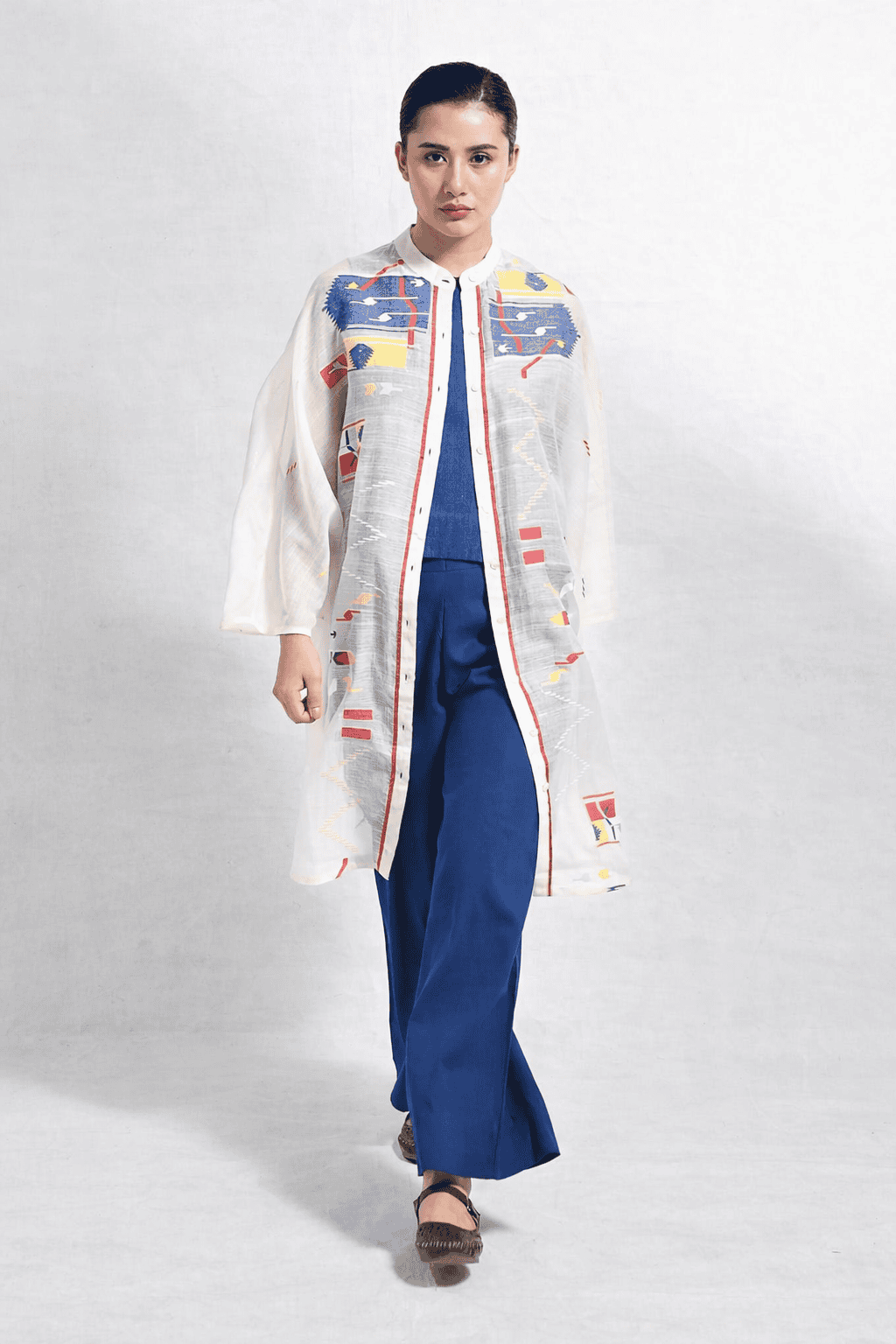
India has been practising the traveller’s version of understated elegance for generations, without needing the label. The craft ecosystem evolved through climate and daily comfort. Natural fibres, breathable weaves, intelligent layering, these are lived design, which is why Indian textiles so often feel right on the road.
Khadi is the clearest example. Defined as hand spun and hand woven cloth, traditionally in cotton, silk, or wool, it is prized for airflow and comfort in heat. In contemporary silhouettes, khadi becomes crisp shirts, relaxed trousers, cords, and unlined jackets that look expensive because they are cut cleanly. On the move, it earns its place through behaviour: less cling, less overheating, less irritation.
Chanderi brings lightness that reads expensive. Its signature is feather-light layering and a subtle sheen that looks elegant without effort. Chanderi sarees are also a registered Geographical Indication in India, which matters when provenance matters. For travel, the appeal is temperature intelligence. A Chanderi layer works across heat outdoors and cold interiors without adding bulk, and it packs beautifully.
Jamdani offers a subdued texture that can be read as tonal and clean from afar, then reveals intricate motifs up close, a tradition recognised by UNESCO. India also has GI-registered Jamdani traditions, including Jamdani Sarees of West Bengal. For the traveller, this is detail without noise: visual interest that does not overstimulate.
The Uniform System
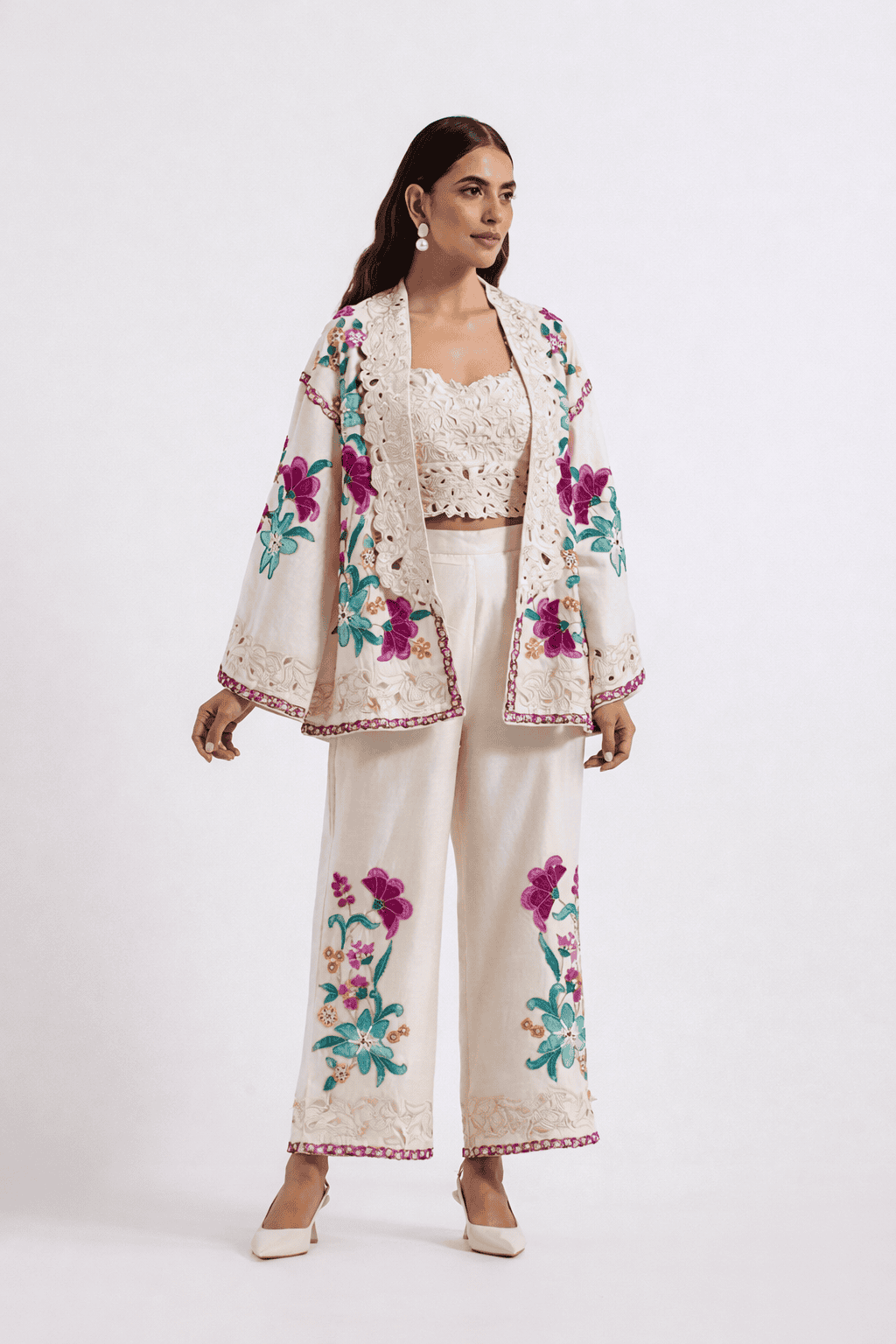
The secret is not shopping, it is systems. Think in modules that work together: a shared palette, a balance of structure and softness, and one craft element per look. When every piece has a job, packing becomes easier and getting dressed becomes almost automatic.
Build your base around breathable essentials that feel calm on bare skin, then add structure in light layers. A soft-tailoring jacket over khadi trousers, or a Chanderi layer over a clean dress, moves easily between airports, lobbies, and dinners. Accessories should be minimal and tactile, like a fine chain, soft leather, or a single scarf that you actually use.
If you need a template, begin with an airport to check in look: an unlined jacket, a breathable shirt or knit tank, and clean trousers that do not pinch when you sit for hours. Shift it into a city walk to dinner combination by keeping the base neutral and adding one craft layer, a Chanderi longline piece or a Jamdani scarf that reads quiet until you look closely. This is where the wellness logic becomes tangible. Softer waistbands and less constriction support comfort after flights and rich meals, tonal palettes keep stimulation low, and a scarf that doubles as a light blanket quietly improves the odds of a decent nap.
Every piece should pass four travel checks. It should feel calm on the skin, let you move without overheating, sit comfortably for hours without digging or pulling, and allow a nap without feeling trapped. If it fails any one of these, it is not travel luxury.
Quality hides in details most people never photograph. Look for clean seam finishing and stitching that lies flat, especially around underarms and waistbands. Check stress points and buttons. Notice lining choices, breathable or partial lining often performs better than stiff, shiny layers that trap heat. Fit matters more than hype because fit is comfort engineering; a correct shoulder line and the right sleeve length reduce fidgeting all day.
If you care about authenticity in Indian craft, provenance markers help. GI-registrations exist for heritage textiles, including Chanderi Sarees and Jamdani Sarees of West Bengal, and the Handloom Mark scheme was created to help consumers identify genuine handwoven products.
The Luxury of Ease

If a travel wardrobe is doing its job, you barely notice it.
There is no tugging at seams, no second thoughts in front of a suitcase, no outfit that needs managing between breakfast plans and an evening reservation. Everything works quietly, and the day stays yours.
Seen this way, refined dressing becomes practical self-care.
Breathable fibres, movement-friendly shapes, and repeatable pairings keep the body comfortable and the mind uncluttered.
That is what today’s luxury traveller seeks most: a sense of steadiness that lasts across changing places and long days.
Read more – Latest