

Beneath spreading branches, banyan tree traditions across India and South Asia link ritual and community
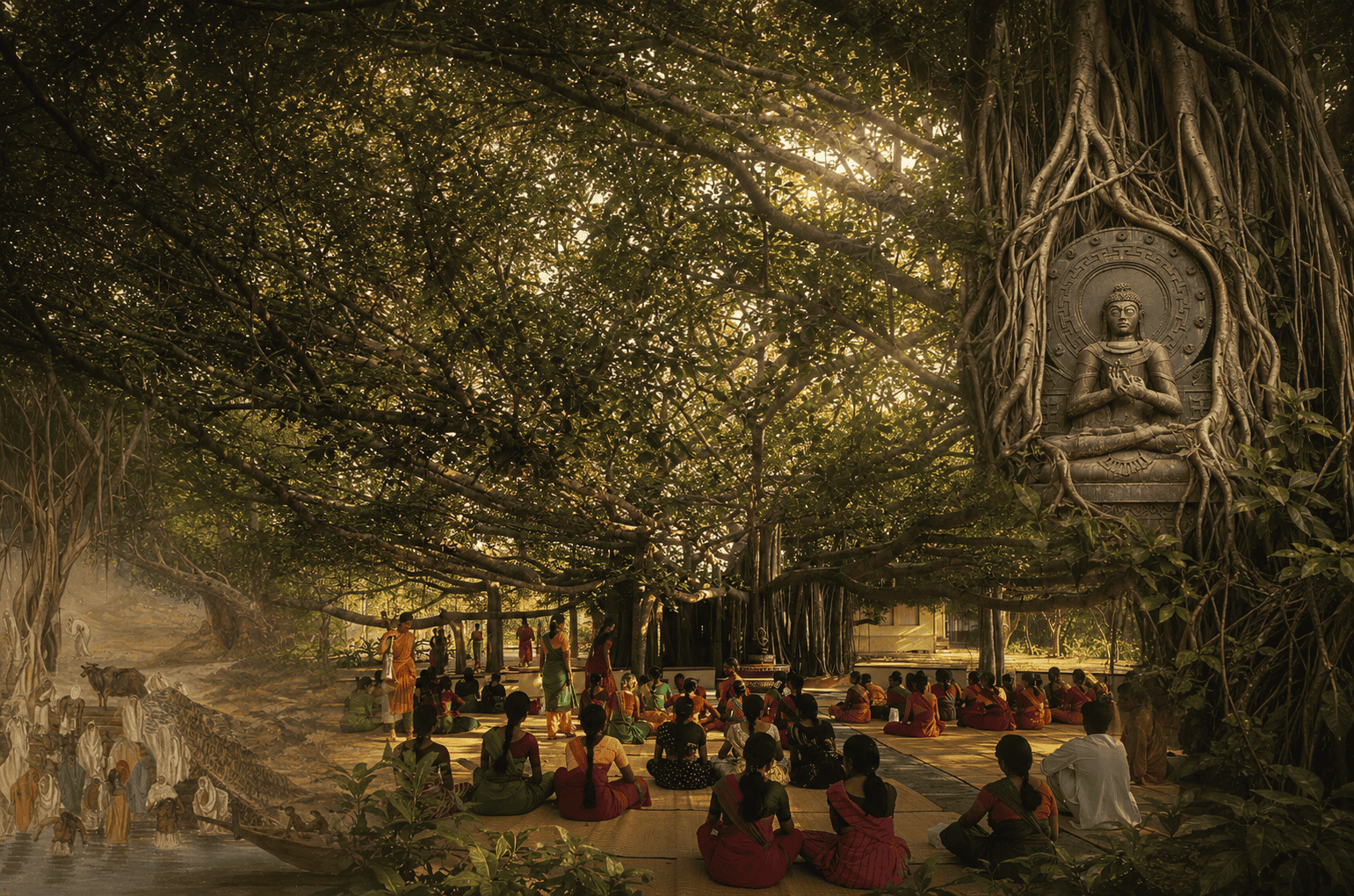
Stand beneath an old banyan and judging scale becomes difficult. One trunk disappears among many. Roots hang like ropes, then thicken after meeting the soil. Branches stretch far beyond the centre, carrying a canopy broad enough for prayer, conversation, trade or an afternoon pause.
The banyan tree across India and South Asia has gathered a rare range of meanings. Sacred stories live beside village memories. Wildlife finds food among its figs, while people claim the shade below. Temples often share their grounds with ancient specimens. Elsewhere, the tree marks a road, school, shrine or forgotten boundary.
India gives Ficus benghalensis national status, though its cultural reach is more widely regional. Hindu tradition grants the tree powerful symbolism. Buddhist narratives place banyans within landscapes of reflection. Jain memory links them with stillness and discipline. Folk stories move across religious lines, carrying spirits, guardians, teachers and travellers beneath the same crown.
Biology explains part of that appeal; faith and daily usefulness carry equal weight. Over centuries, each layer has strengthened the others.
A Tree That Builds Its Own Forest
Ficus benghalensis belongs within the Moraceae family, the large family of figs. Its native range lies across the Indian subcontinent, with tropical and subtropical climates suiting its growth.
Height can reach roughly 30 metres. Width often creates the greater spectacle. Mature branches travel across wide ground, sometimes covering tens or hundreds of metres. Their support comes through aerial roots hanging beneath the limbs.
Once an aerial root enters soil, its character changes. The thin strand gains strength, thickens and begins carrying weight. More roots follow. Years later, one tree resembles a grove filled with separate trunks, although every pillar remains linked within one organism.
Walk through such a banyan and the structure feels almost architectural. Overhead branches create a roof. Root columns divide the space into rooms. Light enters through changing gaps, and the air beneath feels cooler.
That physical drama shaped the tree’s cultural life. A banyan offers both a place and a view, with lived space carrying greater value.
The Tiny Partnership Behind a Giant Tree
Small figs grow along the branches, feeding birds, bats and other animals. Inside that modest fruit sits a highly specialised natural relationship.
Like other figs, Ficus benghalensis relies on a particular wasp for pollination. Eupristina masoni carries that role. Tree and insect depend on an exchange refined across a very long span of evolutionary history.
The contrast in scale is striking. An immense banyan, visible across a landscape, relies on an insect many visitors never notice. Its survival rests on connections above ground, below ground and inside each fig.
Animals eating the fruit carry seeds elsewhere. New plants gain a chance at life, while the wider habitat receives food. The banyan therefore works within a busy ecological network, far beyond any isolated existence.
Why People Read Meaning Into Its Roots
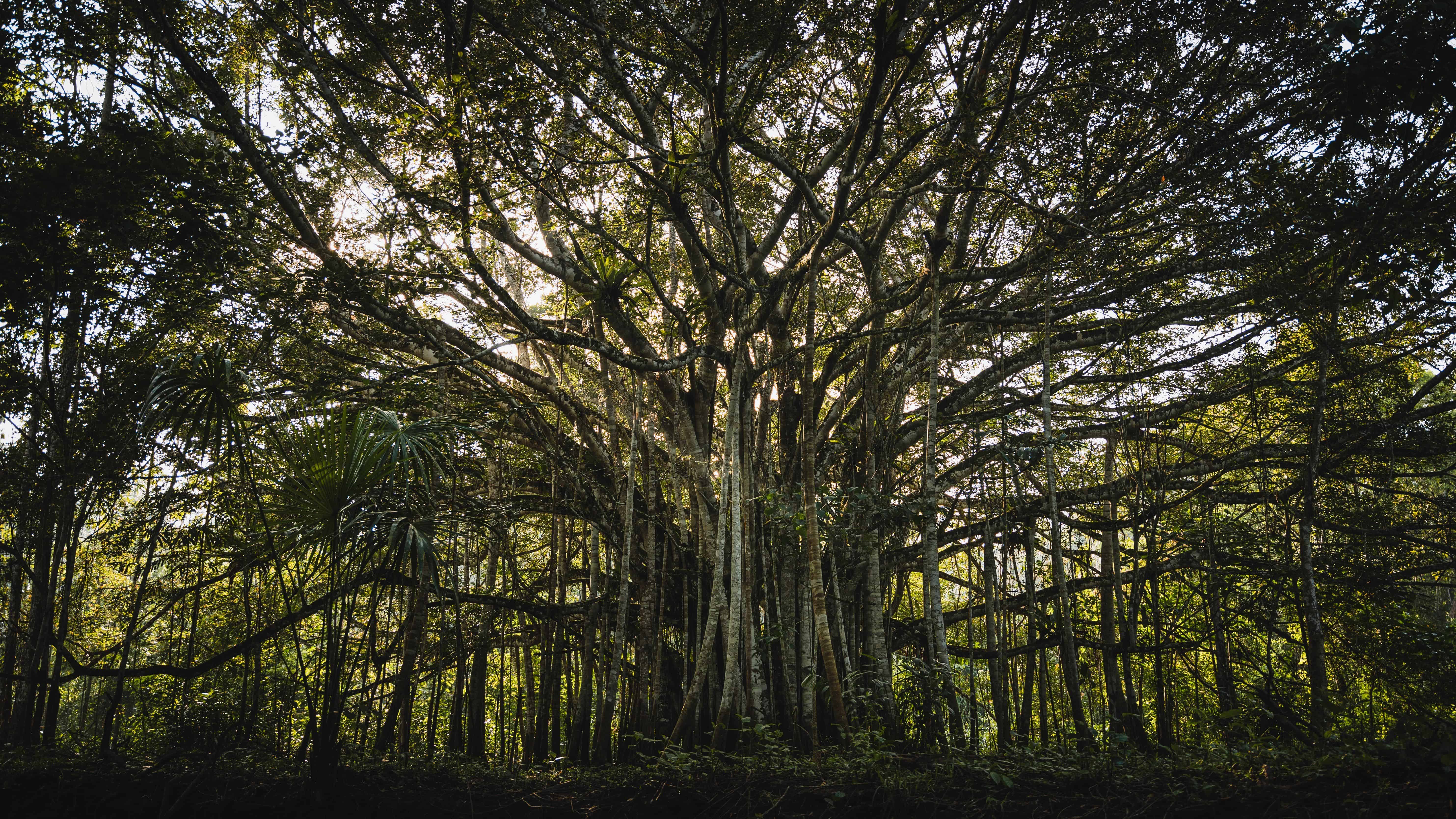
Appearance carries much of a sacred tree’s power. The banyan makes longevity visible. An old trunk remains while fresh roots descend and gain strength. Age brings expansion instead of retreat.
Communities saw renewal happening in front of them. The tree kept building support, spreading its crown and sheltering more life. Ideas such as endurance, abundance, continuity and protection grew naturally around it.
Its shape also suggests a community. Many visible pillars share one living system. Each support carries weight, and every branch depends on a larger whole. That image has inspired religious interpretation, civic symbolism and everyday metaphor.
Still, people valued the banyan through experience as much as symbolism. Shade mattered during intense heat. Open ground beneath a broad crown offered room for gatherings. A tree surviving several generations became a trusted landmark and a keeper of local memory.
Sacred Landscapes Without Walls
Across South Asia, faith often lives throughout a landscape, well beyond buildings. Rivers carry stories, while mountains hold pilgrimage routes. Trees may mark temple entrances, village shrines, courtyards or crossroads.
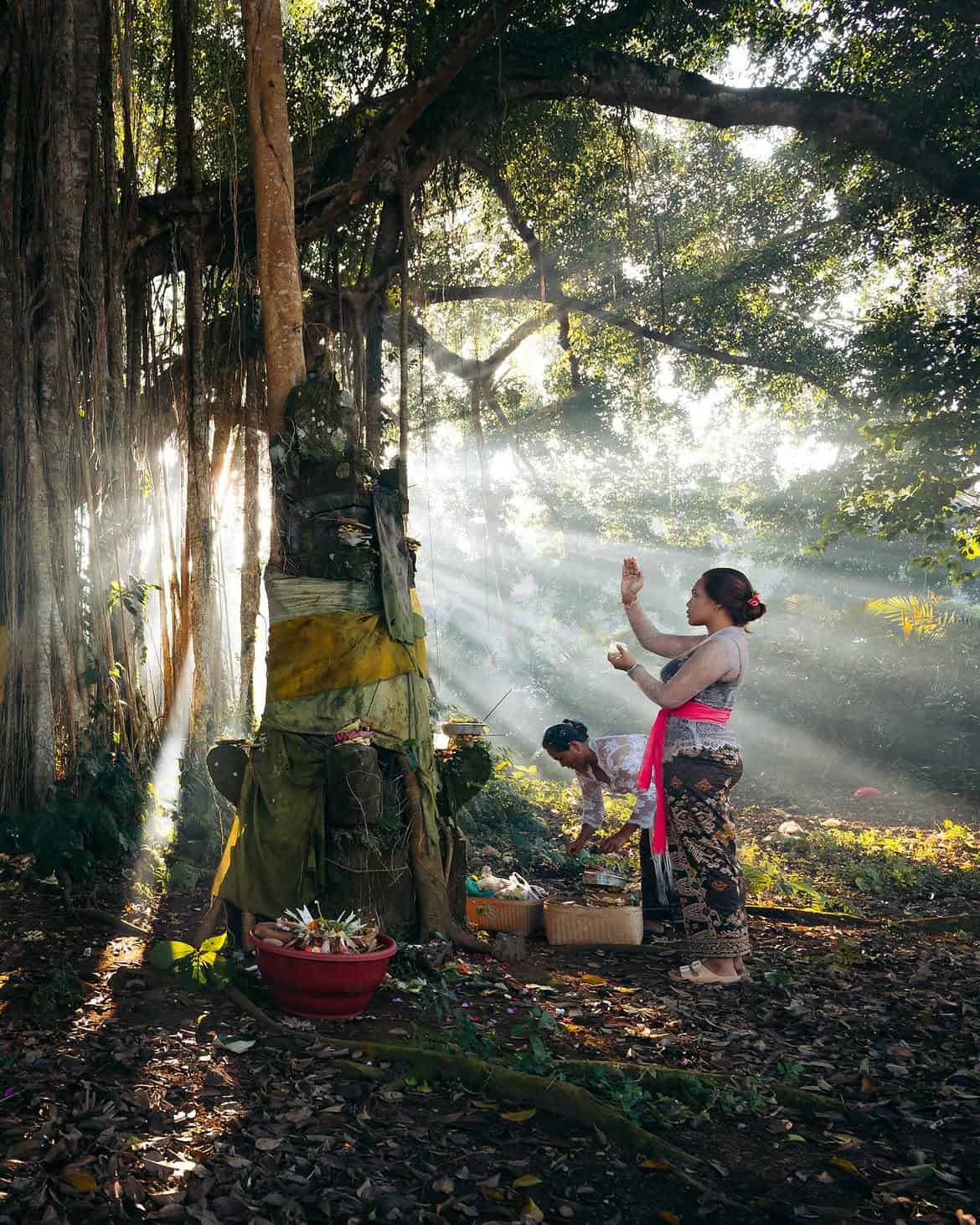
Banyans suit such places beautifully. Their canopies create natural rooms with shifting light and cool air. Lamps sit near roots. Sacred threads circle older trunks. Small images or stones find shelter inside gaps formed by the tree’s growth.
Time deepens the relationship. A temple lends sacred meaning, while an ancient tree gives the grounds presence and shade. Visitors may remember both with equal clarity. Rituals continue, roots thicken and family memories collect beneath the branches.
Living heritage takes shape here. Stonework can survive through careful repair. A tree asks for water, healthy soil, open ground and knowledgeable care. Its value keeps changing because life keeps changing around it.
The Banyan in Hindu Thought
Hindu traditions connect the banyan with longevity, prosperity, protection and cosmic continuity. Its endless looking network of roots makes the association clear.
One sacred identity is Akshayavata, usually translated as the imperishable banyan. Akshaya carries a sense of inexhaustibility and existence beyond decay. A tree that appears capable of renewing its own body gives that idea visible form.
Popular devotion also associates the banyan with Kalpavriksha, the wish fulfilling tree. Interpretations vary across communities. Still, a canopy offering shelter, fruit and space can readily stand for generosity and abundance.
The Bhagavad Gita describes an inverted cosmic tree, with roots above and branches below. That passage does not identify Ficus benghalensis as a botanical species. Its image, however, finds a vivid echo in the banyan’s hanging roots.
Some traditions connect the tree with the Trimurti, expressed through Brahma, Vishnu and Shiva. Here the banyan carries ideas around creation, preservation and dissolution. This three part association belongs within its specific theological setting, so the grouping has genuine purpose.
Vat Savitri and the Thread Around the Trunk
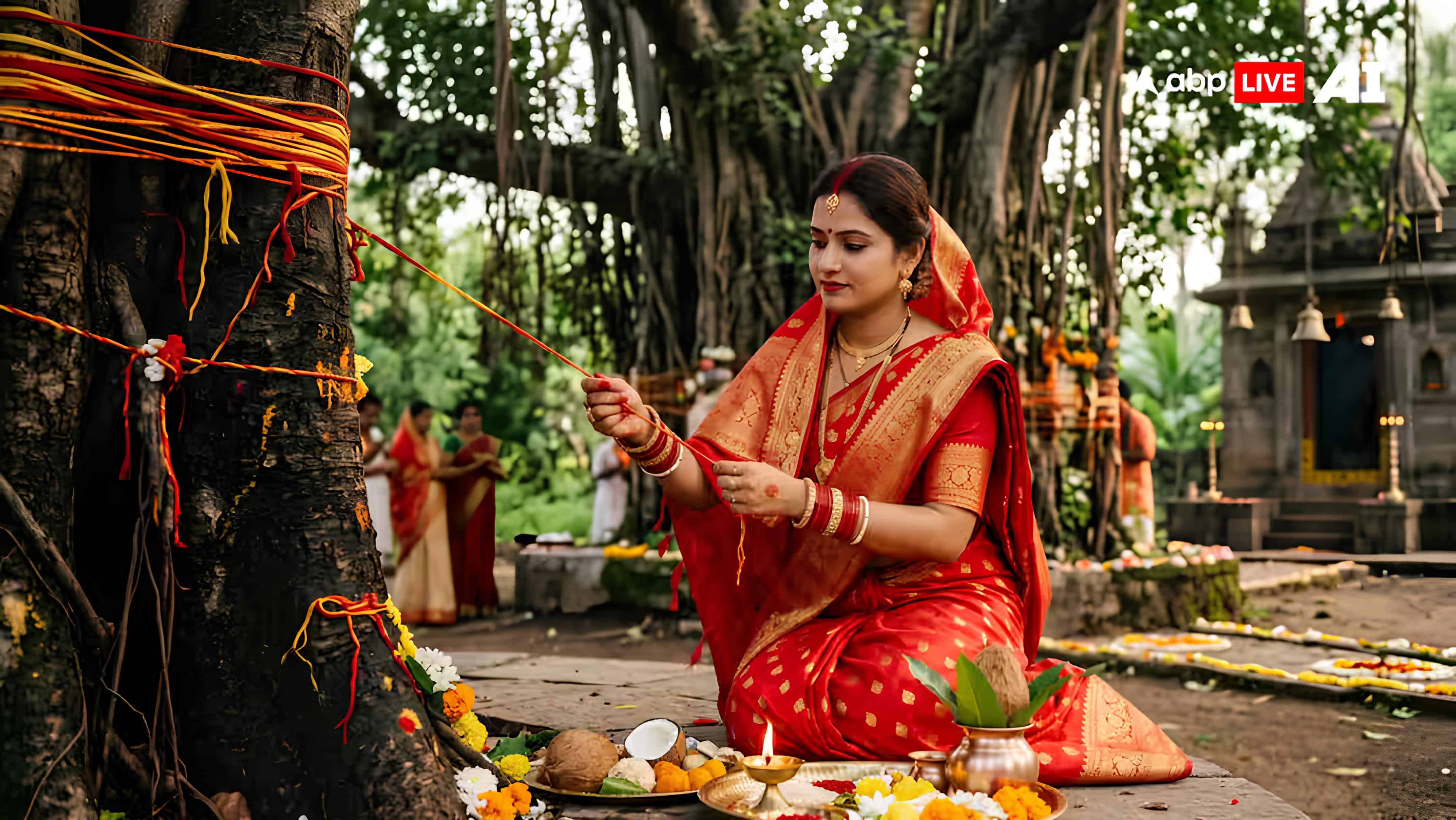
During Vat Savitri, also observed through regional forms such as Vata Purnima, married women gather around banyan trees in several parts of India. Customs shift across communities, yet the central acts remain familiar.
Prayers are offered. Women circle the trunk clockwise and wind sacred thread around its bark or supporting roots. Flowers, fruit and water may sit near the base. Family wellbeing and a husband’s long life shape the observance.
The ritual recalls Savitri and Satyavan. Savitri meets Yama, the god of death, with courage and intelligence, eventually securing her husband’s life. A long-lived tree becomes a fitting witness for that story.
Thread changes the tree’s appearance after each gathering. Layers remain around the bark, carrying evidence of earlier prayers. Private devotion enters public space without needing a permanent structure.
Faith also gives the banyan practical protection. Families return each year, keeping care, memory and ritual closely linked.
Akshayavata and Prayagraj
Prayagraj holds one of the best-known sacred banyans, Akshayavata. The tree belongs within a pilgrimage landscape shaped by the Ganga, Yamuna and the traditionally revered Saraswati.
Pilgrims associate Akshayavata with endurance, immortality and sacred continuity. Its presence carries enough power for darshan in its own right. The tree becomes a destination within the larger religious geography.
Here, an abstract idea gains living form. Visitors see roots entering the earth and branches continuing overhead. Seasonal change happens in plain sight, while the organism survives through renewal.
Sacred trees elsewhere carry similar local weight. Their stories differ, as do surrounding rituals. Care by communities keeps their meaning alive.
Jain Traditions and Sacred Stillness
Jain cultural memory also carries banyan associations. Stories link such trees with Tirthankaras, meditative settings and spiritual insight. Akshayavata holds Jain significance alongside its Hindu identity.
Stillness gives the connection particular force. A banyan may stand for centuries, remaining rooted while countless forms of life move around it. The seeker stays immersed in nature.
Jain thought values restraint, disciplined attention, nonviolence and inward clarity. Beneath a broad canopy, those ideas gain an immediate setting. Leaves shift, insects work and roots hold firm. The world remains active, while the mind searches for quiet.
For monks, ascetics and other seekers, the tree becomes an environment for practice. Sacred meaning grows through presence and use, with decoration carrying little importance.
The Banyan and Buddhist Landscapes
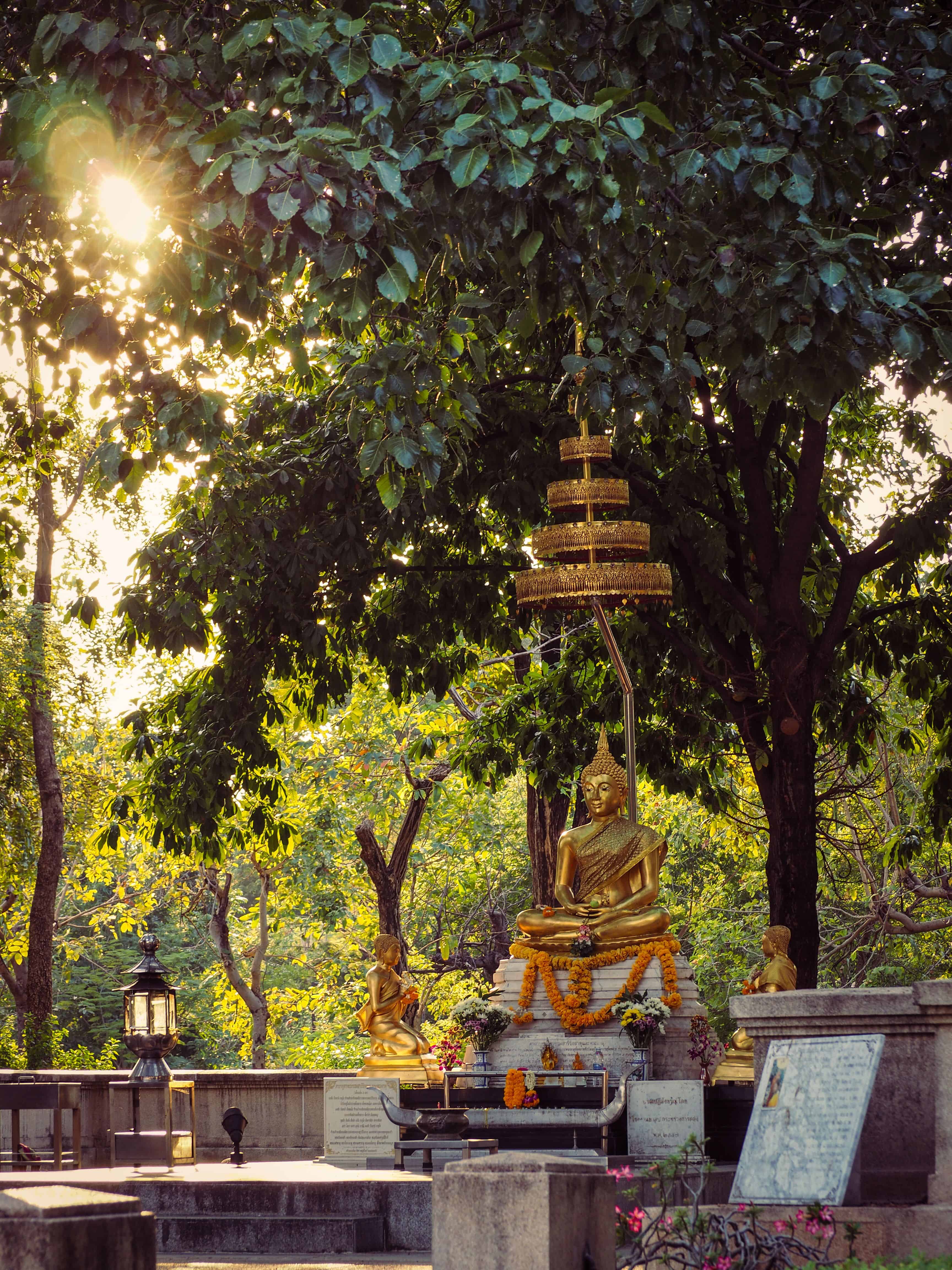
A common botanical confusion needs clearing. The Buddha attained enlightenment beneath Ficus religiosa, the peepal or Bodhi tree. Ficus benghalensis is the banyan. Both belong within the fig family and hold deep cultural significance, which helps explain occasional mixing of their identities.
Banyans still appear in Buddhist narratives. Accounts concerning the period after enlightenment include moments of rest and reflection beneath different trees, including a banyan. Across South Asian Buddhist storytelling, trees often serve as settings for meditation, teaching, and refuge.
The shade itself has a role. A person can sit quietly while birds move overhead and daily activity continues nearby. Seclusion never becomes complete. Awareness stays anchored within a living environment.
That quality gives banyans a fitting place in Buddhist cultural landscapes. The Bodhi tree holds the central enlightenment story; the banyan retains its association with thought and calm.
Folklore Beneath the Canopy
Old banyans almost demand stories. Their roots form passageways. Dense shade hides corners during daylight. After sunset, familiar spaces can feel strange, especially when wind moves through thousands of leaves.
South Asian folklore places many figures beneath these trees. Sages teach in the shade. Travellers find safety. Spirits occupy hidden spaces, while guardians watch over a settlement or shrine.
Some tales encourage prayer. Others warn against careless damage or certain behaviour after dark. Those different moods share one result: the tree gains a presence larger than its physical form.
Fig tree folklore in other parts of the world also carries ideas about divine presence, taboo, protection and unseen beings. Stories change with place, though large figs repeatedly become meeting points between human life and mystery.
Such tales can support conservation. Scientific language explains habitat value. Folklore gives one particular tree a personality, history and emotional claim on the community.
A Village Room Under Leaves
Long before formal halls became common, a banyan could supply a generous public room. No walls limited entry. Shade softened the afternoon heat, and the open ground allowed groups of different sizes.
Village councils discussed disputes there. Traders rested nearby. Children listened during lessons, while visiting performers or teachers addressed whoever had gathered.
Daily use created memory. One resident might recall a wedding procession pausing nearby. Another remembers a childhood game among the roots. Older neighbours may link the same tree with a difficult decision or an important community meeting.
Few of those memories enter official archives. Still, they form a local record carried through conversation. The banyan becomes a reference point for time as well as place.
Modern settlements still need such spaces. A mature tree brings shade and character, while public life gives the site energy. Good planning can preserve both.
India’s National Tree
India recognises Ficus benghalensis as its National Tree. Its immense crown, long life and presence across religious and social settings give the choice clear cultural weight.
Banyans grow near temples, schools, roads and settlements across the country. For generations, their shade has served people and animals. Meetings and rest often shared the ground with informal lessons.
The tree’s many supporting trunks also encourage civic symbolism around unity and difference. Growth remains rooted, while strength emerges through connection.
India’s national recognition forms one major chapter within a wider South Asian story. Shared religious traditions, related landscapes and overlapping folklore carry banyan meanings across modern borders.
Wildlife Finds a City Within the Tree
Look carefully at a large banyan and activity appears everywhere. Birds feed on figs or build nests among branches. Bats visit for fruit. Insects occupy bark, leaves and soil, while smaller animals use hollows or root spaces.
Fig trees can provide food during periods when other fruit becomes scarce. That timing gives them special ecological value. Animals eating figs carry seeds through the surrounding landscape, extending the tree’s influence beyond its own canopy.
Ground conditions change as well. Shade lowers surface heat, leaf litter enriches soil and roots create shelter. In a dry or crowded setting, one mature banyan can support a surprising pocket of life.
Urban value has grown sharper as South Asian cities face hotter summers and shrinking green cover. Large trees cool walking areas and make public spaces more usable. Their habitat value continues even amid dense construction.
Space remains essential. Banyan roots can damage paving, walls, foundations or underground services when squeezed into an unsuitable site. Planning must respect the future size of a young tree.
Living Heritage Needs Living Care
Historic buildings usually receive attention through age and design, often alongside famous events. An old banyan may carry equally rich associations, even when no plaque explains them.
Several generations may have prayed beneath it. Community meetings may have shaped local history there. The tree may predate nearby buildings and remain the most recognised landmark in the area.
Temple compounds, pilgrimage landscapes and old settlements across South Asia often preserve banyan like figs as part of a place’s identity. Architecture changes around them, yet the tree keeps growing.
Living heritage needs a different care model. Roots require air, water and open soil. Aerial strands need clear ground, while damaged limbs call for skilled attention.
Local stories deserve care as well. Elders, temple custodians and residents may hold memories missing in written records. Recording those accounts gives the tree a fuller history.
Traditional Knowledge and Everyday Use
Sacred meaning has always shared space with practical value. Banyans offer shade for people and livestock. Leaves and other parts have served as fodder in certain settings, while roots can help stabilise soil where conditions suit the species.
Ethnobotanical records mention bark, latex, leaves, roots and fruit within Ayurveda, Siddha, Unani and folk practice. Such records belong within South Asia’s long history of plant knowledge.
Medical use needs qualified guidance. Traditional documentation can preserve knowledge without encouraging unsafe treatment. Research, local experience and professional care each have distinct roles.
The combination explains the tree’s enduring presence. It can serve a ritual in one hour and shelter daily work later. Meaning grows through repeated contact.
Giving Old Banyans a Future
Protecting a mature banyan involves the whole organism. Saving the main trunk alone achieves little when roots lose air, water or healthy soil.
Construction poses a common risk. Trenches cut underground roots and concrete seals the surface. Heavy pruning weakens old branches, while signs, nails and lights damage bark.
Regular assessment by trained tree experts can catch problems early. Temple managers, local authorities and residents all hold useful knowledge. Coordination works best when the tree’s future spread shapes nearby development plans.
Documentation strengthens protection. Mapping significant banyans, recording their condition and collecting local stories can build public interest. Visitors may pause and look more closely after reading a clear sign nearby.
Care also demands patience. A giant banyan became large over decades or centuries. Short planning cycles rarely suit such a life.
Why the Banyan Still Holds Us
The banyan creates a rare meeting ground. Faith sits beside ordinary conversation. Wildlife moves above people seeking shade. Old stories survive around roots that continue changing shape.
Its meanings vary across Hindu, Buddhist and Jain traditions. Folklore adds regional voices, while ecology supplies another reason for protection. No single story owns the tree.
Perhaps that openness explains its lasting appeal. A banyan can hold ceremony and daily life under one crown without making either feel misplaced. It belongs within sacred geography and a child’s memory of an afternoon game.
The banyan tree across India and South Asia carries history through living growth. New roots find ground while older trunks bear weight. Above them, the canopy keeps widening. Communities beneath it change, yet the tree continues to gather their prayers, arguments, pauses, and memories.
Protecting such trees preserves more than botanical heritage. It keeps a shared human space alive, one shaped by belief, climate, wildlife and time.
FAQ
Why is the banyan tree sacred in Hindu tradition?
Hindu traditions associate the banyan with longevity and divine presence. Its vast canopy and self supporting roots strengthen its connection with enduring life.
How does the banyan feature in Vat Savitri?
Vat Savitri recalls the story of Savitri and Satyavan. Some married women circle a banyan while wrapping sacred thread around its trunk. Their prayers centre on family wellbeing.
Does the banyan hold meaning in Buddhist and Jain traditions?
Yes. Banyans appear in Buddhist and Jain sacred landscapes as trees associated with meditation and spiritual discipline. Their shade has also supported teaching and reflection.
Are the banyan and Bodhi tree the same species?
They are different species. The banyan is Ficus benghalensis. The Bodhi or peepal tree is Ficus religiosa.
Why is the banyan India’s National Tree?
The banyan represents longevity and unity through its long life and expanding form. Its deep cultural presence gives that symbolism added weight.
Read more – Explore the World