

Far from ordinary holidays, these remote hotels offer rare luxury, dramatic landscapes and the deep thrill of truly earned arrival.
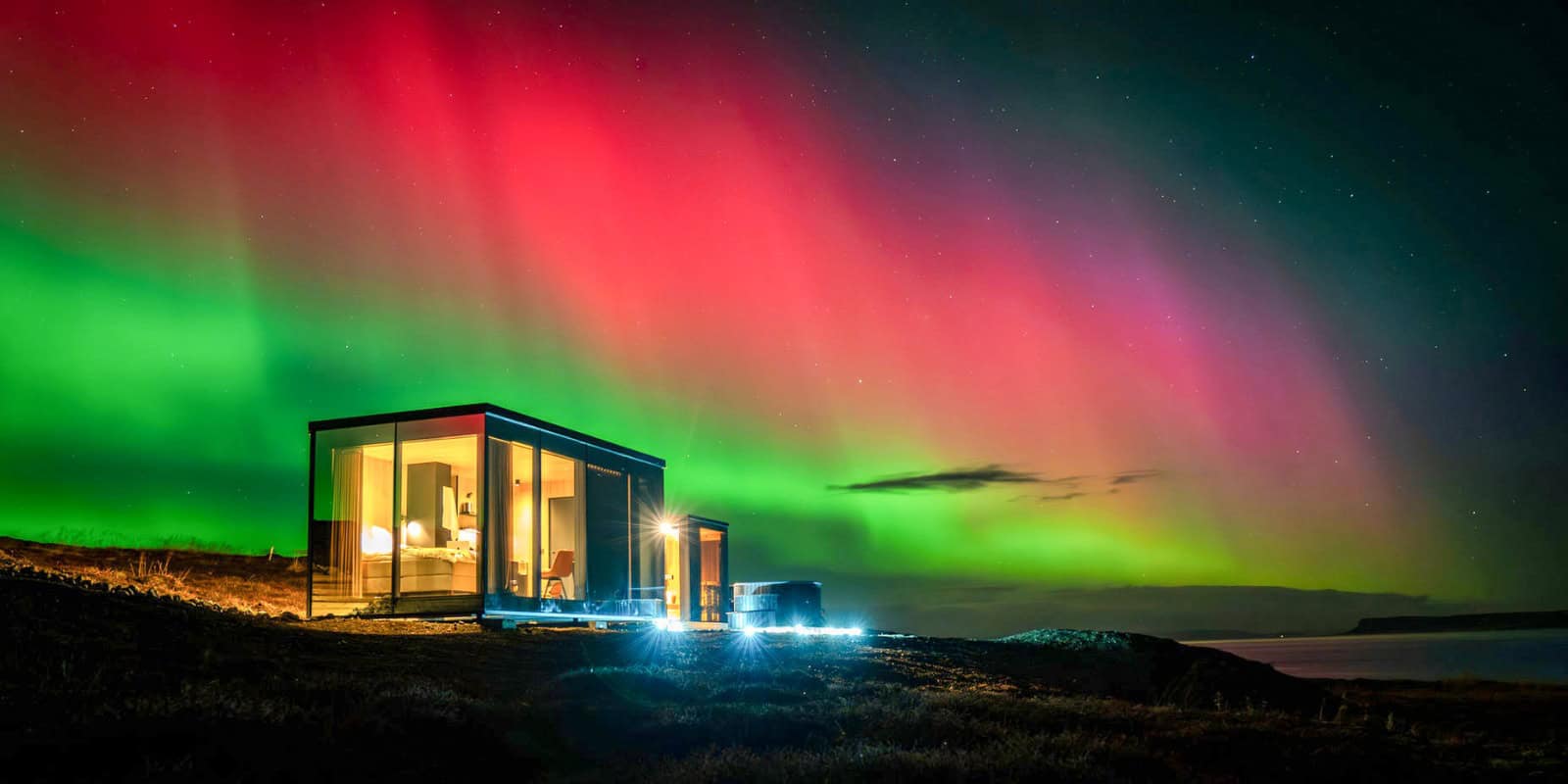
Hidden in faraway corners of the world, they are the kind of stays that turn arrival into its own reward and remoteness into pure glamour. The appeal lies not only in beautiful rooms or polished service, but in the delicious rarity of getting there at all.
Some stand in places so extreme, so remote, and so rarely reached that very few people will ever experience them in person. That is part of their allure. Desert vastness, icy horizons, mountain drama, wild coastlines, every setting brings its own mood and mystique. These are escapes with edge, where exclusivity comes naturally. They do not merely offer luxury. They make it feel daring, elevated, and gloriously hard-won.
Why these stays can be life-changing for travellers
Places like these have a way of turning solo travel into something far more intimate than an ordinary holiday. When the setting is remote, dramatic, and hard-won, every moment lands with greater force. The view feels sharper because it has not come easily. The air feels cleaner because it carries the silence of distance. Arrival itself becomes part of the reward, bringing with it a quiet thrill that makes the entire experience feel deeply personal.
For the adventure-seeking traveller, that shift can be quietly life-changing, in the best possible way. Distance builds confidence. Rare access sharpens perspective. A landscape that demands effort also gives back generously, through stillness, scale, and the strange clarity that arrives when familiar routines fall away. In such places, solitude does not feel lonely. It feels chosen.
There is a particular luxury in being alone in a destination that feels larger than daily life. Meals are slower, walks become more observant, and small details begin to matter: the colour of the sky before dusk, the sound of wind moving across open ground, the warmth of a room after a day spent outdoors. Without the noise of company or the pressure of fixed conversation, the traveller begins to notice more, and perhaps understand more too.
These are not merely stylish stays with impressive addresses. They are journeys with texture and emotional weight. The beauty of the place, the effort of reaching it, and the privacy of the experience combine to create something that lingers long after checkout. They become stories travellers carry home with them, polished by memory, enriched by perspective, and impossible to forget.
Hotel Djúpavík, Iceland
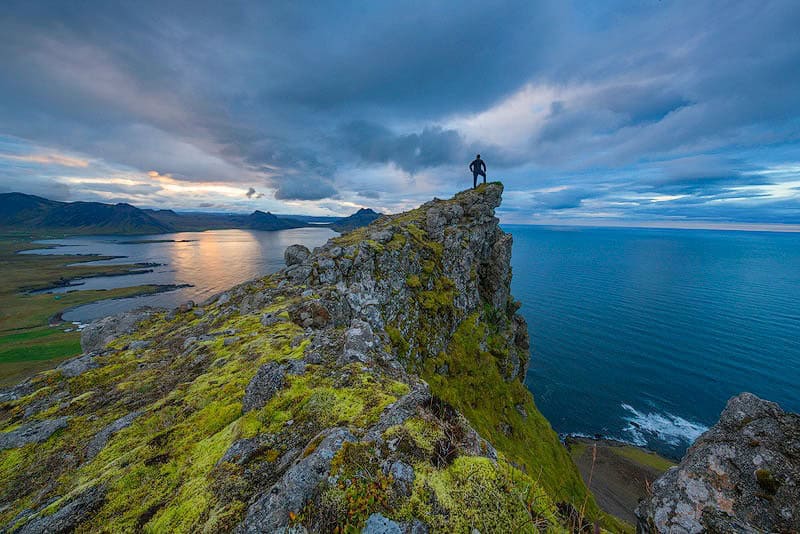
Hotel Djúpavík has the kind of address that makes even seasoned travellers pause. Set in the tiny village of Djúpavík on Iceland’s Strandir coast in the Westfjords, it feels thrillingly off-grid in the chicest possible way. Getting there still means taking Road 643 through Árneshreppur, and public transport in the area is extremely limited, so most visitors arrive by car.
That effort becomes part of the mood. The Reykjavík Grapevine once described the approach as a potholed track edged by stark shoreline and snowy mountains, while the long-shuttered herring factory nearby gives the landscape a severe, cinematic magnetism that feels almost unreal. It is the sort of place where silence lands heavily, the scenery does the talking, and the remoteness becomes part of the luxury.
What makes the stay so compelling is that the welcome feels warm rather than austere. The hotel occupies a 1930s building originally constructed for women who worked at the herring factory, and today guests can expect breakfast and dinner in a wooden-beamed dining room, with free coffee, tea, cakes, and snacks available throughout the day. Official hotel information also mentions additional accommodation options such as Álfasteinn Cottage and Lækjarkot, along with an à la carte restaurant and activities including factory tours, hiking, and handicraft experiences.
Its cinematic quality is not merely a feeling, either. Djúpavík was used as a filming location in Justice League, in the scene where Bruce Wayne searches for Aquaman and Arthur Curry, played by Jason Momoa, rises out of the water before disappearing again into the elemental drama of sea and stone. That cameo in a major Hollywood film only adds to the village’s mystique. The setting already looks as though it belongs to another world; cinema merely confirmed what the landscape was doing all along.
It is that contrast, raw drama outside and character within, that makes Hotel Djúpavík feel so memorably special. Few hotels lean so confidently into isolation while still managing to feel intimate, storied, and quietly generous. In Djúpavík, the journey is part of the theatre, the setting is part of the stay, and the sense of discovery lingers long after checkout.
The Mirror Suite, Iceland
The Mirror Suite gives remoteness a very stylish glow. Tucked into a serene fjord in West Iceland, it feels wonderfully away from it all, yet getting there is far easier than the setting suggests.
The cabins are around 25 minutes from the Ring Road and under two hours from Reykjavík, with year-round winter service on the main road, so travellers get that rare off-grid feeling without the stress of an overly difficult journey. It is the sort of place that makes you feel deliciously far from the world, while still being comfortably within reach.
Once you arrive, the design does all the seducing. Just 50 metres from the ocean, the mirrored glass cabins reflect the coastline so beautifully that they seem to disappear into the landscape. Floor-to-ceiling windows open onto panoramic sea views, and each cabin comes with a private glass sauna and an all-season hot tub.
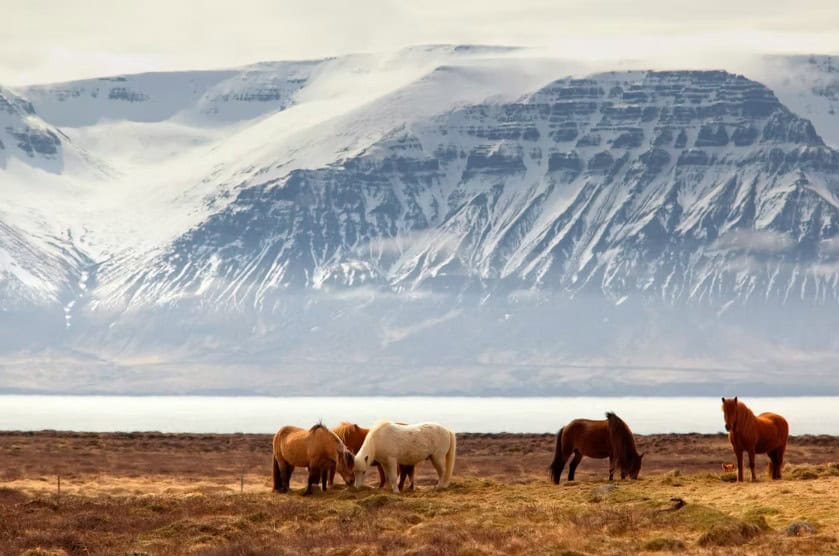
Add ocean sunsets, snowy winters, starry skies, winter Northern Lights, and the chance of spotting seals and birds, and the whole stay feels immersive, cinematic, and irresistibly chic. In the warmer months, you can also go riding on the iconic Icelandic horse, which adds another lovely layer to the escape.
Go Below, Wales
Go Below in Wales is not the kind of stay you stumble into. Deep Sleep is tucked inside an abandoned Victorian slate mine beneath the mountains of Snowdonia, and getting there is part of the theatre. Guests begin at Tanygrisiau Base near Blaenau Ffestiniog, then take a 45-minute walk up into the hills before gearing up with a helmet, headtorch, harness, and Wellington boots.
After that, the route drops through old miners’ stairways, decaying bridges, and scrambles, until you reach the camp 1,375 vertical feet below the surface. By then, ordinary life feels very far away indeed.
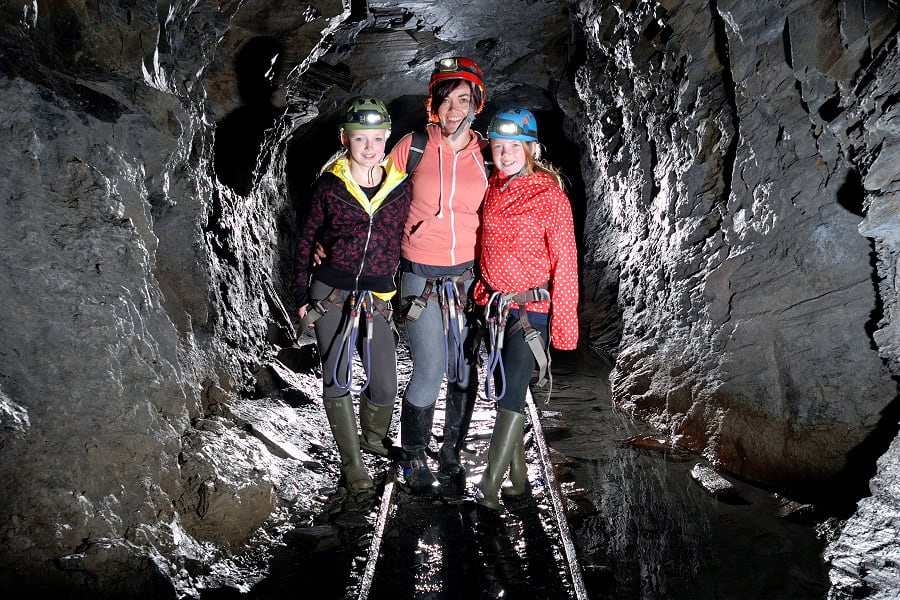
And that is exactly the thrill of it. Instead of polished lobbies and predictable check-ins, Deep Sleep offers four private twin-bed cabins and one grotto with a double bed, all with bedding provided, plus a complimentary expedition-style evening meal, hot drinks, and breakfast snacks the next morning. It is off-grid, dramatic, and deliciously unusual, the sort of experience that feels less like a night away and more like stepping into another world.
HAKONE TAKUMI no YADO YOSHIMATSU, Japan
HAKONE TAKUMI no YADO YOSHIMATSU is the kind of place that changes your pace the moment you arrive. Set on a hill by Lake Ashi in Hakone, this traditional ryokan brings a gentler, more graceful energy to the journey. It is only a four-minute walk from the lake, yet it feels tucked away enough to invite a proper exhale.
Better still, it is easy to work into a wider Japan itinerary, with the trip taking about two hours from central Tokyo. Being in the Lake Ashi area also places guests in one of Hakone’s most iconic landscapes for Mount Fuji views on clear days, which adds even more romance to the setting.
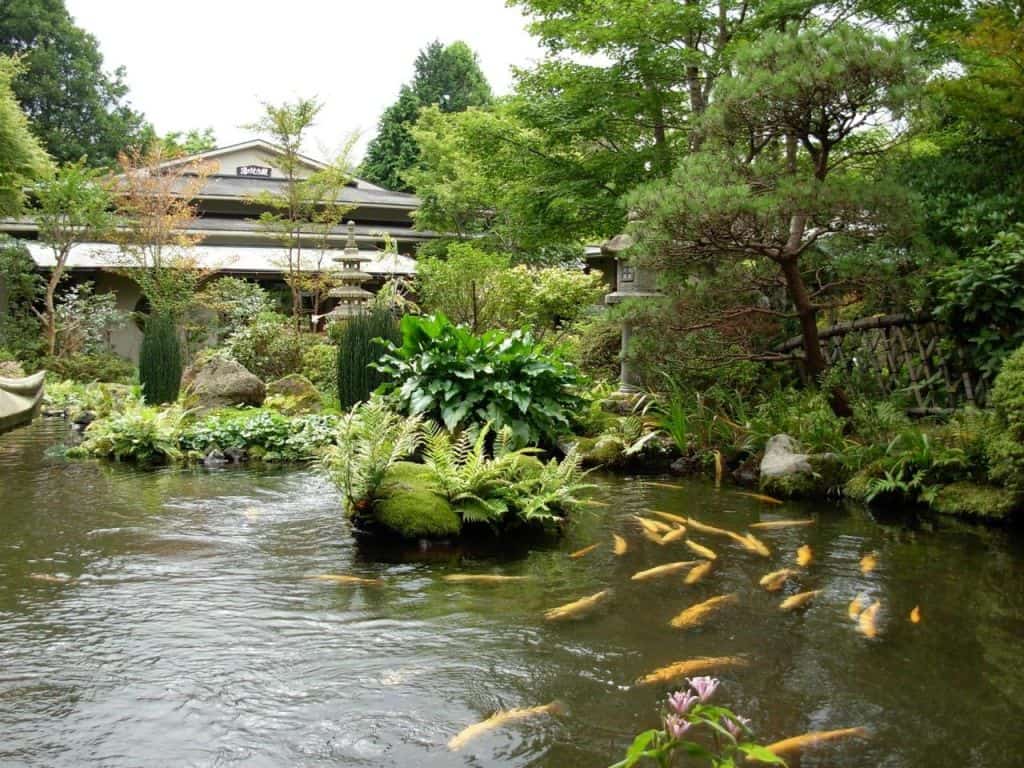
What stays with you here is the quiet refinement of it all. Yoshimatsu offers shared open-air hot spring baths, private hot spring options for families, and some rooms with their own private onsen bath, making relaxation feel deeply personal.
The Japanese garden, with bamboo, a clear pond, and beautifully maintained greenery, adds another layer of calm, especially as the seasons shift. Then there is the kaiseki ryori served in the room, a traditional multi-course Japanese meal prepared with seasonal ingredients and presented with extraordinary care. It feels restorative, intimate, and quietly luxurious without ever needing to announce it.
Capanna Margherita, Italy
Capanna Margherita is not the sort of place you casually arrive at. Sitting on Punta Gnifetti in the Monte Rosa massif at 4,556 metres, it is described by its official site as the highest refuge in Europe, and everything about it feels thrillingly removed from ordinary travel.
Getting there is part of the story: the classic approach takes around four to five hours across the Lys Glacier from Capanna Gnifetti, or about five hours across the Grenz Glacier from Monte Rosa Hutte. Proper equipment and real alpine know-how are essential, and the refuge strongly recommends going with a mountain guide. By the time you arrive, the altitude alone has changed the mood.
What makes it so fascinating is that this raw, high-altitude drama meets the comforts of a functioning refuge. Capanna Margherita can host 70 guests and offers a bar, restaurant, communal bathrooms, electric lighting, 220V power, internet access, and even a library.
It also houses a scientific research laboratory, which gives the stay an added layer of purpose and character. So while the setting is undeniably extreme, the experience is not only about hardship. It is about the rare privilege of being suspended above the everyday world.
The Grand Aleutian, Alaska, USA
The Grand Aleutian is the sort of place that makes the world feel suddenly much larger. Set in Unalaska, roughly 800 miles southwest of Anchorage in the Aleutian Islands, it has that rare edge-of-the-map energy that travellers quietly dream about.
The surroundings do a lot of the storytelling: crystal waters, pristine mountains, and broad views of Margaret Bay, Ballyhoo Mountain, and Unalaska Bay create a landscape that feels rugged, cinematic, and gloriously far removed from the everyday.
What keeps it inviting is that the hotel balances all that wild geography with real ease. The Grand Aleutian has 103 guest rooms and suites, complimentary airport shuttle service, and several food and drink venues, including Margaret Bay Café, The Chart Room, Cape Cheerful Lounge, and Pyramid Coffee.
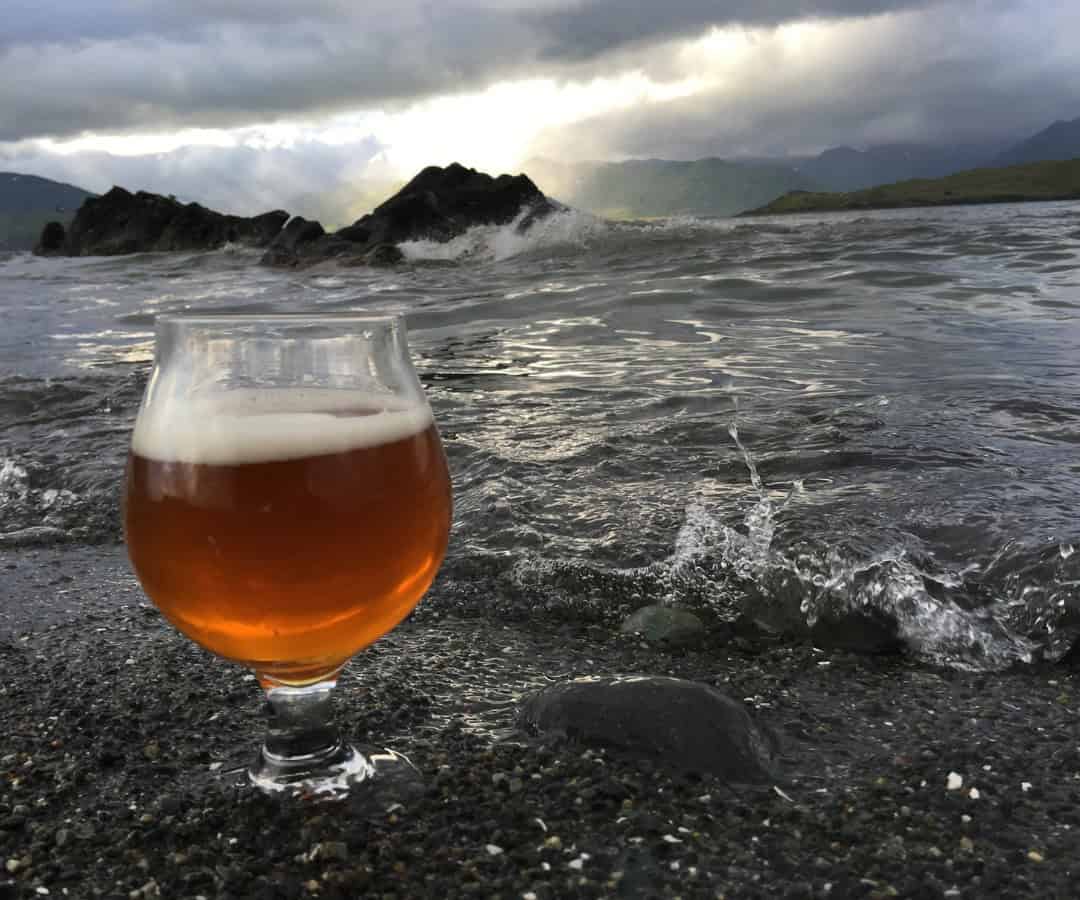
It also places guests within reach of the experiences that make Unalaska and Dutch Harbour so distinctive, including hiking, bird-watching, halibut and salmon fishing, beach strolls, and visits to historical and cultural sites. So the escape here is not about doing nothing. It is about being somewhere so dramatically different that even simple pleasures feel heightened.
Amangiri, Glen Canyon National Recreation Area of Utah, USA
Amangiri is where remoteness becomes part of the seduction. Set in Canyon Point, Utah, it stretches across more than 900 acres of untouched red rock country on the Colorado Plateau, with 34 modernist suites, an Aman Spa, and its now iconic mesa embracing pool dissolving into the desert around it. The architecture does not compete with the landscape. It lowers its voice, lets the stone speak, and turns the surrounding wilderness into the real theatre.
Getting there is not exactly effortless either, which only adds to the mystique. The nearest local airport in Page, Arizona, is still a 25-minute drive away, while arrivals through Las Vegas or Phoenix involve roughly 4.5 hours on the road. That sense of distance is precisely what gives the place its almost unreal serenity. By the time travellers arrive, the desert has already begun doing its work. City noise falls away, phone checking feels less urgent, and the vast sandstone horizon starts setting the rhythm.
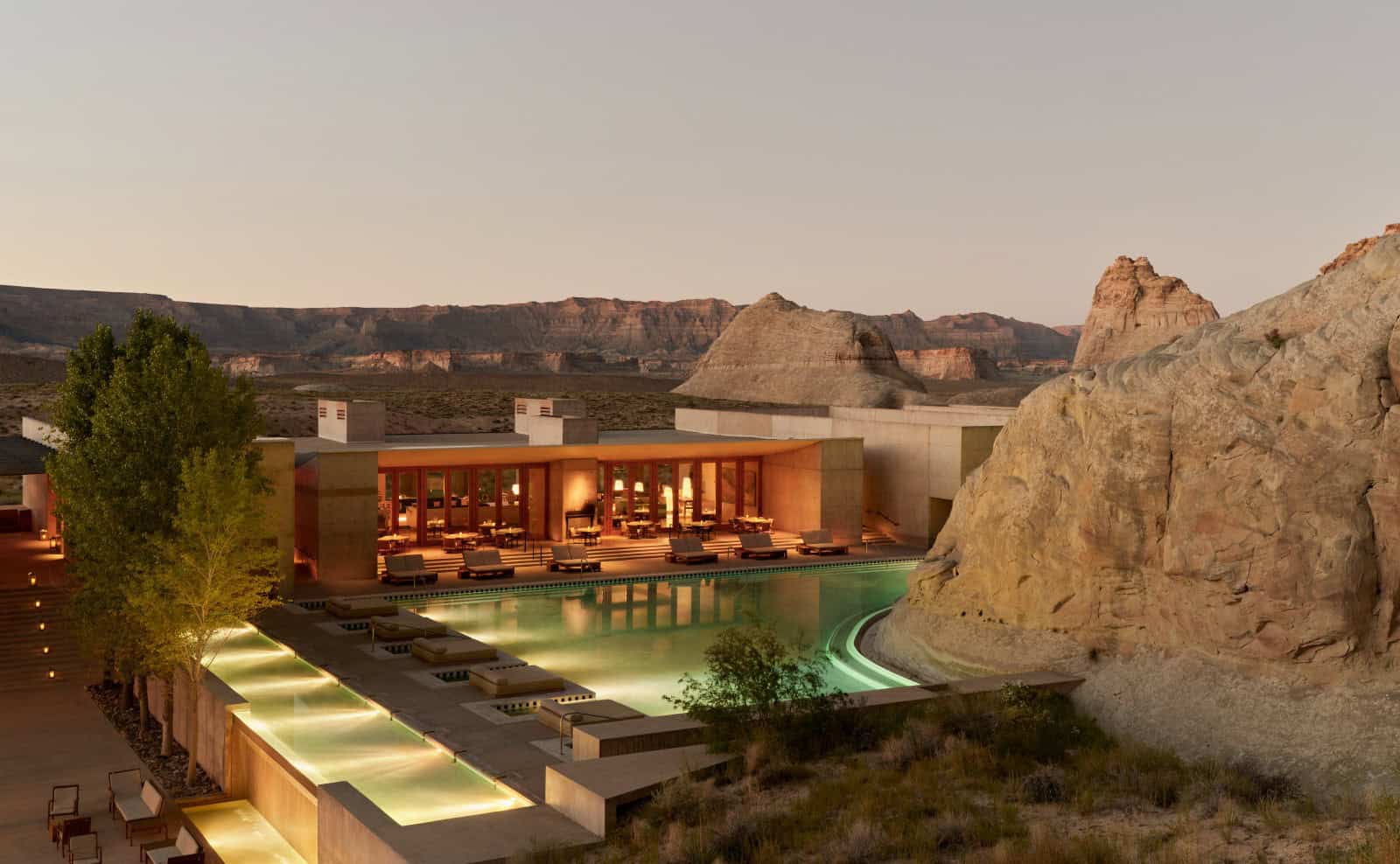
For solo travellers, Amangiri offers a rare kind of privacy. This is not isolation in the bleak sense. It is solitude made beautiful, softened by impeccable service, sculptural interiors, and the quiet confidence of a place that understands restraint. Days can unfold through guided hikes across slot canyons, desert trails, and ancient rock formations, or through slower rituals at the spa, where treatments draw upon Navajo healing traditions and the elemental energy of the landscape. Mornings feel especially powerful here, when the mesas catch the first light, and the entire resort seems carved out of silence.
It also happens to be one of those rare retreats where the guest list has become part of the legend. Publicly reported visitors have included Hailey Bieber, Justin Bieber, Kylie Jenner, Beyoncé, and members of the Kardashian family, which says a great deal about its pull. Yet celebrity is only one layer of the story. The deeper appeal lies in the way Amangiri makes luxury feel both cinematic and intensely personal. It is glamorous, certainly, but never loud. Its drama comes through scale, stillness, shadow, stone, and the feeling that one has reached a private edge of the American desert.
For the adventure-seeking traveller, the experience carries a quiet emotional charge. The journey is long enough to feel earned, the setting is powerful enough to reset perspective, and the design allows every guest to feel alone with the landscape without ever feeling unattended. Amangiri is less a hotel than a desert encounter, a place where arrival feels like entry into another state of mind.
Read More: Explore the World