

Touchdown in Bhuj, Gujarat. The airport is modest, the mood unhurried, and the moment feels like a quiet crossing into the destination. Somewhere beyond the town lies the Rann of Kutch, a landscape shaped by seasons and patience, and I know I am moving towards a place that will ask me to slow down.
The transfer is quick, almost too efficient, and soon I am in an SUV watching Kutch slide past the window in a 2.5-hour drift of tilled fields, scrubland, arid stretches, and green crops ripening in the harvest season. The cold has a bite. The sky holds a clear, bright blue that already darkens at the edges, as if the desert is gently reminding me who sets the pace out here.
This is the Rann of Kutch, and I realise early that I arrive with no sense of scale. This is a vast seasonal salt marsh in Gujarat, inland from the sea, so expansive it refuses to behave like a normal landscape. In summer, it becomes a blinding white salt desert. During the monsoon, it fills with water and turns into a wetland that stretches between the Gulf of Kutch and the Gulf of Cambay.
The science sits behind the beauty like a quiet footnote: this region was once a shallow of the Arabian Sea, and over time, geological shifts closed the connection, leaving behind a basin that changes character with the seasons. I know this intellectually, yet the information still feels unreal as I move closer.
Rann Utsav The Tent City, Dhordo
It is nearing 9 pm when I reach the softly twinkling, welcoming lights of Rann Utsav The Tent City, managed by Evoke Experiences. “City” is the right word. The vehicle slows through neat streets lined with handicraft stalls and wooden heritage-style buildings that stay faithful to Kutch traditions. Colourful installations catch the light: Kutch glass, shells, embroidered patchwork. Visitors stroll with an unselfconscious festive energy. I notice women guests in local skirts and colourful tops, laughing as they walk, and I find myself slightly astonished, not at the outfits, but at the clear intent to celebrate the holiday fully and openly.
A traditional tilak, a garland, and then a gift that immediately feels personal: a warm local cotton shawl with a colourful motif, the kind of souvenir that does not sit in a cupboard. It stays as a storyboard to capture memories and share with friends.
We are escorted to our tent, and my mind goes slightly hazy as I take in the sheer organisation. Anti-inflammable flooring stretches across Rann Utsav the Tent city, except for the roads, walkways, paths, and open spaces. The scale of that single detail is mind-boggling. I know I am staying in a 450-plus tent city, yet the neat clustering and the sense of flow feel like excellent design doing its work quietly. I pass a vast semi-circle of red-carpet flooring with white motif tents that echo the environment, as if the architecture knows it has to belong to this land rather than compete with it.
We stop at R8. A zipped flap opens into a high-ceilinged lounge. Sofas and tables anchor one end, two comfortable chairs and a table settle the other. Flap windows with double netting open on either side for light and ventilation, though the cold persuades me to keep them shut. Another zipped flap, and the main bedroom opens up: tall ceiling, airy space, a large four-poster king-size bed, ample room with sofas and chairs, even a heater and a TV. Another flap leads to a dressing room and then a large bathroom with a geyser and all mod cons. This is the Rajwada suite, and it delivers a kind of desert luxury that feels both indulgent and oddly sensible.
Sunrise Outside My Tent
The air feels cold and clean. The tent is comfortable, yet I sleep little the first night. My Delhi lungs are unused to this kind of sharp, pure desert air. It feels like my body is waking up rather than settling down. I feel energised, alert, almost too alive. I force myself into some kind of semi-sleep. Four hours, my Fitbit later announces with the blunt honesty only a device can deliver.
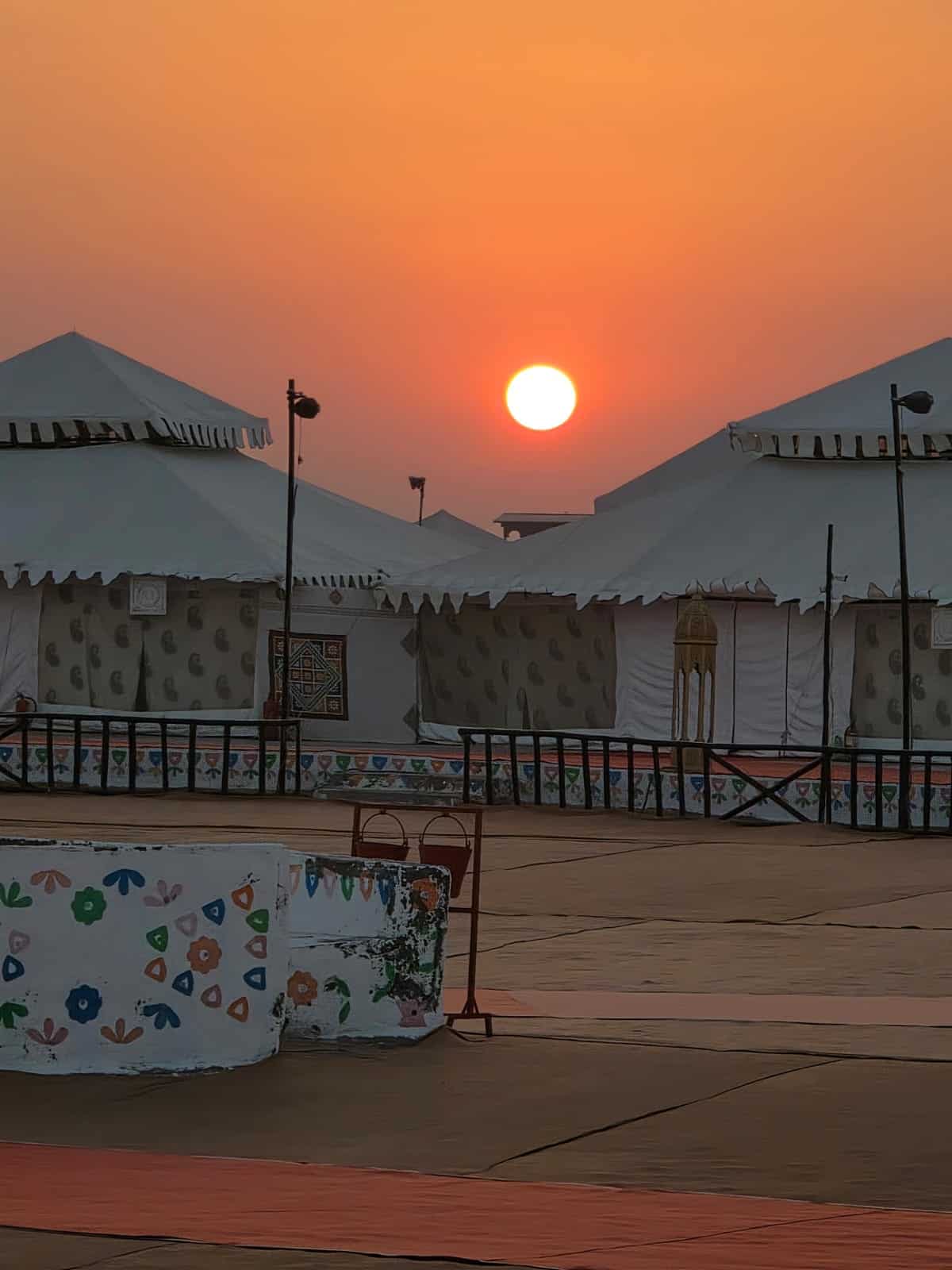
Morning arrives later than I expect. The sun rises well after 7 am, closer to 7.45, and it surprises me. I step out of my Rajwada tent and stop in surprise. A soft orange orb lifts slowly above the white tents of Rann Utsav the Tent City. The stillness is intense, and I notice something strange. There are no bird calls to puncture the quiet. I grab my phone and rush to capture the sunrise right outside my tent, forgetting my hot cup of ginger tea on the ground. The breeze picks up speed. Cloth lanterns begin to flap, and the cold tightens, yet all I see is the steady glory of the orange sun rising with patience that feels almost deliberate.
I fetch another mug of ginger tea, wear a coat and warm cap, and sit outside in a camp chair, soaking up warmth as the wind grows colder. I am delighted by the simplicity of it. Desert therapy requires nothing dramatic. A sunrise does the work.
There is a main highway nearby, close enough for the sound to carry. I hear, then see, heavy trucks moving in a line, carrying salt onwards. I am told that more than 500 trucks a day supply a Tata salt factory. The road, once detoured around the tent city, and now it is used for trucks and tractor movement. The detail feels oddly grounding. Even in a place that looks like the end of the world, work continues, rhythmically, relentlessly.
The Great Rann at Sunset
Later in the evening, we drive a few miles from Rann Utsav the tent city to watch the famous Kutch Sunset. I finally step into the Great Rann of Kutch, and the first sensation is astonishment. The horizon stretches unbroken in every direction, so white it feels as though the sun has nowhere else to land. The vastness is both nerve-racking and stunning. It is hypnotic, unsettling, quietly magnificent.
The emptiness plays tricks. What looks like nothing for miles suddenly holds life. A glimmer of water appears, edged with scrub and low shrub forests. These small oases become homes and gathering points.
Against the sweeping white backdrop, villagers in white dhotis and coloured turbans greet visitors for rides atop wooden carts, the ancient way, wooden wheels rolling over hard salt land. Bells tinkle as a decked-up cart, dressed in shells, brass, and Kutchi embroidered patchwork, is pulled by a bejewelled camel. It is captivating, and yes, totally photogenic. Horses stand nearby, equally adorned, offering rides with tall, turbaned handlers bringing confidence to first-time riders. The scene feels like a carnival that grows naturally out of the desert.
A Moment of Hush
Families, couples, groups of youngsters, solo travellers, women’s groups, all gather across miles of white salt flats to catch the sunset. People try on vibrantly coloured Gujarati costumes and dance with surprising vigour to folk music. Para gliders turn up as business finds opportunity. A 15-minute flight is offered for around 3k, and there is a line of enthusiastic adventurers. In this atmosphere, it does not feel like an intrusion. It feels like the Rann is making room for human joy.
We walk further out, choosing distance the way you choose silence. The flatlands hardened by the sun feel like a giant skating rink made of salt, except steady and not slippery. The more we walk, the fewer people remain around us, though the gliders still whizz high overhead, colouring the clean blue sky.
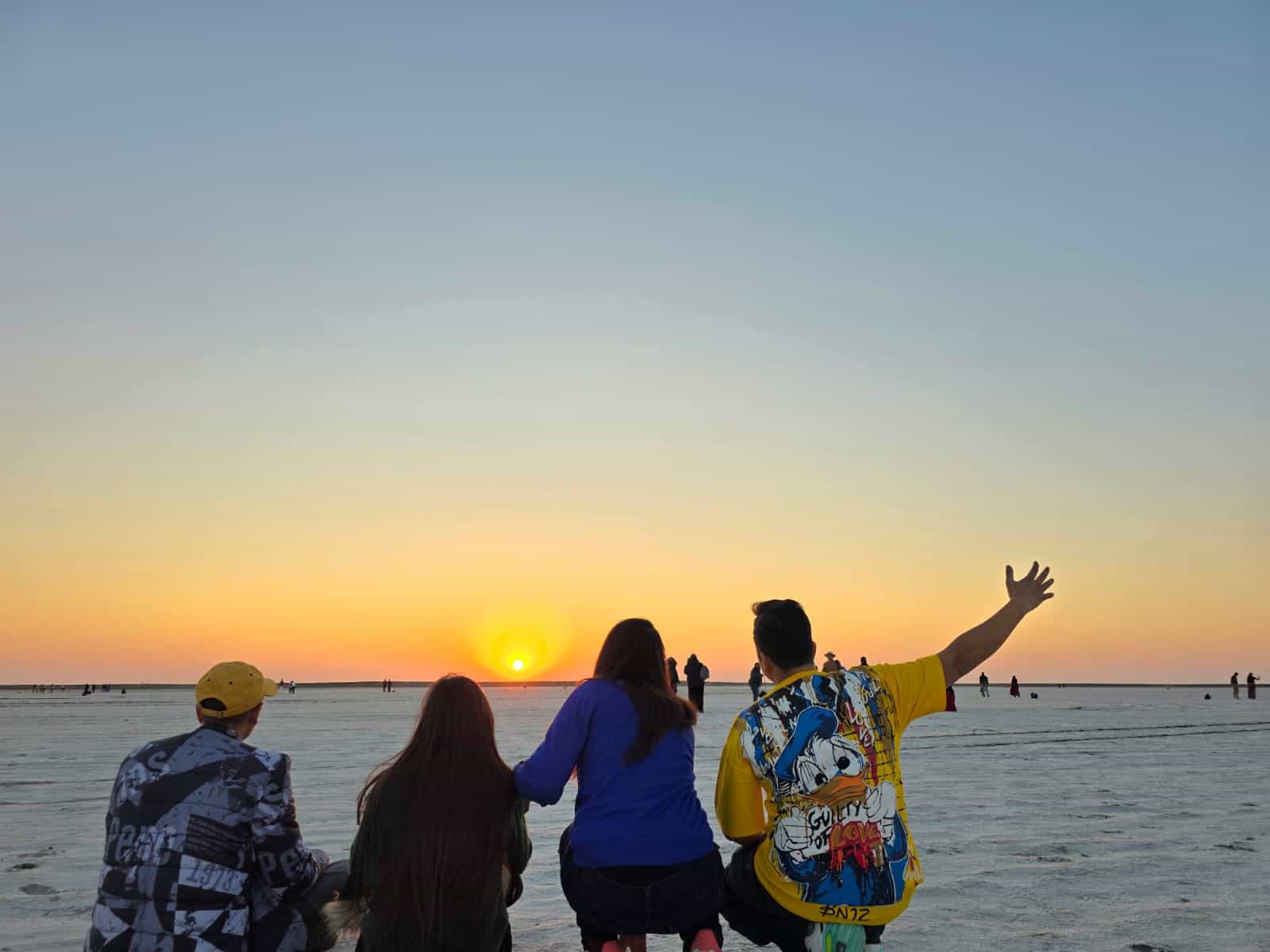
Then the sun begins to dip. A hush spreads like a blanket across the salt. People stop where they are, rooted, watching the flaming orange-red disc lower itself towards the horizon. The sky darkens almost imperceptibly. The sun deepens into vermillion, orange and red. Cameras rise. Phones glow. Selfies happen, families cluster, couples frame the sun between their fingers, yet there is something reverent under the playfulness, a silent agreement that this moment is bigger than all of us.
I sit on the salt land like the others, and each person becomes a quiet witness in their own universe.
Rann Utsav: Craft, Culture, and a Burst of Energy
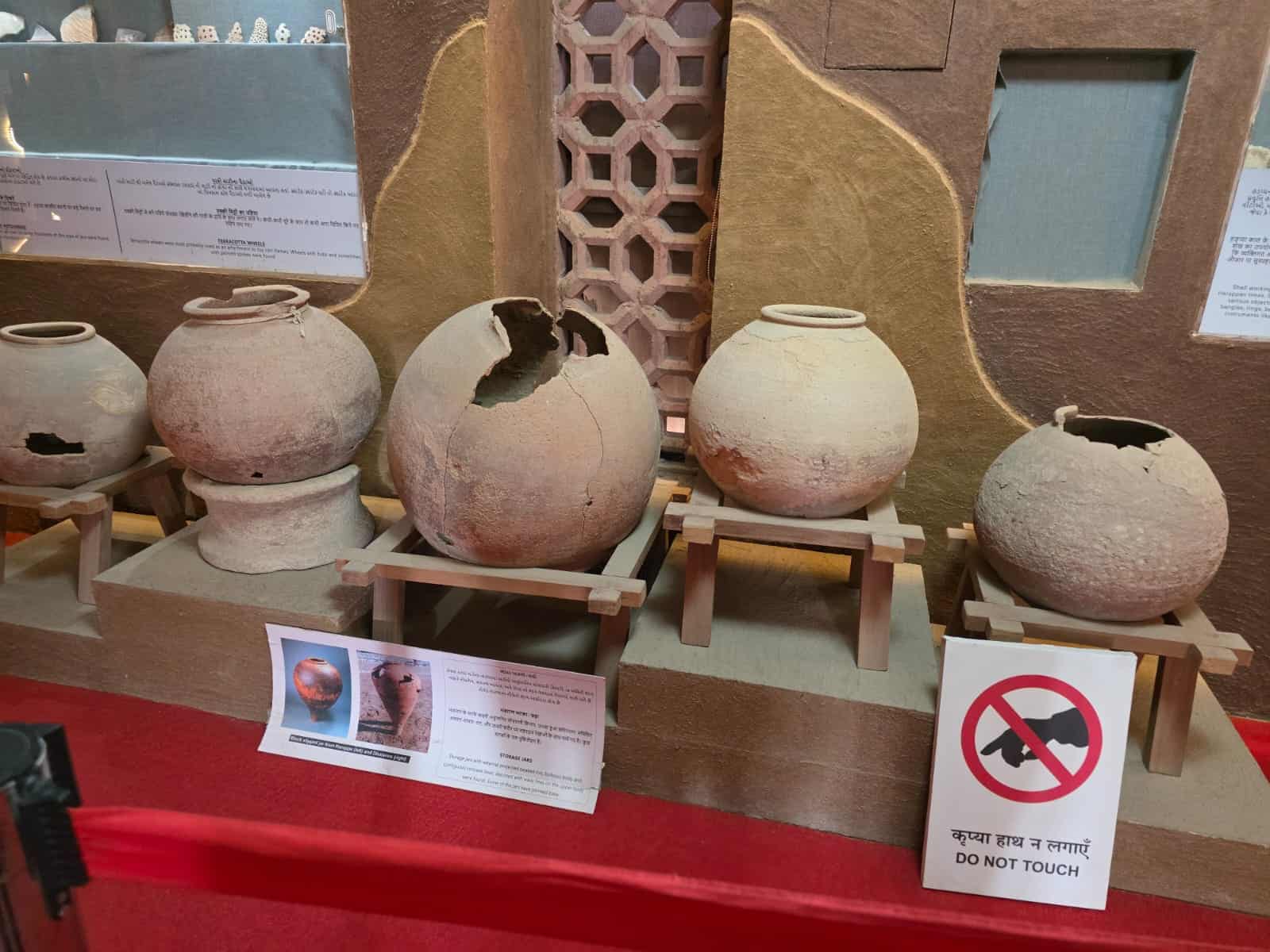
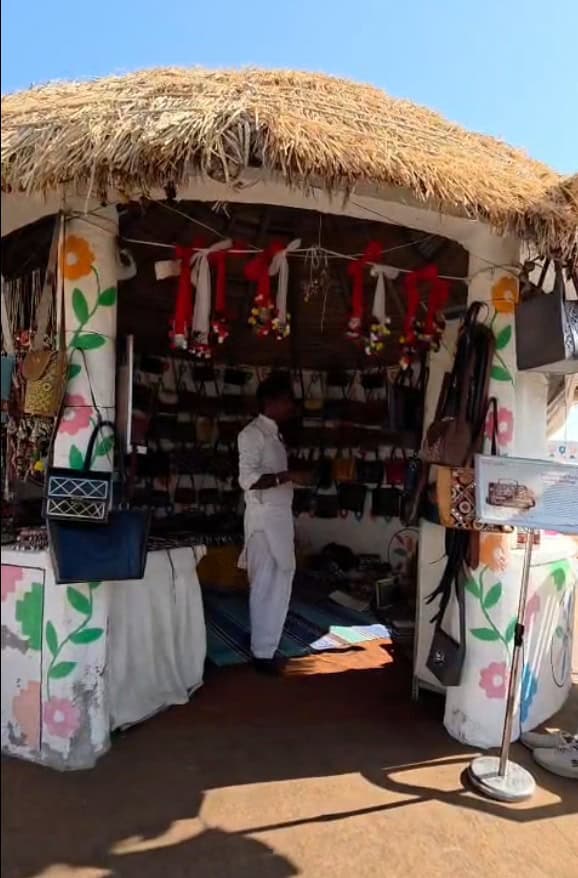
The next morning, I spend time with master craftsmen and the cultural heart of Kutch. I visit the museum, browse the handicraft stalls, explore the wooden clock tower, and then drift into the sports zone where play takes over. Air gun targets, archery, zip lining, off-roading, the kind of day that reminds me the Rann of Kutch is not only about stillness. It is also about energy that arrives in bursts.
In Dhordo, at Rann Utsav The Tent City, managed by Evoke Experiences, the desert takes on a different personality during Rann Utsav. The tent city bustles with vivacity during the day and glows at night, with music and dance spilling into the open air. Crafts and colour fill the stalls. Folk performances echo against the vastness. It feels like a festival – the land permitting celebration, briefly, warmly, without losing its dignity.
Stargazing in the black sky of the Rann
Night brings one of the most unforgettable experiences of the trip: stargazing under the black sky of the Rann. It is freezing. The wind picks up. I shiver and still go, because the sky out here is the kind that makes excuses irrelevant. I carry a word of appreciation in my heart for Narendra Gaur, Astronomy Educator, Star Gazing India and his assistant Shakuntala, whose expertise turns the night into a guided miracle.
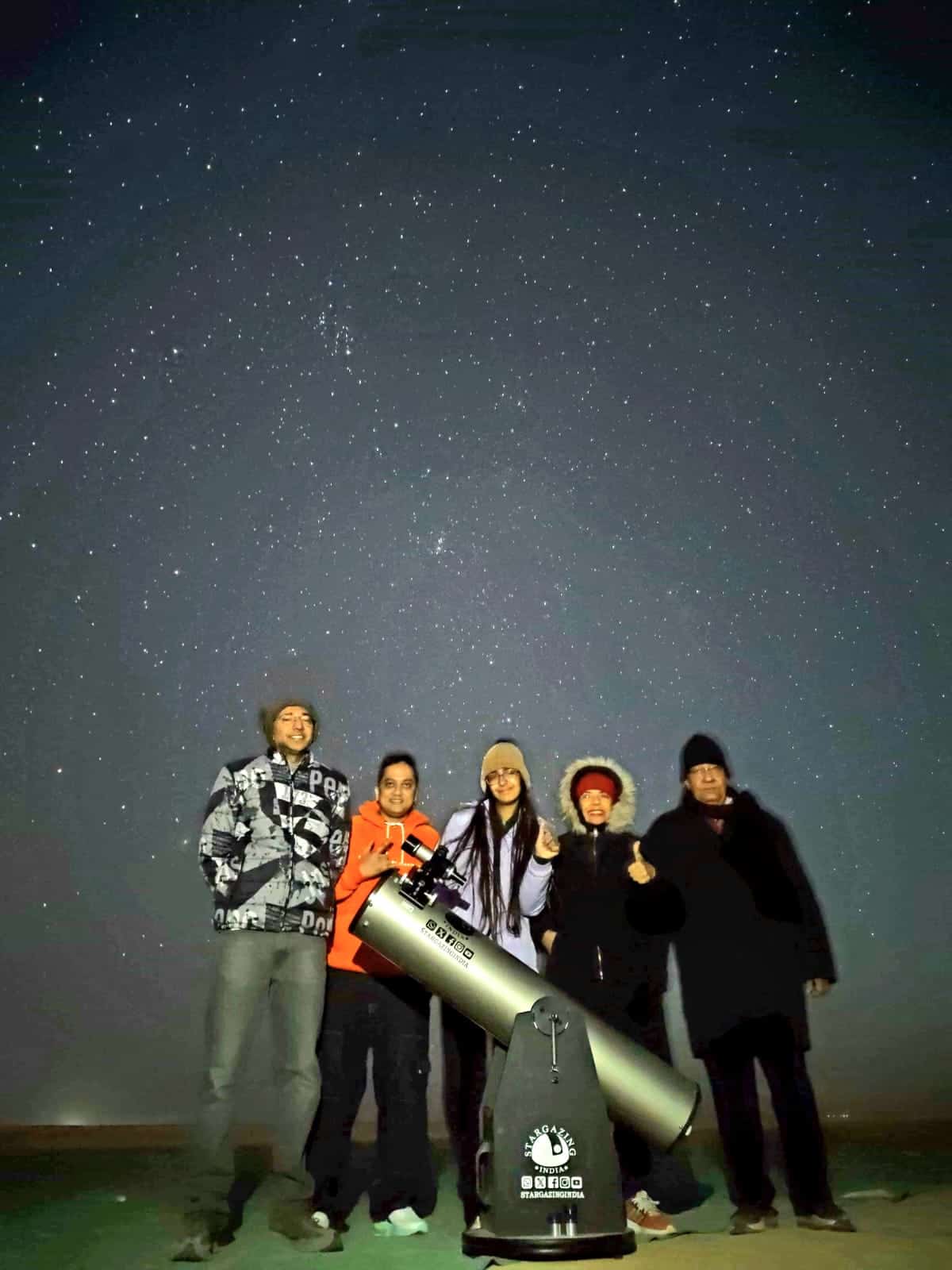
Constellations come into focus. The Great Bear. Orion. Ceres. The North Star and its significance. Jupiter. Big and small stars. The way a star turns red before it disappears. Baby stars. Young blue stars. Mythology, science, wonder, all braided together. We take turns with the telescope, peering again and again as each new point of light is explained.
The stillness is total. The white saltlands gleam faintly as it is not a full moon night. We stand there, freezing humanoids, utterly mesmerised. When we return, I am numb with cold and warm with excitement, living proof that one does not cancel the other.
Road to Heaven, Rewritten by Rain
The next day, I am hyped for the Road to Heaven drive and the UNESCO World Heritage site of Dholavira, the Harappan excavations that make history feel tangible.
The phrase “Road to Heaven” triggers my inner sceptic. I have seen the poster image often: a black ribbon of road knifing through stark white land.
Names like this can collapse under their own hype. I look forward to the drive and remain unsure if it will live up to its reputation.
Then the driver says, matter-of-factly, that this year it rained so much that the salt lands are not there. The water has not dried.
I stare in disbelief. No salt lands? Then what?
“You are very lucky,” he says, calm as though he is discussing the weather, not rewriting my expectations. “You will see an ocean on both sides of the road with flamingoes in the water.”
We drive off on the Khavda–Dholavira road, and within a short time, I see a shimmering expanse that shocks me into silence. This is not a poster image. There are no saltlands today. Instead, the road becomes a black ribbon cutting through a glittering sea on both sides, stretching straight towards the horizon. Thirty-one miles of it. Out of this world!
On both sides of the road, the Rann is a vast sheet of shimmering water, calm and endless, stretching right up to the sky. It looks like an ocean, except the illusion of depth is exactly that. I am told it is barely three feet deep. The road runs straight and unwavering through this flooded expanse, so perfectly aligned that it feels unreal.
With water on all sides, the road seems to float, suspended between reflections. The sky pours itself into the Rann of kutch, and the Rann mirrors it back, erasing any clear boundary between them. At times, it feels as though I am driving through the middle of a lake, with no land in sight at all. As we drive, the silence deepens. There are no distractions, no cluttered views, only sky, water, and this narrow strip of road leading forward. The Rann has turned into a vast, shallow sheet of shimmering water, calm and endless, stretching right up to the sky.
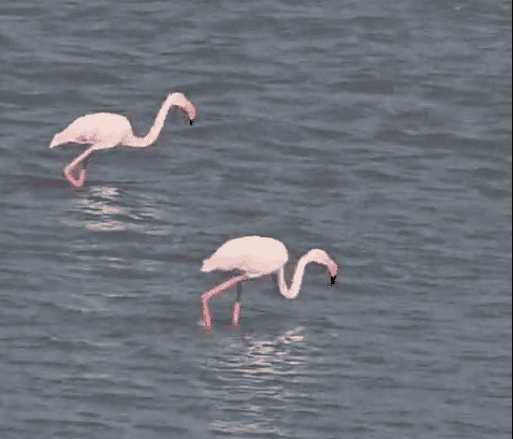
I watch flamingoes wade in shallow pools, their pink bodies almost surreal against the shimmering water and clear blue sky. Far off, a colony of birds nests against the horizon. I zoom in, and what first looks like a white ribbon becomes hundreds of birds, some lifting briefly and settling again. I take pictures, including the classic act of sitting in the middle of the road, the straight line stretching behind me, the scene so surreal it could belong to another planet. Endless miles of water. A thin black road. Wind, light, birds, and that feeling the Rann specialises in, the one that says is this for real?
Surrounded by water and sky, with nothing solid except the road beneath my wheels … in that moment, the name “Road to Heaven” made perfect sense.
Somewhere in the wider journey, I also hold the knowledge of the Little Rann of Kutch, around 200 kilometres east, where the Wild Ass Sanctuary spreads across a vast protected region and shelters the last remaining population of the chestnut-coloured Indian wild ass, along with blue bulls, blackbuck, and chinkara. The Rann is not only a moonscape of salt and sunset theatre. It is also a living, breathing habitat, a wetland when the monsoon arrives, a desert when it withdraws, a place where wildlife and humans both learn resilience.
Dholavira, Where the Rann Turns to History
We arrive in Dholavira with the Great Rann of Kutch closing in on all sides. This is one of the most important sites of the Indus Valley Civilisation, nearly 4,500 years old, and recognised by UNESCO in 2021.
Walking through the excavated remains, I begin to see how carefully this city is imagined. In an arid landscape, the Harappans built one of the world’s earliest and most advanced water conservation systems, carving reservoirs and rainwater channels with astonishing precision.
The Harappa Excavation ruins reveal distinct phases of life here, from confident growth to eventual withdrawal. After reaching its peak, the city is abandoned, then later reoccupied in a simpler form. The return feels intentional, as if the inhabitants choose restraint over complexity. It quietly challenges modern ideas of progress.
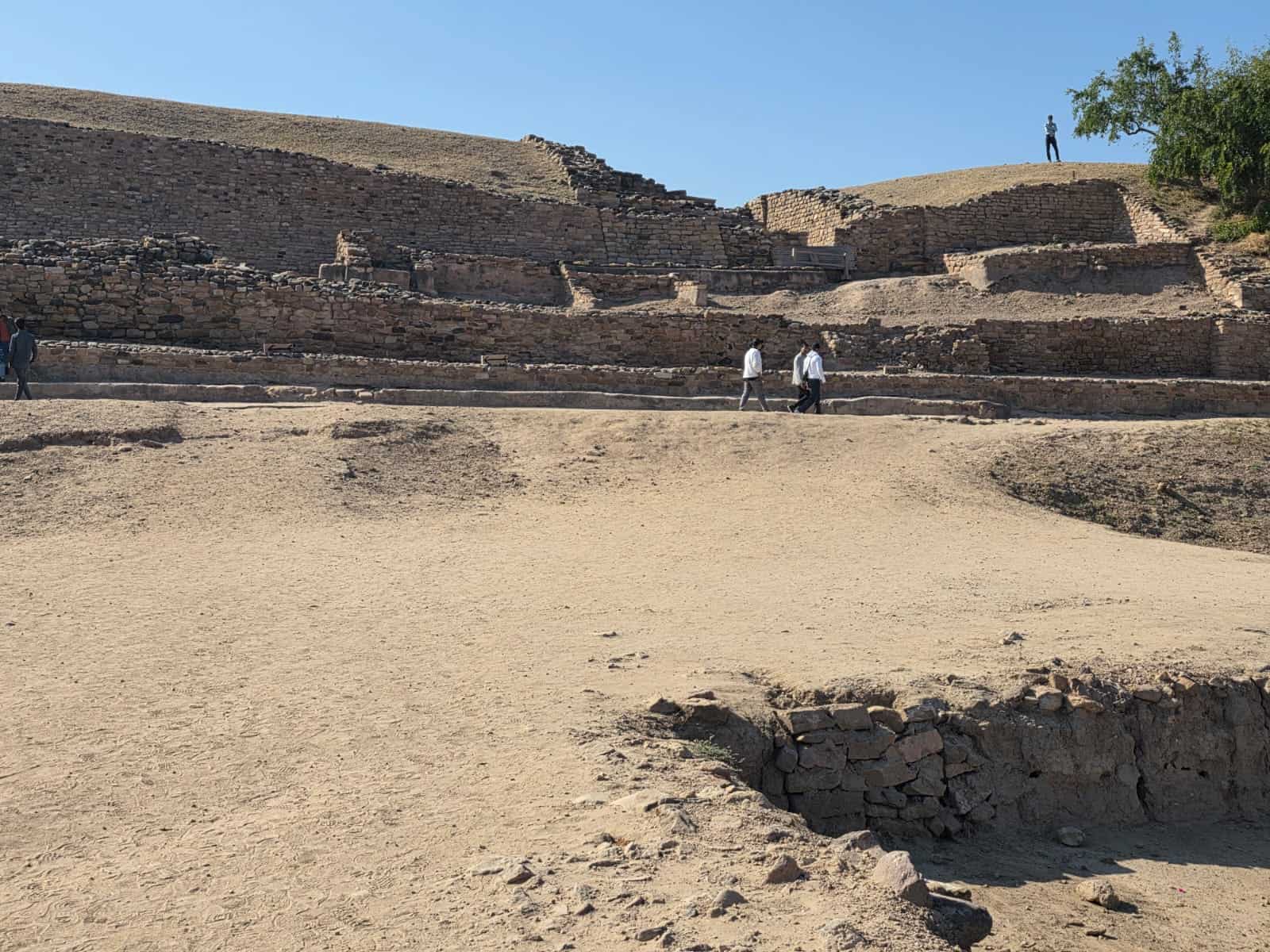
At the centre stands the citadel, surrounded by a middle and lower town, each fortified and laid out with order. Straight streets, underground drainage, and a large stadium speak of a highly organised society. Nearby, massive stone slabs etched with the undeciphered Indus script, perhaps the world’s earliest signboards, remain unreadable. Standing amid stone and salt, Dholavira does not feel like an excavation site. The ruins are more like a question about what endures when ambition recedes, and certainty disappears.
Leaving the Rann
By the time I move through these experiences, the Rann stops being a single image and becomes a shifting world. It strips away noise and leaves me alert to small details: salt crunching underfoot, wind brushing across open space, the way light changes colour, the warmth of ginger tea in cold air, the quiet pride of craft traditions held in mud bhungas, the pulse of celebration in Dhordo, and the vast sky that makes me feel both tiny and entirely alive.
I linger, watching the light shift across white land, until it feels right to leave.
Read More: Latest